Gluten-Free Food In Vienna: What To Know Before You Book
Vienna runs on breaded schnitzel, strudel and pretzels, yet the city is workable for gluten-free visitors who know three things: how Austrian menus label allergens, which classic dishes have safe variants, and which questions to ask an operator before paying for a food walk.
Short answer
Vienna suits gluten-free visitors who plan a little. Austrian menus must flag the EU's 14 allergens, including gluten, so the danger on a menu is visible. Grilled schnitzel variants, Gulasch and roast pork work; strudel and most cakes do not. No food walk on this site states a gluten-free option, so message the operator before booking.
Vienna's most famous foods are, bluntly, a gluten minefield. Schnitzel comes breaded, strudel is wrapped in stretched dough, Kaiserschmarrn is shredded pancake, and the sausage stand will hand your Bosna in a roll unless you say otherwise. That is the intimidating half of the picture. The encouraging half is that Austria is inside the European Union's allergen-labelling framework, so wheat and other gluten sources are flagged on menus by law, and the city's restaurant culture runs on grilled meats, stews and vegetables that never needed flour in the first place. This guide walks through the practical questions: how to read a Viennese menu, which classic dishes have gluten-free workarounds, what the coffee house counter holds, and how to check that a guided food tasting can actually adapt to you before money changes hands. If wheat is only one of the things you're steering around, our guide to vegan eating in Vienna covers the plant-based Beisl, vegan coffee houses and market stalls that handle the dairy-and-meat side of the same challenge.
Is Vienna Good For Gluten-Free Visitors?
Yes, with planning. Austrian law requires restaurants to flag the 14 EU allergens, including cereals containing gluten, so risk is printed on the menu rather than hidden in the kitchen, and Vienna's meat-and-vegetable cooking has many naturally safe dishes even though its famous pastries are off the table.
The baseline safety net is regulation, not luck. Any food served in an Austrian restaurant, coffee house or market stall must have its allergen information available, and in practice this means letter codes or bolded notes beside dish names on the menu. You will see this everywhere from a Naschmarkt snack stand to a traditional Beisl. It does not make cross-contamination impossible, friers shared between breaded and unbreaded food are a real thing, but it means nobody has to guess whether the soup was thickened with flour.
The city has also developed a small dedicated scene. Current listings name Café Ausnahmsweise in the 6th district, which bakes gluten-free and vegan cakes, Café Grüner Salon, also in the 6th, and Gasthaus Zum Wohl, which is gluten-free and lactose-free friendly. These are not sad substitutes; they sit inside the same Neubau streetscapes visitors want to walk anyway. Beyond them, the standard playbook works: grilled Wurstelstand sausages without the bread, Gulasch with potatoes or dumplings swapped out, roast pork with potato salad, Tafelspitz with its vegetables and apple-horseradish.
The hard part is not dinner. It is the pastry culture, and that deserves its own honest assessment later in this guide. Anyone arriving expecting to eat Sachertorte freely will be disappointed; anyone arriving with the menu codes in hand and a translation for "glutenfrei" will eat well.
How Do You Read Allergen Labelling On Austrian Menus?
Look for the letter codes tied to the 14 EU allergens, where gluten-containing cereals carry the code for wheat and related grains; these appear beside dish names or in a legend at the bottom of the menu, and staff are legally required to have the underlying detail available when you ask.
The system is straightforward once you know it exists. The EU's allergen information rules cover 14 substances, gluten-containing cereals among them, and Austrian menus typically mark each dish with letters or numbers keyed to that list. A legend somewhere on the menu tells you which letter means wheat, rye, barley or oats. In one sentence: this labelling exists across Austria, and it is your primary tool. Where a menu uses no codes at all, the venue must still answer the question verbally, so asking is not an imposition, it is the process working as designed.
The words worth memorising are few. "Glutenfrei" means gluten-free. "Weizen" is wheat, "Roggen" rye, "Gerste" barley, "Hafer" oats. "Mehl" is flour, and "paniert" means breaded, the single most important word on a Viennese menu, because it is what turns a safe veal cutlet into schnitzel. "Semmel" or "Gebäck" signals bread arriving with things. A card with those words, or a translation app held up, solves most ordering moments in a regular restaurant.
Two practical cautions. First, labelling tells you what is in the dish as written, not what shares the frier; ask whether breaded items go in the same oil if you are highly sensitive. Second, beer is easy to forget: Austrian lager is brewed from barley, so a gluten-free meal paired with a standard beer is not a gluten-free meal. Cider, wine and most spirits are the traditional alternatives, and Vienna's wine culture makes that an easy swap. Heuriger wine taverns and cellar tastings are, on the drinks side, naturally compatible; the Vienna Tourist Board defines the genuine Heuriger as a venue serving its own wine, and the drinking is the point rather than an accompaniment. If you'd like to pair that gluten-free drinking with a cheap day out, our guide to free things to do in Vienna and eating well on a budget covers affordable Heuriger options and which tastings justify their price.
| Menu word | Meaning | Gluten risk |
|---|---|---|
| Paniert | Breaded | High |
| Mehl | Flour | High |
| Strudelblatt | Strudel pastry | High |
| Semmel / Gebäck | Bread, rolls | High |
| Knödel | Bread or potato dumpling | Varies, ask |
| Gegrillt | Grilled | Usually safe |
| Glutenfrei | Gluten-free | Safe as marked |
Where does a guided experience fit into this? A guided tasting walk is the one part of a Vienna food trip you cannot fix at the table in real time, because the stops and the portions are arranged in advance. That makes the booking conversation the important one, and it is why this guide's booking section later on spends more words on questions than on dishes.
Can You Eat Schnitzel Gluten-Free In Vienna?
Sometimes, yes: many kitchens will grill or pan-fry an unbreaded cutlet on request, and Natur schnitzel style exists for exactly this reason, but the classic breaded Wiener Schnitzel is off limits and a shared frier is the question to ask before ordering any grilled substitute.
The word that saves you is "Natur". A Schnitzel vom Schwein or Kalbs Schnitzel Natur is the cutlet without the breadcrumb coat, cooked in the pan. It is a recognised preparation, not an invention you have to talk a kitchen into, though not every venue runs it every evening. The alternative many Beisln offer is a grilled pork or veal steak, Cordon bleu is out of the question, and the sides are the second checkpoint: potato salad and parsley potatoes are the usual safe pairing, while bread dumplings are not.
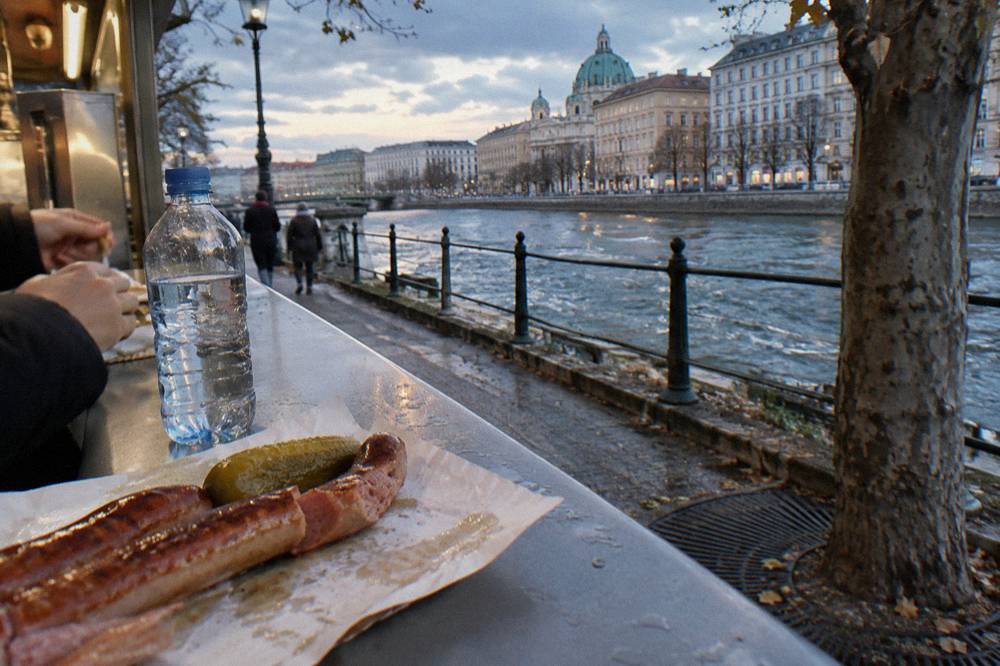
Sausages are the more reliable street answer. A Käsekrainer or Bosna from a Wurstelstand, ordered without the bread, is meat, cheese and mustard, and the stands cut sausages onto plates without ceremony. Ask what touches the grill or the bread-warming area if you are strict, but this is a workable, genuinely Viennese meal at any hour. The Wurstelstand is cited by the Vienna Tourist Board as part of the city's recognised street-food heritage alongside the coffee house and the Heuriger, so eating this way is not a retreat from the culture, it is the culture. For the rest of it, from coffee house etiquette to tipping and tap water, our guide to Vienna's eating and drinking do's and don'ts tells you what to expect.
The same menu-reading logic extends across the whole traditional repertoire, so a quick reference for the dishes a visitor meets everywhere is worth keeping on a phone:
| Classic dish | Gluten-free as served | Workaround |
|---|---|---|
| Wiener Schnitzel | No | Order cutlet Natur, unbreaded |
| Käsekrainer at a stand | No, served in bread | Ask for it on a plate, no roll |
| Gulasch with Knödel | Dumplings contain flour | Swap to potatoes or parsley potatoes |
| Tafelspitz | Usually yes | Confirm no bread side |
| Apfelstrudel | No | Gluten-free bakery or skip |
| Kaiserschmarrn | No | Skip at classic houses |
For visitors who want the schnitzel experience rather than a workaround, a cooking class flips the problem: when you are the cook, the coating is your decision. The Schnitzel and Strudel shared cooking class runs three hours and teaches both classics; whether the kitchen can substitute a gluten-free breading is exactly the sort of detail to confirm by message before booking, and the class page lists what is included.
Back in restaurants, the honest summary is that schnitzel culture is adaptable but not universal. A tourist-centred venue near the Ring will say yes to everything and deliver unevenly; a neighbourhood Beisl will either do a proper Natur cutlet or tell you plainly to order something else, and the plain answer is the safer one. Gulasch, roast pork, Tafelspitz, grilled fish and the enormous range of Viennese vegetable side dishes carry you through any menu where the schnitzel door is closed.
Which Coffee House Cakes Can You Eat?
Almost none of the classic counter cakes are safe, since Sachertorte, Apfelstrudel and Kaiserschmarrn are all built on flour, so the workable strategies are dedicated gluten-free bakeries, the ice cream and chocolate options that many houses serve, and treating the coffee house as a drink stop rather than a cake stop.
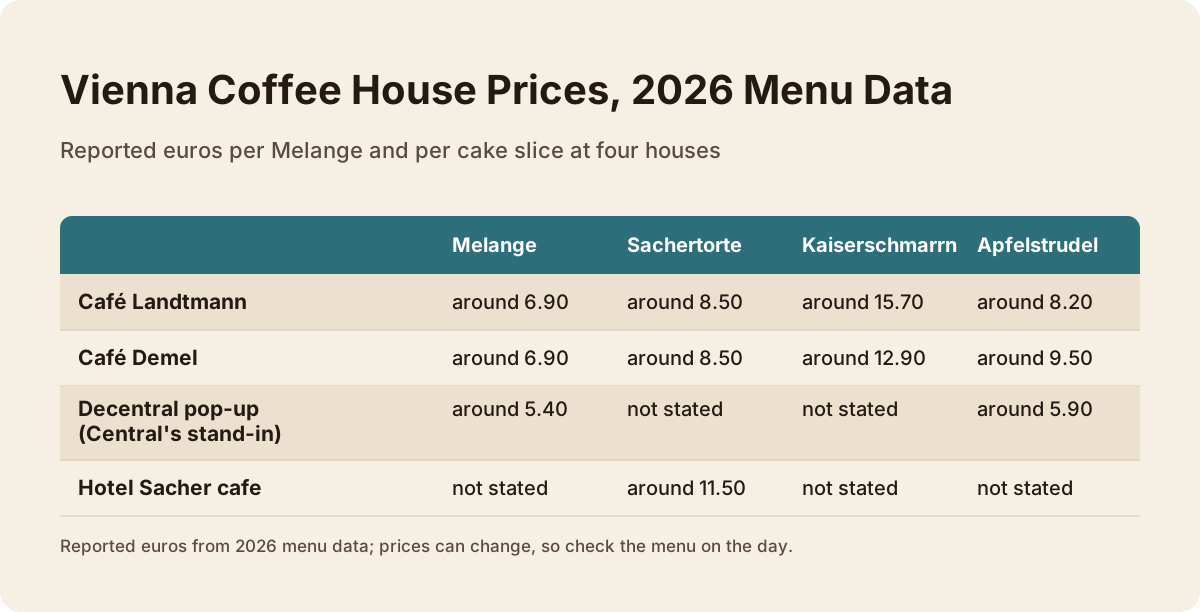
Start with what the classic houses actually charge, because a decision about skipping cake is easier with the numbers. Reported 2026 menu prices put a Sachertorte slice at Café Demel around 8.50 euros, an Apfelstrudel at 9.50 euros and Kaiserschmarrn at 12.90 euros, while Café Landtmann lists Sachertorte around 8.50 euros and Kaiserschmarrn around 15.70 euros. A slice of the original at the Hotel Sacher cafe runs around 11.50 euros in 2026 reports. None of these is gluten-free, and no substitute version of them is on the menu at the classic houses.
| Coffee house | Melange | Sachertorte | Kaiserschmarrn | Apfelstrudel |
|---|---|---|---|---|
| Café Landtmann | around 6.90 | around 8.50 | around 15.70 | around 8.20 |
| Café Demel | around 6.90 | around 8.50 | around 12.90 | around 9.50 |
| Decentral pop-up (Central's stand-in) | around 5.40 | Not stated | Not stated | around 5.90 |
| Hotel Sacher cafe | Not stated | around 11.50 | Not stated | Not stated |
All figures are reported euros and can change, so treat them as planning ranges and check the menu on the day. Not one of those cakes is edible for a gluten-free guest, which is exactly the point of the table: the money question answers itself, and the substitute question is answered elsewhere.
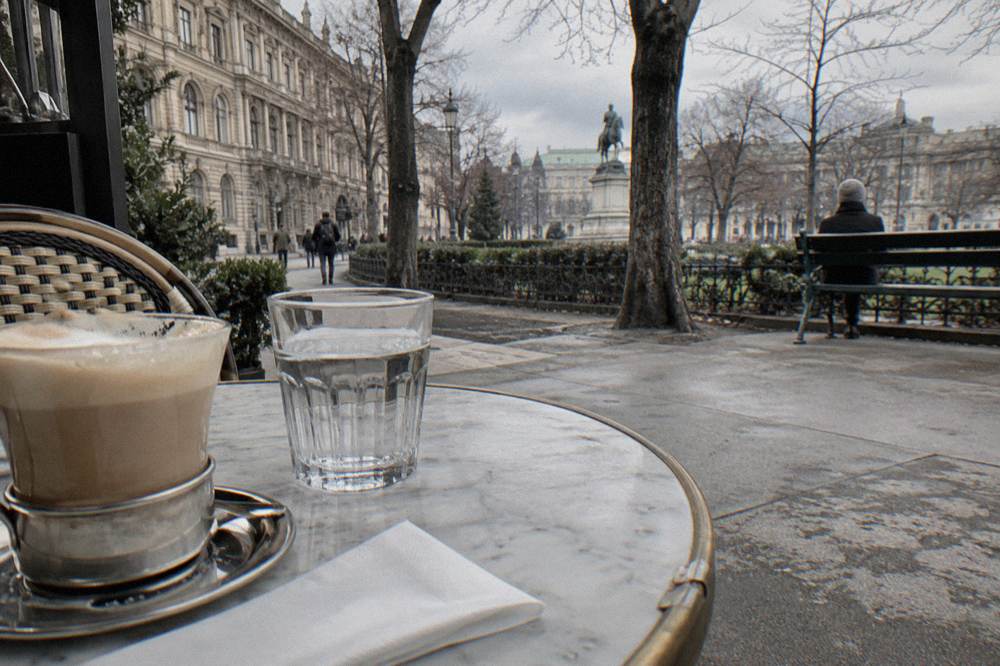
What you keep is the ritual itself. A Wiener Melange at the classic houses runs around 6.90 euros in 2026 price data, the coffee house culture is recognised on Austria's national inventory of intangible cultural heritage, and sitting for an hour with a newspaper is the point of the institution. Many houses also stock ice cream, chocolate bars or meringue-based sweets that are naturally flourless, though always confirm, and gluten-free visitors planning the famous houses should note that Café Central has been closed for major renovation since March 2026 with a reopening planned for winter 2026, running a pop-up called Decentral meanwhile, so check the cafe's own site before planning a visit.
The better cake answer is the dedicated scene again. Café Ausnahmsweise in the 6th district bakes gluten-free and vegan cakes, which converts the coffee-house ritual from a compromise back into a pleasure. Plan the classic house for coffee, plan Ausnahmsweise or Gasthaus Zum Wohl for the cake course, and the day works. Our page on the best coffee houses in Vienna covers the full classic list, and the Vienna cake and pastry guide goes deeper on what each counter actually sells.
Is Naschmarkt Workable Without Gluten?
Yes, and it is arguably the easiest food environment in the city for a gluten-free visitor: the stalls sell olives, cheese, grilled fish, hummus, stuffed vegetables and fresh fruit by weight, most vendors deal with tourists daily, and the market's official rules require allergen information just like any restaurant.
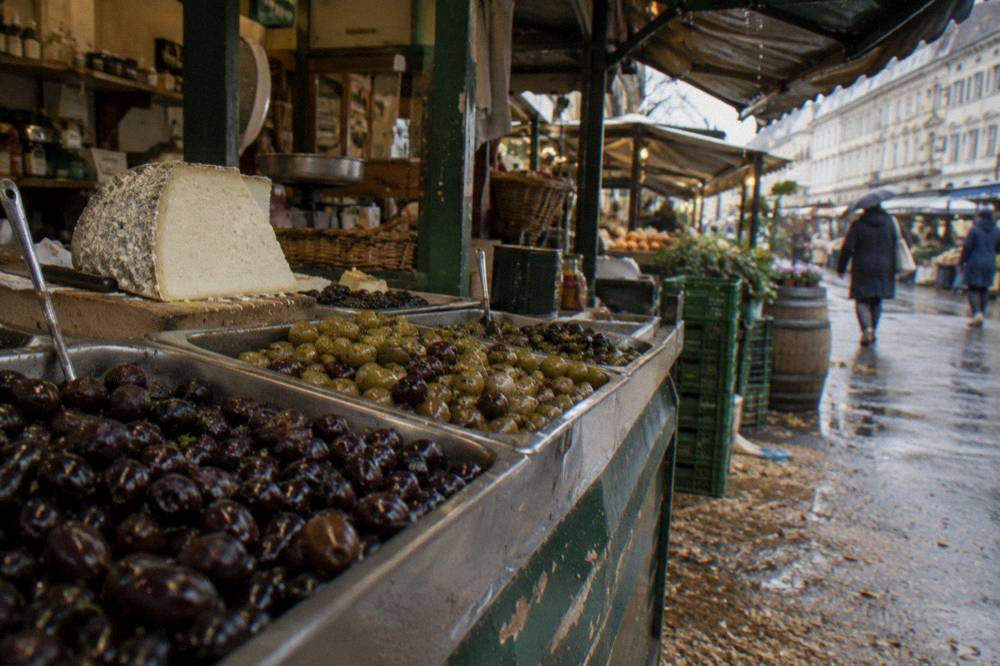
The Naschmarkt is more than sausage and bread. Its stall mix leans Mediterranean, and a shopper can assemble an entire lunch from counters that never touch flour: marinated olives, haloumi, grilled octopus, falafel, which is chickpea-based but worth confirming the frier, stuffed vine leaves, nuts and dried fruit, cheese cut to order, and fresh juices. The market's opening framework comes from the city: sales stands may run to 21:00 on weekdays and 18:00 on Saturdays, restaurants to 23:00, and every stand must be open Tuesday to Friday between 15:00 and 18:00, per the official City of Vienna market page. Sundays are quiet, with only restaurants permitted the reduced window.
The market is also the one place in this guide where a guided tasting genuinely helps a gluten-free visitor, because a guide who knows the stalls can steer to safe counters instead of the visitor gambling stop by stop. Two guided market options on this site cover exactly this terrain: a Naschmarkt food tasting walk of two and a half hours, and a shorter two-hour guided market walk. Whether either can adapt its set tastings for a gluten-free guest is a message-before-booking question, the same rule that applies everywhere on this site.
One more market note worth the stop: the Saturday flea market beside the Naschmarkt runs about 6:30 to 15:00, and it costs nothing to browse. For the full stall-by-stall picture, see our Naschmarkt food guide, and for the city's other markets, Vienna markets beyond Naschmarkt.
Can A Vienna Food Walk Accommodate Gluten-Free Guests?
Possibly, but no food walk on this site states a gluten-free option in its listing, so the answer depends on the operator and the day: contact them before booking, ask which stops and tastings are fixed, and treat any yes you receive by message as your record of what was promised.
This is the single most important section of the guide, so it gets the plainest wording. The main Vienna food walk on this site, a five-and-a-half-hour walk covering coffee houses, markets, lunch and street food, is exactly the format a gluten-free visitor wants on paper, because it crosses several environments and a guide can adapt route more easily than tastings. The listing describes a vegetarian lunch option, which shows the operator already handles food adaptations, but it does not state a gluten-free variant, and that gap is not a no, it is an unanswered question. Message the operator first, through the tour's own booking page.
The authentic Vienna food walk, five hours with lunch, street food and three drinks, states the same vegetarian option and no gluten-free one, so it sits in the same category: promising format, unconfirmed adaptation. Shorter tasting walks, such as the three-and-a-half-hour walk built around seven tastings and a secret dish, are the hardest to adapt, because every stop is a pre-arranged portion; a guide with notice may swap a stop, a guide without notice cannot. The booking questions that matter are on the next section's list, and they work for every operator on this site.
What Should You Ask Before Booking Any Food Experience?
Ask four things in one message: can the operator adapt tastings for gluten, which stops are fixed versus flexible, has cross-contamination been handled for past guests, and what the cancellation terms are if the answer arrives after booking, then keep the reply as your reference.
The message takes two minutes and changes the whole day. Write it before you pay, not after, because a tasting walk booked blind is a fixed menu you then have to negotiate in real time, in a language that may not be yours, in front of a guide who learned about the issue that morning. The questions, in order of value:
| Question | Why it matters |
|---|---|
| Can the tastings be adapted gluten-free? | Establishes whether the operator can do it at all |
| Which stops are fixed and which can swap? | Tells you how much of the route changes for you |
| Have you hosted coeliac guests before? | A yes with specifics beats a confident maybe |
| What is the cancellation policy? | Sets your exit if the reply comes late |
Booking terms live on each operator's own page, and this site's cost breakdown in what a Vienna food walk costs covers how prices are built across formats. If a full guided walk cannot adapt, the fallbacks are real: a self-guided Naschmarkt graze using the allergen rules, the dedicated gluten-free cafes for the cake course, and the cooking class route, where you control the ingredients and the question is only whether the school stocks gluten-free flour. As the saying goes on Vienna Food Tours, the best food experience is the one arranged for you, not around you.
A final habit worth carrying into every restaurant: Austria's dining culture is direct, and staff answer direct questions well. The official business portal that documents guest-area rules also reflects a regulatory culture where the kitchen is used to being asked. Pair that with the allergen codes, and Vienna becomes a city where the gluten-free visitor is unusual but never stranded.
Common Questions About Gluten-Free Food In Vienna
Is Vienna Good For Gluten-Free Visitors?
Yes, with planning. Austrian menus must flag gluten under the EU's 14-allergen labelling rules, grilled and stewed dishes dominate traditional cooking, and a small dedicated gluten-free cafe scene exists in the 6th district. Pastry culture is the hard part, not dinner.
Can You Eat Schnitzel Gluten-Free In Vienna?
Sometimes. Ask for a cutlet "Natur", meaning unbreaded and pan-cooked, or order a grilled pork or veal steak. Confirm the frier is not shared with breaded items before ordering any grilled substitute.
Can A Vienna Food Walk Accommodate Gluten-Free Guests?
Possibly, but no listing on this site states a gluten-free option, so message the operator before booking. Ask which stops are fixed, whether tastings can be swapped, and keep the reply as your record.
Which Coffee House Cakes Are Gluten-Free?
Almost none of the classics. Sachertorte, Apfelstrudel and Kaiserschmarrn are all flour-based. Dedicated gluten-free bakeries such as Cafe Ausnahmsweise in the 6th district are the practical answer for the cake course.
Is Naschmarkt Workable Without Gluten?
Very much so. Olives, cheese, grilled fish, hummus, stuffed vegetables and fruit by weight make an easy lunch, and the same allergen rules apply to market stalls as to restaurants.