Do And Don'ts In Vienna?
Practical do's and don'ts for eating and drinking in Vienna: coffee house etiquette, tipping, Gedeck, tap water, smoking rules, Sundays and markets.
The short list: do learn the coffee house ritual, tip 5 to 10 percent by naming your total, expect a Gedeck cover charge of a few euros in traditional venues, and assume tap water may be billed. Don't smoke indoors, it has been banned in all guest areas since 1 November 2019, don't expect shops or most markets on Sundays, and don't plan a Heuriger evening without checking opening days.
Most of the do's and don'ts that catch visitors out in Vienna are about money and manners, not about danger or difficulty. The city is relaxed, orderly and forgiving of outsiders, but it has firm habits around paying, eating and timing that locals follow without thinking. A visitor who learns five or six of them eats better, pays less and gets warmer service than one who improvises. A visitor who ignores them still eats well, most of the time, but pays for a few surprises along the way.
The rules below come from official Austrian and City of Vienna sources plus 2026 reporting: the federal business portal on the smoking ban, the city's own market regulations, a 2026 Arbeiterkammer price sample on tap water, and reported menu prices from the classic coffee houses. Where something varies, that is said plainly, because queues, hours and menus always can. Nothing here requires rehearsal; every custom on this list can be adopted on the spot, mid-meal, the first time it comes up.
One practical shortcut deserves a mention up front. A guided tasting walk is the fastest way to see the customs performed correctly: how a coffee house order works, how a market stall operates, how a Würstelstand functions, and how to pay and tip at each. The Vienna Food Tour: Coffeehouses, Markets, Lunch & Street Food covers coffee houses, markets, lunch and street food in one 5 hour 30 minute outing, and the operator's booking page carries the current price, meeting point and inclusion list. Watching a local guide order, pay and tip through half a dozen venues teaches the mechanics faster than any list, including this one.
Do: Order Coffee Like A Local
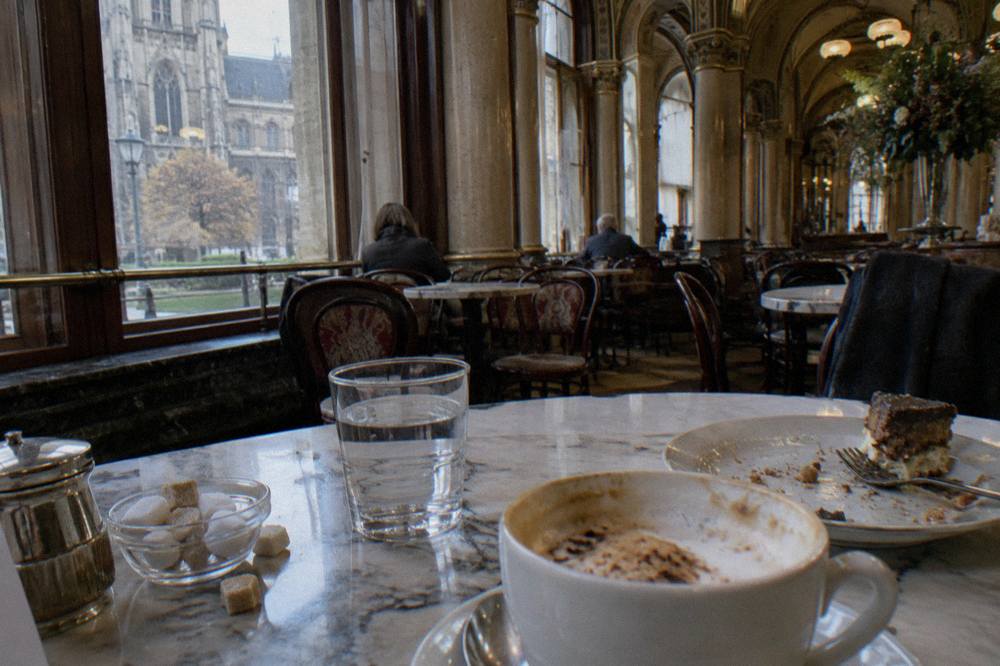
Do order by name rather than by description, because the menu is a vocabulary test you can pass in one afternoon. A Melange is the house standard, espresso-strength coffee under steamed milk, roughly a cappuccino in build but a different drink in spirit. A Brauner arrives black with cream on the side, an Einspänger comes with whipped cream in a glass, and a Verlängerter is a stretched, weaker black coffee. Learning four names earns visibly better service.
It is genuinely how the room orders. Pointing at the menu and asking for "a coffee" works, but it marks you immediately, and in the grand houses the waiter's response is often a follow-up question you were not ready for: which coffee, which size, with or without water on the side. Naming the drink closes the conversation in one word and moves you into the rhythm of the room.
Vienna's coffee house culture is not just a tourist affection, either. It was recognised on Austria's national inventory of intangible cultural heritage in 2011 under the UNESCO framework, and the Vienna Tourist Board cites it as UNESCO heritage alongside the Viennese sausage stand and Heuriger culture. The practical effect for a visitor: the coffee house is treated as living room, office and reading room combined, and the customs reflect that. People settle in for hours with a newspaper, order a second coffee without being asked about it, and treat the table as theirs.
The strongest don't inside this do: don't rush. Waiters in the grand houses are famously unhurried, a table is yours for as long as you want it, and nobody will bring a bill unasked. Ask for it when you are ready ("zahlen, bitte") and expect to pay at the table, not at a counter. Tipping in a coffee house is light: round up, or leave about 0.50 to 1 euro, rather than the full restaurant percentage. The tipping customs guide breaks this down venue by venue.
Money expectations at the classic houses (check the menu on the day):
| Item | Typical reported price | Notes |
|---|---|---|
| Melange at classic houses | around 6.90 euros | Landtmann, Museum and Schwarzenberg clustered at this level |
| Sachertorte slice at Hotel Sacher café | reported at 11.50 euros | Other 2026 reports note a range of roughly 8.90 to 10.50 euros |
| Sachertorte at Café Demel | 8.50 euros | Reported menu price |
| Kaiserschmarrn at Café Landtmann | 15.70 euros | Reported menu price |
One more timing note: Café Central has been closed for major renovation since 16 March 2026, with reopening planned for winter 2026, and its pop-up "Decentral" operates at Freyung 3 in the meantime, reported daily from about 08:30 to 20:00. Confirm on the café's own site before planning a visit, and read more in why Café Central is popular.
Don't: Get Caught Out By Gedeck, Tap Water And Tipping
Don't assume the bill works the way it does at home, because three small charges cause most visitor complaints and all three are legal and normal in Vienna. The Gedeck is a cover charge, typically 2 to 5 euros per person in traditional and upscale venues, payable whether or not you eat the bread. Tap water can be billed whenever the price is menu-listed, and a 2026 sample found most venues do charge. Tipping runs 5 to 10 percent.
Start with the Gedeck, because it is the one that feels like a scam and is not. The cover charge, commonly 2 to 5 euros per person in traditional venues, pays for the bread basket, butter and spreads, and the table setting. It must be listed on the menu to be charged, and it is payable regardless of what you consume. If it is printed on the menu, it belongs to the bill; arguing it down is not a thing locals do, and it goes nowhere.
Tap water is the second surprise. Austrian law allows venues to charge for Leitungswasser whenever the price appears on the menu, and a 2026 Arbeiterkammer sample of 30 Vienna venues found that 23 charged for it, often between 0.80 and 3.60 euros per half litre, even when food and other drinks were ordered. Only three venues in the sample offered it free unconditionally. The habit to adopt: scan the drinks page for a water line before ordering, and if none is listed, ask.
Tipping is the third, and the mechanics matter more than the percentage. Austrian waiters do not leave a folio on the table for you to scribble in. You say the total you want to pay when you hand over cash or card: if you want to round up generously from whatever the bill is, say the rounded figure ("stimmt so" means keep the change, or name a number slightly above the bill). Naming the figure is the whole gesture. It feels blunt the first time and completely natural by the third.
The full etiquette picture, including how the Gedeck appears on the bill and how service is actually distributed, is laid out in the restaurant etiquette and Gedeck guide. The short version of every question a visitor asks:
| Situation | Do | Don't |
|---|---|---|
| Paying at a restaurant | Add 5 to 10 percent by naming the total | Leave cash on the table and walk out |
| Coffee house | Round up, or 0.50 to 1 euro | Overtip heavily; it confuses the ritual |
| Gedeck on the bill | Pay it; it is legal if menu-listed | Argue it away; it is not a scam |
| Tap water | Check the menu for a listed price | Assume it is free because it is tap |
| Water alternative | Order it, or accept sparkling/still bottled | Expect a free carafe as in some countries |
None of this makes Vienna expensive by force. It makes Vienna predictable, which is better. A visitor who knows the three charges in advance budgets them without surprise and tips with confidence at every venue from the grand coffee house to the sausage stand. A visitor who does not spends the last morning of the trip re-adding receipts and wondering which line was which.
Do: Respect The Smoke-Free Rule And The Sunday Pause
Do treat two fixed rules as fixed: indoor gastronomy has been completely smoke-free since 1 November 2019 under the federal Tabak- und Nichtraucherinnenschutzgesetz, banning smoking in dining rooms and every other guest area of restaurants, coffee houses, bars and shisha venues, with outdoor terraces operating under their own rules. And Sundays, when most retail closes, are a planning problem to solve on Saturday, not an obstacle to argue with on the day.
For visitors the smoking rule simplifies everything. Nobody needs to request a non-smoking table, because every table indoors is one. Smokers step outside, families with children get the same air as everyone else, and there is no 2026 change to this law on any official source. The Austrian business service portal states the ban in full for anyone who wants the letter of the law.
The Sunday rule is the other pause worth internalising. Most retail stores and supermarkets close on Sundays and public holidays, with exceptions at stations and the airport, plus some bakeries and souvenir shops. For eating, the practical effect is moderate, restaurants and coffee houses open as normal, but self-catering shifts: shop on Saturday, or accept station prices on Sunday. Visitors who arrive on a Sunday morning expecting a supermarket run before a picnic consistently come away with a bag of station croissants and an opinion. The full index of guides sits on Vienna Food Tours.
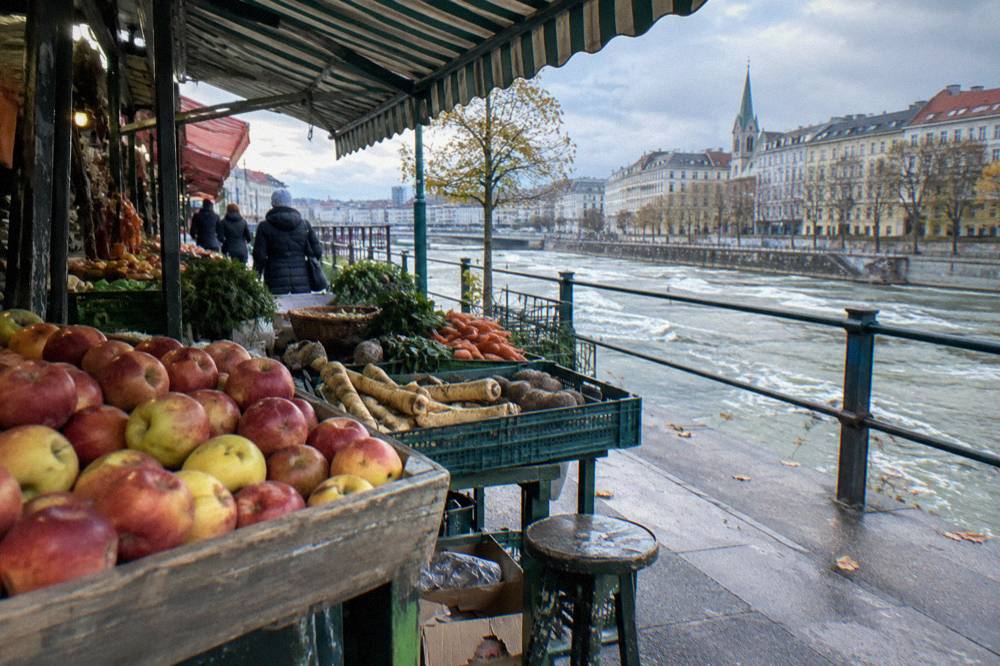
Markets have their own rhythm, and the city regulates it precisely. At the Naschmarkt, official City of Vienna rules allow sales stands until 21:00 on weekdays and 18:00 on Saturdays, restaurants later, and require every stand to be open Tuesday to Friday between 15:00 and 18:00. Sunday is essentially off for the stalls. The Saturday flea market that wraps around it runs about 6:30 to 15:00, skipping 25 and 26 December 2026 and restricted on 12 and 19 December for the Christmas tree market.
Planning around these pauses is half of eating well in Vienna. The Saturday flea market and hours guide covers the full weekly calendar, and the best time to visit Vienna for food handles the seasonal layer, including which events are past (the 2026 Wine Hiking Day ran 26 and 27 September and is over) and which markets open for Christmas.
Late 2026 adds one timing wrinkle worth knowing: the Naschmarkt area is mid-redevelopment. The Naschpark green space, built over the former car park, is finished, but the wider project including the market hall and farmers' market areas has slipped to February 2027, and the farmers' market stalls have been temporarily relocated during U4 tunnel works. The market is fully open for browsing and eating; just expect some layout changes on the ground.
Don't: Assume Every Tour Tastes The Same
Don't book a food experience on its title alone, because Vienna's tour formats vary more than their names suggest: some include a full lunch and drinks, some are coffee-and-cake walks built around a few seated stops, and some shorter options are tasting-oriented without a meal. Check the operator's booking page first, since what is included, where the walk starts, and how long it runs differ tour by tour even within the same category.
The distinctions are real and they show up in the running time. The Vienna Food Tour: Coffeehouses, Markets, Lunch & Street Food runs 5 hours 30 minutes and, as its name states, spans coffee houses, market browsing, lunch and street food in one route; the listing marks a vegetarian lunch option for it, one of only a few tours on this site with that flag. The Authentic Vienna Food Tour, 5 hours, includes lunch, street food and three drinks by its own description. The Vienna Coffeehouse Tour, 3 hours 30 minutes, is the pastry-and-stories format, a different animal entirely, built for travellers whose main interest is the grand café interiors and the cake plate rather than a full meal on foot.
Format choice also shapes what you learn. A market-heavy walk teaches stall literacy: which vendors sell to restaurants, which sell olives by the scoop, and how the Saturday crowd differs from the Tuesday one. A coffee house walk teaches the ordering vocabulary and the seating ritual. A street food walk teaches the Würstelstand and its cousins. None of them is the wrong choice, but they are not interchangeable, and the disappointment reports almost always trace back to a traveller who expected one format and bought another.
For a fuller picture of what each format delivers and who each suits, the which Vienna food walk to book and what a Vienna food walk costs guides compare them side by side.
Dietary needs deserve a direct note. A vegetarian lunch option is stated for the main food walk, the authentic food walk and one private option. No listing states vegan or gluten-free provision, so the honest advice is to message the operator before booking rather than assume. For travelling eaters with restrictions, the vegan food in Vienna and gluten-free food in Vienna guides map the restaurant landscape, which is genuinely strong: 2026 listings include fully gluten-free and vegan cafés and a plant-forward Bib Gourmand bistro near Spittelberg.
For a broader cross-section, the pairing works in either order: a general food walk first to learn the customs, then a coffee-house-specific walk to slow down inside them. Budget-wise, prices and current availability sit on each operator's booking page, and formats from 45-minute cellar tastings to full-day wine excursions all price differently, so compare the description rather than the headline category.
Do: Budget For The Extras Nobody Warns You About
Do budget for the extras nobody warns you about, because beyond the Gedeck and tap water, two more line items shape a Vienna food trip: the Ortstaxe, Vienna's city tourist tax, which stands at 5 percent of the accommodation base fee and rises to 8 percent from 1 July 2027, collected by your hotel, plus small covers at traditional venues and rounding at stands. None of them appear on a menu; all of them appear eventually on a bill.
The budgeting habit that pays off: read the menu cover to cover before ordering. The Gedeck must be printed to be charged, tap water must be priced to be billed, and service ("Bedienung") is often already a stated line. What looks like a slightly higher item price frequently already includes these, which is why Viennese menu maths often lands closer to the sticker than visitors expect once the tipping total is named. The Vienna Chamber of Commerce publishes the Ortstaxe rates for anyone who wants to see the accommodation side itemised.
It also works in the other direction. Once you know the Gedeck is coming, a mid-range traditional restaurant stops looking like it is hiding charges and starts looking like a place with honest arithmetic: the cover is on page one, the water is on page two, and the tip is whatever you say it is. Travellers who internalise this order differently too, skipping the bottled water debate entirely and putting the difference toward one more slice of cake, which in Vienna is nearly always the correct trade.
For travellers weighing the total cost of an eating-focused stay, a guided walk can actually cap the day's uncertainty: one price, one route, inclusions listed in advance, and no cover charges or menu surprises inside it.
A few closing customs that fall outside money:
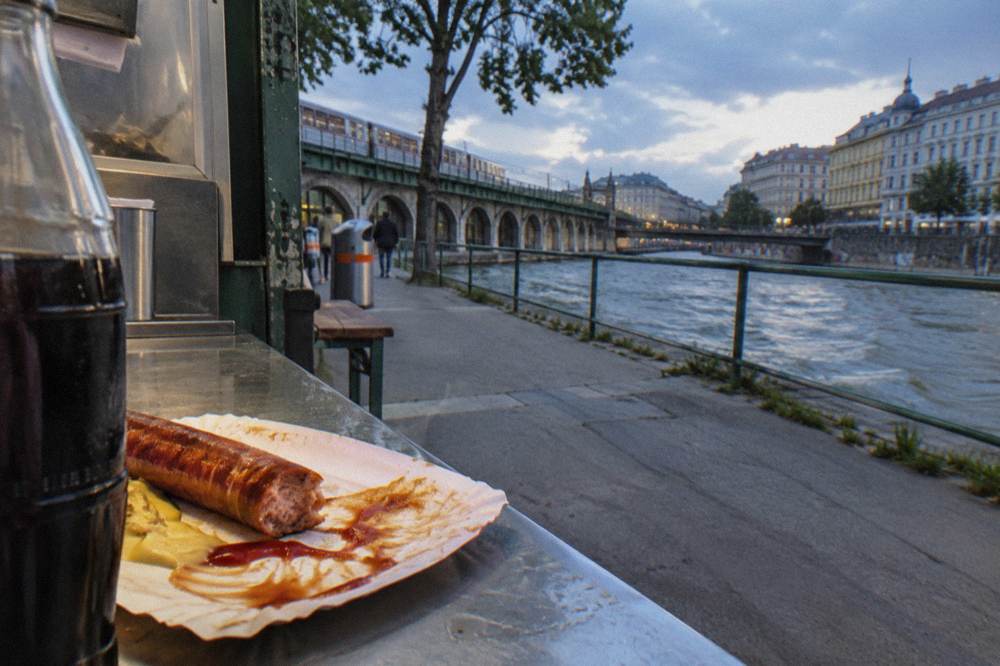
Queue behaviour is its own small culture. At the Hotel Sacher café and at Demel, the Sachertorte queues are a known feature, longer at Sacher and especially in afternoons, shorter at Demel, and the standing advice from 2026 guides is to arrive early or after 16:00. At sausage stands, order at the counter, eat standing at the shelf or a high table, and pay and round up on the spot. Neither venue expects formality, both expect the small tipping gesture. The cake rivalry itself has a legal history: Hotel Sacher holds the "Original" with its sealed chocolate edge and two apricot layers, while Demel serves its rival version with a triangular seal and one layer, a distinction the venues still maintain.
Reservations follow a simple pattern: Café Landtmann accepts them, Demel generally does not, per 2026 guides, and restaurants appreciate them more than visitors assume in a city that dines early by big-city standards. The coffee house culture guide and the where to eat Schnitzel pages carry venue-specific detail, and the Sachertorte or Demel comparison settles the cake question properly.
Whichever way you assemble the eating days, three formats cover most travellers' needs, from the full-market walk to the shorter coffee-and-pastry circuit:
Common Questions About Vienna Do's And Don'ts
Do And Don'ts In Vienna?
Do learn coffee names, tip 5 to 10 percent by naming your total, accept the Gedeck if it is menu-listed, and check the menu for tap-water pricing. Don't smoke indoors (banned in all guest areas since November 2019), don't expect shops on Sundays, and don't book a tour without reading its inclusions.
How Much Should I Tip In Vienna?
Five to ten percent at restaurants, by stating the total you want to pay when you hand over the bill. In coffee houses, round up or leave 0.50 to 1 euro. It is expected for good service but not compulsory.
Is Tap Water Free In Vienna Restaurants?
Not always. Venues may charge for it if the price is on the menu, and a 2026 sample of 30 Vienna venues found 23 did charge, typically 0.80 to 3.60 euros per half litre. Check the menu or order a specified water instead.
What Is A Gedeck?
A cover charge, commonly 2 to 5 euros per person in traditional and upscale venues, covering bread, butter and table setting. It is only lawful if printed on the menu, and it applies whether or not you eat what is provided.
Can You Smoke In Vienna Restaurants And Cafés?
No. Since 1 November 2019 all indoor guest areas of Austrian gastronomy are smoke-free, including bars and shisha venues. Smoking is only permitted outdoors under specific rules.
Are Shops Open On Sunday In Vienna?
Most retail stores and supermarkets are closed on Sundays and public holidays. Exceptions include supermarkets at main stations and the airport, some bakeries and souvenir shops. Restaurants and coffee houses open as normal.