Best Coffee Houses In Vienna: Historic Cafes Worth The Queue
Vienna's coffee houses run on marble tables, newspapers and unhurried service, but the five names every visitor shortlists differ sharply on price, queues and atmosphere. Here is what the current menus and renovation news actually say.
Short answer
Cafe Central is closed for renovation since 16 March 2026, with a reopening planned for winter 2026 and a pop-up, Decentral, at Freyung 3 in the meantime. A Melange runs around 6 to 7 euros at the classic houses and a Sachertorte slice around 8.50 to 11.50 euros, per 2026 menu reports.
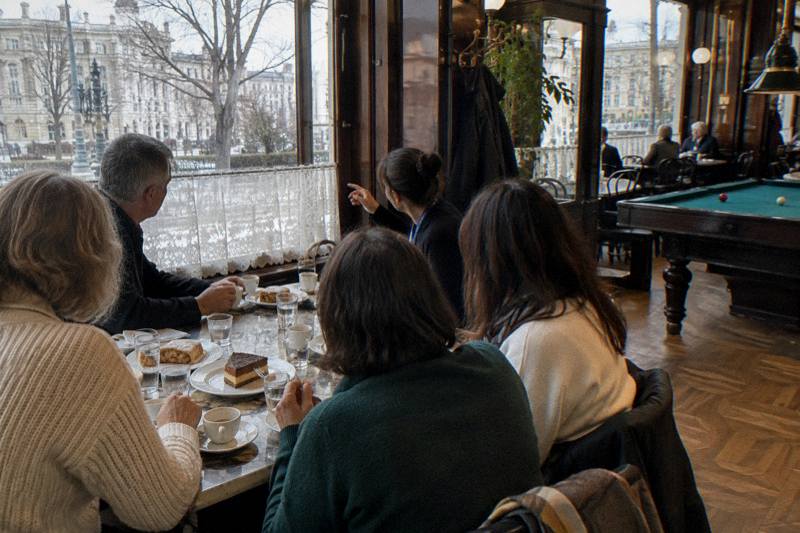
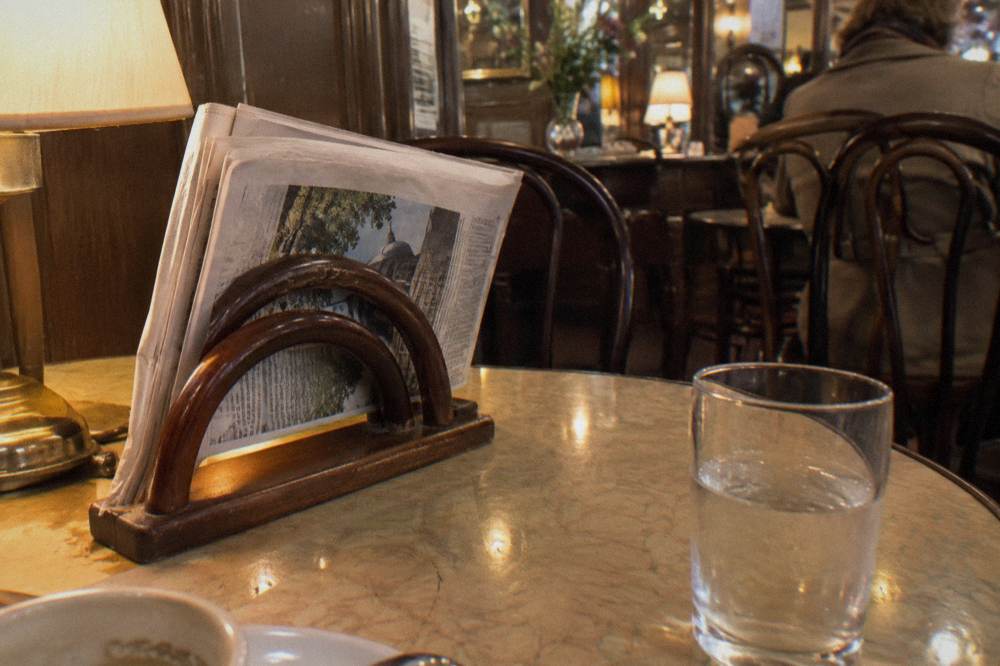
Vienna has roughly the same relationship with its coffee houses that other capitals have with their cathedrals: the institutions are old, ornate and mildly intimidating until you learn the ritual. The city's coffee house culture was placed on Austria's national inventory of intangible cultural heritage in 2011, and it remains listed, so the marble, the newspapers on wooden sticks and the glass of water that arrives with every Melange are officially part of the national estate rather than a museum reconstruction.
The shortlist almost every traveller builds looks the same: Cafe Central, Café Sperl, Café Landtmann, Demel and Hawelka. Those five names are the subject of this guide, compared on the three things that actually decide your visit, which are the queue you will stand in, the price you will pay and the atmosphere you get in return. One of them is currently closed for renovation, which changes the arithmetic considerably, and the details below reflect how things stand now. If Café Central is the one you came for, our explanation of why Café Central draws the crowds in Vienna covers the renovation closure and the pop-up filling in for it.
Prices here are in euros and drawn from 2026 menu reports for the named houses; menus move, so treat every figure as "around" and check the menu on arrival. Tour prices, where mentioned, are in US dollars exactly as the operator lists them.
Which Is The Best Coffee House In Vienna?
There is no single best, because the five headline houses serve different purposes: Landtmann for a classic sit-down with reliable service and reservations, Sperl for the worn-in, workmanlike original, Demel for cake-first counter culture, Hawelka for evening character, and Central, once it reopens, for the grand show. A Melange clusters around 6 to 7 euros at all of them, so price rarely separates them.
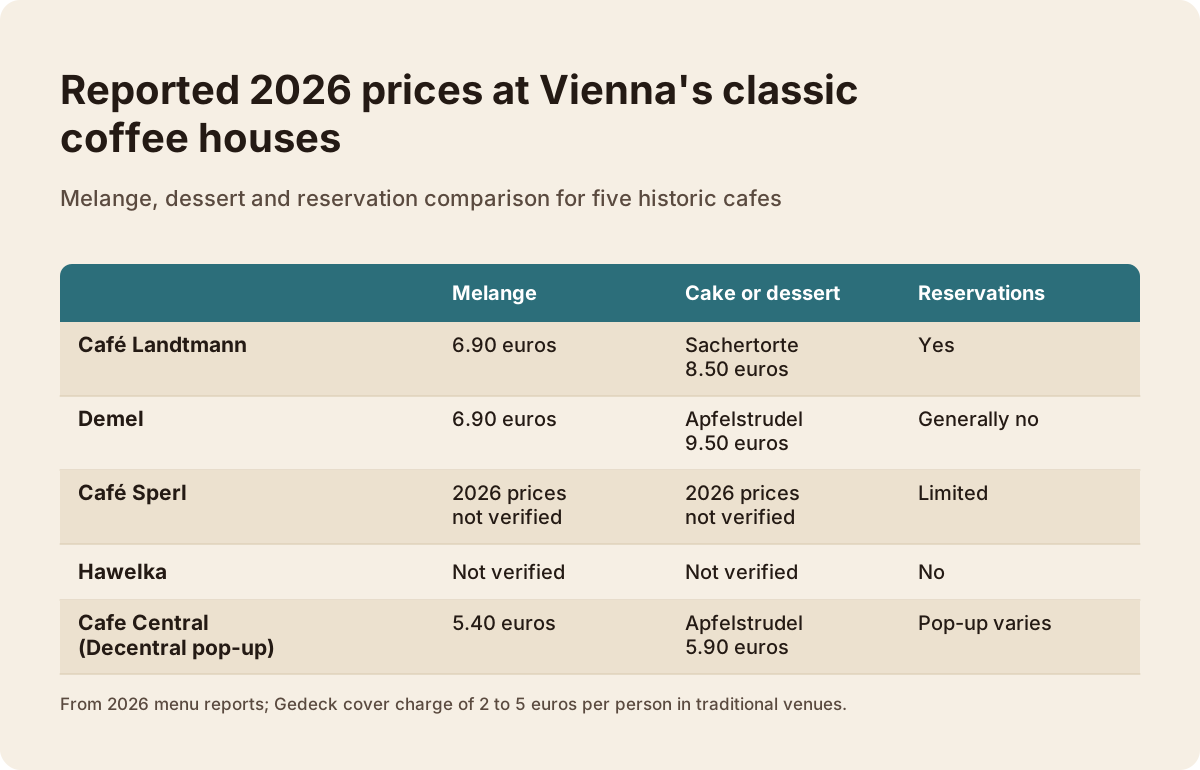
The honest starting point is that "best" in Vienna depends on the hour and the mission. Landtmann, on the Ringstrasse near the Burgtheater, is the professional's choice: it takes reservations, which the others mostly do not, and its menu lists a Melange at 6.90 euros, a Sachertorte slice at 8.50 euros and Kaiserschmarrn at 15.70 euros. Demel, behind the Hofburg, is a confectionery first and a cafe second; its prices put a Melange at 6.90 euros, Sachertorte at 8.50 euros and Apfelstrudel at 9.50 euros, and it generally works without reservations, which means you queue and take what opens up.
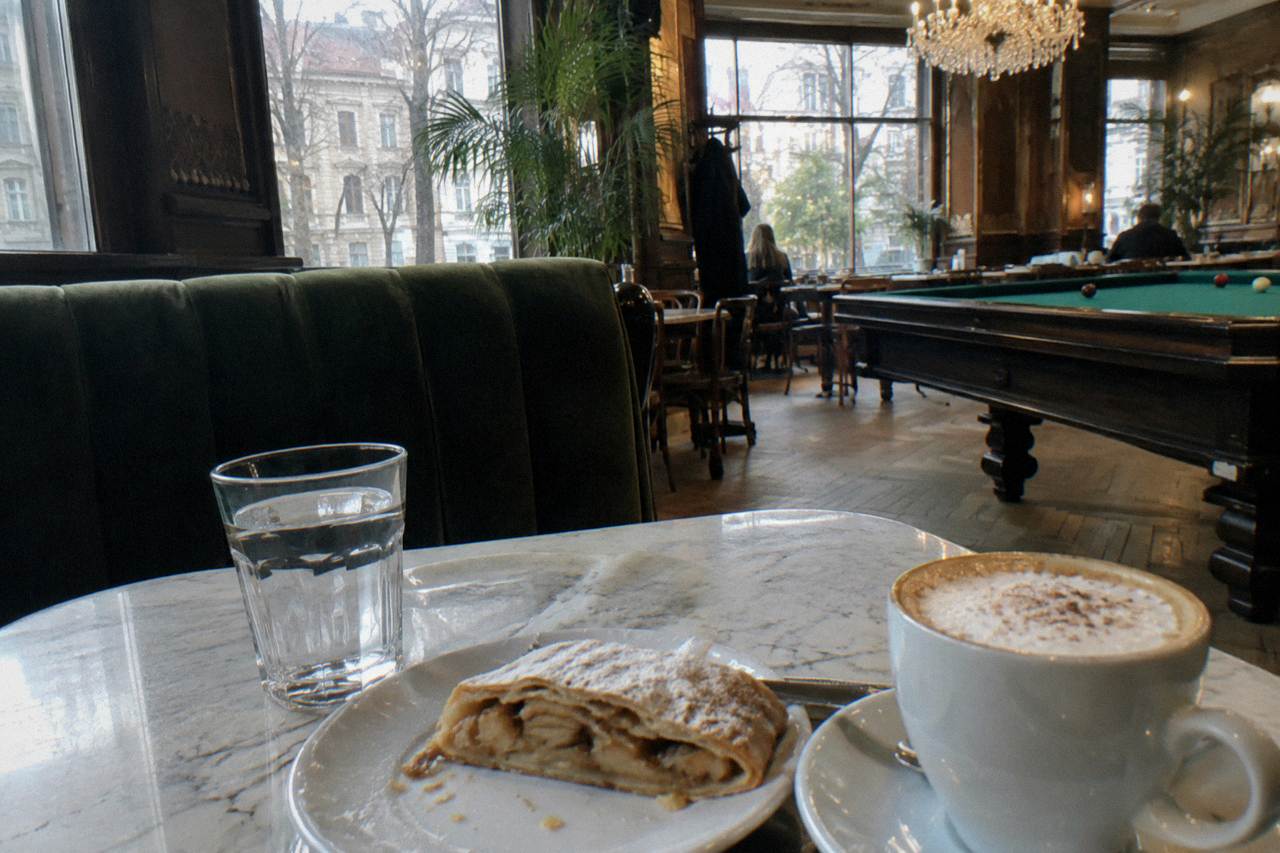
Sperl, near the Naschmarkt end of Mariahilfer Strasse, is the one regulars defend hardest, all bentwood chairs, red velvet and billiard tables, with the patina of a working cafe rather than a salon. Check the menu on site rather than trusting older figures circulating online. Hawelka, in the Innere Stadt, is the artists' institution, famous for its dark, smoky-souled room and its Buchteln, and it earns its reputation in the evening rather than at breakfast. For a deeper dive into the whole institution, read the companion Vienna coffee house culture guide.
What none of these houses will give you is a quick transaction. The coffee house contract, the reason the culture earned its heritage listing, is that the table is yours for hours. Waiters are not being rude; they are honouring the custom that you leave when you are ready. Anyone expecting fast-casual pacing will be frustrated, and anyone who surrenders to it will understand the city a little better by the second Melange.
| Coffee house | Character | Reservations | Reported 2026 prices |
|---|---|---|---|
| Café Landtmann | Grand Ringstrasse classic, theatre crowd | Yes | Melange 6.90 euros, Sachertorte 8.50 euros, Kaiserschmarrn 15.70 euros |
| Demel | Confectionery and counter service behind the Hofburg | Generally no | Melange 6.90 euros, Sachertorte 8.50 euros, Apfelstrudel 9.50 euros |
| Café Sperl | Worn-in original with billiard tables | Limited | Check the menu |
| Hawelka | Dark, artistic, evening institution | No | Check the menu |
| Cafe Central | Closed for renovation, pop-up Decentral at Freyung 3 | Pop-up varies | Decentral: Melange reported 5.40 euros, Apfelstrudel 5.90 euros |
Is Cafe Central Open In 2026?
No. Cafe Central, in the Palais Ferstel at Herrengasse 14, has been closed for major renovation since 16 March 2026, with reopening planned for winter 2026. In the meantime it operates a pop-up, Decentral, at Freyung 3, open daily from around 08:30 to 20:00, with a Melange at 5.40 euros and Apfelstrudel at 5.90 euros.
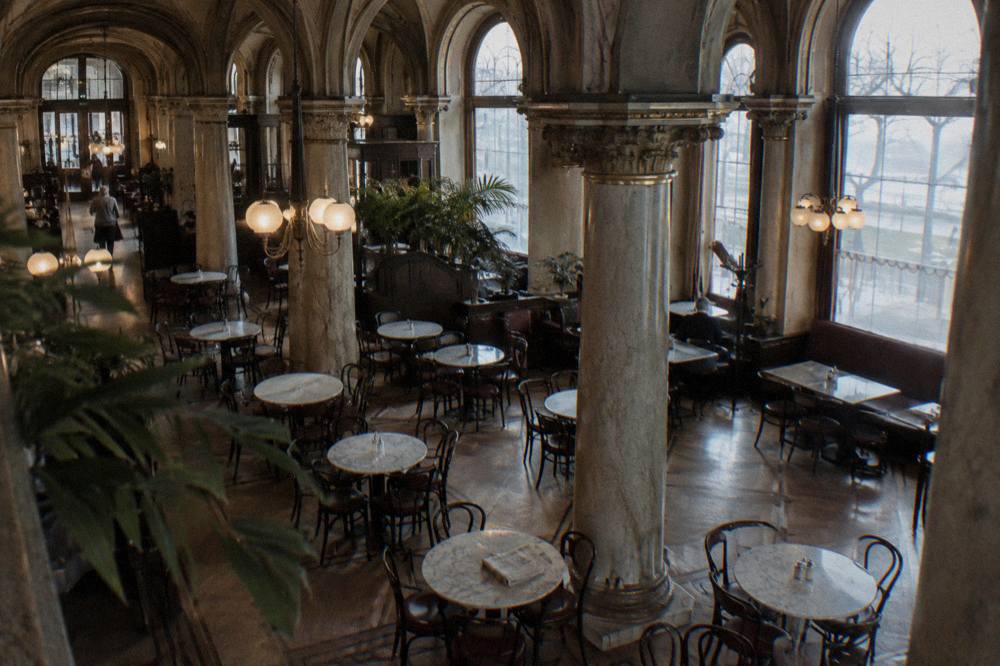
This is the single most important piece of planning news for the Vienna cafe shortlist, because Central is the house most itineraries are built around, the one whose vaulted arches and chess-playing legend appear in every photo essay. Anyone arriving in 2026 expecting the full Palais Ferstel experience will instead find scaffolding and a redirection. The pop-up at Freyung, a short walk away, carries the name and the pastry standards, and its reported prices are actually the lowest of the named houses, but it is not the grand room, and it is described in reporting as an interim operation with hours that should be confirmed on the cafe's own site before you go.
The reopening is planned for winter 2026, which in practice means a date somewhere in November or December, and the word "planned" is doing real work in that sentence. Major renovations of listed interiors slip, and the sensible move is to check the cafe's own channels close to your travel date rather than trusting a booking or a blog post written earlier in the year. If Central is the whole reason for your cafe day, build a fallback now.
The fallback is not a consolation prize. With Central's room out of action, the queue pressure that Central used to absorb has redistributed toward Demel and Landtmann, which is one more reason to arrive early or late rather than mid-morning. The rest of the shortlist is unaffected: Sperl, Landtmann, Demel and Hawelka are all reported as operating normally through 2026, with no verified closures or changes beyond the usual seasonal rhythm. For readers weighing the two great cake institutions against each other, the Sachertorte or Demel comparison covers the Original-versus-rival torte question in detail.
| Status question | Central's situation | What it means for your plan |
|---|---|---|
| Main room at Herrengasse 14 | Closed since 16 March 2026 for major renovation | Do not build an itinerary around the grand room |
| Reopening | Planned for winter 2026, reported as November to December | Confirm on the cafe's own site close to travel |
| Interim option | Pop-up Decentral at Freyung 3, reported daily around 08:30 to 20:00 | Short walk away, lower reported prices |
| Queue effect | Pressure redistributed to Demel and Landtmann | Arrive early or late rather than mid-morning |
What Does A Coffee House Visit Cost In Vienna?
Expect around 6 to 7 euros for a Melange and around 8.50 to 11.50 euros for a slice of Sachertorte at the classic houses, based on September and October 2026 menu reports: Landtmann and Demel list the Melange at 6.90 euros, Decentral at 5.40 euros, and an Original Sacher slice at 11.50 euros. Add a Gedeck cover charge of 2 to 5 euros per person in traditional venues, listed on the menu.
The drink itself is rarely the budget problem; the cake stack is. Melange prices at the classic houses, Landtmann, Museum and Schwarzenberg among them, cluster around 6.90 euros, so a coffee-only visit costs about the same wherever you sit. The spread opens at the pastry counter. Demel's Sachertorte at 8.50 euros and Landtmann's at 8.50 euros sit at one end, and the Hotel Sacher cafe's Original slice, at 11.50 euros with a range of roughly 8.90 to 10.50 euros, sits at the other. Apfelstrudel runs from 5.90 euros at the Decentral pop-up to 9.50 euros at Demel, and Kaiserschmarrn, the shredded pancake that doubles as lunch, runs 12.90 euros at Demel and 15.70 euros at Landtmann.
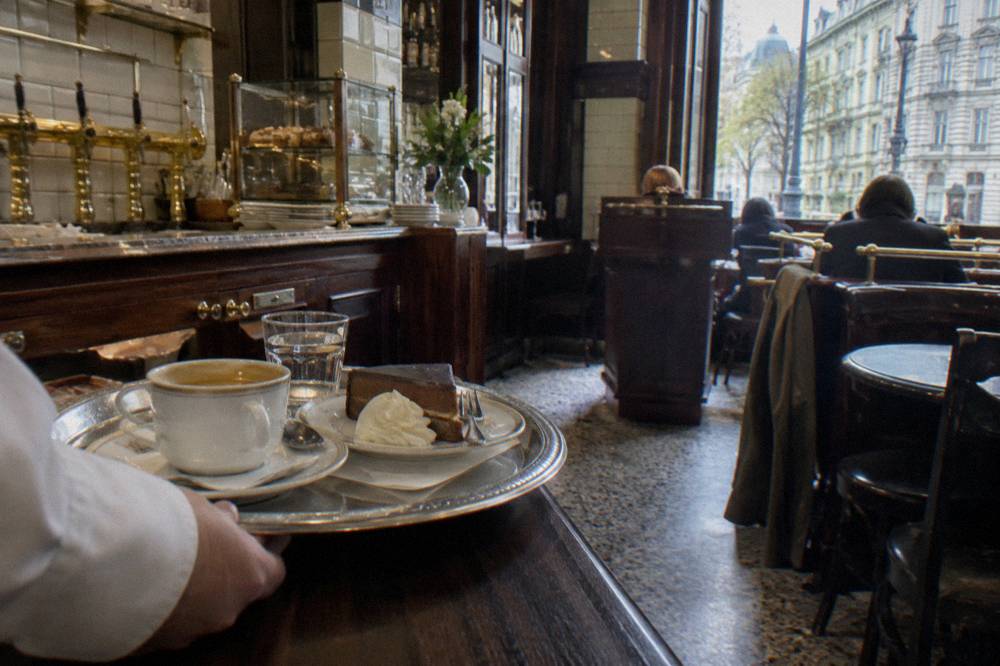
Two small charges catch visitors out. The Gedeck, a cover of 2 to 5 euros per person for bread, butter and table setting, is common in traditional venues and is only legal if it is printed on the menu, so read the back page before ordering. And tap water is not automatically free in Vienna: a 2026 Arbeiterkammer sample of 30 Vienna venues found 23 charged for it, often 0.80 to 3.60 euros per half litre, where the price is listed on the menu. The coffee house ritual does include a small glass of water with your coffee, but a separate carafe is a different matter. Tipping is 5 to 10 percent in restaurants and a simple round-up or 0.50 to 1 euro in cafes, with no obligation beyond good service.
| Menu item | Lowest reported 2026 price | Highest reported 2026 price | Where |
|---|---|---|---|
| Melange | 5.40 euros | 6.90 euros | Decentral at the low end; Landtmann, Demel, Museum and Schwarzenberg at 6.90 euros |
| Sachertorte slice | 8.50 euros | 11.50 euros | Landtmann and Demel at 8.50 euros; Hotel Sacher cafe Original at 11.50 euros |
| Apfelstrudel | 5.90 euros | 9.50 euros | Decentral at the low end; Demel at 9.50 euros |
| Kaiserschmarrn | 12.90 euros | 15.70 euros | Demel at 12.90 euros; Landtmann at 15.70 euros |
| Gedeck cover charge | 2 euros | 5 euros | Traditional venues, must be listed on the menu |
For travellers who would rather sample several houses in one go, a guided walk changes the math on the cake stack: one booking covers multiple stops, tastings and the stories behind them.
Each of those three runs a different length and a different emphasis, and the operator's booking page for each lists the current price, meeting point and what is included. If a self-guided day appeals more, the coffee-only budget at one house is modest; it is the second and third cake stop that turns a 10 euro morning into a 30 euro one, which is exactly the behaviour the cake guides on this site exist to encourage in moderation.
Where Do Locals Actually Drink Coffee In Vienna?
Locals divide by purpose: Sperl and Hawelka for long, unhurried sitting; Landtmann for pre-theatre and business meetings; and the museum and district cafes, away from the five headline names, for everyday drinking. A Melange at the classic houses costs around 6.90 euros, and the everyday neighborhood cafes sit below that.
The tourist circuit and the local one overlap only at the edges. Sperl keeps its local loyalty because it never dressed up for anyone: it is a cafe you can sit in for three hours with one coffee and a newspaper, and nobody will move you along. Hawelka earns the same loyalty in the evening, when its dim room fills with a mix of students, older regulars and the after-theatre crowd. Landtmann's position by the Burgtheater makes it the interval-and-aftershow institution, and its reservation policy reflects that rhythm. More of these guides are collected on Vienna Food Tours.
For everyday coffee, Viennese residents largely use the cafes the guidebooks skip: the ones around the university, in Wieden and Neubau, and the espresso-bar generation that has grown up alongside the classic houses. The Vienna Coffee Festival, which ran 11 to 13 September 2026 at Marx Halle, showcased exactly that split, with the classic houses on one side and the specialty roasters on the other; the 2027 edition is scheduled for 10 to 12 September 2027 at the same venue, with admission reported around 14 to 20 euros for the 2026 edition. None of that displaces the Melange as the city's default order; it simply means the coffee landscape is wider than the heritage room suggests.
One habit worth importing: the coffee house is a workspace, legally and culturally. The heritage listing exists partly because of this, the paid-for table that functions as living room, office and reading room. Order, sit, read, work, order again when it suits you, and pay when you leave. Visitors who treat the visit as a transaction get less out of it than visitors who treat it as a rental.
Is A Guided Coffee House Tour Worth Booking?
A guided coffee walk makes sense if you want several houses, the stories behind them and someone else handling the ordering, in one afternoon of about 2.5 to 3.5 hours; the three coffee-focused walks on this site run in that window, with prices and inclusions on each booking page. It makes less sense if you want one long sitting in a single grand room, which no tour can improve on.
The value case rests on pacing and access to context. A first-time visitor walking Cafe Central's successor options, Sperl and Demel unaided will get the marble and the cake but miss the layer cake of history: which house invented which torte, why the water glass matters, what the newspaper sticks are for, and why the waiter's apparent indifference is a courtesy. A guide compresses that into a single route. The Vienna Coffeehouse Tour, Pastries, Bites & Local Stories runs about 3 hours 30 minutes and, per its listing, pairs the tastings with local stories at each stop, with the current price and meeting point shown on the booking page.
The Guided Viennese Coffee-House Tour covers similar ground in about 3 hours, and the 2.5-Hour Viennese Coffee, Cake, and Chocolate Tour is the short, sweet-tilted option. On any of them, check the inclusions on the booking page before you assume cake is included; tasting counts and stops vary by listing, and the listing is the source of truth.
| Coffee-focused walk | Length | Emphasis | Where details live |
|---|---|---|---|
| Vienna Coffeehouse Tour: Pastries, Bites & Local Stories | 3 hours 30 minutes | Tastings paired with local stories at each stop | Price and meeting point on the booking page |
| Guided Viennese Coffee-House Tour | 3 hours | Cafe-to-cafe guided route through the classic houses | Booking page |
| Vienna: 2.5-Hour Viennese Coffee, Cake, and Chocolate Tour | 2.5 hours | Short, cake-and-chocolate tilted route | Booking page |
There is also a hybrid worth considering. The longer Vienna Food Tour, Coffeehouses, Markets, Lunch & Street Food, at 5 hours 30 minutes, folds coffee house stops into a full eating day that also takes in market and street food stops, and its listing notes a vegetarian lunch option; the price is on the booking page. Travelers with one day and broad appetites often get more from that format than from a cafe-only walk. Message the operator ahead of booking about vegan or gluten-free needs, as no coffee tour listing states them.
When Are The Queues Shortest At Vienna's Famous Cafes?
Arrive before 10:00 or after 16:00. The 2026 guidance on the two great torte houses is consistent: queues at Hotel Sacher run longer, especially in the afternoon, while Demel's are typically shorter, and early or post-16:00 arrivals are the recommended play. Demel generally takes no reservations, so the queue is the only mechanism.
Queue reality in Vienna is concentrated in two places, the Hotel Sacher cafe and Demel, and both are cake pilgrimages more than coffee stops. The Sachertorte legal distinction still stands: Hotel Sacher holds the "Original", a sealed torte with two apricot layers, while Demel serves its rival version with a triangular seal and one layer, and partisans of each will tell you the other is the tourist one. The queue difference between them is the practical decider, and 2026 guidance recommends the early window or the late afternoon at both. Central's closure, covered earlier, has added pressure to the remaining names, which strengthens the case for the off-peak windows.
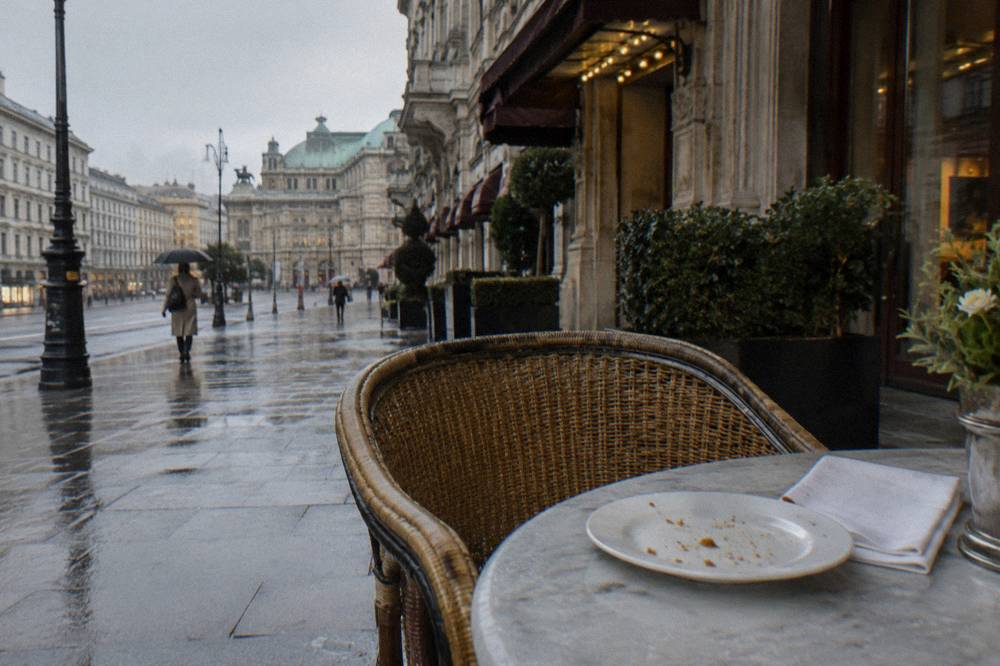
The other three houses on this guide's shortlist are queue-light by comparison. Landtmann takes reservations, which removes the problem entirely; book for a mid-morning or pre-theatre slot and walk straight in. Sperl and Hawelka run on first-come seating, but their rooms are large and their clientele local, so waits, when they happen, are short. A rainy Saturday at 11:30 is the worst case everywhere; a Tuesday at 09:00 is close to a guarantee of your pick of tables, with the caveat that nothing about crowds can be promised in absolute terms.
| House | Typical queue situation | Best play |
|---|---|---|
| Hotel Sacher cafe | Longer queues, especially afternoons | Arrive early or after 16:00 |
| Demel | Typically shorter queues, no reservations generally | Early or late afternoon window |
| Café Landtmann | Reservations accepted | Book a mid-morning or pre-theatre slot |
| Café Sperl | First-come seating, usually short waits | Turn up at opening |
| Hawelka | First-come seating, fills in the evening | Go early evening or off-peak |
One structural tip: the Saturday flea market at the Naschmarkt runs from about 6:30 to 15:00, and Sperl sits a short walk from that end of the market strip. A Saturday plan of flea market at opening followed by an early-afternoon Sperl sitting dodges both the market's midday crush and the cafe's, and it is the kind of morning that leaves you understanding why the coffee house earned its heritage listing in the first place.
How Do You Order Like A Regular In A Viennese Cafe?
Order by the drink name, keep the table as long as you like, and settle up by naming your total with a round-up included: the Melange is the default order, tipping is a round-up or 0.50 to 1 euro in cafes, and 5 to 10 percent in restaurants, and the waiter will not bring the bill until you ask for it.
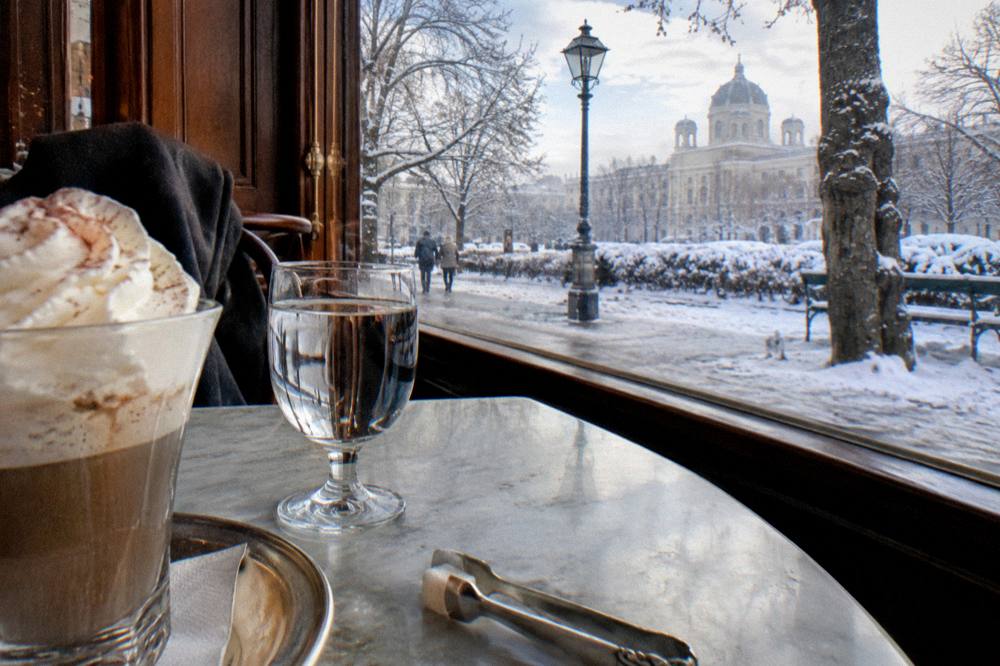
The vocabulary is short. A Melange is the house standard, espresso with steamed milk, similar to a flat white but served in a glass with that obligatory water on the side. A kleiner Brauner or grosser Brauner is an espresso with a jug of cream on the side; an Einspaenner is coffee with whipped cream in a glass handled like a to-go relic of the carriage era. Ordering any of these by name, rather than pointing at the menu, is the single fastest way to be treated as someone who knows the room. The full drink landscape, including what a Melange should cost, is covered in the guide to coffee prices in Vienna.
| Order | What it is | When to choose it |
|---|---|---|
| Melange | Espresso with steamed milk, served in a glass with water on the side | The house default, works everywhere |
| Kleiner or grosser Brauner | Espresso with a jug of cream on the side | When you want to control the milk yourself |
| Einspaenner | Coffee with whipped cream in a tall glass | The historic carriage-era classic |
| Apfelstrudel | Warm apple strudel, reported 5.90 to 9.50 euros in 2026 | The pastry order that needs no explanation |
Paying is the part that surprises. The bill comes only on request; catch the waiter's eye and ask for the bill, or "zahlen, bitte". When you pay, say the total you want to hand over, the "Stimmt so" convention, or the rounded figure including the tip, rather than leaving coins on the table. Card acceptance is near-universal at the big houses but not guaranteed at smaller neighborhood cafes, so carry some euros. Smoking has been banned indoors across Austrian gastronomy since 1 November 2019, so the storied smokiness of rooms like Hawelka's is now a description of the decor and the patina, not the air.
Dress, finally, is not the barrier people fear. The grand houses expect you to look like you did not come straight from a stadium, but there is no jacket rule and nobody inspects shoes. What the houses quietly judge is behaviour at the pace of the room: loud phone calls, standing over tables waiting for them to clear, and photographing other guests' cakes at close range. Sit, read, order again when it suits you. The cafe was placed on the national heritage inventory for exactly that rhythm, and it is the cheapest luxury in the city once you are inside it.
For readers planning a wider food day around the cafes, the longer combined walk folds coffee houses, markets and street food into a single 5 hour 30 minute route, and there is more on the format in the private food walk guide. Whichever way you build the day, the coffee house leg is the one part of Vienna that rewards doing less rather than more.
Common Questions About Vienna Coffee Houses
Which Is The Best Coffee House In Vienna?
There is no single best. Landtmann suits a classic sit-down with reservations, Sperl the worn-in original, Demel cake-first counter culture, Hawelka the evening room, and Cafe Central, currently closed until a planned winter 2026 reopening, the grand show. Price does not separate them much: a Melange runs around 6 to 7 euros at the classic houses.
Is Cafe Central Open In 2026?
No. It has been closed for major renovation since 16 March 2026, with a reopening planned for winter 2026. A pop-up, Decentral, operates at Freyung 3, reported daily around 08:30 to 20:00, with a Melange at 5.40 euros and Apfelstrudel at 5.90 euros. Confirm details on the cafe's own site.
How Much Is A Melange In Vienna's Classic Coffee Houses?
Around 6.90 euros at Landtmann, Demel, Museum and Schwarzenberg, and 5.40 euros at the Decentral pop-up. Menus change, so check the printed menu on arrival.
Which Is Better, Hotel Sacher Or Demel For Sachertorte?
Hotel Sacher holds the "Original" sealed torte with two apricot layers; Demel serves its rival version with a triangular seal and one layer. Sacher's queues run longer, especially in the afternoon, while Demel's are typically shorter. Arrive early or after 16:00 at either.
Do You Need To Tip In A Viennese Coffee House?
Round up or leave 0.50 to 1 euro; restaurants run 5 to 10 percent. Say the total you want to pay when settling the bill. Tipping is expected for good service but not obligatory.
Can You Sit For Hours In A Vienna Coffee House?
Yes, and that is the point. The table is yours until you ask for the bill, a custom central to the culture's recognition on Austria's national inventory of intangible cultural heritage in 2011.