Vienna Markets Beyond Naschmarkt: Karmelitermarkt, Brunnenmarkt And More
Naschmarkt gets the crowds, but three other Vienna markets carry the city's daily food shopping: Karmelitermarkt in the second district, Brunnenmarkt in Ottakring, and Viktor-Adler-Markt in Favoriten. Here is what each one does best, when it is open, and how a guided tasting walk fits around them.
Short answer
Vienna's main markets beyond Naschmarkt are Karmelitermarkt, Brunnenmarkt and Viktor-Adler-Markt. Sales stands may open Monday to Friday until 21:00 and Saturdays until 18:00, and every stand must be open Tuesday to Friday between 15:00 and 18:00. No guided tasting is sold at these three markets, so pair a market visit with a Naschmarkt food walk.
What Markets Beyond Naschmarkt Are Worth Visiting In Vienna?
Three Vienna markets reward a visit beyond the famous Naschmarkt: Karmelitermarkt in Leopoldstadt, Brunnenmarkt along the Thaliastrasse in Ottakring, and Viktor-Adler-Markt in Favoriten. Each is a working food market where locals actually shop, each has its own district character, and none charges an entrance fee or requires a booking to browse.
Naschmarkt is the market most visitors know, and it is the one with the biggest mix of tourists, restaurants and souvenir-adjacent stalls. Our Vienna Food Tours coverage starts there because that is where the guided tastings are sold, but the city runs a wider market system, and the three markets in this guide show a version of Vienna that the first-time itinerary usually misses.
The short version of the differences: Karmelitermarkt is the compact, gentrifying neighbourhood market with a strong Friday and Saturday farmers' component and a cluster of good cafés around it. Brunnenmarkt is the longest street market in Vienna, stretching roughly 160 to 170 stalls along Ottakring's main drag, busy and multicultural, and fully car-free since the 2005 to 2010 renovation. Viktor-Ader-Markt's proper name, Viktor-Adler-Markt, marks the "Platzl" in Favoriten, the most working-class and least touristy of the three, with a producers' row that trades mornings only.
| Market | District | Character | Best for |
|---|---|---|---|
| Karmelitermarkt | 2nd, Leopoldstadt | Compact neighbourhood market, café scene, Friday and Saturday farmers' rows | A short visit paired with coffee, cheese and produce browsing |
| Brunnenmarkt | 16th, Ottakring | Longest street market in Vienna, roughly 160 to 170 stalls, car-free | Atmosphere, street-food snacks, a long unhurried walk |
| Viktor-Adler-Markt | 10th, Favoriten | Traditional "Platzl" market, strong producers' and traders' row | Mornings, meat and produce shopping, zero tourist traffic |
A note on expectations: these are markets, not attractions. They are at their most alive in the morning and in the late afternoon window when the city's market rules require every stand to be open, which we cover in the hours section below. Arrive at 14:00 on a Wednesday and you may find a market half asleep.
Why Visit Karmelitermarkt In Vienna's Second District?
Karmelitermarkt is the easiest non-Naschmarkt market to add to a first visit, because it sits inside Leopoldstadt near the Karmeliterplatz U-Bahn station and combines a small historic market square with a lively Friday and Saturday farmers' market. Official city rules let sales stands open Monday to Friday until 21:00 and Saturday until 18:00, with restaurants permitted Monday to Saturday until 23:00.
The market itself is small enough to see in twenty minutes, which is exactly its appeal. What has made Karmelitermarkt a destination in recent years is the ring of cafés, wine bars and small restaurants around the square, several of them part of the wave of revived Viennese gasthaus cooking that the food press has been writing about since 2025. A morning here feels like a neighbourhood errand with excellent coffee attached, not a sightseeing stop.
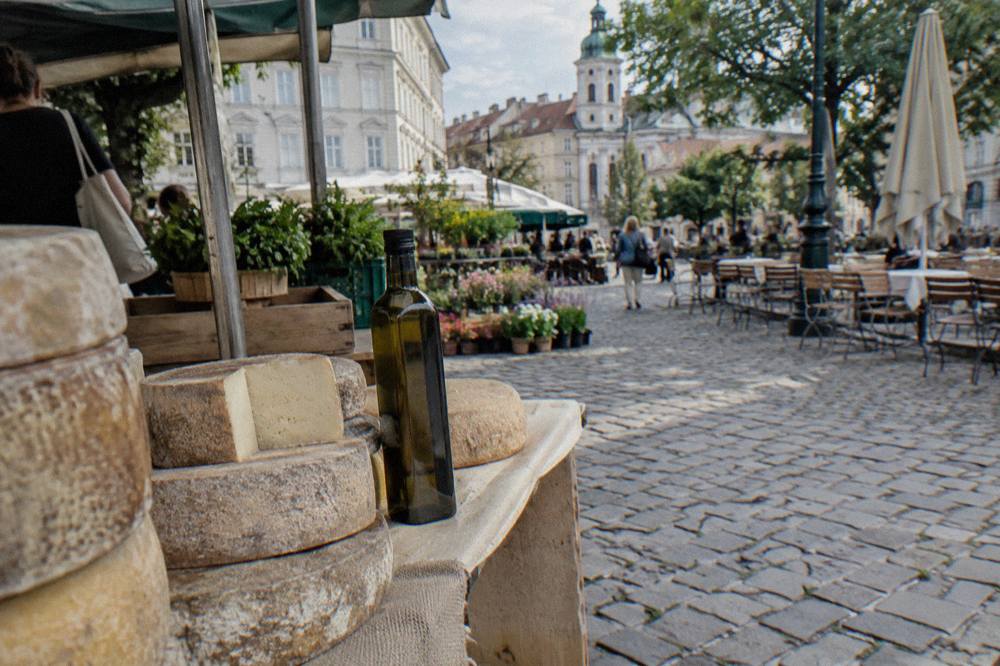
The farmers' component is the part worth timing. The city's own market page describes a large Bauernmarkt, a farmers' market, running especially Fridays and Saturdays, with regional meats, produce and other producer goods. That is when the square fills with stalls selling everything from Styrian pumpkin-seed oil to raw-milk cheese, and when the ratio of locals to visitors is at its most lopsidedly local.
One more detail from the official rulebook that shapes a visit: every stand and venue at Karmelitermarkt must be open Tuesday to Friday between 15:00 and 18:00, with the Sunday restaurant window capped at 9:00 to 19:00, per the city's market page at wien.gv.at. So an early-evening weekday visit is a safer bet than midday, and Sunday is a restaurants-only affair.
What Is Brunnenmarkt And Why Do Locals Love It?
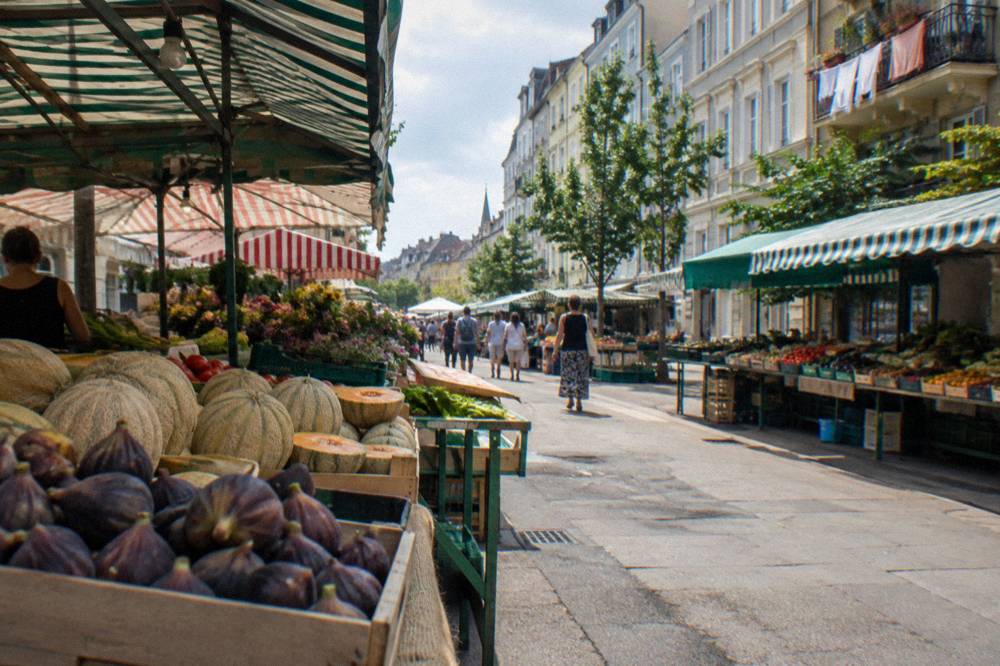
Brunnenmarkt is Vienna's longest street market, running along the Brunnengasse and Thaliastrasse in Ottakring with roughly 160 to 170 stalls in total. Guides report around 40 to 50 stalls active on a weekday and about 120 on Saturdays, and the whole stretch has been car-free since the 2005 to 2010 renovation, which turned it into a genuine promenade of food stalls.
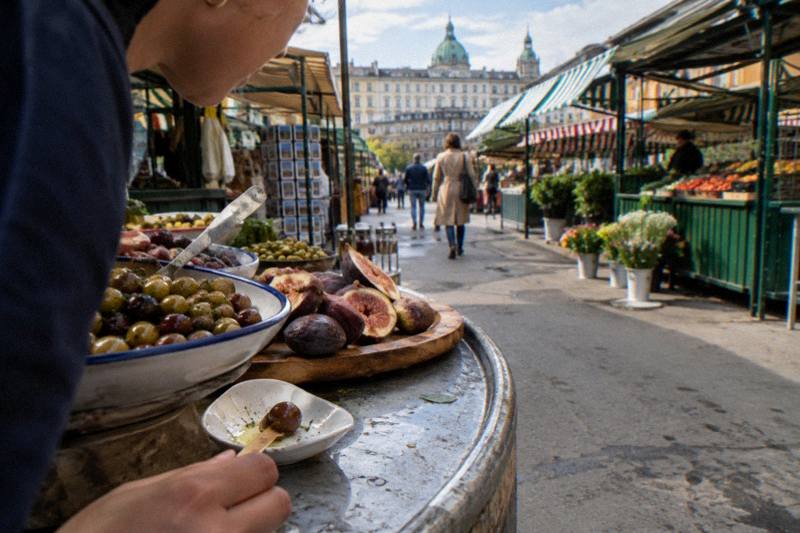
This is the market to come to for texture. Where Karmelitermarkt is polished and Viktor-Adler is gritty, Brunnenmarkt is simply busy, long and varied: fruit and vegetable stalls with prices chalked in several alphabets, cheese stands, bread, olives, herbs, and a constant flow of shoppers from one of Vienna's most mixed neighbourhoods. You walk it rather than visit it, and the walk is the point.
The car-free status matters more than it sounds. Because no traffic cuts through the market lane, the whole street functions as a public space, with café tables and snack stands spilling onto the former roadway. That also makes it the most stroller-friendly and camera-friendly of the three markets here, though it is worth remembering that this is a working shopping street, so the busiest hours are working hours.
There is no dedicated guided tasting sold at Brunnenmarkt itself, and we would not pretend otherwise. What a guided walk adds elsewhere, a local expert decoding stalls, suppliers and dishes while tastings are paid for along the route, is currently sold at Naschmarkt. If tasting with context is the goal, the honest pairing is a Brunnenmarkt browse under your own steam plus a guided Naschmarkt walk, and the format comparison later in this guide lays out those options.
For planning, treat Saturday as Brunnenmarkt's main day: the stall count roughly triples compared with a weekday, the flea-market energy of neighbouring Naschmarkt draws extra foot traffic across the district boundary, and the snack stands run at full tilt. Weekday mornings are quieter and better for photography.
What Can You Find At Viktor-Adler-Markt?
Viktor-Adler-Markt, the "Platzl" in Favoriten, is the most traditional of Vienna's big markets: a covered and open-air market with sales stands, a producers' and traders' row that trades Monday to Saturday from 6:00 to 13:00 only, and restaurants permitted until 23:00 Monday to Saturday and 9:00 to 21:00 on Sundays and holidays.
The producers' row is the distinctive part. While the general sales stands follow the city-wide maximum hours, the traders and producers at Viktor-Adler keep market-morning hours, done by early afternoon, which preserves the old rhythm of a market where restaurants and households bought the morning's catch and slaughter. Come after 14:00 and you will find the permanent stands but miss that row entirely.
Favoriten is Vienna's tenth district, the city's most populous, and it sees very little tourism. That shows in the market's character: signage in German and Turkish, butchers with queues of regulars, and prices aimed at residents rather than visitors. Of the three markets in this guide, this is the one where a few words of German and a willingness to point at what looks good go furthest.
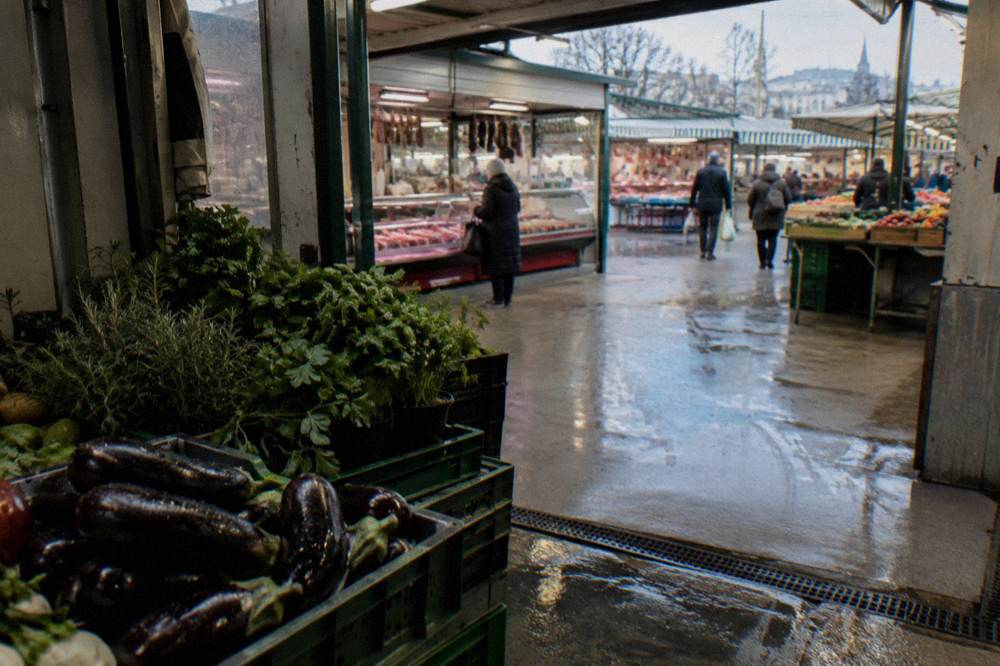
The official page for the market, wien.gv.at, confirms the same core rule that applies city-wide: all stands and venues must be open Tuesday to Friday between 15:00 and 18:00, so there is always a reliable late-afternoon window even if you sleep through the producers' morning. One recent change worth knowing: the meat producer Radatz has announced it is taking over the former Rudy's Imbiss stand location on the Platzl, so the snack options at the market are in flux, and the current lineup is best judged on the day.
When Are Vienna's Markets Open?
All three markets follow the same official maximum hours: sales stands Monday to Friday 6:00 to 21:00 and Saturday 6:00 to 18:00, with every stand required to be open Tuesday to Friday 15:00 to 18:00. Restaurants may open Monday to Saturday until 23:00, and on Sundays and holidays until 21:00, except Karmelitermarkt where the Sunday restaurant cap is 19:00.
Two practical readings of those rules. First, "maximum hours" means exactly that: individual stands choose their own hours within the window, and many close earlier, especially on Saturdays when the market thins well before the 18:00 cap. Second, the mandatory 15:00 to 18:00 window is your guarantee: whatever else happens, the market will be standing and trading in the late afternoon on a weekday.
| Hours category | Mon to Fri | Saturday | Sunday and holidays |
|---|---|---|---|
| Sales stands | 6:00 to 21:00 max | 6:00 to 18:00 max | Closed |
| Producers and traders (Viktor-Adler) | 6:00 to 13:00 | 6:00 to 13:00 | Closed |
| Restaurants at Karmelitermarkt | 6:00 to 23:00 max | 6:00 to 23:00 max | 9:00 to 19:00 |
| Restaurants at Viktor-Adler-Markt | 6:00 to 23:00 max | 6:00 to 23:00 max | 9:00 to 21:00 |
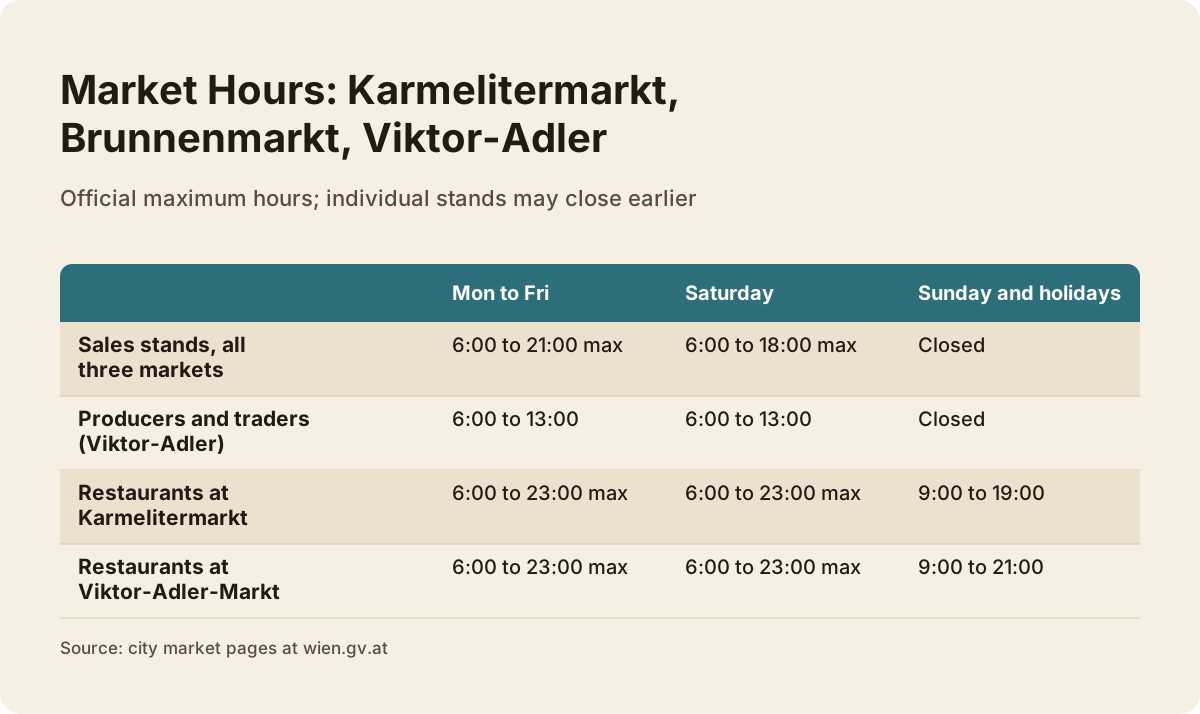
The source for all of these figures is the City of Vienna's market pages, principally the Naschmarkt page, which states the city-wide framework, with the district pages carrying each market's specifics. Sunday's retail closure rule applies to the surrounding shops too, so a Sunday market visit is a restaurant-and-ambience trip, not a shopping one.
Which Vienna Market Is Best For Your Visit?
Choose Karmelitermarkt for the easiest visit with the best coffee attached, Brunnenmarkt for the longest and most atmospheric walk, and Viktor-Adler-Markt for a morning inside a market locals actually shop with almost no visitors. If you only have time for one and food is the reason you are in Vienna, Karmelitermarkt on a Friday or Saturday morning is the strongest single choice.
The tie-breaker is usually time of day. If you are a late riser, Karmelitermarkt forgives you: the mandatory afternoon window keeps it alive, and the café scene around the square runs all day. If you are an early riser, Viktor-Adler rewards you, but only before 13:00. Brunnenmarkt is the flexible one, though its stall count drops sharply outside Saturday.
| If you want... | Go to | When | Why |
|---|---|---|---|
| Coffee plus a market browse | Karmelitermarkt | Any morning, or 15:00 to 18:00 weekday | Café ring around a compact square |
| The biggest, busiest market scene | Brunnenmarkt | Saturday | Stall count roughly triples versus weekdays |
| Old-school producer trading | Viktor-Adler-Markt | Monday to Saturday before 13:00 | Producers' row closes at 13:00 sharp |
| A guided tasting with a local expert | Naschmarkt | Per the operator's schedule | No tasting walk is sold at the other three |
It is also fine to skip one. A first-time visitor with two market mornings available will get more from Karmelitermarkt plus a Naschmarkt walk than from racing across the city to all three. The districts are far apart, and Vienna's transit is good but not instantaneous. Our guide to planning three food days in Vienna suggests how to slot markets into a wider eating itinerary without spending the trip on platforms.
Can You Take A Guided Tasting At These Markets?
No guided tasting walk is sold at Karmelitermarkt, Brunnenmarkt or Viktor-Adler-Markt; the bookable market walks in Vienna all operate at Naschmarkt. The honest pairing is a self-guided browse at one of the three neighbourhood markets plus a guided Naschmarkt tasting walk, which covers the market-stall context, the tastings and the coffee-house stops that a free-form visit cannot. If sampling at the stalls leaves you wanting to cook the food yourself, the guide to Vienna cooking classes, from strudel to schnitzel explains what a session covers and how to pick the right workshop for your trip.
That is a real gap, not a sales line. A guided walk buys three things: someone who can explain what a stall sells and why it exists, tastings arranged in advance so you are not guessing at counters with a phrasebook, and a route that connects market eating to the coffee-house and sausage-stand traditions that make Vienna's food culture coherent. Browsing Karmelitermarkt alone gives you the first half of that and none of the second.
The closest bookable options all start at Naschmarkt. Peters Naschmarkt Enjoyment Walk, a two-hour guided walk, is the shortest and most market-focused of them, built around the stalls rather than a full meal. If you want the walk to double as lunch, the Naschmarkt guided food tour and the Naschmarkt food tasting tour formats, at two hours and two and a half hours respectively, add tastings to the route. What each includes in detail, meeting point and inclusions, is stated on the operator's booking page, and it is worth checking there before you commit, since tasting counts and stops are set by the operator, not by us.
A reasonable day combines both: a morning at Karmelitermarkt or Brunnenmarkt under your own steam, a pause in the middle of the day, and a late-afternoon or early-evening guided Naschmarkt walk, which lands neatly inside the mandatory market opening window. Our Naschmarkt food guide covers what to eat at the stalls themselves.
How Do You Get To Each Market?
All three markets sit on the U-Bahn or tram network within about 20 minutes of the centre: Karmelitermarkt at Karmeliterplatz on the U2, Brunnenmarkt along the Thaliastrasse served by the U6 and trams, and Viktor-Adler-Markt at Viktor-Adler-Platz on the U1. A single digital ticket costs 3.00 euros, with paper tickets slightly more.
Those transit facts come from standard network maps and the fare sheet, and the fares are worth knowing because they are flat: the distance to Favoriten costs the same as two stops in the centre. The Vienna City Card, at 19 euros for 24 hours, bundles transport with discounts and may suit a day that combines markets with paid sights, though for a single market round trip the single or 24-hour ticket is cheaper.
| Market | Nearest stations | Rough time from Stephansplatz | Notes |
|---|---|---|---|
| Karmelitermarkt | Karmeliterplatz (U2) | About 10 minutes | Shortest hop from the centre |
| Brunnenmarkt | Thaliastrasse (U6), trams on Thaliastrasse | About 20 minutes | Walk the market length, end at one end |
| Viktor-Adler-Markt | Viktor-Adler-Platz (U1) | About 15 minutes | Go before 13:00 for the producers' row |
One construction caveat: Vienna's transit map is carrying diversions, including work that has affected the S-Bahn core line and various tram routes, so a live journey check on the day beats any printed advice. Allow more time on Saturdays, when market-bound crowds add their own friction.
What Should You Know Before You Go?
Bring cash in small euros, go in the morning or in the 15:00 to 18:00 guaranteed window, expect Sunday to be restaurants-only, and know that tipping 5 to 10 percent and a possible Gedeck cover charge of 2 to 5 euros apply if you sit down to eat at a market restaurant. Prices at stalls are per item, and haggling is not part of the culture.
Cash still matters at Austrian markets more than visitors expect. Card acceptance has spread, but plenty of stallholders, especially at Viktor-Adler and the weekday Brunnenmarkt, prefer notes, and the denomination matters: a 50-euro note for a 3-euro bunch of radishes will not make friends. Small bills solve most market interactions before they start.
If you sit down at a restaurant attached to a market, the standard restaurant rules apply: tipping 5 to 10 percent by naming the total you want to pay, and a Gedeck cover charge of 2 to 5 euros per person in traditional venues, legal only if it is printed on the menu. Tap water is not automatically free either; a sample by the Austrian Chamber of Labour found 23 of 30 Vienna venues charged for it, commonly 0.80 to 3.60 euros per half litre, so check the menu rather than assuming. Our restaurant etiquette guide covers this in full.
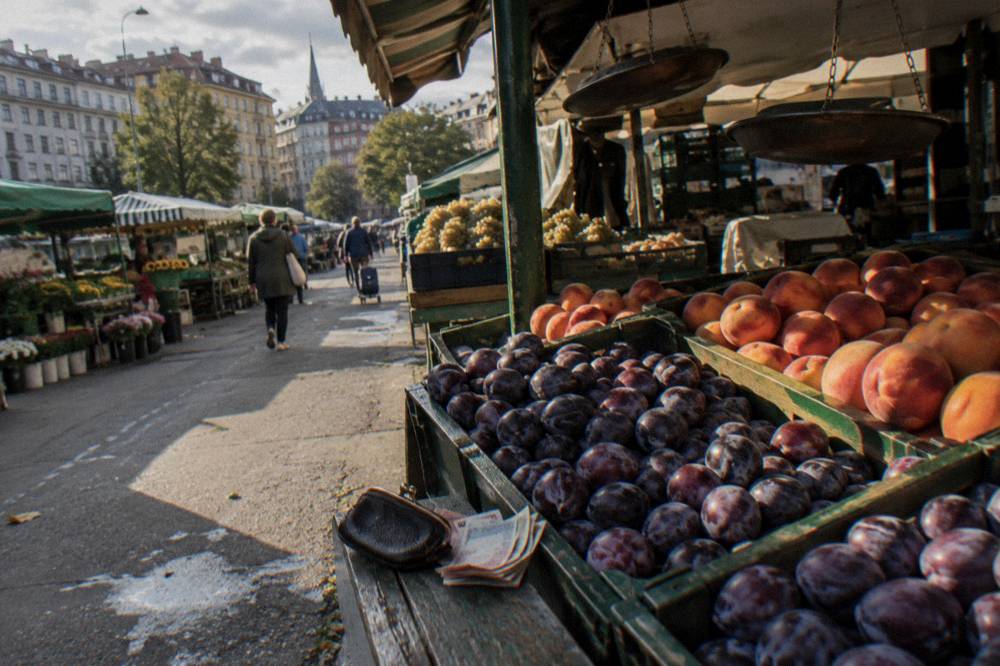
For timing your trip around market life generally, the best time to visit Vienna for food matters: the Saturday flea market beside Naschmarkt, the seasonal Christmas markets, and harvest-timed wine events all shift the market calendar through the year. A Saturday in late November, for instance, layers the regular markets over the start of the Christmas market season, fifteen markets and 814 stalls per the city's announcement, which is either a feast or a crowd depending on your temperament.
How Do These Markets Compare For A Food Lover?
For pure food interest per minute spent, Karmelitermarkt wins on quality and café pairing, Brunnenmarkt wins on variety and energy, and Viktor-Adler-Markt wins on authenticity and price, while Naschmarkt remains the only one with a guided tasting infrastructure. A food-focused visitor gets the most from pairing one neighbourhood market with one guided Naschmarkt walk across the same trip.
The reason the pairing works is that the two halves answer different questions. The neighbourhood markets answer "where does Vienna actually shop", and they answer it loudly and cheaply. The guided walk answers "what does all this mean", from the Gemischter Satz wine tradition to why the coffee house is heritage-listed, and it does so with tastings already arranged. Neither substitutes for the other, and pretending a self-guided Brunnenmarkt stroll replaces a tasting walk, or that a tasting walk shows you a working locals' market, would be selling both short.
Whichever combination you choose, anchor the plan on the official hours above and check the operator's booking page for anything a walk includes. The markets themselves ask nothing of you but an appetite and small change.
Common Questions About Vienna Markets
What Markets Beyond Naschmarkt Are Worth Visiting In Vienna?
Karmelitermarkt in the 2nd district, Brunnenmarkt in Ottakring and Viktor-Adler-Markt in Favoriten are the three main ones. All are working food markets with no entry fee, and each shows a district the centre rarely does.
When Are Vienna's Markets Open?
Sales stands may open Monday to Friday from 6:00 to 21:00 and Saturday from 6:00 to 18:00. Every stand must be open Tuesday to Friday between 15:00 and 18:00, which is the safest window for a visit.
Is Karmelitermarkt Open On Sundays?
Only its restaurants, which may open Sundays and holidays from 9:00 to 19:00. The sales stands themselves are closed on Sundays.
Can You Take A Food Walk At Brunnenmarkt Or Viktor-Adler-Markt?
No guided tasting walk is sold at those markets. The bookable market walks operate at Naschmarkt, so pair a self-guided neighbourhood market visit with a guided Naschmarkt tasting walk.
Which Vienna Market Is Best On A Saturday?
Brunnenmarkt, where the stall count rises to roughly 120 from about 40 to 50 on weekdays. Karmelitermarkt's farmers' rows also peak Friday and Saturday.
Do Vienna Market Stalls Take Cards?
Some do, but cash in small euro notes is the reliable option, especially at Viktor-Adler-Markt and on weekdays at Brunnenmarkt.