Vienna Wine Tasting And Wine Tour Options
Vienna is one of the very few world capitals with commercial vineyards inside the city limits, and that shapes every wine experience you can book here, from a 45-minute cellar tasting to a full day in the Wachau Valley.
Short answer
Vienna grows wine on 588 hectares inside the city, and its signature bottle is Wiener Gemischter Satz, a field blend of at least three grape varieties. You can taste it on a 2.5-hour guided city tasting, in a hidden private cellar, or on a half-day countryside trip with a meal and pickup.
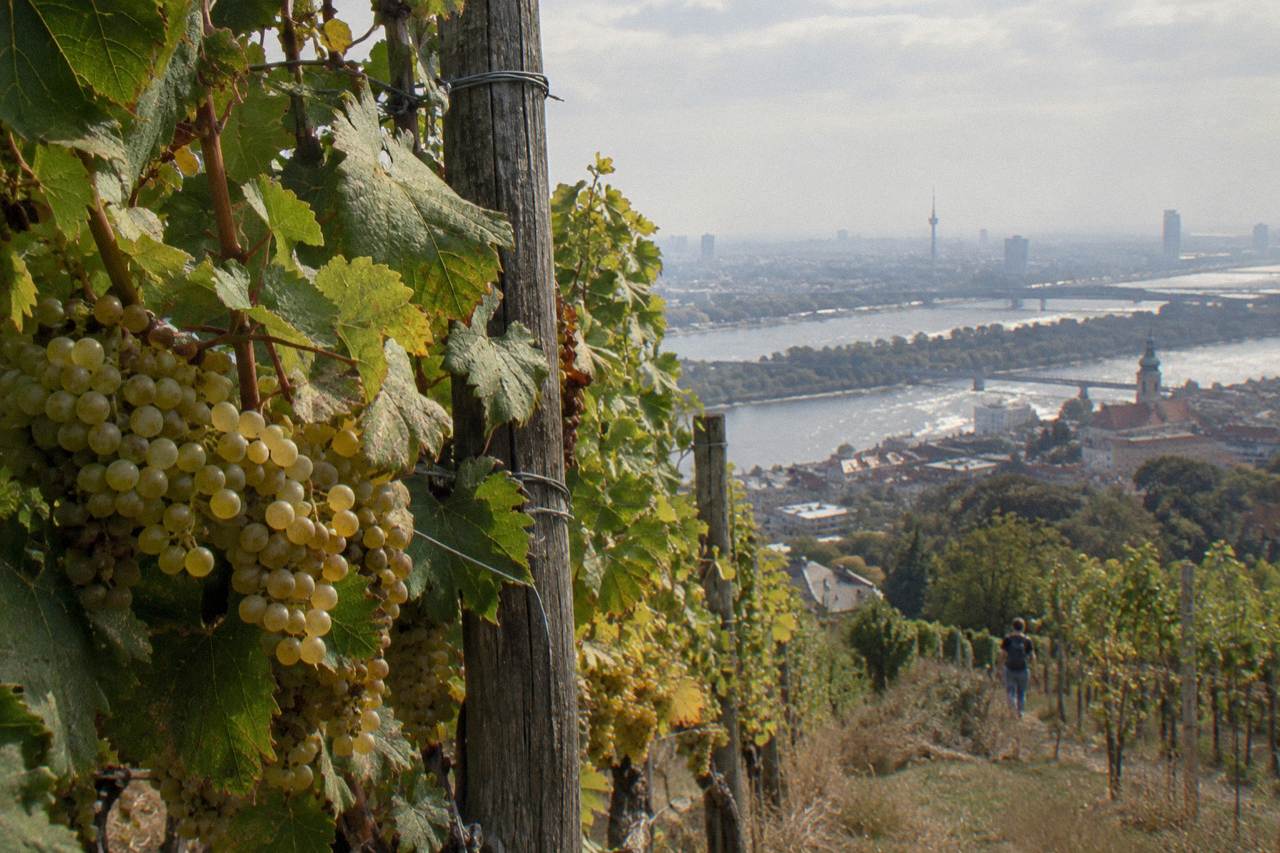
Vienna is one of the only major cities on earth where working vineyards sit inside the municipal boundary, 588 hectares of them according to the 2026 Vienna wine catalog, farmed by 172 wineries. That single fact explains why the wine experiences on offer here are unusually varied for a capital. You can taste inside a centuries-old cellar a ten-minute walk from the center, ride an e-bike between vines on the hillsides of the 19th district, or spend a full day in the terraced Wachau Valley an hour west. This guide compares the formats honestly, using only what the bookable experiences actually state, so you can match the right one to your time and budget.
The city's signature wine is Wiener Gemischter Satz, a field blend. Unlike a cuvée blended after the harvest, Gemischter Satz is made from at least three grape varieties planted together in the same vineyard, picked and pressed together, with no single variety allowed above 50 percent of the vineyard and a third variety needing at least 10 percent. It is a protected designation with real rules behind it, and it is the bottle most likely to appear on every Vienna tasting table.
What Wine Is Vienna Actually Known For?
Vienna is known for Wiener Gemischter Satz, a protected field-blend white wine that must come from registered Vienna vineyards, mix at least three varieties planted together, and stay at or below 12.5 percent alcohol on the label. The rules are codified in the consolidated DAC ordinance, and the wine cannot legally be sold to consumers before 1 December of its harvest year.
The name translates roughly as "Viennese mixed set", and the concept is older than the regulation. Growers historically planted several varieties together so that whatever the weather did to one, another would carry the harvest. The modern DAC ordinance, updated in September 2026, formalized this: a minimum of three varieties in the vineyard, a ceiling of 50 percent for any one variety, and later release dates for wines from named single vineyards, 1 March or even 1 May of the following year. If a waiter tells you the young Gemischter Satz is "not ready yet", that is the law talking, not marketing.
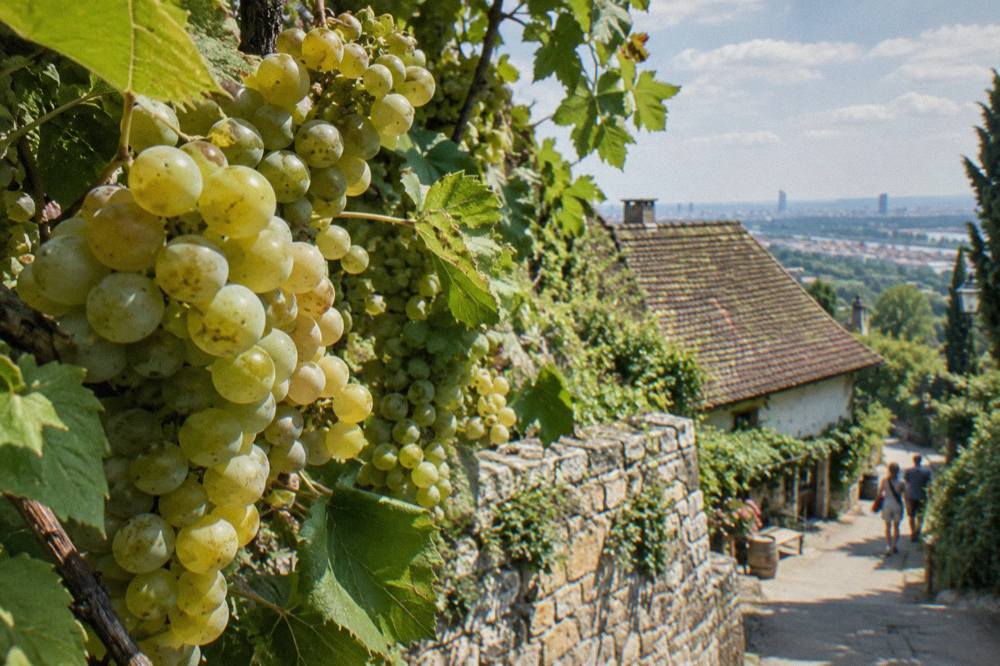
The 2026 vintage itself is a story worth knowing before you taste. Heat and dryness cut yields by up to 40 percent across Vienna's vineyards, but growers described the quality as very good to exceptionally good, with an early harvest starting in September at the demonstration vineyard by Schwarzenbergplatz. Less wine, better wine: a fair summary of what the 2026 bottles will offer when they reach the glasses.
Where exactly are these vineyards? Döbling in the north holds 48 percent of the city's vineyard area, Floridsdorf 38 percent, Liesing 7 percent and Oberlaa 4 percent. A full third of the area, 33 percent, is farmed organically, which is a remarkably high share for an urban wine region. The Vienna Tourist Board's page on Heurigen culture is the primary source for how the city presents this heritage, alongside the Viennese coffee house and the sausage stand. For background on the broader tradition, our guide to Vienna Food Tours covers how wine fits into the city's food culture overall, and the Heuriger visitor's guide goes deeper on the wine tavern tradition.
Which Vienna Wine Tastings Can You Book In The City?
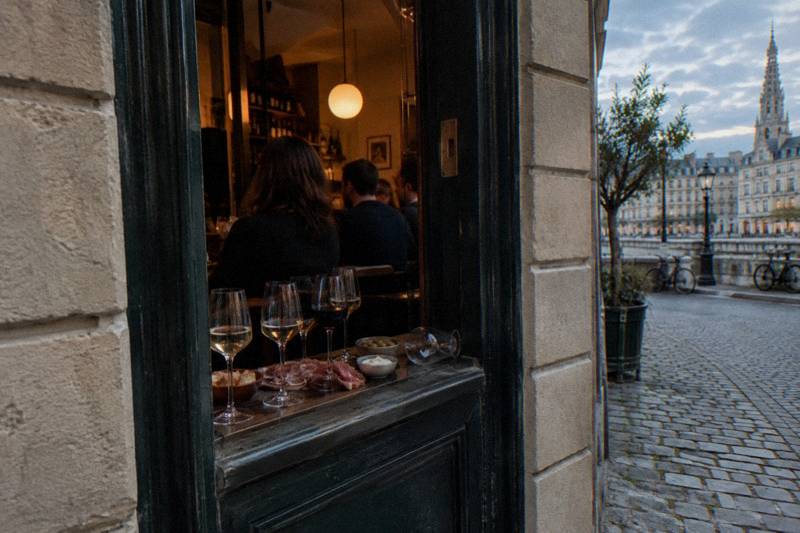
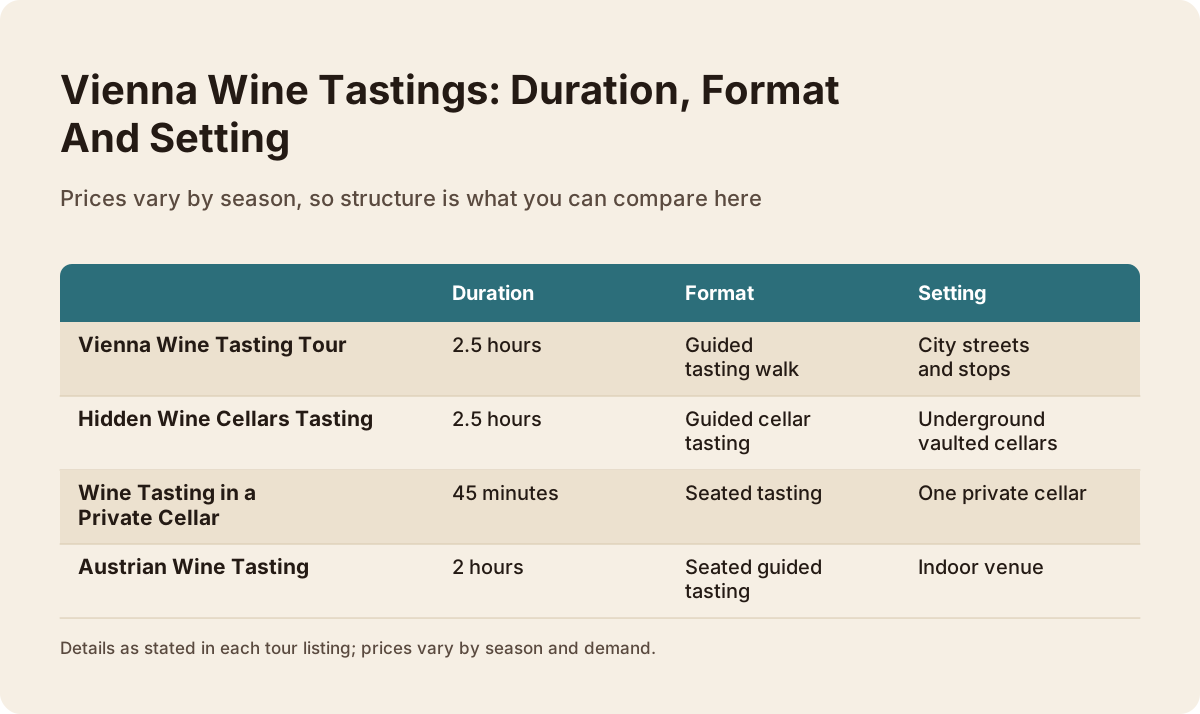
The bookable city options are a 2.5-hour guided wine tasting walk, a 2.5-hour hidden wine cellar tasting experience, and a 45-minute Viennese wine tasting in a private cellar, alongside a 2-hour Austrian wine tasting. Each differs in depth, setting and group format, and the details below come from what each listing itself states.
Two of these deserve the most attention. The Vienna Wine Tasting Tour runs 2.5 hours and is the format most visitors picture: a guided walk with tastings built in. The Hidden Wine Cellars Tasting Experience, also 2.5 hours, trades the street for underground cellars, the cool, vaulted spaces beneath the old city where wine has been stored for centuries. Both are described in the material below, and you can compare them directly. If wine isn't your only interest, our guide to Vienna beer covers everything from local lagers to craft brewery tastings.
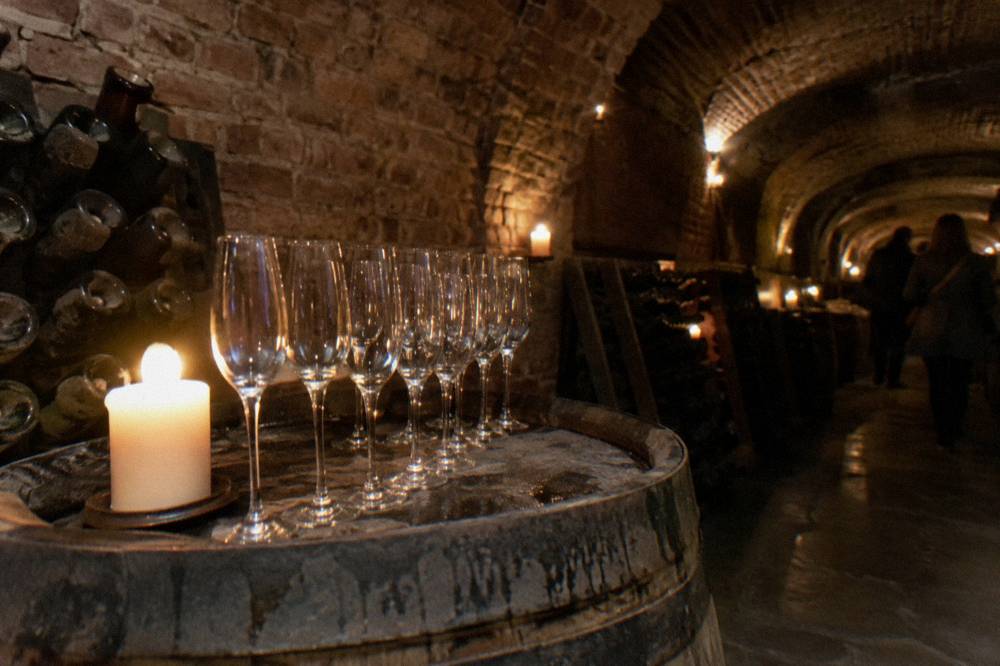
The cellar format has a particular advantage in bad weather and in winter: the temperature underground is stable year-round, and the setting does more storytelling than any street corner can. What exactly is poured, how many glasses, and whether cheese or bread accompanies them, varies by listing and by season, so read the inclusions on the booking page before you commit. Where a listing does not state a detail, treat the booking page as the single source of truth rather than assumptions from other cities' wine tours.
Price is the obvious comparison point, and here honesty matters: tour prices are set per person and shift with season and demand, so this guide does not print a number the listing does not firmly state. What you can compare structurally is duration, format and inclusions, which is what the table later in this article does. As a planning rule of thumb for the venues themselves, an Achtel (an eighth of a liter, the standard Heuriger pour) runs around 3 to 5 euros at neighborhood spots, so a self-guided evening can be very affordable if a guided tasting stretches your budget.
Guided Cellar Tasting Or Walking Wine Tasting In Vienna?
Choose the walking tasting if you want the city's wine culture explained street by street with a guide narrating; choose the cellar experience if you want atmosphere and focused tasting in one atmospheric location. Both run about 2.5 hours, so the real difference is setting and pacing, not time commitment.
The Vienna Wine Tasting Tour is the more educational, mobile format: you move, you see, and the guide connects what is in the glass to what is around you. Reviews for this listing are strong, and the rating with its review count is shown on the live listing, where it is worth reading a handful of recent reviews yourself, since they describe guide quality better than any summary can. The meeting point and inclusions are stated on the booking page, and those are the details to check against your itinerary: distance from your hotel, start time, and what the price actually covers.
The Hidden Wine Cellars Tasting Experience makes a different promise. Vienna's cellars are genuinely hidden infrastructure, carved for storage in centuries when the city needed cool space for barrels, and a guided tasting down there delivers a sense of place that a room with chairs cannot. The 2.5-hour duration matches the walking tour, so you are choosing between movement and immersion. If your trip includes a lot of walking already, or you are visiting in the coldest months, the cellar format is the kinder choice for your feet and your jacket.
A third, shorter option fills a different niche: the Viennese Wine Tasting in a Private Hidden Wine Cellar lasts 45 minutes. That is a tasting, not a tour, and it suits a late afternoon slot between sightseeing and dinner, or a first-evening-in-Vienna orientation to what local wine tastes like before you order it by the Achtel for the rest of the week. There is also a 2-hour Austrian Wine Tasting that widens the lens beyond Vienna to the country's other regions, useful if you want context on Grüner Veltliner and Zweigelt from further afield.
| Experience | Duration | Format | Setting | Best For |
|---|---|---|---|---|
| Vienna Wine Tasting Tour | 2.5 hours | Guided tasting walk | City streets and stops | First-time visitors wanting context |
| Hidden Wine Cellars Tasting | 2.5 hours | Guided cellar tasting | Underground vaulted cellars | Atmosphere, bad weather, winter |
| Wine Tasting in a Private Cellar | 45 minutes | Seated tasting | One private cellar | A short slot between activities |
| Austrian Wine Tasting | 2 hours | Seated guided tasting | Indoor venue | Wider Austrian wine overview |
What Is A Heuriger Evening And Can You Book One?
A Heuriger is a wine tavern licensed to serve only its own vineyard's wine, marked by a pine branch and an "Ausg'steckt" sign when open, and no guided evening in the city's bookable wine listings is described as a Heuriger visit. To experience one, you go independently, or you take a wine-country tour that includes a winery stop.
The rules around the word are stricter than most visitors realize. A genuine Viennese Heuriger, sometimes called a Buschenschank, serves wine from its own vineyards, and the pine bush over the door plus the "Ausg'steckt is'" sign tells you it is open, the Vienna Tourist Board explains this on its official Heurige page. Openings are irregular and seasonal: many traditional taverns close or reduce hours from November through March, while the larger operations in Grinzing and Nussdorf run more year-round. Roughly 100 genuine ones were still operating in Vienna as of late 2026, a decline locals call Heurigensterben, though some neighborhoods, Mauer and Oberlaa among them, report strong demand. Before you set out to find one, our beginner's guide to the Heuriger tradition explains how these taverns work, what a visit typically costs, and how they differ from ordinary restaurants.
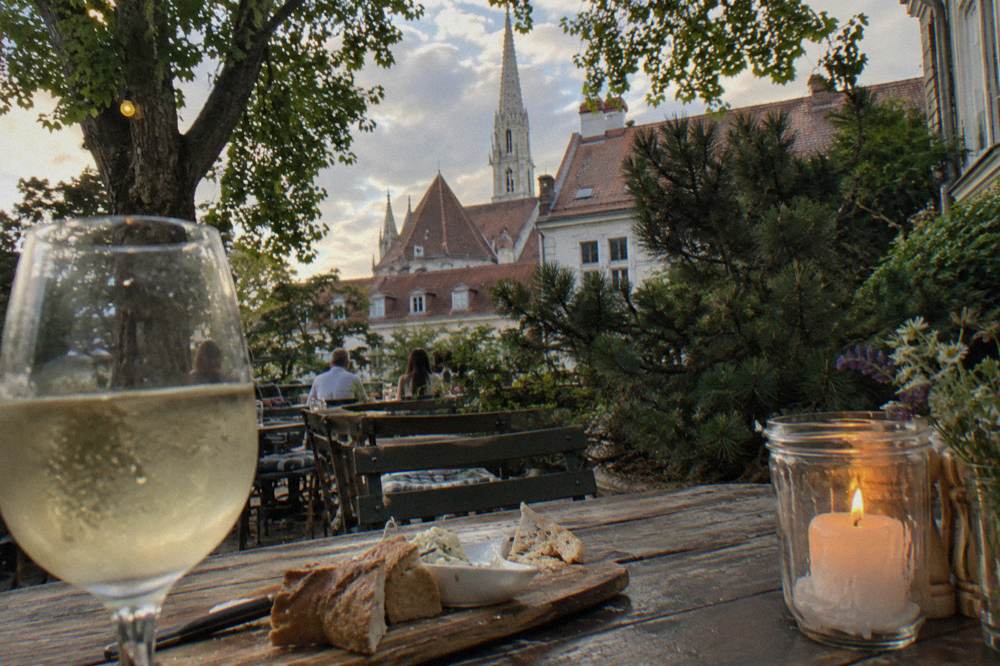
The word "Heurige" also names the wine itself: the current vintage, which may carry that name until 11 November, St Martin's Day. So a Heuriger serving Heuriger is serving this year's young wine at this year's tavern, and the fuzzy, half-fermented version of that, called Sturm, appears briefly in September and October. If a guided experience you are considering mentions a Heuriger stop, check the booking page's own description carefully, because the bookable wine experiences compared in this guide are described as tastings and cellar visits, not Heuriger evenings, and it is worth being precise about what you are actually buying.
For eating at one independently, the buffet norm is helpful planning data: a self-service cold plate typically runs about 6 to 12 euros, and a full evening at a neighborhood spot often lands between 8 and 15 euros, with tourist-oriented places higher. Check the buffet prices on the board before you load a plate, the way locals do. Getting there is simple: tram D to Nussdorf, bus 35A to Neustift am Walde, bus 38A or tram 38 to Grinzing, tram 31 to Stammersdorf.
Vienna Vineyards By E-Bike Or Vienna Woods: Worth The Day?
Yes, if you have the time: an e-bike wine culture tour covers vineyard scenery in 4 hours inside the city, while Vienna Woods wine tours run 4.5 to 8 hours and reach the forested hills west of the city with tastings built in. Both trade city-center convenience for landscape and a slower pace.
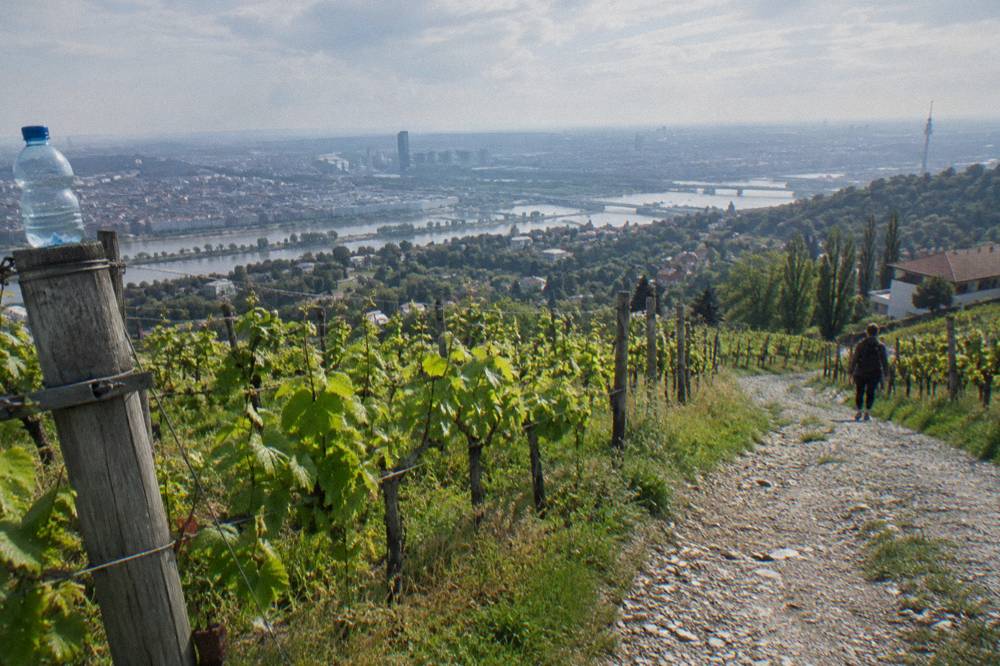
The E-Bike Wine Culture Tour is the sleeper pick of the wine lineup. Four hours on an electric bike takes you through the northern vineyard districts, the same hills that hold nearly half of Vienna's vineyard area, with the motor flattening the climbs that stop most visitors from cycling there. One Vienna Forest tour option runs 4.5 hours and includes an underground lake visit plus a wine tasting, an unusual pairing of natural spectacle and tasting that families often like. The Vienna Woods Wine Tour is the biggest commitment at 8 hours, a full day of vines, viewpoints and tastings west of the city.
Austrian Wine Tasting, covered above as a 2-hour city option, is the low-commitment alternative when a half or full day feels like too much. The honest framing: if your Vienna stay is two nights, do a city tasting and spend your remaining hours on coffee houses and markets. If you have four nights or more, a vineyard day is one of the best uses of a Vienna morning you will find. Our morning or evening food walk comparison applies the same logic to eating tours, and it holds for wine too.
What Does A Countryside Half-Day Wine Trip Include?
The half-day countryside wine tour from Vienna runs 4 hours with hotel pickup and a meal included, which distinguishes it from every city tasting: you leave town, you eat properly, and logistics are handled. It is a day trip, not a city tasting, and should be compared on those terms.
This is the format for visitors who want wine country without surrendering a whole day. Pickup removes the transit puzzle, the meal turns the outing into a real lunch or dinner rather than cheese cubes between pours, and four hours is short enough to leave the evening free for a concert or a coffee house. The listing describes the countryside setting; the specific winery, menu and tasting count are on the booking page, and those are the details to confirm before booking, since rural itineraries adjust with the season.
Its sibling at the far end of the commitment scale is the Wachau Valley Small Group Tour, 8.5 hours in the UNESCO-protected river valley west of Vienna, with its terraced vineyards above the Danube. The Wachau grows different wine from Vienna, Riesling and Grüner Veltliner off steep stone terraces, and a small-group day trip there is less a tasting and more a full landscape experience. The E-Bike Wine Culture Tour stays inside Vienna; the Wachau trip leaves it entirely. If wine is the centerpiece of your trip rather than one pleasant chapter, the Wachau is the deepest single day available from the tours listed here. Our day trips from Vienna guide covers the valley's non-wine sights too.
How Much Does A Vienna Wine Tour Cost?
Tour prices are quoted per person on each operator's live listing and shift with season and demand, so this guide does not print numbers the listings do not firmly state; the honest comparison is duration, inclusions and group format. For venues themselves, an Achtel of wine runs around 3 to 5 euros and a Heuriger buffet plate about 6 to 12 euros.
That may sound like a dodge, but it is the difference between a guide you can trust and one that quotes a price you discover has doubled by the time you book. What you can lock down in advance is structure. The table below compares the wine-region experiences purely on the fields the listings themselves state. Where a cell is blank, the listing does not commit to that detail, and the booking page is where to verify it.
| Experience | Duration | Leaving The City? | Meal Or Pickup Stated | Group Style |
|---|---|---|---|---|
| Vienna Wine Tasting Tour | 2.5 hours | No | Not stated | Guided walk |
| Hidden Wine Cellars Tasting | 2.5 hours | No | Not stated | Guided group |
| Countryside Half-Day Wine Tour | 4 hours | Yes | Meal and pickup stated | Small group |
| E-Bike Wine Culture Tour | 4 hours | Vineyards inside the city | Not stated | Guided ride |
| Vienna Forest Tour, Underground Lake | 4.5 hours | Yes, forest edge | Tasting stated | Guided group |
| Vienna Woods Wine Tour | 8 hours | Yes | Not stated | Guided group |
| Wachau Valley Small Group Tour | 8.5 hours | Yes, Wachau | Tasting stated | Small group |
Budget logic falls out of that table naturally. A city tasting plus an independent Heuriger evening will usually cost less than a full countryside day, and you will taste more styles of experience for it. A single day trip, whether the half-day countryside tour or the Wachau, concentrates spending into one richer block. If you are pairing wine with a broader eating plan, the cost guide for Vienna food walks walks through the same arithmetic for food, and the two budgets rhyme.
When Is The Best Season For Wine In Vienna?
September and October are peak wine season: harvest is underway, Sturm briefly appears, and the Wine Hiking Day routes open the vineyards to walkers. Winter shrinks the Heuriger scene but suits cellar tastings, and the Christmas season adds market Glühwein as its own tradition.
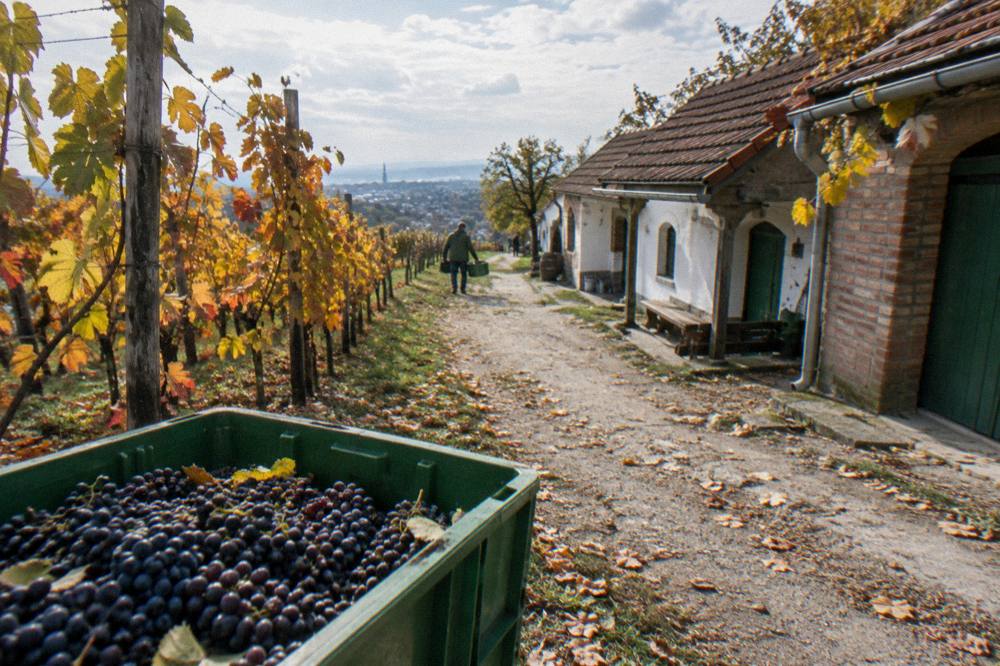
The calendar is more structured than most visitors expect. The 2026 Wine Hiking Day ran 26 and 27 September across four routes, 10.8 km from Neustift am Walde to Nussdorf, 9.6 km from Strebersdorf to Stammersdorf, about 4.5 km in Ottakring and 4.6 km in Mauer, with free entry and tastings at stations along the way. That event is past for this year, and 2027 dates were unlisted at the time of research, but the pattern holds: late September is when the vineyards are at their most open and sociable. Harvest itself in the Wachau typically runs from early or mid-October into mid-November, weather depending.
Wine-country events continue into November: MondoVino, a wine and gourmet festival with more than 170 producers, fills Marx Halle on 13 and 14 November 2026. And from mid-November the Christmas markets take over, 15 markets and 814 stalls across the city by the official count, with mulled wine as the seasonal crossover between the wine world and the street. The Vienna Christmas markets guide covers those in full. For season-by-season planning across all of it, the best time to visit Vienna for food guide places wine events in the wider calendar.
| Period | What Happens | Best Booked Experience |
|---|---|---|
| March to May | Vines green up, cellar tastings calm | Cellar or walking tasting |
| June to August | Heuriger gardens at their liveliest | E-bike vineyard tour |
| September | Harvest, Sturm, Wine Hiking Day | Vineyard tour or countryside half-day |
| October to mid-November | Harvest ends, MondoVino festival | Any, plus independent Heuriger |
| Late November to December | Many Heurigen quiet, markets open | Cellar tasting plus Christmas market |
One planning note for bookings: dietary needs and mobility questions are worth messaging the operator about before you book, since the listings do not state vegan, gluten-free or accessibility provisions for the wine experiences, and rural pickups and e-bikes have their own physical requirements. A short message in advance beats an awkward surprise on the day.
Common Questions About Vienna Wine Tours
What Wine Is Vienna Famous For?
Wiener Gemischter Satz, a protected field blend of at least three grape varieties grown together in one Vienna vineyard, with no variety above 50 percent and a label alcohol ceiling of 12.5 percent. It cannot be sold before 1 December of the harvest year.
Can You Visit Vineyards Inside Vienna Itself?
Yes. Vienna has 588 hectares of vineyards inside the city limits, concentrated in Döbling and Floridsdorf, and an e-bike wine culture tour reaches them in a 4-hour guided ride.
Is A Heuriger The Same As A Wine Bar?
No. A genuine Heuriger serves only wine from its own vineyards and signals it is open with a pine branch and an "Ausg'steckt" sign. Openings are seasonal and irregular, with many traditional spots reducing hours from November to March.
How Long Is A Vienna Wine Tasting Tour?
The guided city formats run 45 minutes to 2.5 hours, the countryside half-day trip runs 4 hours with pickup and a meal, and the Wachau Valley day trip runs 8.5 hours.
What Is The Best Month For Wine In Vienna?
September and October: harvest is underway, the briefly available Sturm is poured, the Wine Hiking Day opens vineyard routes to walkers, and MondoVino brings 170-plus producers to Marx Halle in mid-November.
Do Vienna Wine Tours Include Food?
Only the countryside half-day tour states a meal and pickup in its listing. The city tastings do not commit to food beyond what the booking page describes, so check inclusions there before booking.