Morning Or Evening Food Walk In Vienna?
The time of day you pick changes what a Vienna food walk can show you: markets and coffee houses run on fixed official windows, while evenings belong to restaurants, wine cellars and Heuriger culture.
Short answer
Choose a morning or midday walk for markets and coffee houses, since sales stands close by 18:00 on Saturdays and restaurants stretch to 23:00 on weekdays. Choose an evening for dinner, wine and cocktails. Vienna's classic houses sit around 6.90 euros for a Melange, and Heuriger evenings depend on Ausg'steckt opening periods, so check the calendar.
Choosing a time of day is a booking decision before it is a preference. Vienna's food day is structured by fixed official windows: market stands trade within hours the city sets, coffee houses fill and empty in predictable waves, and the Heuriger wine taverns on the city edge open only when they choose to, signalled by a pine branch over the door. A walk booked at 10:00 and the same route at 19:00 pass through two different cities.
This guide lays out what each part of the day actually offers, using the city's own published market hours, the 2026 price data for the classic coffee houses, and the durations and inclusions the operators themselves list. By the end you should know which slot fits your trip, and which format of walk suits each.
Morning Or Evening: What Actually Changes In Vienna?
The decisive difference is what is open. Morning walks lean on markets and coffee houses, both of which run on daytime schedules set or shaped by official rules, while evening walks lean on restaurants, wine cellars and tavern culture that only come alive after the stalls shut. Neither is better; they sample different halves of the food day.
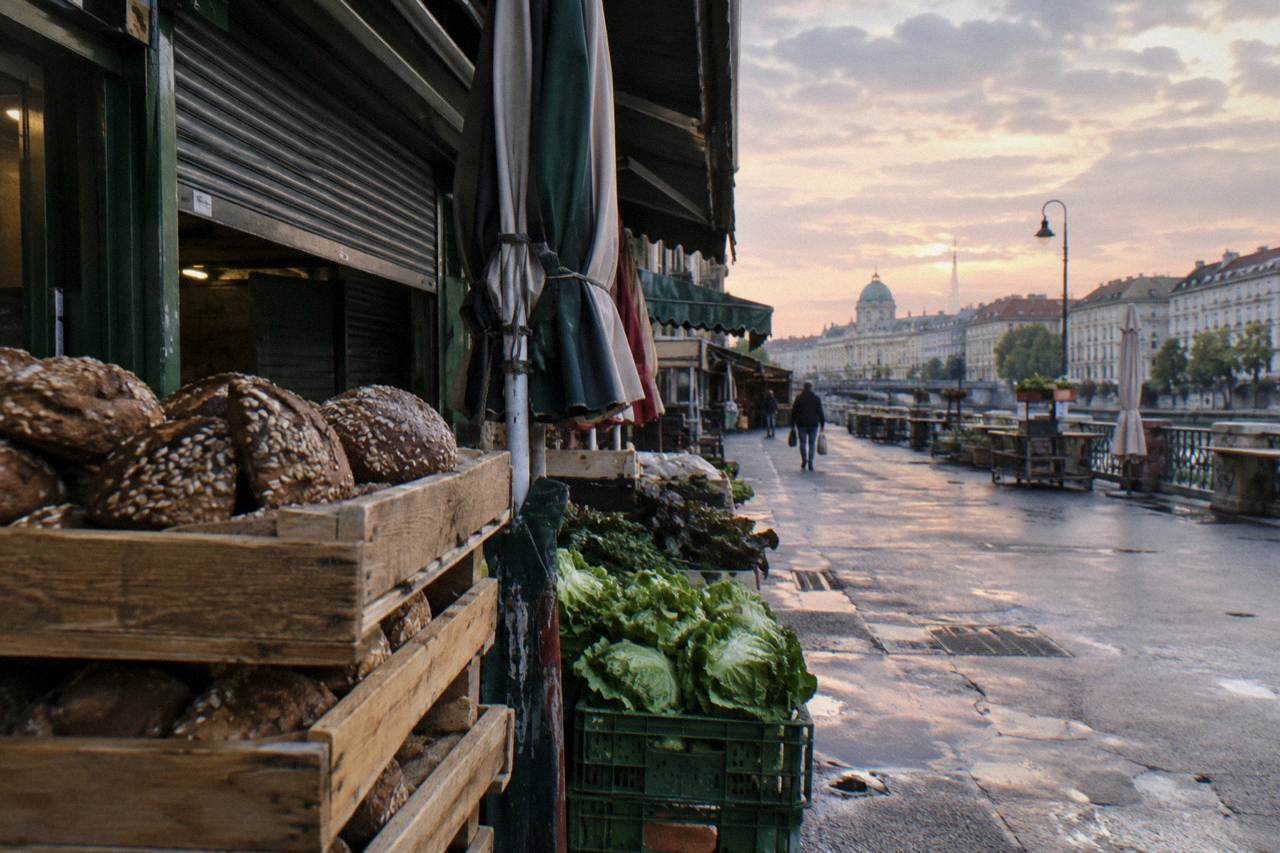
Market stands at Naschmarkt may sell from as early as 6:00 and must be open every Tuesday to Friday between 15:00 and 18:00, a rule that guarantees an afternoon window but says nothing about evenings: stands close by 18:00 on Saturdays, and the restaurants around them are the only part allowed to run to 23:00. Coffee houses open early and stay deep into the evening, but their identity, the marble table, the newspapers, the slow second cup, belongs to the morning and early afternoon. The evening belongs to dinner, to wine, and to the Buschenschank tradition in the vineyard districts, where opening is seasonal and irregular rather than daily.
There is also a crowd rhythm. The first hours at the market belong to locals shopping; late morning brings the tour groups. Coffee houses are quietest just after opening and busiest from mid-afternoon. Evenings concentrate everyone into the Innere Stadt dining streets and the cellar bars. If you dislike queues and jostle, the early side of each window is your friend.
The format of the walk follows the clock too. Daytime products on this site's pages, like the five-and-a-half-hour coffeehouse, market, lunch and street food walk, are built around stalls and cafe tables. Evening products, like the four-hour dinner, wine and cocktail walk, are built around seated courses. Duration alone tells you a lot: anything longer than about three hours in the daytime assumes you stop and eat a full meal.
What Does A Morning Food Walk In Vienna Look Like?
A morning walk trades restaurants for raw ingredients: produce stalls at their freshest, bakers pulling bread, and coffee houses in their quietest, most local hours. Expect standing and sampling rather than sitting down to courses, and expect the walk to end near lunch, when several operators fold a full meal into the itinerary.
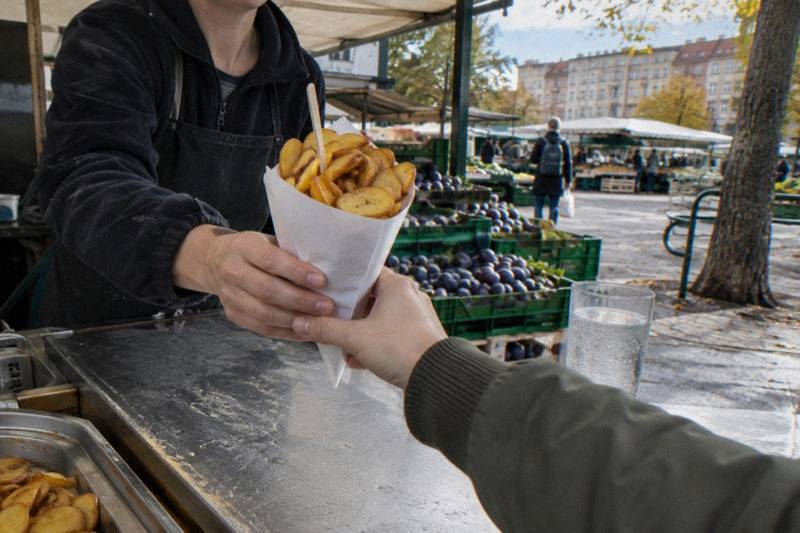
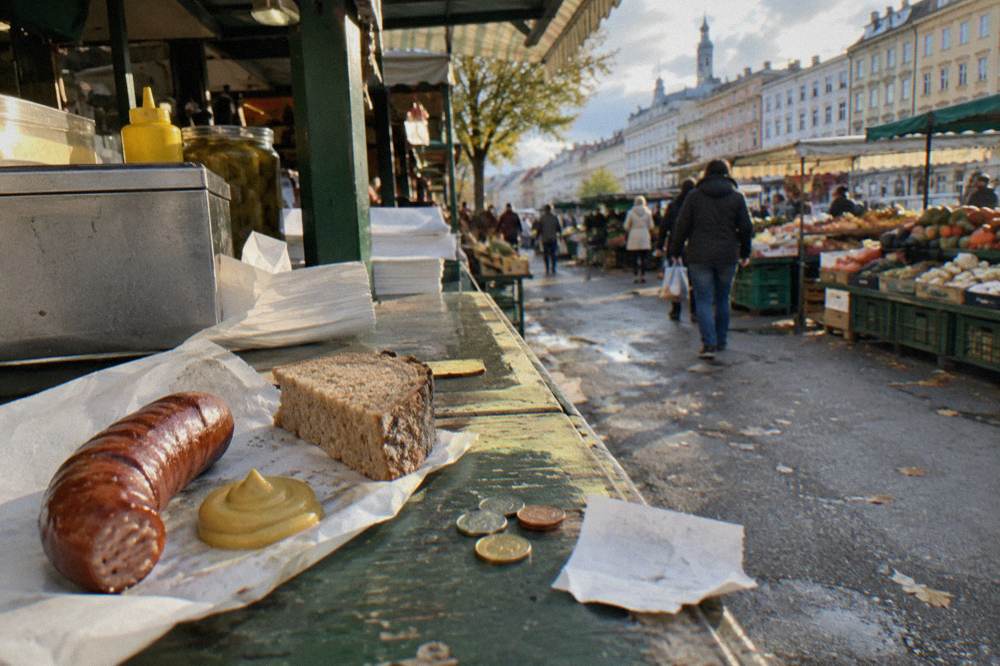
Morning is when the market is at its most convincing. The official windows allow sales stands to trade from 6:00, and the serious buying happens before the late-morning visitors arrive. A guided walk that starts at 9:00 or 10:00 catches the tail of that mood: olives and cheese being cut to order, vendor chatter, the smell of the bakery rows. Stands are not obligated to open early outside the protected 15:00 to 18:00 slot, so a guide who knows which stallholders are reliable in the morning is genuinely worth something.
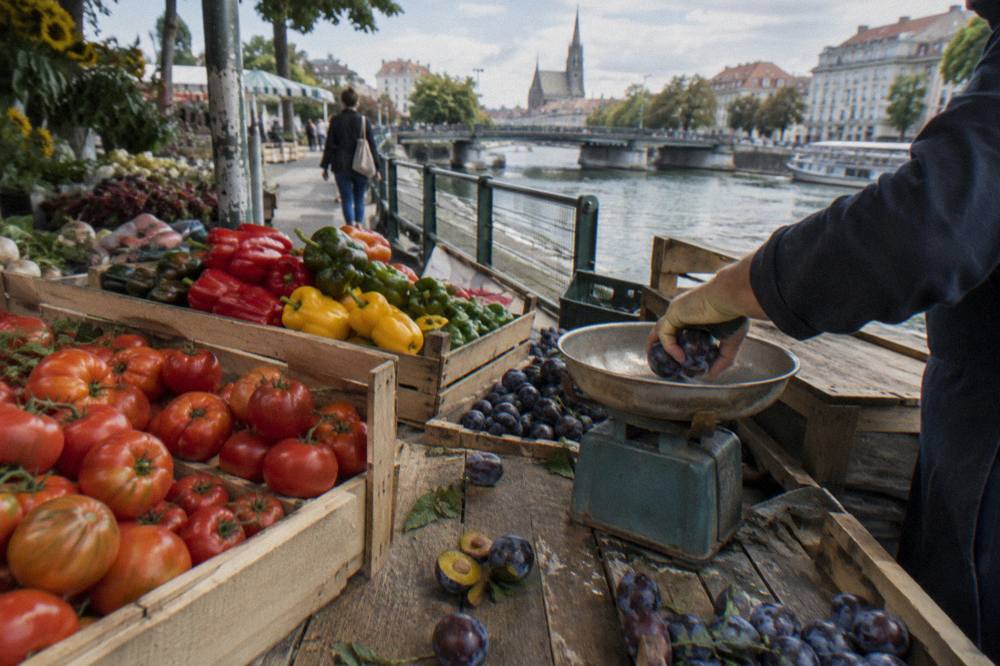
Coffee houses slot in naturally before the market or after it. The classic houses open between 7:00 and 8:00 in most cases, and the first two hours are the closest you get to seeing them as Viennese residents do: newspapers on sticks, regulars at the same table, unhurried service. By 15:00 the same rooms carry a different, heavier traffic. For the timing logic behind cafe visits generally, the Vienna coffee house culture guide breaks the day down in more detail.
The flagship daytime option is the Vienna food walk covering coffee houses, markets, lunch and street food over five hours and thirty minutes. That length is only possible in the daytime, because it stitches together a cafe stop, a market stretch, a seated lunch and street food into one arc. Operators describe the itinerary and inclusions on the booking page, including the vegetarian lunch option, so confirm details there before you book. If five hours and thirty minutes sounds like a lot, the same family includes a first-day orientation walk of about two and three-quarter hours that covers a coffee house and street food without the full lunch.
Morning has practical edges beyond mood. Daylight makes market photography workable, distances feel shorter on foot, and you leave the afternoon free for museums or the Prater. The trade-off is simple: no dinner, no wine cellar atmosphere, no Heuriger evening. You are buying the producing half of Vienna's food day rather than its consuming half.
What Happens On An Evening Food Walk In Vienna?
An evening walk shifts from sampling to dining: seated courses, wine poured rather than sipped, and the city's candlelit interiors. Markets are shut or shutting, so the itinerary runs through restaurants, bars and cellars, and the pace slows to match. Most evening products run three to four hours and end within walking distance of the centre.
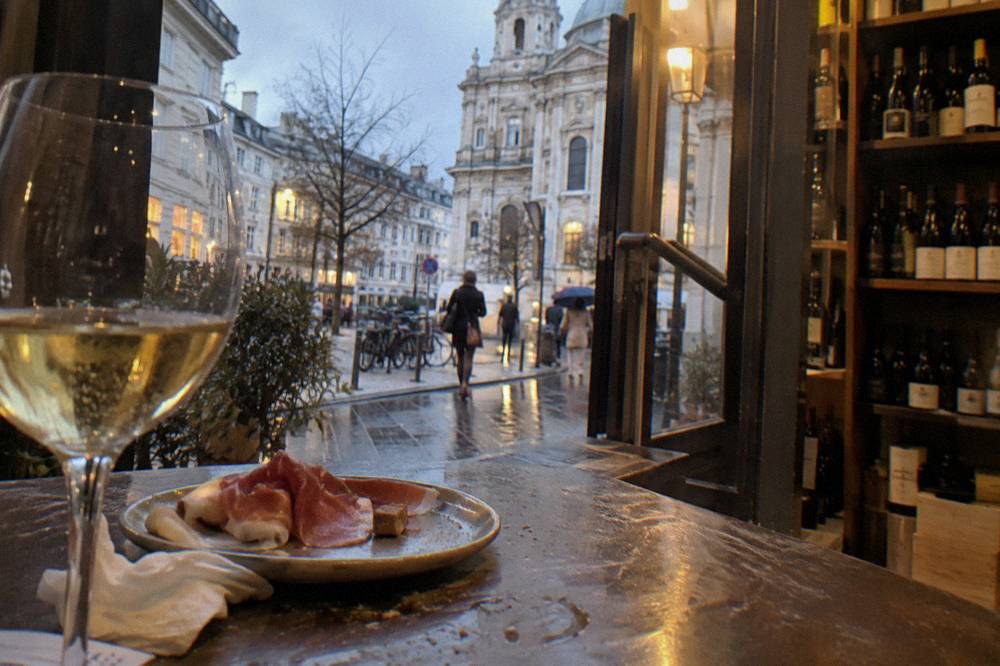
Evening is when Vienna's dining rooms take over. The same streets that carried market crates in the morning now carry dinner traffic, and the walks designed for this window are built accordingly: the dinner, wine and cocktail evening tour, for example, is a small-group product of about four hours that the operator describes in terms of a meal and drinks rather than stall hopping. Its price and meeting point are on the operator's booking page, and the small-group format means seats are limited per departure, which matters on weekends.
One structural fact makes evenings distinct: the indoor smoking ban. Since 1 November 2019 all Austrian gastronomy, dining rooms and guest areas included, has been smoke-free, with only defined outdoor areas exempt, as the Austrian business service portal documents. That removed the one downside evening interiors used to carry and made cellar venues, of which Vienna has many, comfortable for everyone.
Evenings also unlock formats that cannot exist in daylight. A hidden wine cellar tasting runs about two and a half hours underground; the operator frames it around Vienna's own wines, and the details of pours and meeting point are on the booking page. A short cellar tasting in a private hidden wine cellar runs just 45 minutes, which pairs neatly with a dinner you arrange yourself afterwards. None of these make sense at 10:00, and none of the market walks make sense at 20:00. The clock, not taste, sorts the options.
The dinner, wine and cocktail walk deserves a specific mention for readers torn between the two halves of the day: it is the clearest answer among the tours listed here to "what does Vienna taste like after dark", and you can read the full tour page or check availability for dates. Cancellation terms are stated on the booking page, so check them when you pick a slot.
The trade-offs are the mirror of the morning's. You gain atmosphere, seated comfort and wine; you lose the market at its best, the cafe in its quiet hours, and daylight for walking between stops. Weekend evenings in the centre are also the busiest window of the week, so a small-group evening product is partly a way of guaranteeing a table in rooms that would otherwise mean a queue.
When Are Vienna's Markets Actually Open?
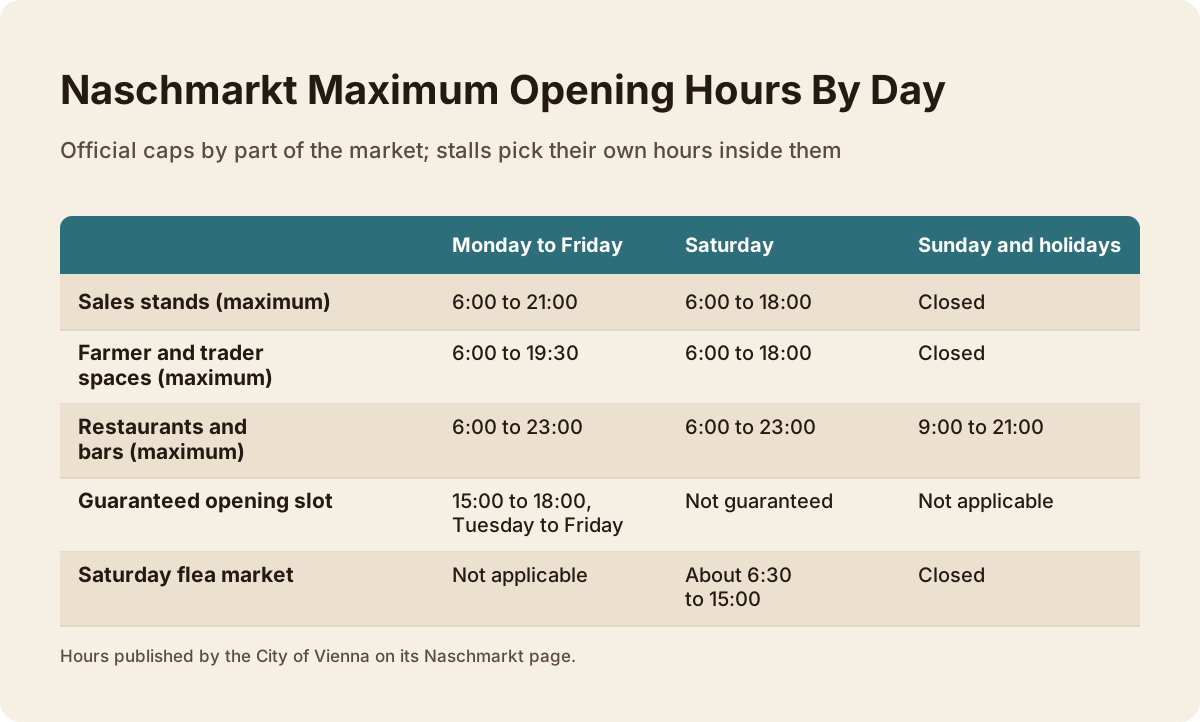
Official city rules cap Naschmarkt sales stands at 6:00 to 21:00 Monday to Friday and 6:00 to 18:00 on Saturdays, while market restaurants may run to 23:00 Monday to Saturday and 9:00 to 21:00 on Sundays and holidays. Those caps are maximums, not promises: individual stalls choose their own hours inside them, but all must open Tuesday to Friday from 15:00 to 18:00.
The city's own market page publishes these windows, and they are the single most useful input for timing a market visit. The afternoon protected slot means a 16:00 arrival will find stalls open every weekday, no matter what individual stallholders do in the morning. A Saturday visit needs to be earlier: the cap falls to 18:00, and plenty of stallholders pack up before it.
| Part of the market | Monday to Friday | Saturday | Sunday and holidays |
|---|---|---|---|
| Sales stands (maximum) | 6:00 to 21:00 | 6:00 to 18:00 | Closed |
| Farmer and trader spaces (maximum) | 6:00 to 19:30 | 6:00 to 18:00 | Closed |
| Restaurants and bars (maximum) | 6:00 to 23:00 | 6:00 to 23:00 | 9:00 to 21:00 |
| Guaranteed opening slot | 15:00 to 18:00, Tuesday to Friday | Not guaranteed | Not applicable |
| Saturday flea market | Not applicable | About 6:30 to 15:00 | Closed |
Two consequences follow for walk timing. First, any "market evening" is really a restaurant evening: after 18:00 on a Saturday, the stalls are covered and the action moves to the market's restaurant row, which is a different experience and one the evening dinner walks capture better. Second, a market-focused walk that starts after about 16:00 on a Saturday risks arriving to shuttered aisles.
Other markets follow the same logic. Karmelitermarkt in the second district runs to the same stand windows with a Sunday restaurant cap of 9:00 to 19:00, and its farmers' market component peaks on Fridays and Saturdays. The guide to Vienna's markets beyond Naschmarkt covers which neighbourhood market suits which part of town, and the Naschmarkt opening hours guide goes deeper on the Saturday flea market, including its 2026 Christmas restrictions.
Construction is worth a line of caution. The Naschmarkt redevelopment, including the new timber Marktraum hall with its 13 regional-food stands, is now expected to complete in February 2027, and the farmers' market area has shifted around during the works. Nothing is closed, but the layout a guide describes may differ from photos you have seen, so treat the walk as the map.
Are Coffee Houses Better In The Morning Or Afternoon?
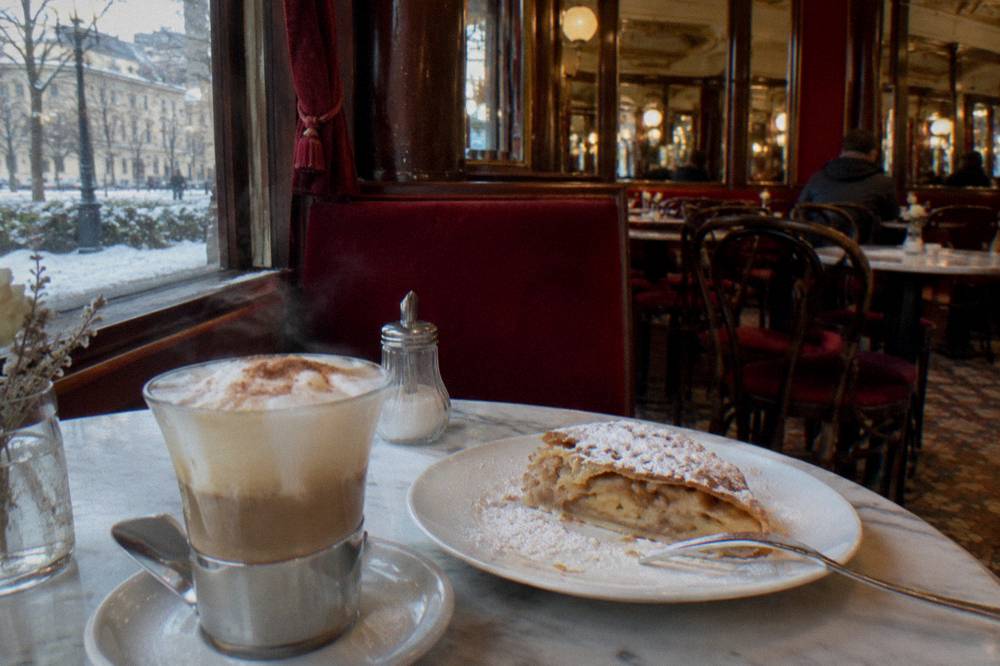
Morning coffee houses are working rooms for locals, quiet and unhurried; the afternoon from about 15:00 onward brings the cake-and-crowd window that most visitors picture. Neither is wrong. Prices do not move with the clock, so the choice is purely about atmosphere and queue length, and the quiet hours sit at the day's edges.
The classic houses cluster their Melange prices tightly. Landtmann, Museum and Schwarzenberg charge around 6.90 euros for a Melange, and Landtmann's Sachertorte sits at 8.50 euros, Apfelstrudel at 8.20 and Kaiserschmarrn at 15.70. Demel lists a Melange at 6.90, Sachertorte at 8.50, Kaiserschmarrn at 12.90 and Apfelstrudel at 9.50. These are reported menu figures, euros, so check the card on the day; they say nothing about time of day because cafe pricing does not work that way.
| Coffee house | Melange | Signature cake | Kaiserschmarrn | Notes from 2026 guides |
|---|---|---|---|---|
| Café Landtmann | Around 6.90 euros | Sachertorte around 8.50 euros | Around 15.70 euros | Takes reservations |
| Café Demel | Around 6.90 euros | Sachertorte around 8.50 euros | Around 12.90 euros | Generally no reservations |
| Café Central (pop-up Decentral) | Around 5.40 euros | Apfelstrudel around 5.90 euros | Not reported | Main house closed for renovation, pop-up at Freyung 3 |
One 2026 wrinkle matters for anyone's cake plans: Café Central has been closed for major renovation since 16 March 2026, with reopening planned for winter 2026, and its pop-up, Decentral, operates at Freyung 3 in the meantime with reported prices of 5.40 euros for a Melange and 5.90 for an Apfelstrudel. Confirm status on the cafe's own site before planning a stop; no walk that lists Central among its stops should be assumed to enter the original room.
For the walk-planning question, the pattern is simple. A morning walk that includes a coffee house stop gets the room at its calmest; an afternoon walk gets the theatrical version, full but slower, with the cake counter at its fullest display. If your walk is self-planned, aim for opening time or the 16:00-plus dip that cake veterans recommend for the Sacher and Demel counters. The guide to Vienna cake and pastry and the Sachertorte versus Demel comparison cover the substance behind the stops.
What About A Heuriger Evening In Vienna?
A Heuriger evening is a real but conditional option: genuine wine taverns serve only their own wine, hang a pine branch and Ausg'steckt sign when open, and keep irregular seasonal calendars rather than fixed hours. Roughly 100 still operate in Vienna, many reducing hours from November to March, so an evening Heuriger plan depends on checking the current opening calendar, not the clock.
The Vienna Tourist Board's Heuriger page defines the tradition precisely: the word names both the tavern and the current-vintage wine, which may carry the name until 11 November, St Martin's Day. The districts to know are Grinzing, Nussdorf, Neustift, Heiligenstadt and Sievering within the city, plus Stammersdorf and Strebersdorf to the north and Mauer and Oberlaa to the south. Larger Grinzing and Nussdorf spots run more year-round; the small family places in Stammersdorf open in blocks.
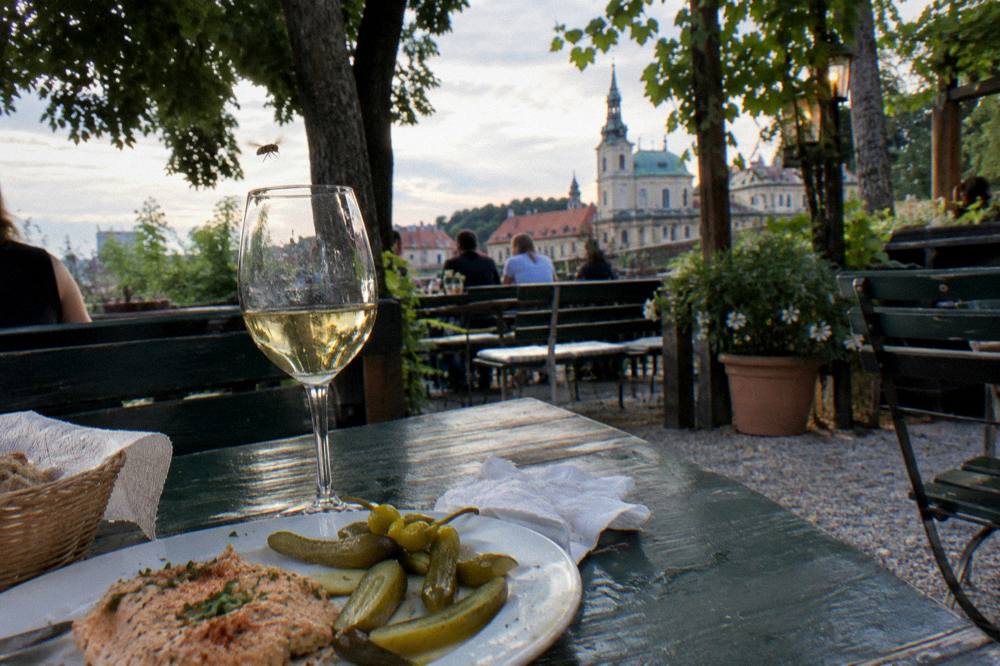
Costs at these places follow buffet norms rather than menus: 2026 guides report typical self-service cold buffet plates around 6 to 12 euros, an evening total often 8 to 15 euros at neighbourhood spots, and an Achtel, an eighth of a litre of wine, around 3 to 5 euros. Tourist-oriented houses run higher. Treat these as planning ranges and check the board on-site, as the Heuriger visitor guide explains at length.
Two timing cautions. First, "Heuriger evening" is an opening-period question before it is a clock question: if the branch is not out, the door is shut, and no itinerary fixes that. Second, none of the guided walks sold on this site is described as visiting a Heuriger, so if that specific experience is your goal, the nearest bookable options are the wine cellar and Vienna Woods tastings, reached via the wine tasting and wine tour options guide. The cellar tasting below is the most central of them.
How Does Time Of Day Change The Walk You Book?
Time of day sorts the formats more than the prices. Daytime walks are longer and stall-based, evening walks are shorter and table-based, and the durations of the tours listed here make the split plain: the longest daytime product runs five hours and thirty minutes, while evening products cluster around two and a half to four. Confirm each price on the operator's page, since figures sit on the booking page rather than in fixed print.
Duration is the honest signal. The coffeehouse, market, lunch and street food walk needs five hours and thirty minutes because it spans two meals' worth of the day. The authentic food walk with lunch, street food and three drinks needs five. Evening products compress: the dinner, wine and cocktail walk runs four hours, the cellar tasting two and a half. A first-day orientation walk squeezes coffee house and street food into two hours forty-five, which only works in daylight. However long you choose to walk, the guide to Vienna's must-eat dishes tells you which plates deserve the room you save for them.
| Walk format | Typical hours | Best time of day | Built around |
|---|---|---|---|
| Coffee house and market walk with lunch | Around 5 to 5 hours 30 minutes | Morning to mid-afternoon | Stalls, cafe tables, seated lunch |
| Naschmarkt tasting walk | Around 2 to 2.5 hours | Late morning or the 15:00 to 18:00 window | Market stands and tastings |
| Evening dinner, wine and cocktail walk | Around 4 hours | Evening | Seated courses and drinks venues |
| Hidden wine cellar tasting | Around 2.5 hours | Late afternoon or evening | Underground cellar, seated tasting |
Party size and group format also tilt with the clock. Evening products tend to run small-group because restaurants seat finite tables; the dinner walk states small-group on its listing. Daytime market walks absorb bigger groups easily since aisles and stall counters scale. If you are travelling as a family, note that daytime walks end near lunch, when children are easiest to please, while evening walks brush up against bedtime. Dietary needs cut across both: a vegetarian lunch option is stated for the main daytime walks, while vegan and gluten-free coverage is not stated for any product, so message the operator before booking in either slot.
Season is the last lever. From mid-November the Christmas markets change the evening calculus entirely: 15 markets with 814 stalls open across the city in 2026, and a dedicated Christmas market food and drinks tour becomes the evening format of choice. In deep winter, the shorter daylight pulls everything earlier, and the Heuriger edge-of-town options thin out. The best time to visit Vienna for food guide covers the seasonal calendar month by month.
Morning Or Evening For First-Time Visitors?
First-time visitors with one slot should take the morning or midday market-and-coffee-house walk, because it shows the two institutions Vienna protects by rule and habit, markets and coffee houses, at their most authentic. Save the evening for a dinner walk on a second night, or pick the evening format outright if your trip is short and food after dark matters more to you than stalls.
The reasoning is about irreplaceability. You can eat well in Vienna any evening on your own, and the three-day food itinerary shows how. What you cannot easily replicate solo is a guided route through market stallholders and coffee house culture with the context a local guide carries, timed to the quiet hours. That is the morning product's edge. The evening product's edge is equally real, tables and cellar rooms that need a booking, but a restaurant evening is less structurally fragile than a market morning.
Practical closing advice: check the meeting point on the booking page for whichever slot you choose, since Vienna walks gather at specific central addresses and the operator's listing is the source for them. Confirm the free-cancellation terms when you book. And if your dates fall midweek, prefer Tuesday to Friday, when the guaranteed 15:00 to 18:00 stand opening gives any late-running itinerary a safety net. For a wider comparison of formats, which Vienna food walk to book works through the decision from scratch, and Vienna Food Tours keeps the full set of guides and tours for the city.
Common Questions About Morning Or Evening Food Walks In Vienna
Morning Or Evening Food Walk In Vienna?
Take a morning or midday walk if you want markets and coffee houses, since stands cap at 18:00 on Saturdays and coffee houses are calmest early. Take an evening walk for seated dinner, wine and cellar atmosphere. Both are strong choices; the clock decides which institutions you actually see.
What Time Do Naschmarkt Stalls Close In Vienna?
Official city rules cap sales stands at 21:00 Monday to Friday and 18:00 on Saturdays. Restaurants at the market may run to 23:00 Monday to Saturday and 9:00 to 21:00 on Sundays and holidays. Individual stalls choose their own hours within those caps, but all must open Tuesday to Friday from 15:00 to 18:00.
Can You Do A Food Walk In Vienna At Night?
Yes. Evening formats include a small-group dinner, wine and cocktail walk of about four hours and a hidden wine cellar tasting of about two and a half hours. Market stalls are not part of evening itineraries, since the stands close at or before 18:00.
Are Vienna Coffee Houses Crowded In The Afternoon?
The busiest window is from mid-afternoon, with the Sacher and Demel cake counters drawing queues especially in the afternoon. Early morning and after about 16:00 are the calmer edges; the guide to the best coffee houses in Vienna covers each house's rhythm.
Do Heuriger Wine Taverns Open Every Evening?
No. Genuine Heurigen hang a pine branch and Ausg'steckt sign only when open, follow seasonal calendars, and many reduce hours from November to March. Check the current Ausg'steckt calendar for the district you plan to visit rather than assuming an evening opening.
Which Is Better For A First Visit To Vienna?
A morning market-and-coffee-house walk shows the protected, institutional side of the food day and is the safer single booking for a first trip. Add an evening dinner walk on a second night if your stay allows, or choose the evening format outright if late dining matters more to you than markets.