Best Time To Visit Vienna For Food And Wine
Season decides more in Vienna than the weather: it decides whether the Heurigen are ausg'steckt, whether Sturm is on the table, and whether your evening ends at a Christmas market or a wine garden.
Short answer
September and October are the strongest months for food and wine: Sturm season runs then, the Heurigen are open after harvest, and the Wine Hiking Day routes cross the city vineyards in late September. November and December bring 15 Christmas markets with 814 stalls. Midsummer shifts the scene to terraces and market lunches.
Season decides Heuriger and market options in Vienna more than any other factor. The city's food year is not a flat curve of sausage stands and coffee houses, though those never close. It rises and falls with the wine villages at the city edge, the harvest, and a run of festivals that compress whole food cultures into a single weekend. Time the trip around what you most want on the plate and in the glass, and Vienna rewards you for it. Once your dates are set, a guide to the most popular drink in Vienna helps you match the glass to the season, from Melange in a coffee house to Sturm at a Heuriger.
The year splits cleanly. Spring belongs to the markets and the first warm terraces. Summer is terrace and beer garden season, with long evenings in the wine villages on the edge of town. Autumn is the wine city at its peak, Sturm by the glass and pine branches over the Heuriger doors. Winter is Christmas market season, fifteen markets and more than eight hundred stalls, with the coffee houses doing what they have done for a century and a half.
This guide walks through each of those windows, what is realistically on offer, and how the guided options change with the season. Where a detail depends on the operator or the year, it says so plainly.
When Is The Best Time To Visit Vienna For Food?
For most food-focused visitors the answer is late September through October: Sturm season is running, the Heurigen around the city are open after harvest, and the wine hiking routes are at their best. If Christmas market food is the priority, mid November to late December wins instead. Summer suits terrace eaters who value long evenings over festival density.
There is a second, quieter logic to the timing: Vienna's food institutions are year-round, but its seasonal ones are not. The coffee houses, the Naschmarkt, the sausage stands, the Beisl kitchens, all of these operate in every month. The Heurigen do not, at least not reliably: they open by their own calendars, signalled by the pine bush and the Ausg'steckt sign over the door, and many reduce hours or close entirely between November and March. If a wine village evening is a headline item on your list, the season chooses itself. If the word itself is new to you, our guide to Vienna's wine taverns and the pine bush tradition explains what they are, what they cost, and how to find one before you plan the trip around them.
A useful way to frame the decision is by what you would regret missing. Travellers who care about new wine, harvest atmosphere and hiking between vineyards should build the trip around September and October. Travellers whose food memories are made at market stalls with a gluhwein in hand should aim for Advent. Travellers who want long lunches, market browsing and warm evenings can take July or August and be perfectly content.
The rest of this guide breaks each window down, with the dates and norms that actually shape the plate.
Which Season Suits Which Food Interest In Vienna?
Autumn serves wine drinkers and Heuriger seekers best, with Sturm on the tables from September into October. Winter belongs to Christmas market food and the grand coffee houses. Spring and summer favour market browsing, terrace meals and the long wine-garden evenings in the villages at the city edge. Whenever you choose to go, a three-day Vienna itinerary built around eating helps you fit the markets, coffee houses and wine villages into a single trip.
Each season has a distinct centre of gravity, and the table below maps it. The point is not that one season is uniformly best, it is that the seasons answer different questions. A trip built around one interest lands better when it matches the month that interest peaks.
| Season | What peaks | Where to eat | Watch out for |
|---|---|---|---|
| Spring | Market season restarts, first terraces open | Naschmarkt, Karmelitermarkt, coffee houses | Weather can turn cool; Heurigen hours still thin |
| Summer | Terraces, beer gardens, wine garden evenings | Naschmarkt restaurants, Naschpark, village Heurigen | Peak crowds at market restaurants on weekends |
| Autumn | Sturm, new wine, harvest, wine hiking | Heurigen in Grinzing, Nussdorf, Stammersdorf, Mauer | Harvest yields vary; check Ausg'steckt calendars |
| Winter | Christmas markets, baked goods, coffee houses | Rathausplatz, Schonbrunn, Spittelberg markets | Many Heurigen reduce hours or close until spring |
The Heuriger season deserves a note on mechanics, because it drives more timing mistakes than anything else. A genuine Viennese Heuriger serves only wine from its own vineyards, and it signals that it is open with a pine bush and an Ausg'steckt sign; the openings are irregular and seasonal, posted in the Ausg'steckt calendars rather than kept to fixed hours. Roughly one hundred real Buschenschanken and Heurigen were estimated still operating in Vienna in a September 2026 report, and the number has been falling for years. The larger Grinzing and Nussdorf spots stay closer to year-round operation, but the small village ones follow the seasons. Our Vienna Food Tours site keeps a fuller breakdown in the Heuriger visitor's guide, which explains the opening signs and the wine rules in detail.
If you are matching a guided experience to the season rather than building everything yourself, the coffeehouse, market and street food format is the one that works in every month, and the Christmas market walk is the one that only exists in winter. That contrast frames the rest of this guide.
Why Is Autumn The Heuriger And Sturm Season In Vienna?
Autumn is when Vienna's wine culture is at its most active: Sturm, the cloudy partially fermented new must, is sold only briefly from September into October, the harvest brings the vineyards to life, and the Heurigen open by their Ausg'steckt calendars. New Heuriger wine may be called Heurige until 11 November, St Martin's Day.
Sturm is the seasonal marker most visitors have never heard of and most remember. It is the sweet, fizzy, partially fermented grape must that appears in the Heurigen for a short window each year, typically September and October, and disappears when fermentation finishes. The Stammersdorf Kellergasse weekends built around it are a local institution. There is no Sturm in April, and there is no point pretending otherwise; the season is short by nature.
The 2026 harvest itself was smaller but strong: heat and dryness cut Vienna's yields by 30 to 40 percent, yet the quality of the wine was described as very good to exceptionally good, with early picking already underway at the start of September at the Schwarzenbergplatz demonstration vineyard. For a visitor that means the autumn 2026 glasses are worth the trip even if the volume behind the bar is tighter.
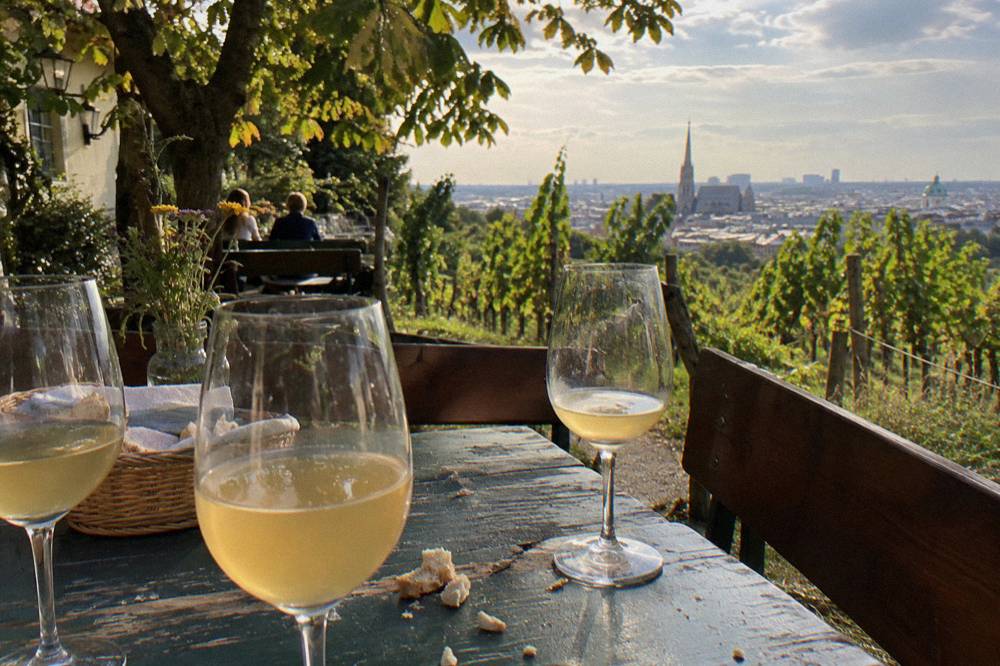
The vineyard scale surprises people. Vienna lists 588 hectares of vineyard area in the 2026 Wiener Weinpreis catalog, split mainly across Doblting at 48 percent and Floridsdorf at 38 percent, farmed by 172 wineries, with a third of the area organic. The Wiener Gemischter Satz, the city's field-blend wine, is protected by regulation: it must come from registered Vienna vineyards, blend at least three varieties, and cannot be sold to consumers before 1 December of the harvest year. That last rule matters for timing, the true bottled Gemischter Satz of the new vintage arrives after the Sturm season is over.
Late September also brought the Wine Hiking Day, four signposted routes through the city vineyards in 2026: 10.8 km from Neustift am Walde to Nussdorf, 9.6 km from Strebersdorf to Stammersdorf, and shorter walks in Ottakring and Mauer, with tastings along the way. The 2026 edition ran on 26 and 27 September and is now past; entry was free and you paid only for tastings and food at the stations, a model worth remembering for the next edition. Transport to the wine villages is straightforward: tram D to Nussdorf, bus 35A to Neustift am Walde, bus 38A or tram 38 to Grinzing, tram 31 to Stammersdorf.
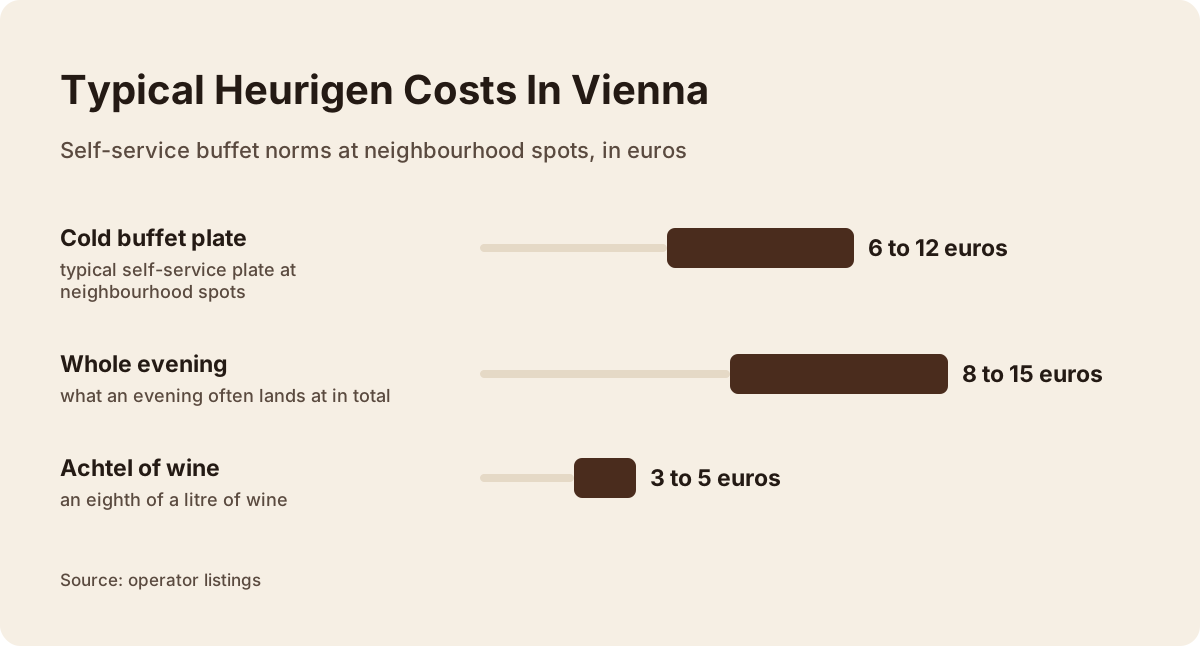
For eating, the Heuriger buffet norms are budget-friendly: a typical self-service cold buffet plate runs around 6 to 12 euros at neighbourhood spots, an evening often lands between 8 and 15 euros, and an Achtel, an eighth of a litre of wine, around 3 to 5 euros. Tourist-oriented places sit higher. Check the buffet prices on the board before loading the plate.
The bookable counterpart to a self-guided Heuriger evening is a guided wine experience. The countryside half-day wine tour with meal and pickup runs about 4 hours and pairs tastings with food outside the city; its price and current terms are on the operator's booking page.
If you would rather stay inside the city, a cellar tasting is the compact alternative, and the autumn months are when the new-vintage talk in those cellars actually means something.
What Food Events Fill The Vienna Calendar?
The near-term calendar is anchored by MondoVino on 13 and 14 November 2026 at Marx Halle, the Christmas market window from early November to late December, the Vienna Coffee Festival on 10 to 12 September 2027, and the Festwochen from 14 May to 20 June 2027. The 2026 editions of the Coffee Festival, the Ottakringer Bierfest and Wine Hiking Day are already past.
MondoVino is the next date on the food calendar: a wine and gourmet festival at Marx Halle on 13 and 14 November 2026, running 15:00 to 21:00, with more than 170 producers and over 1,000 products poured and sold. For a visitor in Vienna that weekend it is the single densest wine tasting in the city, and it sits conveniently just as the Christmas markets open.
The Vienna Coffee Festival moved to September and drew the specialty coffee crowd to Marx Halle on 11 to 13 September 2026, with admission reported around 14 to 20 euros; the 2027 edition is confirmed for 10 to 12 September. Anyone timing a trip around coffee culture, and Vienna's coffee house culture has been recognised on Austria's national inventory of intangible cultural heritage since 2011, should know the festival exists as a September fixture.
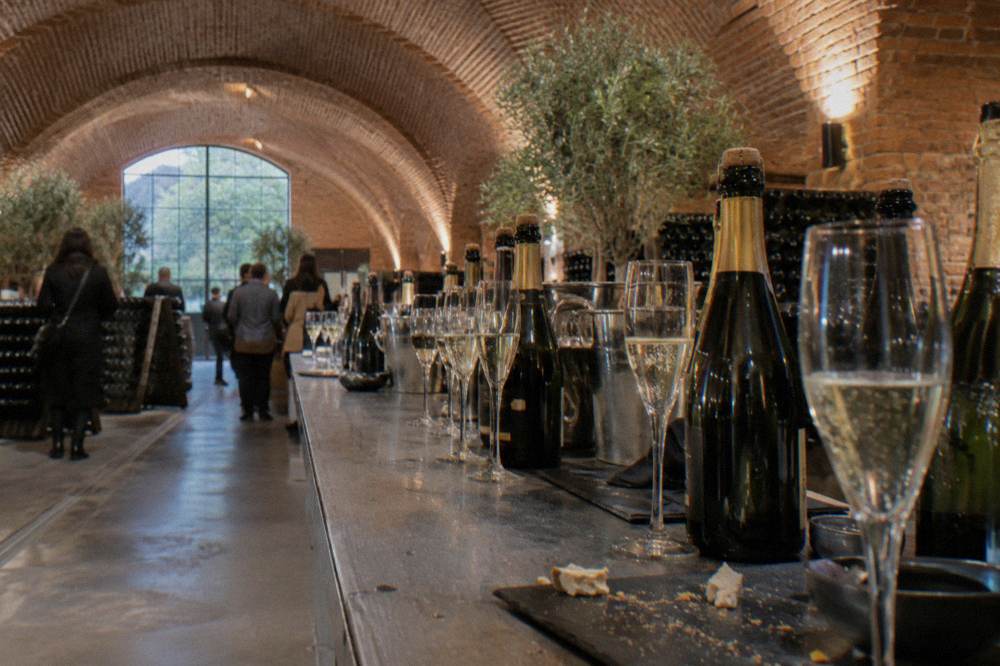
Beyond food proper, two events shape the wider calendar. The Ottakringer Bierfest ran from July into early September 2026 at the Ottakringer brewery with more than twenty tapped beers and street food; it is over for this year but marks summer as the beer season. The Wiener Festwochen run 14 May to 20 June 2027 and are a performing arts festival rather than a food event, though the restaurant terraces around its venues fill accordingly.
| Event | Dates | Venue | Food angle |
|---|---|---|---|
| MondoVino | 13 to 14 Nov 2026, 15:00 to 21:00 | Marx Halle | 170+ producers, 1,000+ products |
| Vienna Christmas markets | 6 Nov to 31 Dec 2026 (varies by market) | Citywide, 15 markets | Market food and drinks at 814 stalls |
| Vienna Coffee Festival | 10 to 12 Sep 2027 | Marx Halle | Specialty coffee, 2026 admission around 14 to 20 euros |
| Wiener Festwochen | 14 May to 20 Jun 2027 | Citywide | Terrace season backdrop, not a food event |
| Wine Hiking Day | 2026 edition past (26 to 27 Sep) | Four vineyard routes | Free entry, tastings at stations |
One planning note that is easy to miss: Sunday. Most retail in Vienna is closed on Sundays and public holidays, with exceptions at station and airport shops and some bakeries. Markets and restaurants keep their own hours, but a Sunday arrival should not count on supermarket provisioning. The Saturday flea market beside the Naschmarkt runs about 6:30 to 15:00, with no market on 25 and 26 December and restricted operation on 12 and 19 December 2026.
Is Christmas The Best Time For Food In Vienna?
Christmas is the best time if market food is the goal: Vienna runs 15 Christmas markets with 814 stalls from early November to late December 2026, per the City of Vienna press release. It is not the season for Heuriger hopping, since many wine taverns reduce hours or close through the winter months.
The 2026 Christmas market season, confirmed by the city's own press release of 29 October, is the densest in the country. The dates and hours below are official; stall-level food offerings vary year to year, so treat the table as the timing skeleton and browse on arrival.
| Market | 2026 dates | Hours |
|---|---|---|
| Rathausplatz Christkindlmarkt | 13 Nov to 26 Dec | Daily 10:00 to 22:00, 24 Dec closes 18:30 |
| Schonbrunn Weihnachtsmarkt | 6 Nov to 24 Dec | Daily 10:00 to 21:00, 24 Dec 10:00 to 16:00 |
| Spittelberg | 13 Nov to 23 Dec | Mon to Fri 14:00 to 21:30, weekends 11:00 to 21:30 |
| Am Hof | 13 Nov to 23 Dec | Mon to Thu 11:00, Fri to Sun 10:00, to 21:00 or later |
| Belvedere | 20 Nov to 31 Dec | Mon to Fri 11:00 to 21:00, weekends 10:00 to 23:00 |
| Art Advent, Karlsplatz | 13 Nov to 23 Dec | Daily 12:00 to 20:00, gastronomy to 21:00 |
For a fuller treatment of what to eat at the markets, the Vienna Christmas markets guide on this site goes market by market. The short version: this is the season of käsekrainer and pommes, punch and gluhwein, germknodel and roasted chestnuts, eaten standing up in the cold. The Christmas market food and drinks walk pairs a guide with those stalls across about 4 hours; the listing carries too few reviews for a rating to mean anything yet, and its price is on the booking page.
Christmas week also has a quirk worth planning around: the flea market and some market operations pause on 25 and 26 December, and 24 December sees shortened hours nearly everywhere. The days either side of Christmas itself are the calmest market visits; the weekends of Advent are the busiest.
One closure note for coffee house pilgrims: Cafe Central has been closed for major renovation since 16 March 2026, with reopening planned for winter 2026, and a pop-up called Decentral operates at Freyung 3 in the meantime, with a Melange reported at 5.40 euros and Apfelstrudel at 5.90. Confirm on the cafe's own site before going, and see the Sachertorte and Demel guide for where the classic cake houses stand this year.
What Does Summer Offer Food Visitors In Vienna?
Summer shifts Vienna's food life outdoors: market restaurants at the Naschmarkt run to 23:00, terraces and beer gardens fill the courtyards, and the wine villages at the city edge do long evening business. The bigger Grinzing and Nussdorf Heurigen stay open through summer, though the small village ones may not.
Summer eating in Vienna is terrace eating. The Naschmarkt's restaurants and bars may operate to 23:00 Monday to Saturday under the city's maximum-hours rules, and every stand and venue there must be open Tuesday to Friday between 15:00 and 18:00, a useful guaranteed window for a visit. The market itself has been in flux: the Naschpark green space with 70 trees is complete, the new Marktraum timber hall opened with 13 regional-food stands, but full redevelopment slipped to February 2027, and the farmers' market stands were relocated during 2026 tunnel works.
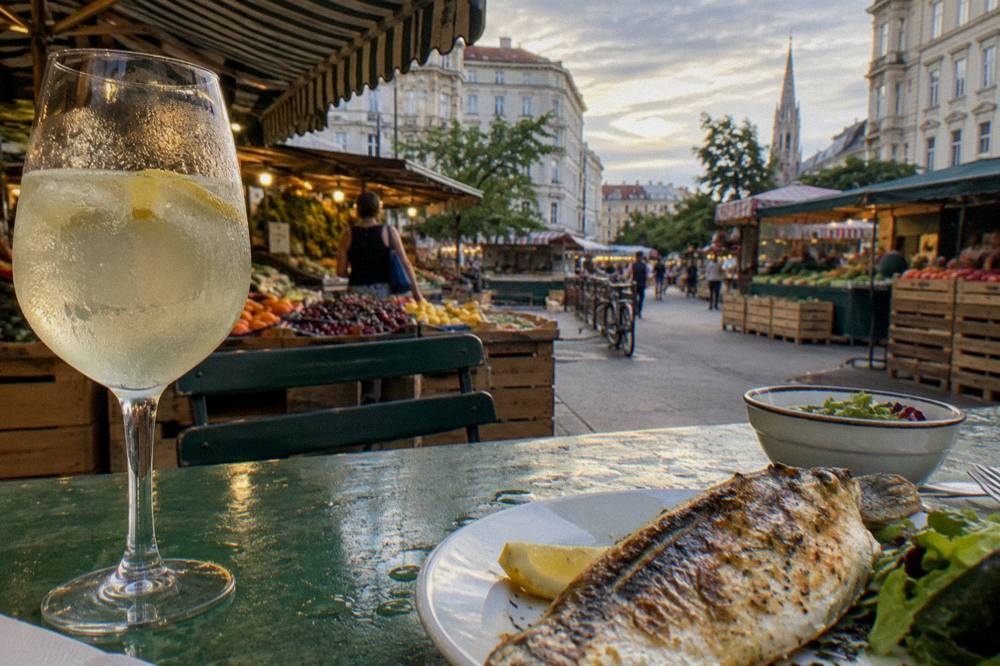
Two summer practicalities are worth the trip planning themselves. First, every dining room in Austria has been smoke-free since 1 November 2019, indoors entirely, so terrace seating is a choice rather than an escape. Second, the small charges add up in a way budget travellers should expect: a Gedeck cover charge of 2 to 5 euros per person in traditional venues, legal only if listed on the menu, and tap water that may legally be charged if it is on the menu, with a 2026 sample of 30 Vienna venues finding 23 charged between 0.80 and 3.60 euros per half litre. Those norms apply year round but bite hardest over a long summer evening. Our page on restaurant etiquette, Gedeck and tap water covers them in full.
Summer is also sausage stand season in the practical sense that you eat standing outside rather than huddled. The Wurstelstand culture is cited by the Vienna Tourist Board alongside the coffee house and the Heuriger as part of the city's food heritage. Nothing about a Kasekrainer changes with the month; only the comfort of eating it does.
How Does The Season Change The Food Walks You Can Book?
The core food walks run all year, but season changes what they pass: the Christmas market walk exists only in the Advent window, wine-country tours are richest during and just after harvest, and coffee house walks are the most weather-proof option at any time of year. Format, not availability, is what moves with the calendar.
The guided formats split into three seasonal groups. The year-round group covers the city food walks and coffee house walks, which depend on indoor institutions and markets that never close. The winter group is the Christmas market walk. The seasonally best group is the wine cluster: countryside and cellar tastings are bookable year round, but they carry the most texture between September and November, when the harvest is in and the new wine is the conversation. If the countryside tasting angle appeals, our guide to Wachau Valley wine day trips from Vienna covers what the tours include and how to plan a self-guided version.
| Format | Best months | Why | Length |
|---|---|---|---|
| Coffeehouse and market food walk | All year | Indoor anchors: coffee houses, Naschmarkt, street food | 5 hours 30 minutes |
| Christmas market walk | Mid Nov to late Dec | Exists only while the markets run | 4 hours |
| Countryside wine tour with meal | Sep to Nov | Harvest and new-wine season in the surrounding wine country | 4 hours |
| Hidden wine cellar tasting | All year | Cellars are weather-proof; autumn adds new-vintage talk | 2.5 hours |
| Austrian wine tasting, city centre | All year | Compact introduction before a Heuriger trip | 2 hours |
The long coffeehouse, market, lunch and street food walk is the reference point for the year-round group: 5 hours 30 minutes, touching coffee houses, markets, lunch and street food, with a vegetarian lunch option stated on the listing. Price is on the operator's page. Book it in any month; in December it simply runs alongside the markets rather than through them. The morning or evening food walk comparison helps with the start-time question once the month is chosen.
Dietary needs deserve one note whenever you book: a vegetarian lunch option is stated only for some listings, and none state vegan or gluten-free options. Message the operator before booking if that matters; the booking page carries the contact route.
For wine visitors who want the cellar without leaving the centre, the hidden wine cellar tasting runs 2.5 hours and is the calm counterpoint to a busy market day.
Whichever format fits, the price bands shift more by format than by month, and the breakdown on what a Vienna food walk costs explains the ranges before you commit.
How Does Spring Compare For A Food Trip To Vienna?
Spring is a quiet but pleasant food season in Vienna: the markets are fully back in rhythm, the first terraces open, and the coffee houses are at their least crowded. The wine villages are the weak point, with many Heurigen still on reduced winter hours until the first warm weeks, so spring suits eaters more than drinkers.
The honest case for spring is the case against crowds. The Christmas markets are packed up, the summer terrace rush has not started, and the grand coffee houses can be sat in without a wait. Landtmann accepts reservations and Demel generally does not, a pattern that holds through the year but matters most when a rainy spring afternoon pushes everyone indoors. Cake prices at the classic houses cluster tightly: a Melange around 6.90 euros at Landtmann and Demel, Sachertorte around 8.50, with the Original Sachertorte slice at Hotel Sacher reported at 11.50 euros. Confirm on the menu, prices move.
Spring is also when the city's market rhythm is easiest to browse. The Karmelitermarkt in the second district runs its large farmers' market component especially Friday and Saturday, and the Brunnenmarkt in Ottakring, Vienna's longest street market, has roughly 40 to 50 stalls active on weekdays and around 120 on Saturdays. Neither requires a ticket or a plan, just the official stand hours as a backstop.
The weak spot is wine. Between the end of Sturm season and the first warm weeks, many Buschenschank reduce hours or close outright; the Ausg'steckt calendars, not fixed opening times, decide. If spring is your window and wine is your interest, lean on the city cellar tastings and save the village Heuriger evenings for a return trip in autumn.
| Timing question | Spring answer | Autumn answer |
|---|---|---|
| Heuriger villages open? | Reduced hours at many; check calendars | Peak season, Ausg'steckt signs up |
| Signature seasonal drink | Fresh market produce, coffee house season | Sturm, then new Heuriger wine |
| Biggest food event | Festwochen period (14 May to 20 Jun 2027) backdrop | MondoVino (13 to 14 Nov 2026) |
| Crowd level at coffee houses | Lower | Higher on market weekends |
| Market browsing | Full rhythm, comfortable walking | Full rhythm, harvest produce |
Common Questions About The Best Time To Visit Vienna For Food
When Is The Best Time To Visit Vienna?
Late September through October for wine, Sturm and Heuriger season; mid November to late December for Christmas markets; summer for terraces and long evenings; spring for coffee houses and markets without crowds.
What Is Sturm Season In Vienna?
Sturm, the cloudy partially fermented grape must, is sold only briefly, typically from September into October, while fermentation is still running. After that it becomes wine and leaves the Heuriger tables until next year.
Are Heurigen Open All Year In Vienna?
The larger Grinzing and Nussdorf spots stay close to year-round, but many traditional Buschenschank reduce hours or close between November and March. Openings are signalled by the pine bush and Ausg'steckt sign and posted in seasonal calendars.
When Do Vienna's Christmas Markets Run In 2026?
From 6 November at Schonbrunn through 31 December at Belvedere, with most markets running mid November to 23 or 26 December. The city confirms 15 markets with 814 stalls for 2026.
Is Vienna Good For Food In Winter Outside The Markets?
Yes. The coffee houses, Beisl kitchens and sausage stands operate all winter, and the coffee house culture has been recognised on Austria's national inventory of intangible cultural heritage since 2011. Only the wine village evenings thin out.
Do Food Tours In Vienna Run In Every Season?
The city food walks and coffee house walks run year round. The Christmas market walk exists only in the Advent window. Wine tours are bookable year round but are richest during and just after the September and October harvest.