What Is The Most Popular Drink In Vienna?
No single drink rules Vienna: Melange coffee, Gemischter Satz white wine, autumn Sturm and beer all stake a claim. Here is what to drink, when and where.
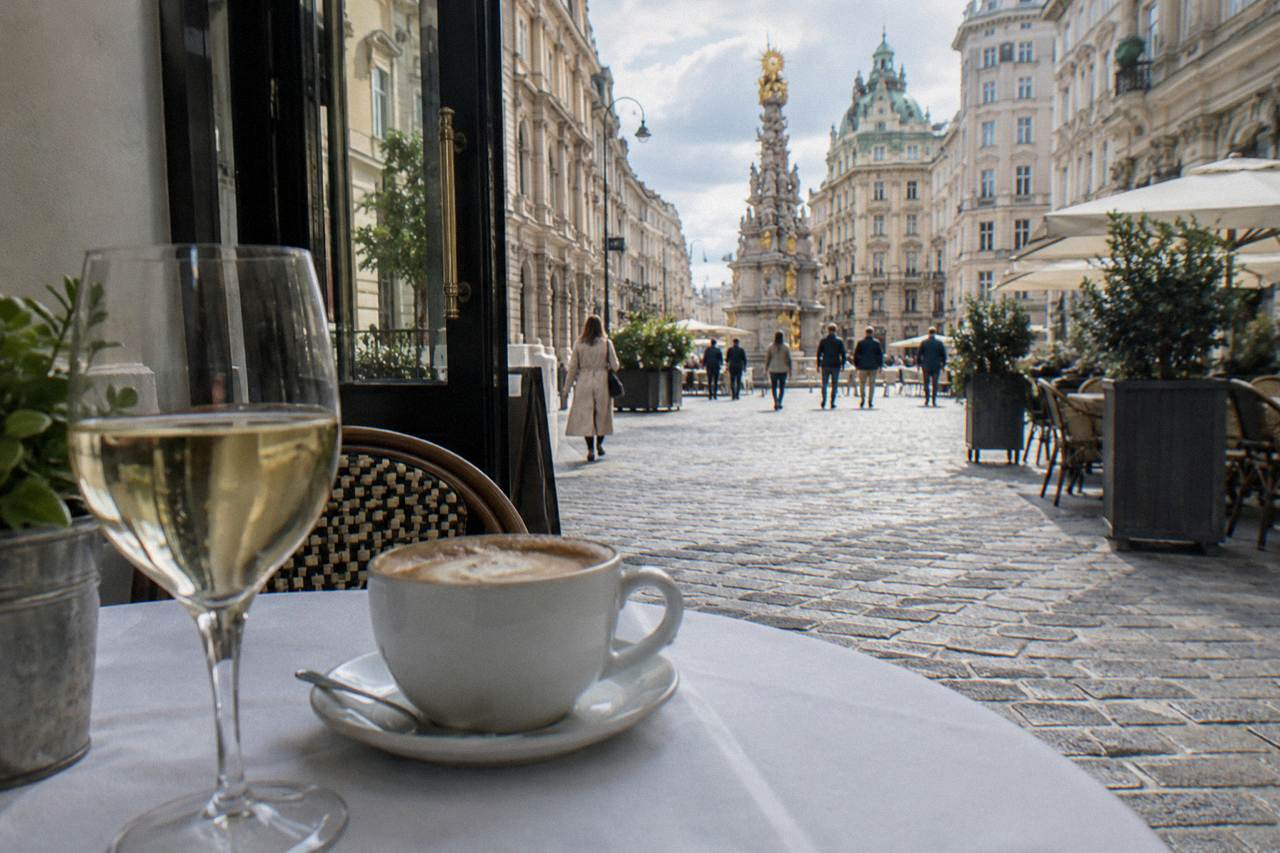
There is no verified popularity ranking, and any article that names one outright is guessing. What Vienna is genuinely known for is a set of four drinks with clear territories: Melange coffee in the grand coffee houses, Gemischter Satz white wine in the Heuriger, briefly fizzy Sturm in early autumn, and beer in the brewery gardens. Order the right one in the right room and you are drinking the way the city drinks. Once you have the drinks sorted, our guide to the must-eat dishes in Vienna tells you which plates deserve the same attention.
Vienna is unusual among European capitals in that its drinking culture is not concentrated in one signature glass. Instead the city runs on a schedule. Morning belongs to the coffee house, where the Melange, equal parts coffee and steamed milk, is the drink most locals would name if pressed. Evening tilts toward wine, specifically the field-blend whites poured in the wine taverns on the city's edges. For a few weeks between September and October the whole conversation turns to Sturm, the cloudy, partially fermented young wine that appears and disappears within a season. And underneath all of it sits beer, the default of the beer garden and the sausage stand.
The question of "most popular" also depends on where you stand. Ask at a coffee house and the answer is the Melange. Ask at a Heuriger in Stammersdorf and the answer is Gemischter Satz. Ask in Ottakring, the brewery district, and the answer is beer without hesitation. This guide walks through each of the four, what it costs, when to drink it and which guided experience pairs with it if you want a local to pour the first glass.
There is also a rhythm to the day that visitors pick up quickly. The coffee house fills twice, once in the morning with readers and regulars, and again in the afternoon for cake and a slow glass of something stronger. The wine taverns on the edge of town only come alive in the evening, when the buffet opens and the garden tables fill. Beer has no schedule at all, which is precisely its role in the city: it is the drink that bridges every other one.
If you would rather have someone else lead the way, three guided experiences cover this map well: a Vienna wine tasting walk, a regional beer tasting session, and a guided Viennese coffee house tour. Prices and current availability are on each operator's booking page.
Is Coffee The Answer, Specifically The Melange?
In the coffee house, yes: the Melange is the drink Vienna built its café identity around, a roughly equal mix of coffee and steamed milk, topped with milk foam. Classic houses list Melange clustered around 6.90 euros, with a slice of Sachertorte at the same houses around 8.50 euros. Those are menu figures, so check the menu card on the table.
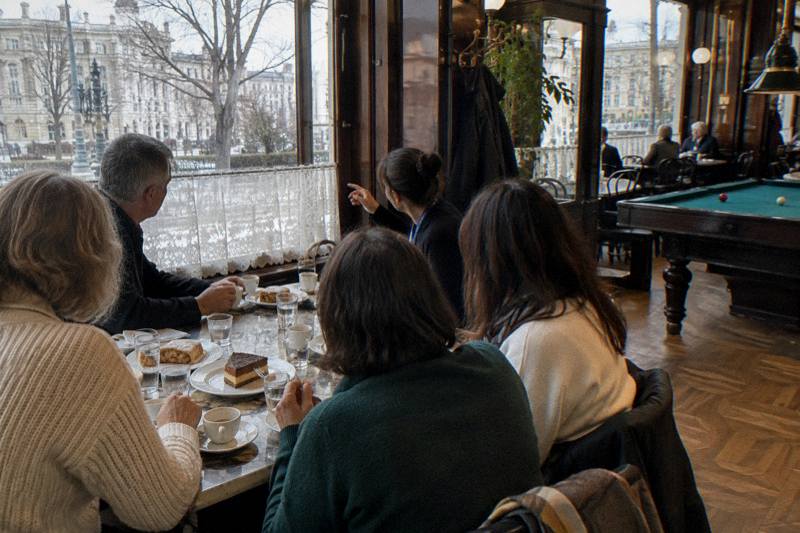
The Melange is often mistaken for a cappuccino by visitors. The difference is in the proportions and the foam, and in the fact that a Melange is meant to be sat with. Viennese coffee house culture was recognised on Austria's national inventory of intangible cultural heritage in 2011, and the Vienna Tourist Board cites it as UNESCO heritage; part of what earned that status is the ritual, not the recipe. A coffee house is a place where the waiter lets you stay for two hours over one cup, where newspapers hang on wooden holders and where the glass of water that arrives beside your coffee is part of the service.
That last detail deserves a second look, because the water glass is not a given everywhere in the city. In the traditional coffee houses it arrives unasked and uncharged. In other venues, tap water can appear on the bill, more on that below.
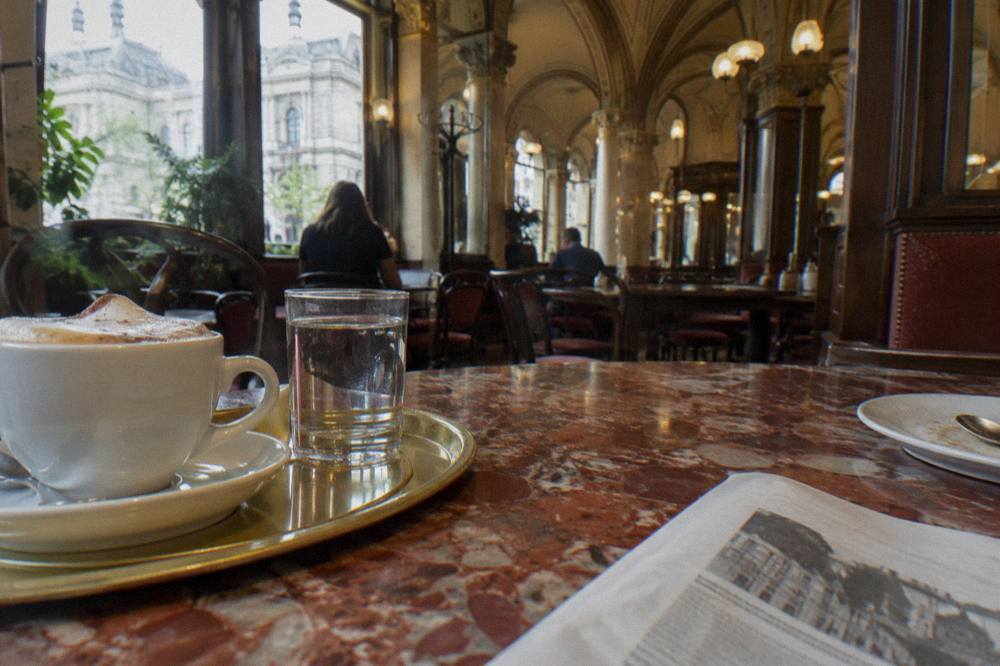
Prices vary by house and by year, so treat these as planning ranges rather than promises. Classic houses such as Landtmann and Demel charge around 6.90 euros for a Melange, while the pop-up Decentral café at Freyung, which is standing in for Café Central during its renovation, charges 5.40 euros. Cake adds roughly 6 to 12 euros a slice at the famous addresses. Café Central itself has been closed for major renovation since 16 March 2026, with reopening planned for winter 2026, so confirm on the cafe's own site before planning a visit.
| Drink or slice | Where reported | Reported price | Notes |
|---|---|---|---|
| Melange | Café Landtmann | 6.90 euros | Reported menu price |
| Melange | Café Demel | 6.90 euros | Reported menu price |
| Melange | Decentral pop-up, Freyung | 5.40 euros | Standing in for Café Central |
| Sachertorte slice | Café Landtmann | 8.50 euros | Reported menu price |
| Sachertorte slice | Hotel Sacher café | around 11.50 euros | 2026 reports vary; confirm on site |
| Kaiserschmarrn | Café Demel | 12.90 euros | Reported menu price |
Reservations are another practical point that separates the houses. Café Landtmann accepts reservations while Demel generally does not, according to 2026 guides, and queues at the Sacher café run longest in the afternoon. Arriving early or after 16:00 is the standard advice for the famous Sachertorte counters.
Tipping in a coffee house is lighter than at a restaurant: rounding up or leaving 0.50 to 1 euro is the local habit. Our Vienna coffee house culture guide goes deeper into the rituals, and the question of which historic house to pick is covered in best coffee houses in Vienna.
A guided option exists for readers who want the stories with the cup: the Vienna guided coffee house tour runs 3 hours and visits classic houses with pastries along the way, with price and inclusions on the booking page. Check availability
What About Wine, The Heuriger And Gemischter Satz?
Wine is Vienna's other answer, and it is the one visitors most often miss. Vienna is one of the few world cities with commercial vineyards inside its limits, 588 hectares across Döbling, Floridsdorf, Liesing and Oberlaa, with 172 wineries and 33 percent farmed organically. The signature pour is Wiener Gemischter Satz, a field blend of at least three grape varieties planted and harvested together.
The rules behind Gemischter Satz are codified in Austrian regulation: the wine must come from registered Vienna vineyards, blend at least three varieties, keep any single variety under 50 percent of the blend, and carry a maximum 12.5 percent alcohol on the label. It cannot legally be sold to consumers before 1 December of the harvest year for the base designation. That is a real, protected wine style, not a marketing phrase, and it exists because Vienna's vineyards have always been mixed plantings rather than single-variety blocks.
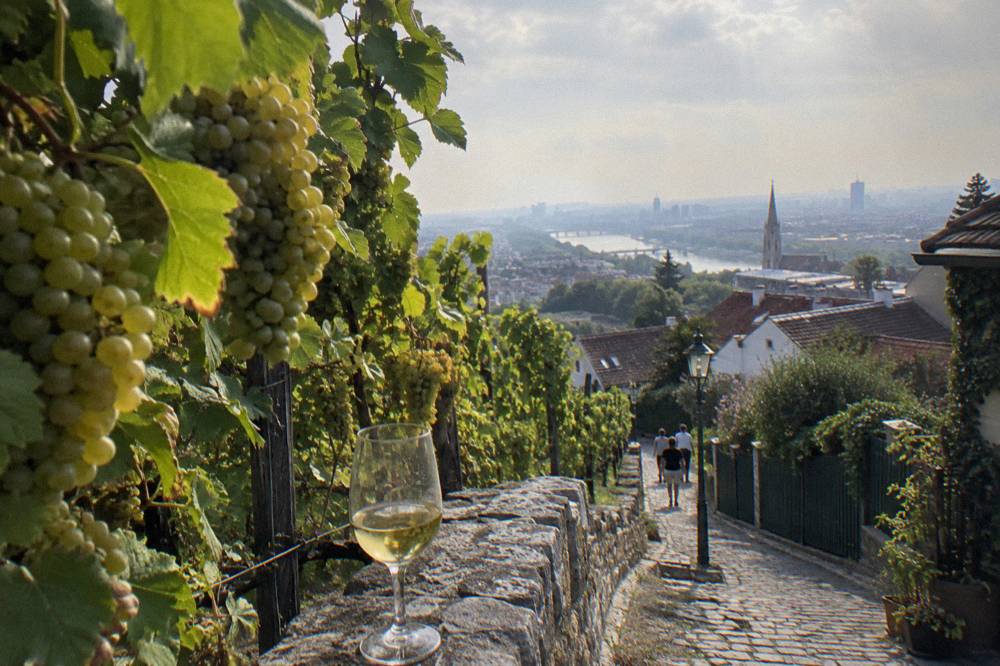
The place to drink it is the Heuriger, the wine tavern where growers serve their own wine, marked by a pine branch and an Ausg'steckt sign over the door. The Vienna Tourist Board's guide to Viennese Heurigen explains the tradition and lists the wine districts: Grinzing, Nussdorf, Neustift and Sievering in the north, Stammersdorf and Strebersdorf in the northeast, Mauer and Oberlaa in the south. Around 100 genuine Buschenschank and Heurigen operations were still counted in September 2026, a shrinking number that locals call Heurigensterben, though some areas report strong demand.
The word Heurige itself carries the season with it. It names both the tavern and the current year's wine, and under the tourist board's account the young wine may carry that name only until 11 November, St Martin's Day, after which it becomes last year's vintage. So the Heuriger you sit in and the wine you drink there share one word and one clock.
Getting to the wine districts takes a little planning but no car. Local guides report tram D to Nussdorf, bus 35A to Neustift am Walde, bus 38A or tram 38 to Grinzing, and tram 31 to Stammersdorf as the standard routes. Check current timetables before you travel, since works and diversions change frequently.
A Heuriger evening is also one of the better value nights out in the city. Local guides report a self-service cold buffet plate running about 6 to 12 euros, a full evening at a neighbourhood spot often landing between 8 and 15 euros, and an Achtel, an eighth of a litre of wine, at around 3 to 5 euros. Those are reported norms, not promises; the buffet is weighed or counted and the price is yours to control.
The 2026 vintage itself is a story worth knowing before you order. Heat and dryness cut Vienna's yield by 30 to 40 percent, but the quality was described as very good to exceptionally good, with an early harvest in some vineyards. Less wine, good wine: a fair summary of what is in the glass this season.
The calendar matters when you plan. From harvest until 1 December, the current year's Gemischter Satz is still behind its legal gate, so a spring or summer visit pours the previous vintage. The switch sits close to 11 November, when the young wine stops being the Heurige and becomes last year's vintage, and either side of that date is when the taverns turn over.
The Achtel is the right unit for comparison. At 3 to 5 euros it lets you try several growers in one evening without committing to a bottle, and because each Heuriger pours only its own wine, the tasting works tavern by tavern. The blend rules guarantee variety, three grapes minimum, none above half the blend, so a Gemischter Satz from Nussdorf need not taste like one from Stammersdorf even in the same vintage.
Given Heurigensterben and roughly 100 remaining operations, check ahead before you ride out. Pair one district with one route, tram D to Nussdorf or tram 31 to Stammersdorf, and confirm the tavern you want is serving that day. Budget against the reported norms, a buffet plate at 6 to 12 euros and a night out at 8 to 15.
For travellers who want the wine without working out the edge-district bus routes alone, a guided Vienna wine tasting experience pairs Austrian and local wines with context. The Vienna wine tasting walk runs 2.5 hours and is the natural pairing for this half of the article; check the booking page for the current price, meeting point and what is poured. Operators can also help with dietary questions, and it is always worth messaging before booking if you have specific needs.
When Does Sturm Take Over The Conversation?
For a few weeks each September and October, Sturm is the drink everyone in Vienna's wine districts talks about: a cloudy, sweet, lightly fizzy partially fermented grape must, sold only in the brief window while it is still working. There is no Sturm season outside those weeks, no bottled export to speak of, and no way to plan a trip around it except to travel in early or mid autumn.
Sturm sits between grape juice and wine. It is still fermenting when it is served, which is why it comes in a tumbler rather than a wine glass and why it goes to your head faster than its mild taste suggests. Wine taverns in Stammersdorf's Kellergasse and the other vineyard villages pour it straight from the barrel while it lasts, and once the fermentation finishes and the wine settles, Sturm is gone until next year.
The 2026 season has already passed, as has Vienna's Wine Hiking Day, held on 26 and 27 September 2026 with free entry along four routes through the city's vineyards, the longest 10.8 km from Neustift am Walde to Nussdorf, a 9.6 km route from Strebersdorf to Stammersdorf, and shorter walks in Ottakring and Mauer. Tastings and food at the stations were paid, the walking was free, and the routes included stroller-friendly sections with tasting stations open from 10:00 to 18:00. It was, in effect, the whole Sturm and Gemischter Satz culture laid out along a day's walk, and a 2027 edition has not been announced. If a future visit lands in late September, the wine hiking day is one of the best free food-and-drink experiences the city offers.
Does Beer Belong In The Conversation?
Beer belongs, and quietly: Vienna is one of Europe's great brewing cities, home to the Ottakring brewery district and a lager style, the Viennese lager, that travelled far beyond Austria even as it faded at home. The Ottakringer Bierfest ran from early July to early September 2026 with more than 20 tapped beers, street food and brewery tours, and beer remains the default pour at sausage stands and beer gardens year round.
The Viennese lager is an amber-red style whose descendants survive in breweries far from Vienna, and it is the historical argument for putting beer in the same sentence as Melange and Gemischter Satz. In everyday 2026 Vienna, beer is less a ceremony than a constant: the Wurstelstand sausage stand and the beer garden are where it lives, and the regional brewing scene has grown around the Ottakring anchor. A guided regional beer tasting experience in Vienna runs about an hour and covers the local styles with a guide; price and pours are listed on the booking page.
One practical note that surprises visitors: Austrian gastronomy has been smoke-free indoors since 1 November 2019 under national law, including all guest areas of bars and beer halls, with smoking permitted only in defined outdoor areas. Beer garden culture got a quiet boost from that change, and the official business portal states the rules plainly.
How Do You Choose The Right Drink For Your Trip?
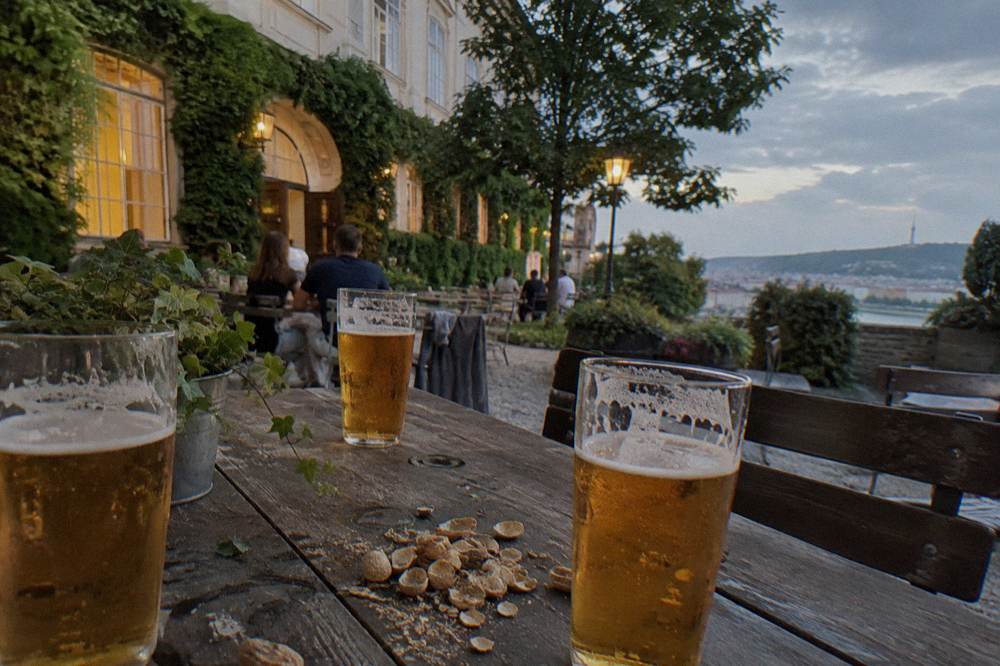
Match the drink to the hour and the room: Melange before noon in a coffee house, beer in the afternoon at a sausage stand or beer garden, Gemischter Satz in the evening at a Heuriger, and Sturm only if your visit falls inside its short autumn window. If you have time for just one guided experience, the wine tasting walk covers the most distinctly Viennese of the four.
The coffee house and the Heuriger are the two rooms worth crossing the city for, and they mirror each other nicely. Both are slow by design. Both protect their rituals: the water glass beside the Melange, the pine branch over the Heuriger door. Both are cheaper than their reputations suggest, provided you read the menu for the Gedeck and the water charge before you order.
Beer and Sturm are the opportunistic picks. Beer needs no planning, since the stands and gardens are everywhere and the regional styles reward an hour of guided tasting if you want the history. Sturm rewards whoever happens to be in Vienna in late September or early October, and punishes everyone who is not.
Season matters more than ranking. A February visitor will find the coffee houses at their cosiest and many small Heurigen closed or on reduced winter hours, a pattern local calendars make plain. A September visitor gets Sturm, the wine hiking weekend if the dates align, and vineyards at harvest. Both will find Melange and beer waiting, which is the honest answer to why Vienna has never needed to crown a single most popular drink. The team behind Vienna Food Tours covers each of these rooms in depth, from the Naschmarkt food guide to the Vienna beer and craft beer guide.
Common Questions About Drinks In Vienna
What Is The Most Popular Drink In Vienna?
No verified ranking exists. Vienna is known for four drinks, each in its own setting: Melange coffee in the coffee houses, Gemischter Satz white wine in the Heuriger, Sturm for a few weeks in autumn, and beer at sausage stands and beer gardens.
What Is A Melange?
A Viennese coffee drink of roughly equal parts coffee and steamed milk, topped with milk foam. It is the classic order in traditional coffee houses and is not the same as a cappuccino. Classic houses list Melange at around 6.90 euros.
What Is Gemischter Satz?
Vienna's protected field-blend white wine, made from at least three grape varieties grown and harvested together in registered Vienna vineyards, with no variety above 50 percent of the blend. It is the standard pour at a genuine Heuriger.
When Can I Drink Sturm In Vienna?
Only during its short season, typically September into October, while the partially fermented must is still fizzy. The 2026 season has ended. It is sold by the glass at wine taverns in the vineyard districts and does not keep.
Is Tap Water Free In Vienna Restaurants?
Not always. Venues may charge for tap water if the price is printed on the menu, and a 2026 sample of 30 Vienna venues found 23 charged, usually 0.80 to 3.60 euros per half litre. Check the menu before assuming.
Is Smoking Allowed In Vienna Bars And Coffee Houses?
No. Austrian gastronomy has been smoke-free indoors since 1 November 2019, including all guest areas of bars, beer halls and coffee houses, with smoking only in defined outdoor areas.