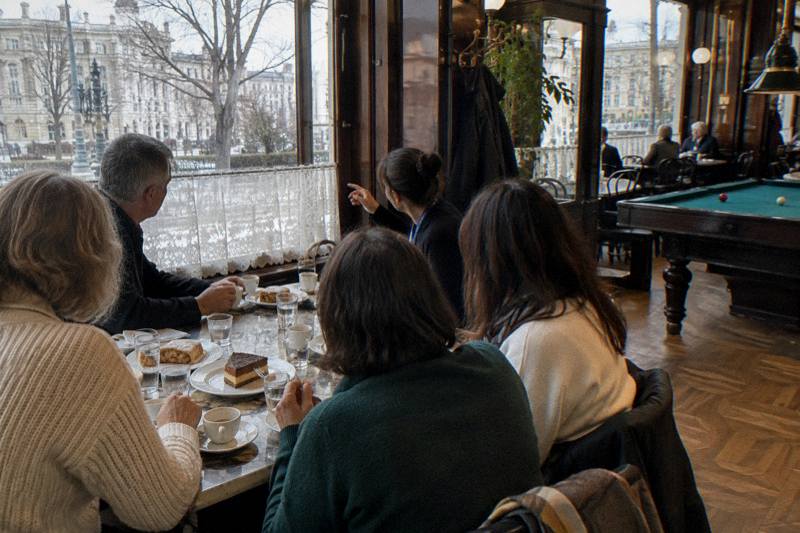
What Is So Special About Vienna Coffee?
Viennese coffee house culture explained: the Melange, the Einspaenner, the glass of water ritual, 2026 prices at the classic houses, and how to book a guided coffee house tour.
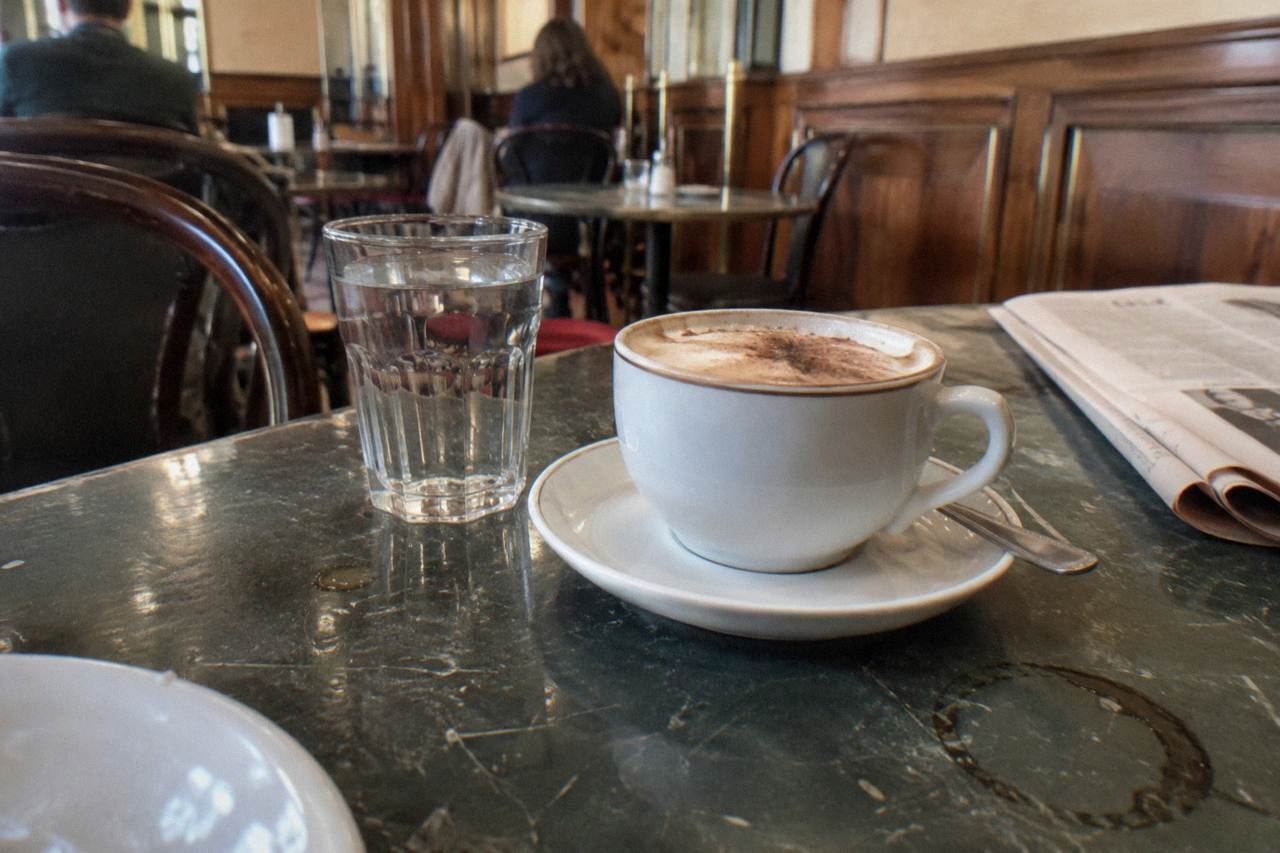
Ask a Viennese person what makes their coffee special and they will rarely talk about the roast. What they mean is the whole institution: the marble table, the bentwood chair, the newspaper on a stick, the glass of water that arrives with the coffee and is refreshed without asking, and a waiter who has seen decades of customers and does not hurry anyone. Viennese coffee house culture was recognised on Austria's national inventory of intangible cultural heritage in 2011 and is cited by the Vienna Tourist Board as UNESCO heritage, and that recognition is about the social space as much as the drink.
The coffee itself has its own identity too. Vienna is not a third-wave espresso city by origin; it is a city of long milk coffees served in specific glasses and cups with specific names, where ordering a Melange, a Kaisermelange or an Einspaenner means something precise, and where a small glass of water traditionally belongs to the order as much as the spoon. A visitor who orders "a coffee" is, in a gentle way, ordering the wrong thing. Once you know what to order, the next question is what it all costs, and the full breakdown of coffee house prices in Vienna covers Melange costs at the classic houses, cake prices, cover charges, tipping, and how a guided coffee house tour compares.
This piece explains the ritual, the menu vocabulary, the prices at the classic houses, what is happening with Cafe Central during its renovation, and how a guided coffee house tour fits in if you would rather have the stories served alongside the Sachertorte. Everything about prices below is labelled as reported, since cafe menus move. And if coffee house mornings have you wondering what locals actually eat to start the day, what a common breakfast in Vienna looks like walks through the full range, from Melange and cake to sausage stands.
Vienna coffee is special because the coffee house is the product: a legally ritualised, unhurried public living room where a Melange arrives on a tray with a glass of water, refills of water are silent, and a single order can last three hours without a glare. The culture was inscribed on Austria's national inventory of intangible cultural heritage in 2011, a status it still holds.
That inventory entry is the formal answer. The informal answer is time. In a Viennese coffee house you rent a table as much as buy a drink, and everyone in the room, from the regular reading the same newspaper for a morning to the tourist with a laptop, operates under the same quiet contract: nobody rushes you out. Waiters in the grand houses are famously brusque and famously loyal; regulars get their coffee before they order it. The glass of water that comes with every coffee is refilled without being asked for, a small signal that the table is still yours.
The coffee menu is the second thing that surprises people. A Viennese Speisekarte of coffees runs to dozens of named variations, and the names are not decorative. A Melange is equal parts espresso and steamed milk with milk foam. An Einspaenner is a double espresso in a tall glass with whipped cream, named after the one-horse carriages whose drivers could hold the glass with one hand. A Kaisermelange adds an egg yolk and honey. A Fiaker, named after the city's horse-drawn cabs, is coffee with a slug of cherry or rum. Ordering is part of the pleasure, and getting it slightly wrong is part of being a visitor.
For many travellers the fastest way into this world is a guided walk, since the stories behind the houses rarely appear on the menus. The guided Viennese coffee house tour listed on Vienna Food Tours pairs several classic stops with a local guide; details, duration and price are on the operator's booking page.
If you would rather go alone, start with the houses that still run the full ritual: Cafe Landtmann near the Burgtheater, Cafe Demel opposite the Hofburg, and Cafe Sperl in the sixth district. Each is covered in the separate best coffee houses in Vienna guide, with locations and what to order in each.
The Waiter, The Glass Of Water And The Ritual
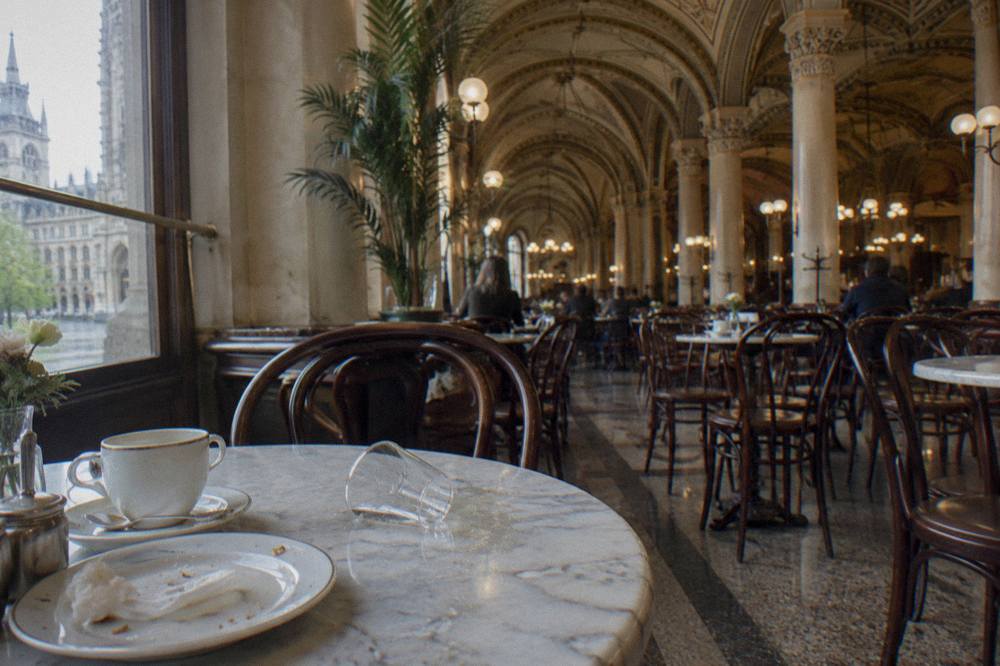
The ritual is the point: your coffee arrives on a small tray with a glass of cold water, the water is refilled without a word throughout your stay, and the table is yours for as long as the drink lasts. Waiters are professional, formal and famously dry, and nobody brings a bill until you ask for it.
The glass of water deserves its own paragraph because visitors so often misread it. It is not a freebie or an apology for small espresso cups; it is a courtesy with a long history, a palate cleanser and a signal of hospitality. In a properly run house the water glass is refreshed even if you have ordered nothing else for two hours. The day's newspapers on wooden sticks, the Thonet bentwood chairs, the card tables, the chandeliers dimmed for late afternoon: all of it is maintained theatre, and the best houses treat it as a living institution rather than a museum set.
The waiter relationship is the other half. Service in the grand coffee houses can feel brusque to visitors used to North American cheer, but it is a form of respect: you are treated as an adult who knows what they want. Say hello when you enter, catch the eye when you are ready, and ask for the bill when you want to leave, because it will never arrive on its own. Tipping follows the local pattern described in the tipping in Vienna guide: round up or leave around 0.50 to 1 euro in a coffee house, more like 5 to 10 percent in a full restaurant.
There are practical quirks worth knowing. Many coffee houses add a small cover charge in traditional venues, generally around 2 to 5 euros per person, and it is legal only if printed on the menu. Tap water can be charged if it is listed; a 2026 Arbeiterkammer sample of 30 Vienna venues found 23 charged for it, often 0.80 to 3.60 euros per half litre, so do not assume the tap carafe is free. These customs are laid out in more detail in the restaurant etiquette and Gedeck guide.
A guide who knows the houses takes the friction out of all of this.
Melange, Einspaenner And The Long Menu
The Viennese coffee menu is a fixed vocabulary, not a suggestion list. The Melange, espresso and steamed milk in equal parts under a layer of foam, is the local default; the Einspaenner is a double espresso in glass with whipped cream; the Kaisermelange adds egg yolk and honey; and each name reliably produces the same drink in any traditional house.
This reliability is unusual. In many cities a "macchiato" or a "flat white" drifts city to city; in Vienna the names are stable because the houses learned them from each other over generations of shared custom. A few entries worth decoding before your first order:
| Coffee on the menu | What arrives |
|---|---|
| Melange | Espresso and steamed milk in roughly equal parts, topped with milk foam, in a cup |
| Einspaenner | Double espresso in a tall glass, crowned with whipped cream |
| Kaisermelange | Coffee with an egg yolk and honey beaten in |
| Fiaker | Black coffee with cherry brandy or rum, whipped cream on top |
| Brauner | Black coffee served with a small jug of cream on the side |
| Verlaengerter | "Lengthened" espresso, hot water added, the local americano |
The Melange is the one to learn first, because it is the drink the city measures itself by. The big houses cluster their Melange prices in the same band, which makes the menu a useful price signal: classic houses like Landtmann, Museum and Schwarzenberg charge around 6.90 euros. Cafe Demel's Melange is also listed at 6.90 euros. Treat these as reported figures and check the card on arrival, since menus move.
The cake is not an optional extra. A Sachertorte slice at Cafe Landtmann is listed at 8.50 euros and at Demel at 8.50 euros; a slice of the Original at the Hotel Sacher cafe is reported at 11.50 euros, with other reports noting a range of roughly 8.90 to 10.50 euros. The full cake landscape, including the Sacher versus Demel rivalry over what counts as the Original, is covered in the separate Sachertorte or Demel guide. For a broader run through Apfelstrudel, Kaiserschmarrn and the rest, see the Vienna cake and pastry guide.
If tasting your way through the menu with someone who explains it sounds better than decoding it alone, one format sits exactly on that job. The pastries, bites and local stories coffee house walk visits a series of houses with tastings built in; the operator's booking page carries the current stops and inclusions.
Coffee House Culture As Recognised Heritage
The formal status is specific: Viennese coffee house culture was inscribed on Austria's national inventory of intangible cultural heritage in 2011, under the UNESCO framework, and it remains listed. The Vienna Tourist Board also cites the coffee house, together with the Heuriger wine tavern and the sausage stand, as UNESCO heritage on its own pages.
Precision matters here because the internet routinely upgrades the claim. Vienna's coffee house culture is not on UNESCO's global representative list; it sits on the Austrian national inventory, which is the country-level mechanism of the UNESCO intangible heritage system. The Austrian UNESCO commission's inventory page documents the 2011 entry, and it is worth reading what the citation actually values: not the coffee, but the atmosphere of equality: a place where guests consume time and space while the bill lists only the coffee.
That phrasing is the best single sentence ever written about the institution, and it explains the heritage argument. A coffee house is one of the few commercial spaces where purchase and occupancy have been decoupled by custom: you buy one Melange and receive a table for the morning. The inventory citation also names the specific furniture, the newspapers, the marble and the specific forms of service as carriers of the tradition, which is why the grand houses keep replacing bentwood with bentwood.
The Heuriger and the Wurstelstand share the same heritage framing on the tourist board's pages, and all three are covered elsewhere on this site: the Vienna coffee house culture guide goes deeper on the history, and the street food and Wurstelstand guide takes the sausage side. None of the three is a museum piece; all three still function as daily infrastructure for locals, which is exactly what the heritage designation is trying to protect.
What A Cup Costs In 2026
A Melange at the classic houses runs around 5.40 to 6.90 euros, with the cheapest reported Melange at the Cafe Central pop-up and the big houses clustered at the top. Cake on top of that runs roughly 5.90 euros for a strudel slice to 11.50 euros reported for an Original Sachertorte slice at the Hotel Sacher cafe.
These are menu figures and they move: treat them as orientation, not gospel, and check the menu card or the house's own site before you plan a budget. The spread is genuinely useful though, because it shows how little separates the famous houses from each other and how the Sacher cafe sits a tier above.
| Venue | Melange | Signature cake | Notes |
|---|---|---|---|
| Decentral (Cafe Central pop-up, Freyung 3) | around 5.40 euros (reported) | Apfelstrudel around 5.90 euros (reported) | Pop-up during Central's renovation, open daily until early evening |
| Cafe Landtmann | around 6.90 euros (reported) | Sachertorte around 8.50 euros, Kaiserschmarrn around 15.70 euros (reported) | Takes reservations |
| Cafe Demel | around 6.90 euros (reported) | Sachertorte around 8.50 euros, Apfelstrudel around 9.50 euros (reported) | Generally no reservations |
| Hotel Sacher cafe | on the menu | Original Sachertorte slice reported at 11.50 euros | The "Original", sealed and two apricot layers |
Two planning notes fall out of this table. First, queues: the Sacher cafe and Demel both draw lines, the Sacher's usually longer and worst in the afternoon, so arriving early or after 16:00 is the standing advice. Second, reservations: Landtmann accepts them, Demel generally does not, and if you are set on the Original Sachertorte the whole question of which version to buy is argued out in the Sachertorte guide.
Against that, a guided tour bundles several houses, tastings and stories into one price, which changes the maths. The 2.5-hour Viennese coffee, cake and chocolate tour is the format built exactly for this comparison: multiple stops, tastings included, priced on the live listing rather than paid piecemeal at each marble table.
Cafe Central And The 2026 Renovation
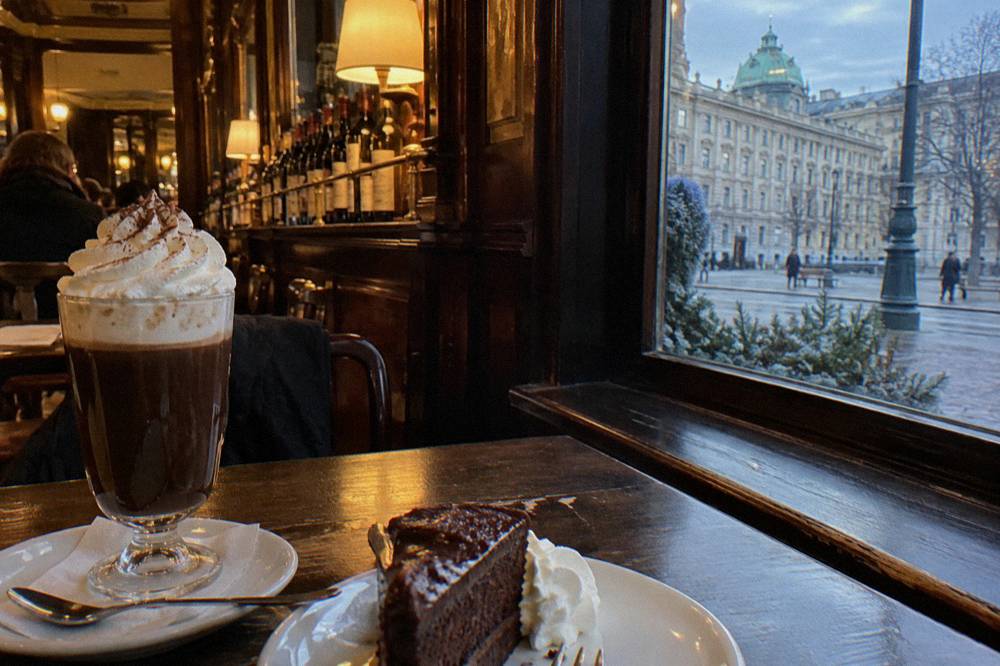
Cafe Central, the most famous coffee house in the city, has been closed for major renovation since 16 March 2026, with reopening planned for winter 2026. Until it reopens, its operators run a pop-up, Decentral, at Freyung 3, serving the classics in a smaller space, with a reported Melange at 5.40 euros and Apfelstrudel at 5.90 euros.
This matters because Cafe Central is on nearly every Vienna itinerary, and a traveller who turns up at Herrengasse 14 without knowing will find scaffolding. The pop-up is a genuine substitute for the cake and coffee, though not for the vaulted Palais Ferstel interior that made Central famous; confirm the current status on the cafe's own site before you go, since reopening windows can shift. The full backstory is in the why is Cafe Central popular piece and the reservation question is handled in do I need a reservation for Cafe Central.
The rest of the classic tours listed here are unaffected by the works. Demel, Landtmann and the Hotel Sacher cafe all continue to serve as normal, so a coffee house crawl loses nothing by Central's absence; it simply routes through Freyung instead of Herrengasse. If your heart is set on the original room, plan around the winter 2026 reopening and check the house's own channels rather than third-party listings.
The Festival And The New Roasting Scene
Vienna's coffee identity is expanding beyond the marble table. The Vienna Coffee Festival returns 10 to 12 September 2027 at Marx Halle, following a 2026 edition in September, and the city now supports a visible specialty roasting scene alongside the traditional houses, with dedicated gluten-free and vegan cafe options like Cafe Ausnahmsweise and Cafe Gruener Salon listed in 2026 guides.
The festival is the clearest single marker of the shift: three days at Marx Halle where roasters, machines and baristas from across the region show their work, with admission around 14 to 20 euros at the 2026 edition and dates for the next one listed on the official festival site. It is the one moment the old and new scenes share a hall, and it is a good pairing with a traditional coffee house visit if your trip happens to land on it.
The everyday scene has broadened too. 2026 listings name fully gluten-free and vegan-friendly cafes such as Cafe Ausnahmsweise and Cafe Gruener Salon in the sixth district and Gasthaus Zum Wohl, covered in the gluten-free food in Vienna and vegan food in Vienna guides. None of this displaces the Melange; it simply means the question "what is so special about Vienna coffee" now has a second chapter, written by roasters rather than waiters.
For most visitors the traditional houses remain the main event, and the choice of how to experience them is really a choice between going alone with a shortlist or joining a walk that strings several houses together. If you'd like to turn your coffee house visit into a full morning, the Vienna breakfast guide covers what a traditional Frühstück includes and where locals actually eat it.
Common Questions About Vienna Coffee
What Is So Special About Vienna Coffee?
It is the institution as much as the drink: a protected coffee house culture, inscribed on Austria's national inventory of intangible cultural heritage in 2011, where a named milk coffee like the Melange arrives with a glass of water on a tray, and the table is yours for as long as the order lasts.
What Exactly Is A Melange?
Espresso and steamed milk in roughly equal parts, topped with milk foam and served in a cup. It is the local default coffee, priced around 6.90 euros at the classic houses.
Is The Glass Of Water Free?
Yes, in a traditional coffee house the water glass that comes with your coffee is part of the service and is refilled without charge. Tap water ordered on its own is different: most Vienna venues charge for it when it is listed on the menu.
Is Cafe Central Open In 2026?
No. It has been closed for major renovation since 16 March 2026, with reopening planned for winter 2026. A pop-up, Decentral, operates at Freyung 3 in the meantime; confirm status on the cafe's own site.
How Much Does Coffee And Cake Cost?
Around 5.40 to 6.90 euros for a Melange and roughly 5.90 to 11.50 euros for a cake slice at the classic houses. Check each house's current menu, prices move.
Is A Coffee House Tour Worth Booking?
If you want the stories, several houses and the tastings handled in one go, yes. Prices and inclusions sit on each operator's booking page, and the three coffee walk formats compared above cover the range from a guided house tour to a cake and chocolate route.