Tipping In Vienna: Restaurants, Cafes And Tours
Vienna tips less than America and more casually than you might fear: roughly 5 to 10 percent in restaurants, small change in coffee houses, and a polite question when a guided food walk ends.
Short answer
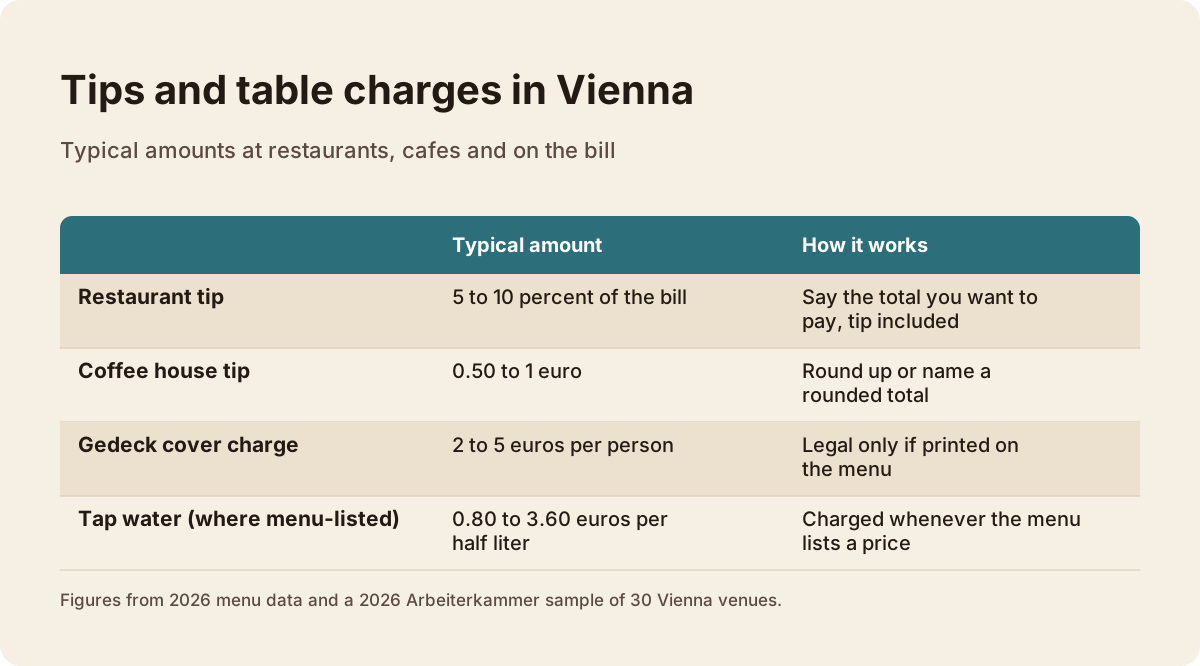
Tip 5 to 10 percent in Vienna restaurants and state the total you want to pay when the bill arrives. In coffee houses, round up or leave 0.50 to 1 euro. No verified rule covers food walk guides, so ask the guide or check the booking page.
Vienna does not run on American tipping logic, and it does not run on strict no-tip European logic either. The city sits in between: servers earn a real wage, tips are not owed as a matter of survival, but leaving nothing at a sit-down meal reads as a statement that the service was poor. The custom is 5 to 10 percent in restaurants, and the paying ritual matters as much as the amount. You do not leave cash on the table and walk out, you tell the server the total you want to pay while they stand at the table with the card machine.
That ritual, plus a few local wrinkles like the Gedeck cover charge and the tap water rule, is what trips visitors up. Nobody hands you a rulebook at the airport, and the guidebooks tend to compress the whole subject into a single line. This guide walks through each situation in turn: restaurants, coffee houses, market stands and sausage stands, guides on paid walks, taxi drivers and hotel staff, and the moments where leaving nothing is genuinely fine. Each section stands alone, so if you only came for the coffee house answer, jump straight to it.
How Much Should You Tip In Vienna Restaurants?
The standard restaurant tip in Vienna is 5 to 10 percent of the bill, with 10 percent marking genuinely good service and 5 percent marking ordinary service. You state the total you want to pay, tip included, when the server brings the bill, rather than leaving money on the table afterwards.
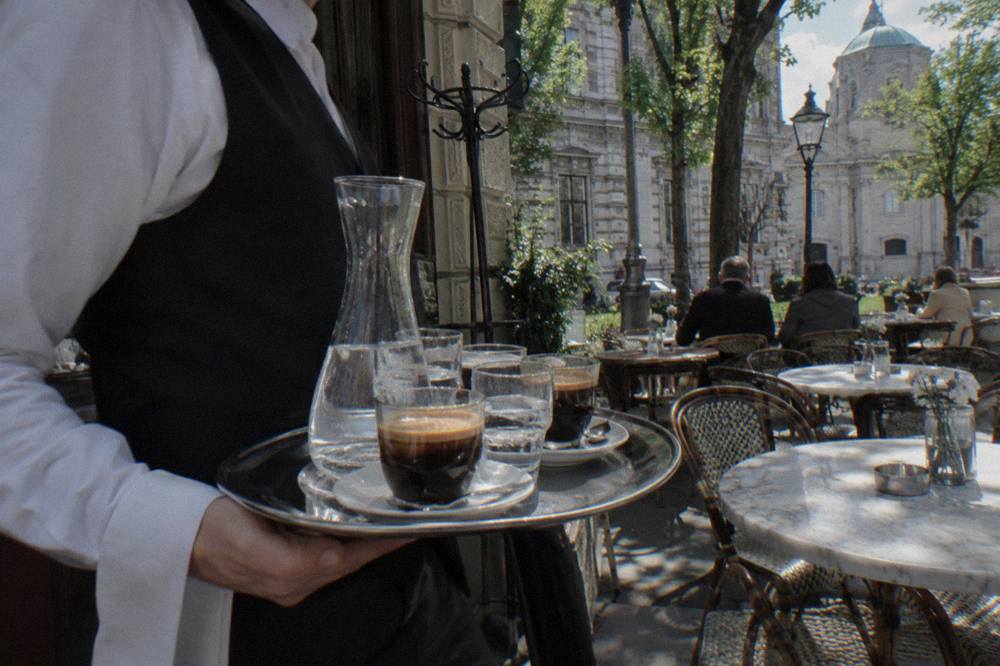
The mechanics are simple once you have seen them once. When the server arrives with the bill, you look at the total, decide on a rounded figure that lands within the 5 to 10 percent band, and say it out loud. The phrase "Stimmt so" means "that is fine as it is" and works when you hand over cash and let the server keep the difference. If you are paying by card, the same logic applies: the machine is handed to you or pre-set at the table, and you enter the tip-inclusive total yourself. Card payment is normal in Vienna restaurants, so this is not a cash-only maneuver, though small notes are always handy elsewhere on your food day.
Two things surprise visitors. First, tipping is not legally owed and will not be added silently to your bill; anything charged to you appears printed on the bill itself, including the cover charge covered further down this page. Second, rounding alone is fine at casual places. At a traditional Beisl where the bill is modest, rounding up to the next sensible note and saying "Stimmt so" is a perfectly normal tip that lands inside the percentage band without any arithmetic. Austrians themselves rarely calculate to the cent; the gesture and the round figure carry the meaning.
If service is genuinely poor, locals simply pay the exact total and leave. It is understood as a quiet verdict, and no server will chase you down the street. But it is worth being certain the fault was the service and not a slammed Saturday night before you deploy it.
For a fuller picture of where those restaurant bills come from, the best food in Vienna by district guide maps the eating neighborhoods worth budgeting for.
How Does Tipping Work In Viennese Coffee Houses?
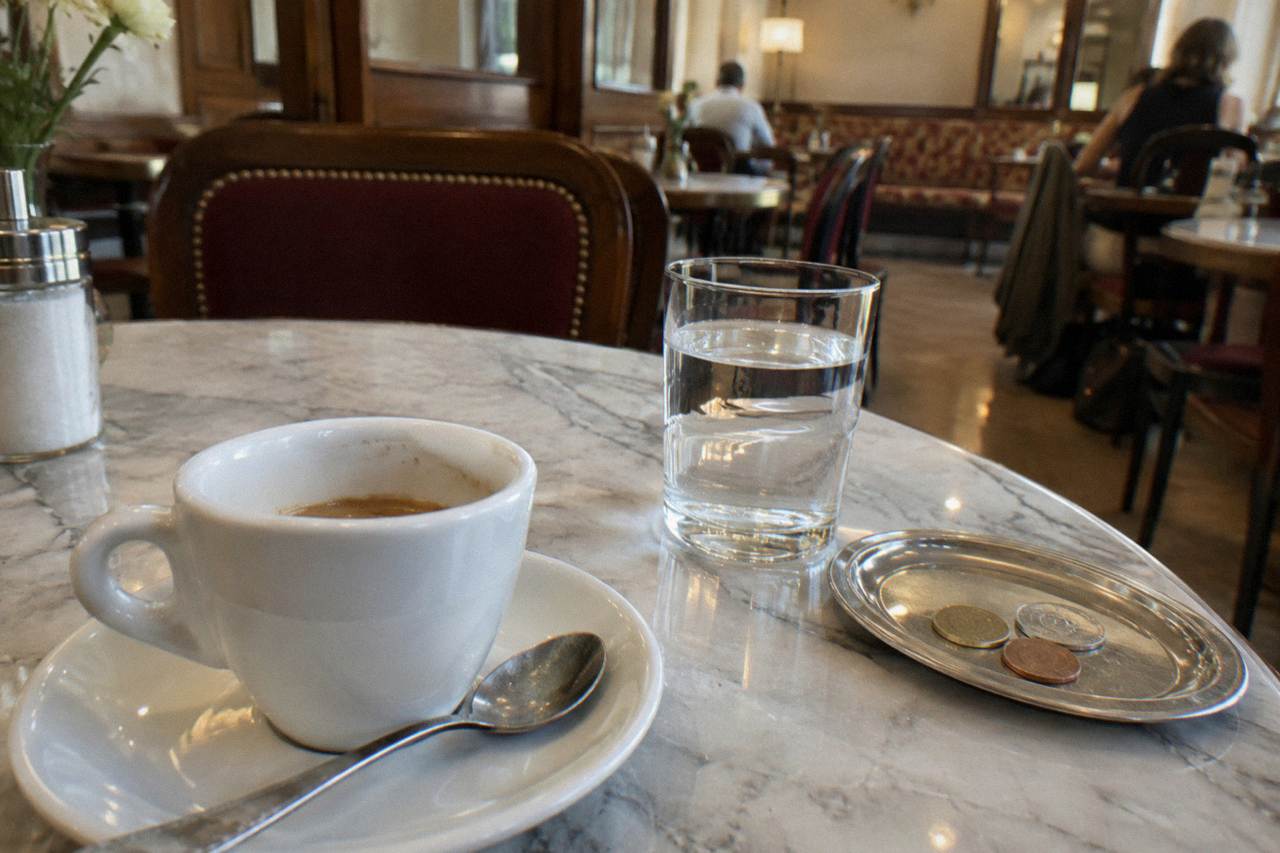
In Viennese coffee houses you round up or leave roughly 0.50 to 1 euro, which is a smaller gesture than a restaurant percentage. A regular who drinks one Melange and reads the paper for an hour is not expected to tip like a table ordering a full lunch.
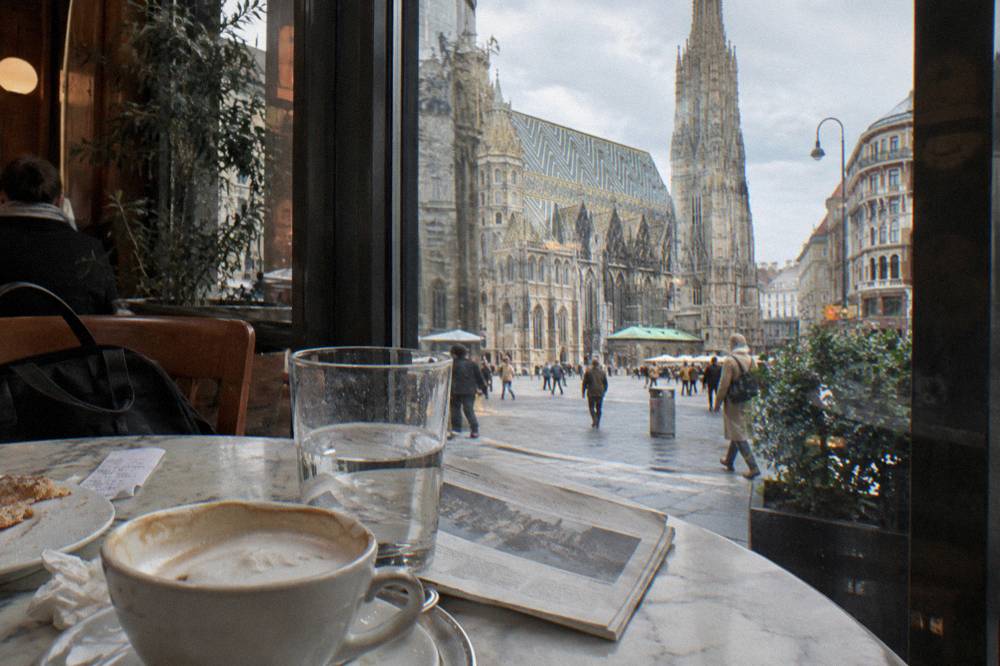
The coffee house is a slow institution, recognised as intangible cultural heritage in Austria and cited by the Vienna Tourist Board as UNESCO heritage, and the payment rhythm reflects that. You order, you sit as long as you like, water often arrives beside the coffee unasked, and you pay when you ask for the bill. The tip is a small rounding gesture, not a percentage exercise. Round to the nearest euro or add half a euro for attentive service and you are comfortably inside the custom.
Prices give you a sense of scale. Classic houses charge around 6.90 euros for a Melange, with a Sachertorte slice at landmark cafes around 8.50 euros and the slice at the Hotel Sacher cafe at about 11.50 euros. Check the menu on the day, figures move with the season. On a bill like that, a rounding tip of half a euro to one euro is exactly what the regulars at the next table are doing.
One heritage note that often gets garbled: coffee house culture was inscribed on Austria's national inventory of intangible cultural heritage in 2011, and the Vienna Tourist Board cites it as UNESCO heritage on its own pages. That is the careful wording, and it is why the institution carries the weight it does. For a deeper dive into the institutions themselves, see the Vienna coffee house culture guide and the breakdown of the city's famous cake dispute in Sachertorte or Demel: where to eat the cake.
| Coffee house order | Reported price (euros) | Normal tip | How to pay |
|---|---|---|---|
| One Melange at a classic house | around 6.90 | Round up | Name the total to the server |
| Melange and Apfelstrudel | around 12 to 16 combined | 0.50 to 1 euro | "Stimmt so" or rounded total |
| Sachertorte slice at the Hotel Sacher cafe | reported about 11.50 | Round up | Name the total to the server |
Do You Tip Guides On A Vienna Food Walk?
No verified rule sets guide tips on Vienna food walks. Operators do not publish a standard, so the honest answer is to ask the guide at the start or check the booking page's inclusions before you go. Guests who do tip guides commonly give an amount in the range of the restaurant custom.
This is the one tipping question the verified facts do not settle, and pretending otherwise would be guesswork. Plenty of travel content asserts a firm percentage for tour guides as if it were law; in Vienna nothing published supports a fixed number. What is documented is what a walk includes, and inclusions are what your tip decision sits on top of.
The Vienna Food Tour: Coffeehouses, Markets, Lunch & Street Food runs 5 hours 30 minutes and, as its listing describes, folds tastings, lunch and the guide's local commentary into one booking, so any tip is genuinely discretionary rather than a top-up to a wage. A shorter format like the Vienna Coffeehouse Tour, 3 hours 30 minutes, behaves the same way: read the booking page's inclusions and cancellation terms before the day, and ask the guide how they handle gratuities if the page is silent.
A practical rhythm for the day itself: when you book, scan the page for any gratuities note. If it is silent, plan on cash in small notes, because not every guide carries a card reader, and the end-of-walk goodbye happens standing on a street corner, not at a till. And if a walk genuinely lands well, an evening outing such as the Vienna Dinner, Wine & Cocktails small-group tour, 4 hours per the listing, is the kind of format where a thank-you at the end feels natural rather than transactional.
What Is The Gedeck Cover Charge In Vienna?
The Gedeck is a per-person cover charge of roughly 2 to 5 euros at traditional or upscale Vienna restaurants, covering bread, spreads and the table setting. It is legal only if printed on the menu, and you pay it whether or not you eat the bread.
Visitors sometimes mistake the Gedeck line for a sneaky tip or a service scam. It is neither. It is an old and openly priced custom, and the menu listing is the legal condition for charging it. If you never see it printed, you cannot be asked for it. The etiquette around the table, from the Gedeck to how you request the bill, is covered in more detail in Vienna restaurant etiquette: Gedeck and tap water.
The Gedeck is not a tip and does not replace one. Think of it as a small fixed cost of the table, then apply the 5 to 10 percent custom to the bill as a whole when you settle up. At a neighborhood Beisl the Gedeck is often absent entirely; it clusters in grand cafes and traditional dining rooms where the bread basket, butter and spreads arrive unasked. If you are comparing a casual dinner against a grand-cafe lunch, the cover charge is part of why the grand cafe receipt reads higher for what looks like similar food.
Tap water belongs in the same mental folder: a priced item, not a trick. A 2026 Arbeiterkammer sample of 30 Vienna venues found 23 charged for tap water, often 0.80 to 3.60 euros per half liter, whenever the menu listed a price for it. Only 3 venues in the sample offered it free unconditionally. So when the bill carries a water line you did not expect, the first move is to check the menu, not the server's mood.
| Charge | Typical amount (euros) | Do you tip on top? |
|---|---|---|
| Gedeck cover charge | 2 to 5 per person | Yes, 5 to 10 percent of the bill |
| Tap water (where menu-listed) | 0.80 to 3.60 per 0.5 L | No, it is a priced item |
| Bread basket (inside Gedeck) | Included | No |
Is Service Already Included In Vienna Prices?
Menu prices in Vienna include tax and service in the sense that nothing is silently added afterwards, but a tip on top is still the custom at restaurants. The bill you receive is the bill you pay unless a line such as the Gedeck is printed on it.
This is the nuance that confuses both American visitors, who expect a tip economy, and some European visitors, who expect the printed total to be final. Vienna's position sits between the two: the printed total is final and honest, and the tip is a separate, socially expected gesture of 5 to 10 percent delivered at the table. Nobody will chase you for it, and no one will add it for you either. A local who is dissatisfied simply pays the exact total, and that reads as a quiet verdict on the service.
One more thing worth knowing while we are on bills: dining rooms in Austria have been smoke-free since 1 November 2019 under national law, with smoking allowed only in defined outdoor areas, so the bill you get is for food, drink and whatever is printed on it, nothing else. The rules are stated on the Austrian business service portal at usp.gv.at.
Do You Tip At Vienna Market Stalls And Sausage Stands?
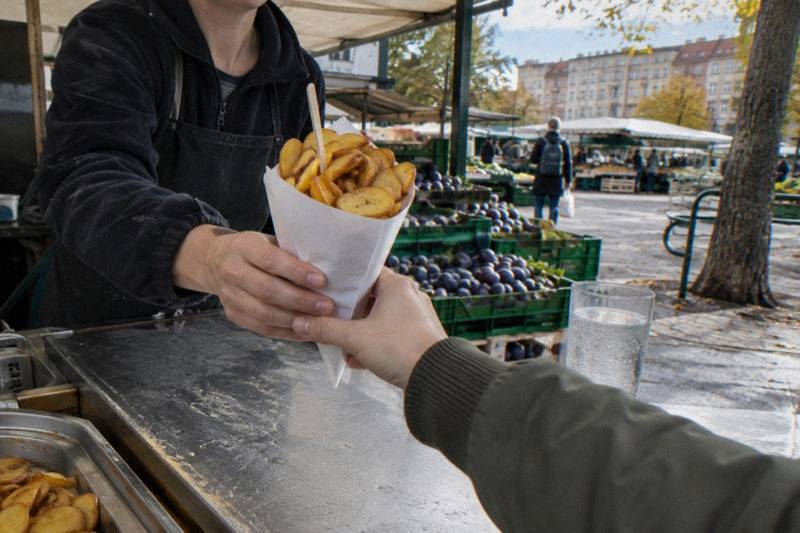
At market stalls and Wurstelstände the custom is small change or nothing at all: round up a sausage purchase, or drop the coins you get back. There is no percentage expectation and nobody will think twice if you pay exact.
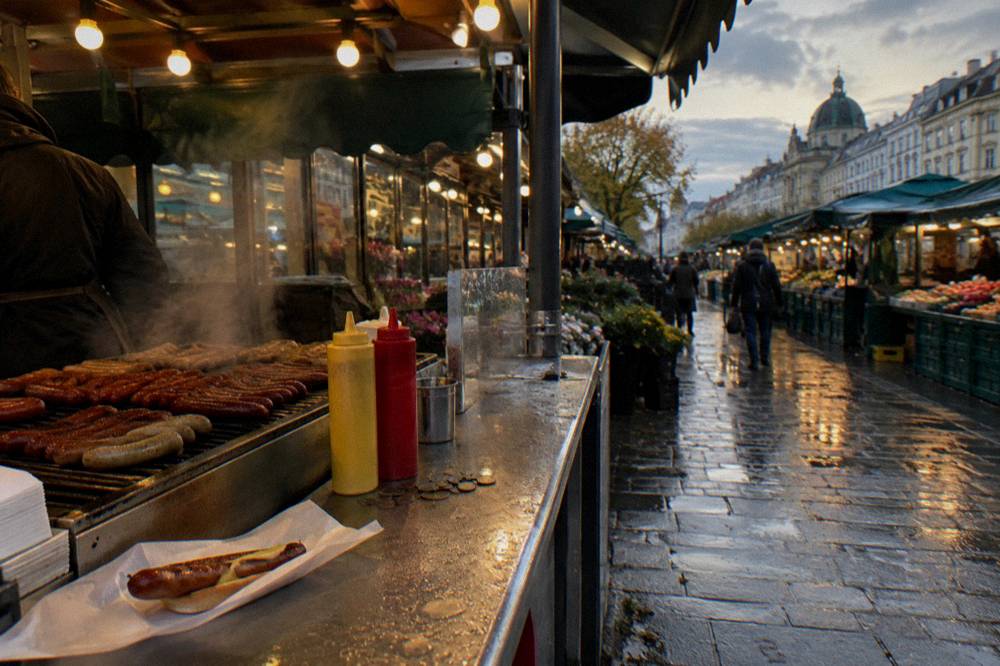
The Wurstelstand is standing food, eaten at the counter or on the move, and it operates outside restaurant logic entirely. The same goes for buying olives, cheese or bread at a market: you pay the price, and the tip question barely exists. If a stall worker hands you extra napkins, bags your things with care or lets you taste before buying, leaving the small change is a friendly gesture in the local spirit, and it is noticed more here than a rote percentage ever would be at dinner.
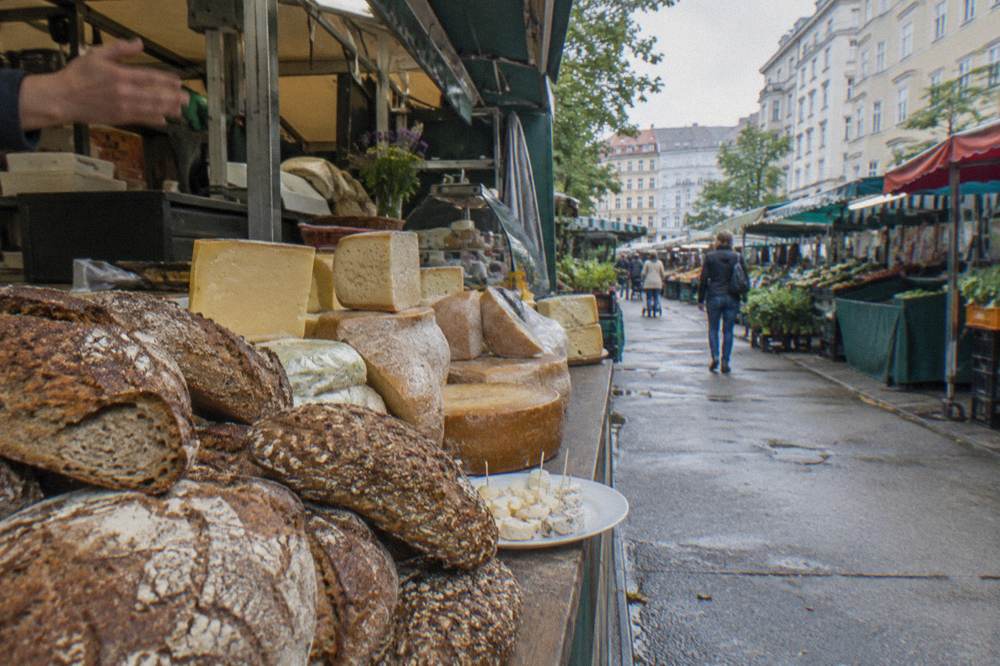
Markets have their own rhythm, and it helps to know the windows before you plan a cheap-eats afternoon. The Naschmarkt's official stand windows run to a maximum of 6:00 to 21:00 on weekdays and 6:00 to 18:00 on Saturdays, with all stands required to be open Tuesday to Friday between 15:00 and 18:00, per the City of Vienna page at wien.gv.at. The Saturday flea market alongside it runs about 6:30 to 15:00, with restrictions on 12 and 19 December 2026 for the Christmas tree market and no market at all on 25 and 26 December. Details are in the Naschmarkt opening hours and Saturday flea market guide.
Browsing all of it is free, which makes the market a natural anchor for a low-spend food day: wander the stalls, taste where tasting is offered, and put your budgeted money into one seated stop where the tipping custom actually applies. The Naschmarkt food guide: what to eat and where picks out the things worth spending on.
Do You Tip Taxi Drivers And Hotel Staff In Vienna?
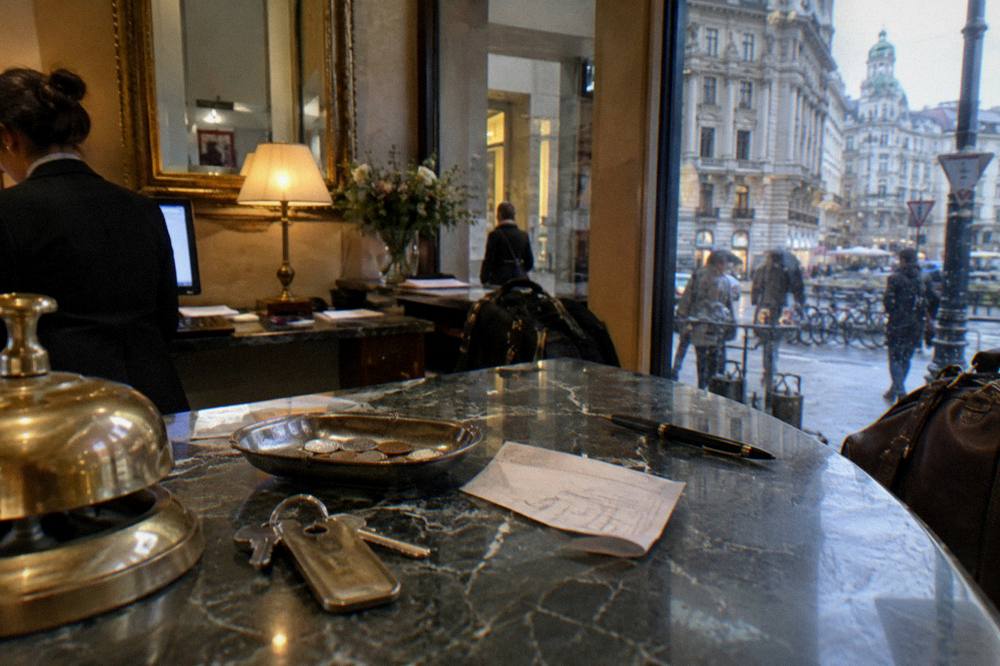
Taxi drivers in Vienna typically get the fare rounded up to the nearest euro or one or two euros on top, and hotel porters get about 1 to 2 euros per bag. Housekeeping tips are optional, a few euros at the end of a stay is a reasonable gesture.
These are convenience tips, small and unremarkable. A taxi fare becomes the next round figure when you pay, and the driver hands back the difference without ceremony. The porter who carries two bags to your room gets a coin or two per bag. Nobody tracks or audits these gestures, and none of them approaches restaurant percentages. If you are using ride apps rather than taxis, the same rounding logic applies in cash if you carry any; otherwise the app's own mechanics settle the matter.
Vienna's hotel prices carry their own quirk worth knowing at checkout: the city's Ortstaxe, the tourist tax on accommodation, sits at 5 percent of the base and rises to 8 percent from 1 July 2027, per the Vienna Chamber of Commerce at wko.at. That is on your hotel bill, not your plate, but it explains a line item many visitors ask about at the desk. Where to base yourself in the first place is covered in where to stay in Vienna for food lovers.
When Is It Fine To Leave No Tip In Vienna?
Leaving no tip is acceptable in Vienna when there is no table service: counter food, takeaway, a market stall, a self-service buffet. At a sit-down restaurant with table service, paying the exact total reads as a deliberate signal that something went wrong.
The distinction is service, not price. A Käsekrainer eaten standing at a Wurstelstand involves no tip question at all. A modest soup in a seated restaurant with a server does, and the 5 percent floor applies even to small bills, which is why rounding up by a few coins matters proportionally more at lunch than at dinner. Bad service is the other case where locals pay exact, and it is understood as such, but it is worth being sure the fault was the service and not a busy Saturday before you make the point.
Buffet-style Heuriger visits follow the casual pattern. Typical self-service cold buffet plates run around 6 to 12 euros and an evening total often lands between 8 and 15 euros at neighborhood spots, reported in 2026 guides, and guests commonly round the total or leave small change rather than calculating a percentage. An Achtel of wine runs about 3 to 5 euros, reported in the same guides. Check the buffet board for prices on the day, and remember that a genuine Heuriger serves only wine from its own vineyards, marked by the pine branch and the Ausg'steckt sign. For the format itself, see Heuriger in Vienna: a visitor's guide.
| Situation | Expected tip | How you pay it |
|---|---|---|
| Restaurant with table service | 5 to 10 percent | Name the total to the server |
| Traditional coffee house | Round up, or 0.50 to 1 euro | Name the total to the server |
| Sausage stand or market stall | Small change or nothing | Drop coins in the tray |
| Self-service buffet | Round up or nothing | At the till |
| Guided food walk | No verified standard | Ask the guide or check the booking page |
The authentic Vienna food tour with lunch, street food and three drinks, 5 hours per its listing, is a good example of where that last row matters: the listing describes what is included, and the guide question is best settled by asking directly or reading the booking page before the day rather than arriving with an assumed percentage.
If you would rather settle the whole question by letting someone else handle the orders, the site behind this guide, Vienna Food Tours, walks through the bookable options across formats and prices.
Common Questions About Tipping In Vienna
How Much Do You Tip In Vienna Restaurants?
Five to 10 percent of the bill, with 10 percent marking very good service. State the tip-inclusive total to the server when paying rather than leaving cash on the table.
Do You Tip In Viennese Coffee Houses?
Yes, but lightly: round up or leave 0.50 to 1 euro. One coffee and a long sit does not carry a percentage expectation.
What Does "Stimmt So" Mean?
It means "that is fine as it is" and is the standard way to tell a server to keep the change from the amount you handed over, or to confirm a rounded total.
Do You Tip Food Walk Guides In Vienna?
There is no verified standard. Ask the guide at the start of the walk or check the booking page's inclusions and gratuities note before you go, and bring small notes just in case.
Is The Gedeck A Tip?
No. The Gedeck is a cover charge of roughly 2 to 5 euros per person for bread and table setting, legal only when printed on the menu, and it does not replace the 5 to 10 percent custom.
Can A Restaurant Charge For Tap Water In Vienna?
Yes, if a price is listed on the menu. A 2026 sample of 30 Vienna venues found 23 charged for it, commonly 0.80 to 3.60 euros per half liter.