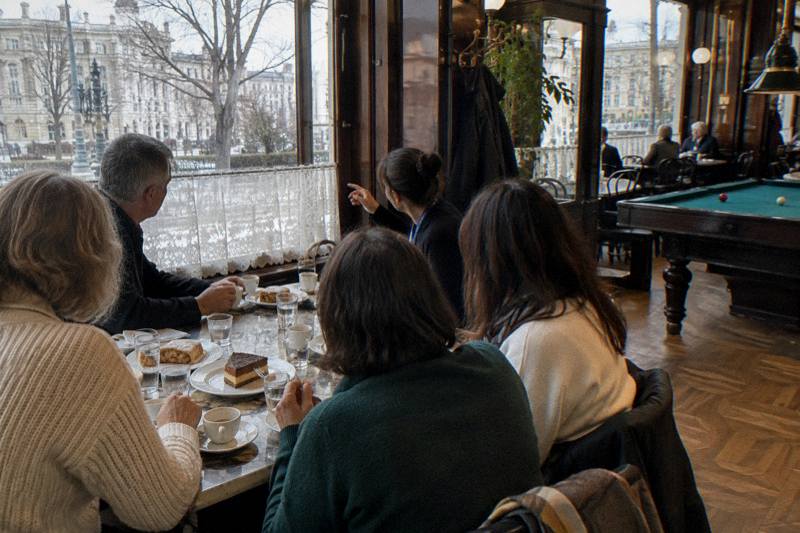
What Is A Common Breakfast In Vienna?
A practical answer to what a common breakfast in Vienna looks like, from the classic coffee house Melange and cake to sausage stands and market stalls, with 2026 prices and etiquette.
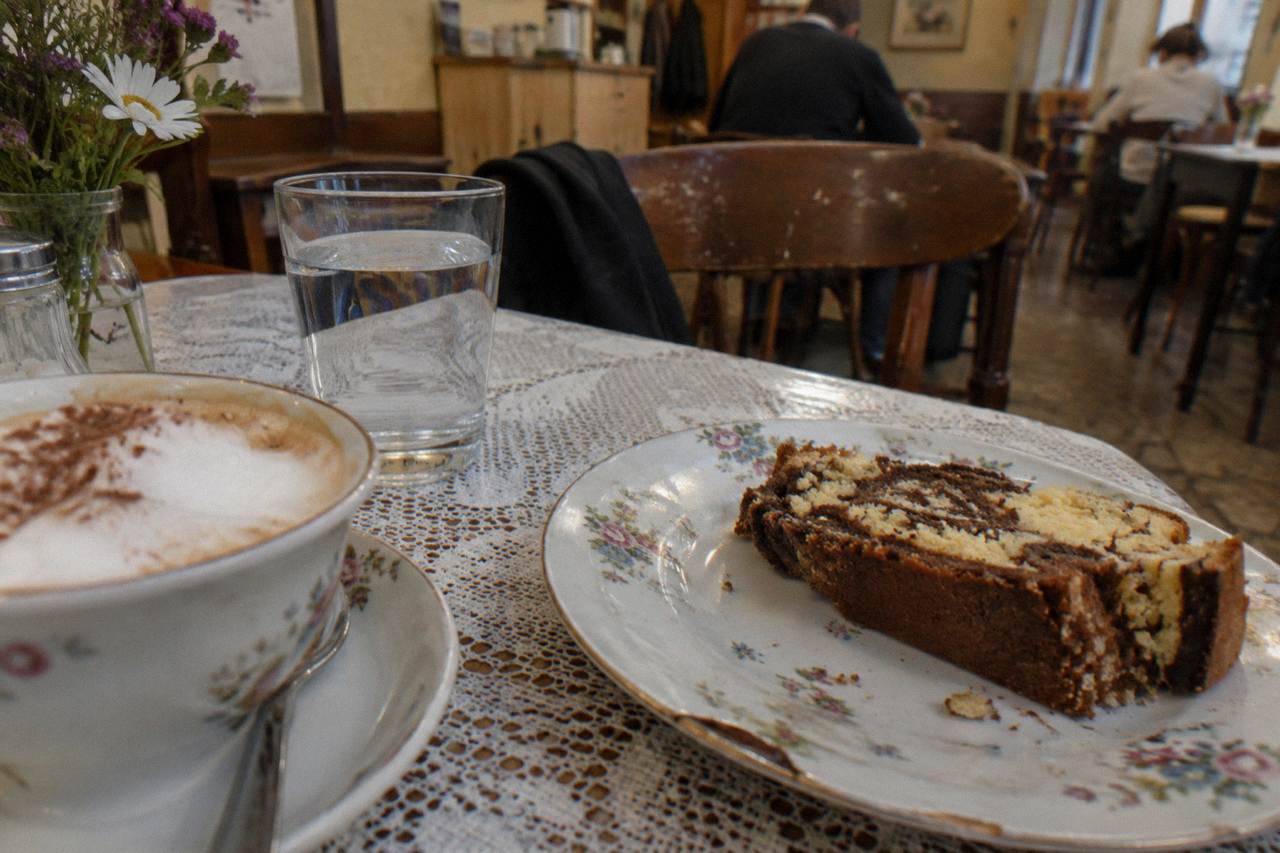
A common breakfast in Vienna is the coffee house morning: a Melange (espresso with steamed milk), a basket of bread rolls or a Semmel with butter, ham and cheese, often a soft-boiled egg, and, frequently, a slice of cake rather than anything sweet from a bakery display. Add a newspaper on a marble table and you have the local ritual. If you want to try this ritual at the city's most famous coffee house, the guide to whether you need a reservation for Café Central Vienna explains how seating works right now.
That is the short version. The longer one runs through sausage stands for those who want something hot at 8 a.m., market stalls at the Naschmarkt for a weekend version, and the etiquette that comes with sitting in a room that has served the same breakfast for a century. This article walks through all of it, with the 2026 prices that are actually printed on menus right now and the traps that catch visitors who order like they would at home.
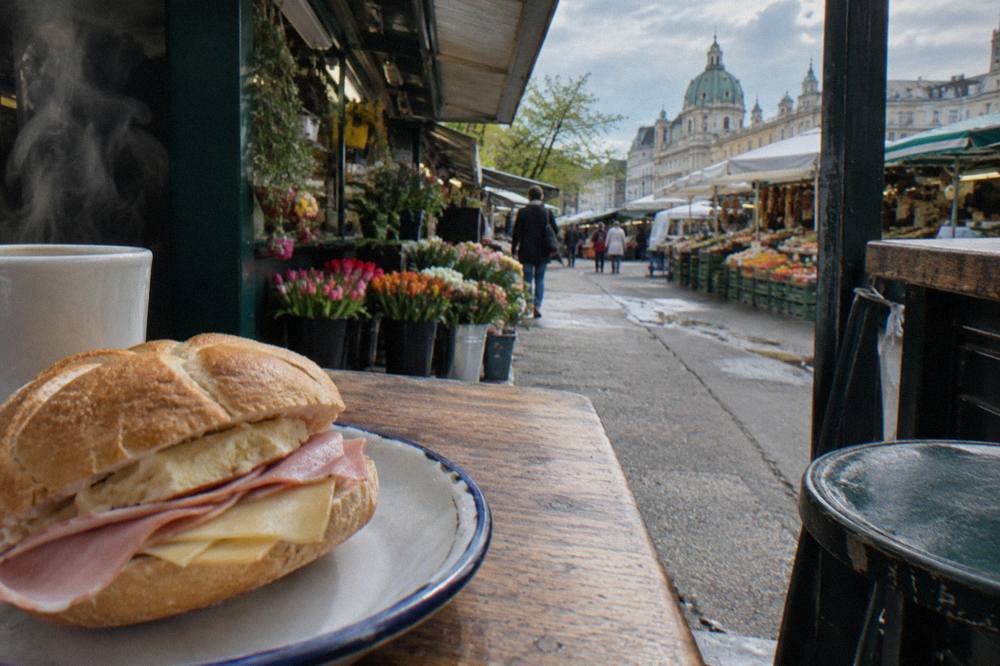
Vienna breakfast culture leans on the coffee house, and the coffee house is not a café in the hurry-up sense. It was recognised on Austria's national inventory of intangible cultural heritage in 2011, a status it still holds, and the pace is part of the protected idea. Waiters are addressed as Herr Ober, the newspaper rack is included in the experience, and nobody will hurry you off the table. Breakfast here is a sit-down hour, not a grab-and-go.
The classic order is simple. A Melange, the coffee house signature that sits somewhere between a cappuccino and a latte, comes in a glass or cup on a small silver tray with a glass of water. Alongside it: a Semmel (the crusty Kaiser roll) with butter, a few slices of ham or cheese, maybe a soft-boiled egg in its cup, and, for the full commitment, a piece of Apfelstrudel or Sachertorte at breakfast hour, which is entirely normal here. Cake in the morning is not decadence in Vienna, it is tradition. If you want to know why that glass of water arrives beside your cup, or what an Einspaenner is, our guide to what makes Vienna coffee special covers the rituals, the prices at the classic houses, and how to join a guided tour.
There is a historical reason the format froze this way. The coffee house grew up in the 19th century as a second living room for a city of small apartments: heated, stocked with newspapers from across the empire, and tolerant of a customer who ordered one coffee and wrote letters for four hours. Billiards rooms, card tables and velvet booths were standard furniture. The breakfast plate, cold, assembled, and cheap to serve, fit that economy perfectly, and the menu never had a reason to reinvent it. What a breakfast order looks like today: coffee, a sweet pastry, and time to sit with it.
If you want the coffee house experience explained rather than just consumed, a guided walk does it well. The guided Viennese coffee-house tour runs about three hours and pairs the grand rooms with the pastries and the stories behind them; the current price, meeting point and what is included are on the operator's booking page.
What Does A Viennese Coffee House Breakfast Look Like?
A Viennese coffee house breakfast is a cold, assembled plate rather than a cooked one: bread rolls or dark bread with butter and preserves, sliced ham and cheese, a soft-boiled egg sometimes, and a Melange or a larger coffee order like a Maria Theresia. It arrives without rush, and the table is yours for as long as you want it, which is the whole point.
The plate itself is unglamorous and precise. A typical "Frühstück" listing on a coffee house menu means two or three Semmeln or slices of bread, butter, a strip of ham, cheese, and sometimes cucumber or tomato. Some houses offer it with an egg; some offer a "kleines Frühstück" of just rolls, butter and jam with the coffee. What you will not usually find is the fried, griddled Anglo-American plate. Eggs exist, bacon mostly does not, and nobody will ask how you want your eggs done because the answer is soft boiled and served in a cup.
Portions are smaller than North American breakfast plates, and that catches some visitors off guard. The Viennese plate is a European continental breakfast with better raw materials: the Semmel is baked that morning, the butter is real, the ham is cut from the bone. The expectation is that you finish and stay, not that you finish and roll out. If you are genuinely hungry, order the plate plus a sweet, or plus a second round of Semmeln, which most houses will bring without fuss.
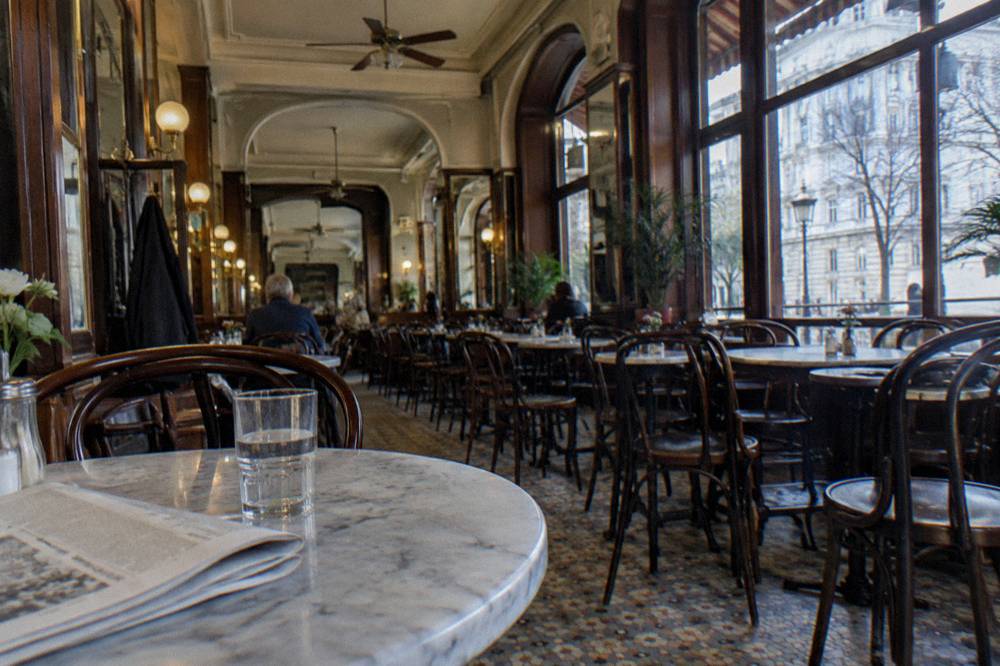
The coffee list deserves five minutes of study. Beyond the Melange, the standard orders include a kleiner Brauner (espresso with a splash of cream), a grosser Brauner (the same, larger), an Einspänner (black coffee topped with whipped cream in a glass), and a Fiaker (black coffee with a shot of cherry or rum). The Melange remains the breakfast default, and the classic houses, Landtmann, Museum and Schwarzenberg among them, charge around 6.90 euros for one. That is a useful planning number: not cheap, but it buys the room, the newspaper and unlimited table time.
A quick note on what a Melange is not: it is not a latte and not a cappuccino, though it resembles both. The milk is steamed rather than frothed into foam, the proportions sit closer to half and half, and it comes traditionally in a glass or a small cup on a tray, never in a paper to-go vessel. Ordering a Melange "to go" is the fastest way to mark yourself as new in town; these rooms are built for sitting, and several of the most famous houses do not offer takeaway at all. Take your time, or drink at the standing bar of a sausage stand instead.
Cake at breakfast deserves its own sentence or two. The Sachertorte question, Original at Hotel Sacher versus the Demel version, is a Vienna argument that has run for decades and is still alive in 2026: Hotel Sacher holds the "Original" name with its sealed chocolate cake and two apricot layers, while Demel serves its rival with a triangular seal and a single layer. Neither side has conceded. An Apfelstrudel or a slice of Sachertorte at 9 a.m. with a Melange is a perfectly ordinary local order, and our longer Vienna coffee house culture guide unpacks the ritual in more depth if you want the full background.
Kaiserschmarrn, the shredded pancake with raisins and powdered sugar, technically belongs to the sweet main-course family, and some houses serve a breakfast-sized portion. It is heavier than it looks and sweeter than most visitors expect for a morning dish. Landtmann's lists it at 15.70 euros, Demel's at 12.90, which tells you it sits at the top of the breakfast budget. Share one if the table allows.
Where Do Locals Actually Eat Breakfast?
Most Viennese eat breakfast at home on a workday, and the breakfast-out culture concentrates on weekends at coffee houses, Beisl restaurants and market stalls. Tourists assume the grand cafés are the whole story, but locals spread across neighbourhood coffee houses, the Naschmarkt on a Saturday, and the standing sausage counter for a hot 8 a.m. bite.
The neighbourhood coffee house is the real local answer. The famous palaces, Sacher, Landtmann, Demel, are visit-worthy but sit on the visitor-heavy end. In districts like the 4th, 6th and 16th, unmarked coffee houses serve the same Semmel plate at lower prices to regulars who have sat at the same table for twenty years. They are harder to find and easier to love, and they will not appear on a souvenir mug.
How to spot one: bentwood chairs rather than velvet, a clientele that skews grey and unhurried, a Konditorei counter near the door with cakes under glass, and a bill that arrives only when you ask for it. The waiter has probably worked the room for a decade and remembers orders. The menu is shorter, the Melange is cheaper than the 6.90 euros of the Ringstrasse houses, and the experience is closer to what the heritage listing actually describes.
The Saturday version happens at the Naschmarkt. Official city rules keep sales stands open to 18:00 on Saturdays, with the flea market alongside running from about 6:30 to 15:00, per the city's market page. Breakfast there is a standing affair: coffee at one stall, cheese and bread at another, maybe an olive or two, eaten along the lane while the market fills up. Note the redevelopment: the new Naschpark green space is finished, but full completion of the wider market rebuild is now expected in February 2027, and parts of the market area still reflect the construction.
Other markets serve the same role in other districts. The Karmelitermarkt in the 2nd follows the same official opening windows, with a farmers' market component on Fridays and Saturdays that is the best time for a bread-and-cheese morning, and the Viktor-Adler-Markt in the 10th runs its producer stalls into the early afternoon. The Brunnenmarkt in Ottakring, the city's longest street market, keeps a car-free lane that makes an easy breakfast stroll. If markets are your preferred format, the Vienna markets beyond Naschmarkt guide maps them all.
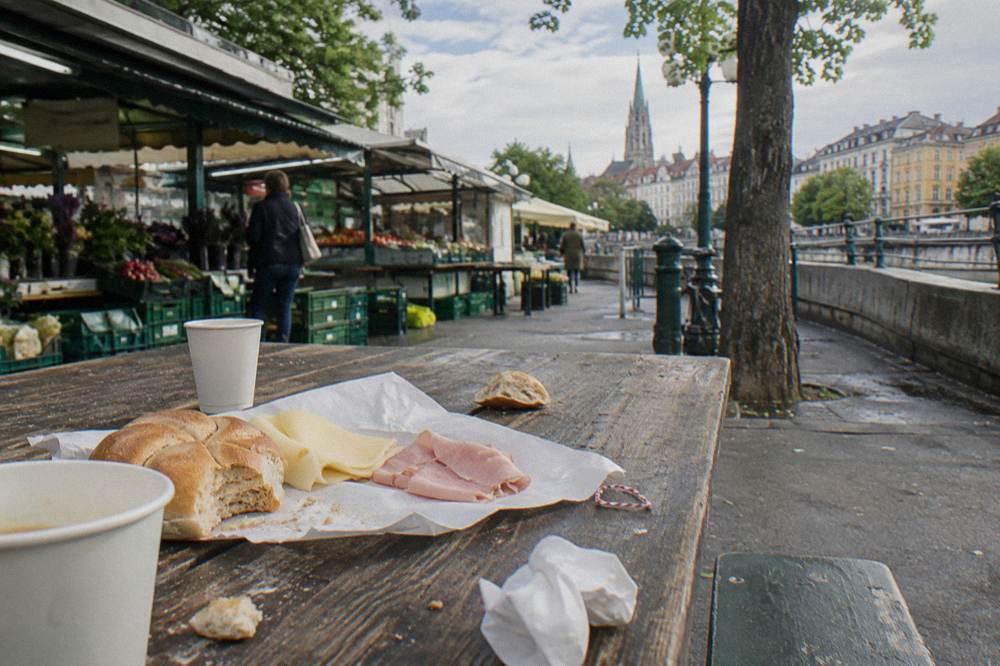
Then there is the Wurstelstand. A Käsekrainer, the cheese-stuffed sausage, with mustard and a slice of bread, is a legitimate Austrian breakfast, even if visitors usually meet the sausage stand at midnight rather than at opening. Our Vienna sausage stand guide covers the ordering vocabulary; for breakfast purposes, know that a sausage with a Semmel costs far less than a coffee house plate and takes three minutes. The Bosna, a sausage in a toasted roll with onions, mustard and curry powder, is the other standing order, and both go better with the morning than their reputation suggests.
Can You Get A Savoury Breakfast In Vienna?
Yes, and savoury is actually the traditional register: the standard coffee house breakfast is ham, cheese and bread, not pancakes or pastries. Beyond that, the Verlängerter-with-a-sausage combo at a Wurstelstand, a Brettljause cold-cuts board at a Beisl, and weekend brunch spots offer savoury mornings in ascending order of size.
The ham-and-cheese plate is the backbone. What surprises some visitors is how rarely sugar appears before noon in the classic format: jam exists on the plate, but the centrepiece is cold cuts. A "Schnitten" plate, bread topped with spreads like Liptauer (a paprika-cream cheese) or Verhackertes (a lard and bacon spread), is the older, earthier version still served in traditional houses.
For a bigger savoury morning, look to the Beisl, the neighbourhood restaurant, on weekends. Many run a brunch or a Jause board: cured meats, pickles, bread, lard, cheese, everything cold and everything local. A Liptauer Semmel at a butcher's counter is the fastest version, and a full Brettljause the longest. None of this is fried-breakfast territory, and that is the honest answer to visitors asking for eggs and bacon: Vienna's savoury breakfast tradition is a cured and fermented one.
The modern layer sits on top of the traditional one. Recent Viennese restaurant coverage tracks a revival of the old Wirtshaus format, with revived Gasthäuser blending traditional Beisl cooking with fresher, more vegetable-forward menus, and the Michelin Guide's 2026 Bib Gourmand list added Vienna vegetarian rooms to its best-value tier. What that means for breakfast is simple: the weekend brunch menu at a modern Beisl or bistro will offer more vegetables, better coffee and possibly a shakshuka-style egg dish, while the classic coffee house next door serves the plate it has served for decades. Both are common breakfasts in 2026 Vienna, just for different crowds.
Dietary notes matter here. Dedicated vegetarian and vegan breakfast venues exist in the 6th district and beyond, and gluten-free cafés are established in the city, with fully gluten-free and vegan pastry rooms listed in 2026 guides, but the classic coffee house breakfast plate is built on bread and cold cuts. If your diet rules either out, pick the venue first and the breakfast second, and mention the requirement before you sit, not after you order. The Vienna breakfast guide on this site goes deeper on where to eat it.
How Much Does Breakfast Cost?
A coffee house breakfast at the famous houses runs roughly 10 to 18 euros per person for the plate plus a Melange, with cake adding 6 to 12 euros. At neighbourhood houses and market stalls the same meal costs meaningfully less, and a sausage stand breakfast is the cheapest hot option in the city.
The printed figures that exist cluster at the top end of the market. Café Landtmann's menu lists a Melange at 6.90 euros, Sachertorte at 8.50, Apfelstrudel at 8.20 and Kaiserschmarrn at 15.70. Café Demel lists Melange 6.90, Sachertorte 8.50, Kaiserschmarrn 12.90 and Apfelstrudel 9.50. At Hotel Sacher a slice of Original Sachertorte costs around 11.50 euros, with other reports noting a range of roughly 8.90 to 10.50. During Café Central's renovation, its Decentral pop-up at Freyung
| Venue | Melange (reported 2026) | Signature sweet (reported 2026) | Reservation habit |
|---|---|---|---|
| Café Landtmann | 6.90 euros | Sachertorte 8.50, Kaiserschmarrn 15.70 | Accepts reservations |
| Café Demel | 6.90 euros | Sachertorte 8.50, Apfelstrudel 9.50 | Generally no reservations |
| Hotel Sacher Café | listed on menu | Original Sachertorte around 11.50 | Reservations common, queues |
| Decentral pop-up (Freyung 3) | 5.40 euros | Apfelstrudel 5.90 | Walk-in |
Queues are part of the cost calculation at the two cake landmarks. 2026 guidance notes that the Sacher café counter draws longer waits, especially in the afternoon, while Demel's line typically moves faster; arriving early or after 16:00 is the standard advice. Neither queue is a scam, both are the visible price of fame, and both can be skipped entirely by choosing any of the dozen other grand houses within a fifteen minute walk.
Two caveats keep this honest. First, these are the famous houses; a plate breakfast at a neighbourhood coffee house costs less, and the exact figure depends on the house, so check the menu at the door. Second, Café Central itself is closed: it has been shut for major renovation since 16 March 2026, with reopening planned for winter 2026, and until then the Decentral pop-up at Freyung 3 stands in; confirm status on the café's own site before planning a visit. Prices everywhere move with menu cycles, so treat these as planning figures, not promises. For the full story of the café and its stand-in, the guide to Café Central's enduring appeal explains the closure, the pop-up on Freyung, and what a classic Viennese coffee house visit feels like until the reopening.
Coffee House Etiquette At Breakfast
The three rules that cost money: a Gedeck cover charge of 2 to 5 euros can appear on traditional-house bills if it is printed on the menu; tap water can be legally charged when listed, and a 2026 sample of 30 Vienna venues found 23 charged 0.80 to 3.60 euros per half litre; and tipping of 5 to 10 percent, or rounding up at the café, is the custom.
The Gedeck is the one that catches people. In traditional and upscale rooms it covers bread, spreads and the table setting, it is charged per person whether or not you eat the bread, and it is legal only when printed on the menu. If you never look at the menu, you never see it coming. Ask if unsure; there is no shame in the question, and staff answer it daily.
Tap water is the second surprise. Austrian law lets a venue charge for Leitungswasser when the price is listed, and the Arbeiterkammer's 2026 sample found only 3 of 30 venues offered it free unconditionally. The safe assumption is that the water glass on your coffee tray is free, and a carafe ordered separately may not be. Our page on Gedeck, tipping and tap water covers the full mechanics.
Tipping is lighter than in North America. At a coffee house, rounding up the bill or leaving 0.50 to 1 euro is the norm; at a full breakfast in a restaurant, 5 to 10 percent, stated as the total you want to pay rather than left on the table. The phrase "Stimmt so" does the work: say it when you hand over the note and the waiter keeps the difference as the tip. At a coffee house, simply rounding to the next euro or two reads as correct, and overtipping can cause genuine confusion.
One more practical point: smoking has been banned in all indoor guest areas of Austrian gastronomy since November 2019 under the federal business portal's rules, so breakfast rooms are smoke-free indoors, with only defined outdoor terrace areas permitted. And service pace: slow is by design. The waiter has not forgotten you, the waiter is respecting the institution. Catch the eye, say "zahlen, bitte", and the bill arrives. Seating yourself is normal in most houses, but if there is a host stand, wait; breakfast regulars have their tables, and the staff will route you around them.
Which Guided Walks Pair Well With Breakfast?
The best pairing is breakfast first, then a coffee-house or first-day walking tour: the three-hour guided Viennese coffee-house walk, the 3.5-hour coffeehouse pastries tour, or the 2 hour 45 minute first-day tour that combines a coffee house stop with street food and local orientation. Each covers the same institutions from a different angle.
The coffeehouse pastries walk, three and a half hours long, is the tasting-forward option: pastries, bites and the local stories that go with them, in a format that works well for visitors who want the food explained while they eat it. It suits travellers who already know they want the cake canon and would rather have a guide order for them than parse a German menu alone. Check the booking page for the current price and what is included.
The first-day format suits the start of a trip. At 2 hours 45 minutes, it combines a coffee house stop with street food and local tips, which makes it a good primer for the rest of a stay, a way to learn the ordering vocabulary and the neighbourhood layout in one morning. Details of the meeting point and inclusions are on the operator's booking page.
A practical note on the wider context, because Vienna's Vienna Food Tours site exists for exactly this: the guided walks above are afternoon-friendly, so the natural day is your own breakfast in a neighbourhood coffee house at 9, the walk at 10 or 11, and lunch wherever the route ends. If your interest is specifically the cake canon, the Sachertorte or Demel question has its own dedicated page.
Common Questions About Vienna Breakfast
What Is A Common Breakfast In Vienna?
A common breakfast in Vienna is a coffee house plate of Semmel bread rolls with butter, ham and cheese, sometimes a soft-boiled egg, served with a Melange coffee, often followed by a slice of cake. Sausage stands and market stalls are the faster, cheaper alternatives.
Is Cake Really A Normal Breakfast Food In Vienna?
Yes. Eating a slice of Apfelstrudel or Sachertorte with a morning Melange is an ordinary local order, not a tourist excess. The coffee house is built for lingering, and sweets are part of the morning register.
Do Viennese Coffee Houses Serve Eggs And Bacon?
Soft-boiled eggs are common on breakfast plates, but the fried Anglo-American breakfast is not part of the tradition. The savoury local format is bread, butter, cold cuts, cheese and spreads such as Liptauer.
How Much Should I Budget For Breakfast In Vienna?
At the famous coffee houses, a plate plus Melange runs roughly 10 to 18 euros per person, with cake extra. Neighbourhood houses and market stalls cost less, and a sausage stand breakfast is the cheapest hot option. Always check the menu, and watch for a Gedeck cover charge.
Is Café Central Open For Breakfast?
No. Café Central has been closed for major renovation since 16 March 2026, with reopening planned for winter 2026. Its pop-up, Decentral, operates at Freyung 3 in the meantime, with a reported Melange at 5.40 euros and Apfelstrudel at 5.90. Confirm on the café's own site before visiting.
Can I Sit As Long As I Want In A Viennese Coffee House?
Yes, table time is part of the institution. Coffee houses were recognised on Austria's national inventory of intangible cultural heritage in 2011, and unlimited sitting with a newspaper is central to that status. Order, read, stay.