Vienna Breakfast: What Locals Eat And Where To Go
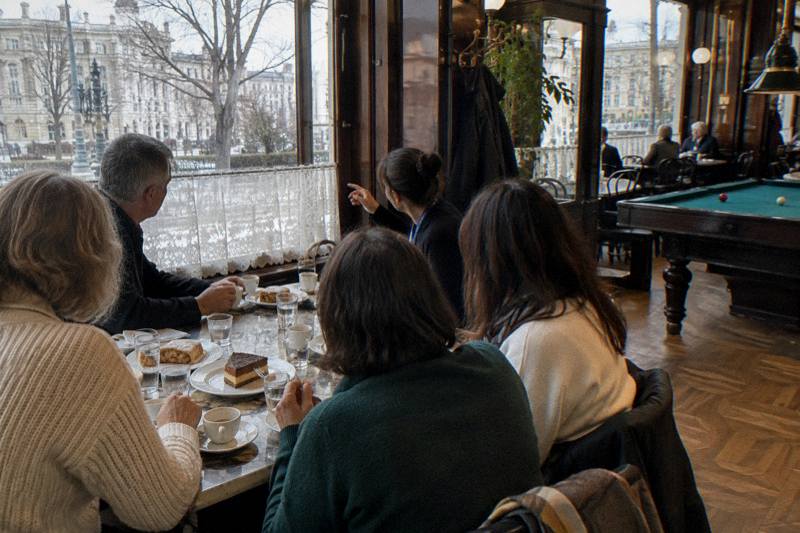
Breakfast in Vienna is mostly a coffee house affair: a melange, a pastry or two, maybe a soft boiled egg, and no rush at all. Here is what a traditional Vienna breakfast actually looks like, what it costs in 2026, and where to find it.
Short answer
A traditional Vienna breakfast centers on the coffee house: a Wiener Melange, a pastry such as Apfelstrudel or Sachertorte, sometimes a breakfast set with egg, bread, ham and cheese. Reported melange prices cluster around 6.90 euros at classic houses; a full breakfast menu runs higher. Cafe Central is closed for renovation until winter 2026.
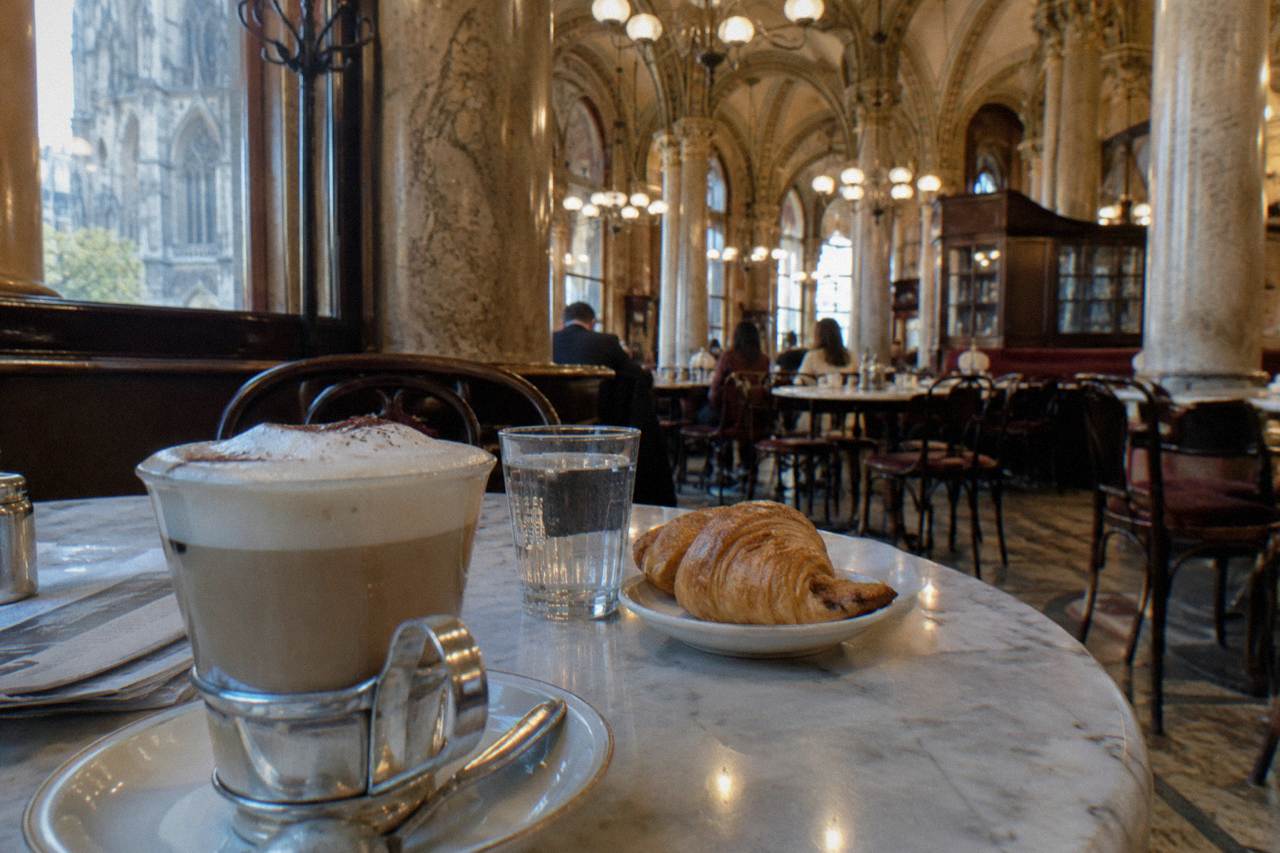
Viennese breakfast is a quiet ritual, not a fuel stop. The classic version happens in a coffee house with a newspaper, a Wiener Melange, and a pastry that arrives without ceremony, and locals treat the whole affair as an hour of the day rather than a meal to get through. Coffee house culture was recognised on Austria's national inventory of intangible cultural heritage in 2011, which tells you how seriously the city takes the institution behind the croissant. This guide covers what a traditional Vienna breakfast actually is, where locals eat it, what it costs in 2026, and how a guided morning coffee-house walk fits in if you want the stories along with the strudel. And if the drinks themselves have you curious, a guide to what makes Vienna coffee so special explains the Melange, the Einspaenner, and why every order arrives with a small glass of water.
What Does A Traditional Vienna Breakfast Look Like?
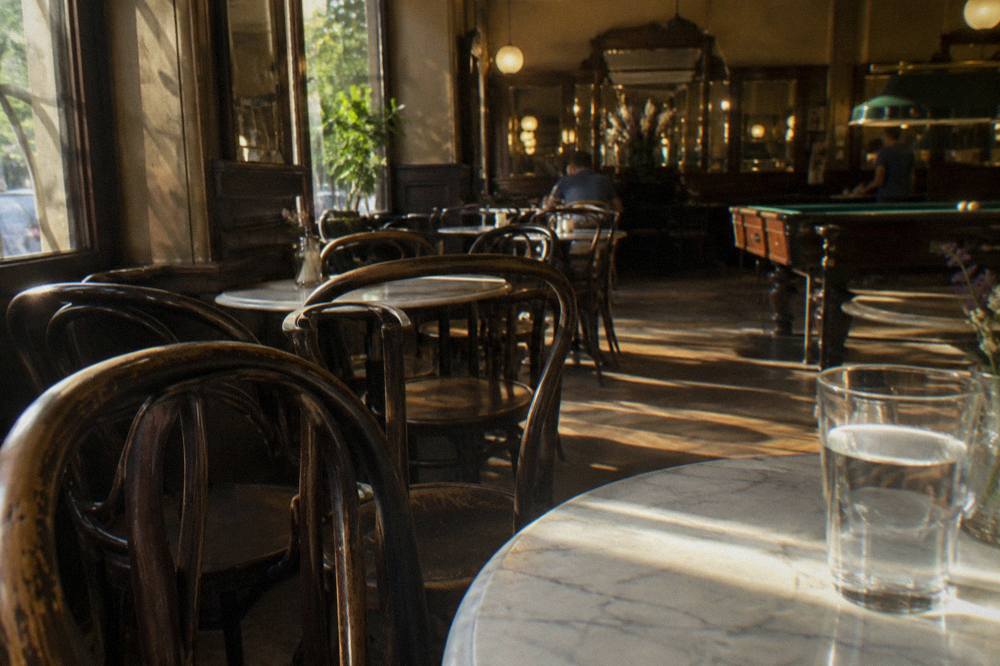
A traditional Vienna breakfast is a coffee house breakfast built around coffee, bread and pastry rather than a cooked plate: a Wiener Melange or a kleiner Brauner, a bread basket or a semmel, butter and jam, often a soft boiled egg, and a slice of cake if the morning allows it. It is unhurried by design. Waiters in classic houses do not hurry you out, and a single melange can legitimately occupy a table for an hour while you read. That pace is the point, and it is the single biggest difference between a Viennese breakfast and an American or hotel buffet version. And if that slice of cake turns out to be Sachertorte, our guide to how Sachertorte is actually supposed to taste settles the dryness question before you judge the slice.
The components have names worth knowing. The Wiener Melange, a coffee with steamed milk similar to a cappuccino, is the default morning order at most classic houses. The kleiner Brauner is a small coffee with a splash of cream. The semmel is the crusty round roll that anchors the bread basket. A typical menu will also offer a "Fruehstueck" set: eggs, cold cuts, cheese, bread and jam arranged as a plate for one, which is the closest Vienna gets to a full English style meal before noon.
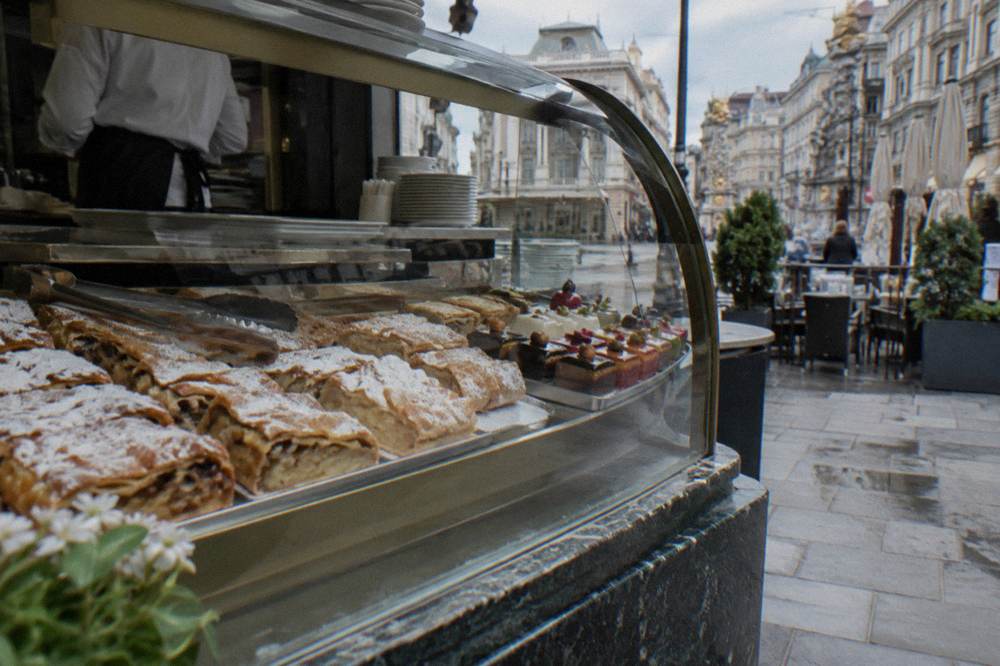
Pastry is not compulsory but it is normal. An Apfelstrudel, a slice of Sachertorte, or a sweet Kipferl all appear at breakfast tables without anyone raising an eyebrow. The city's cake tradition is deep enough that we cover it separately in the Vienna cake and pastry guide, and the dividing line between breakfast pastry and afternoon cake is mostly imaginary in practice.
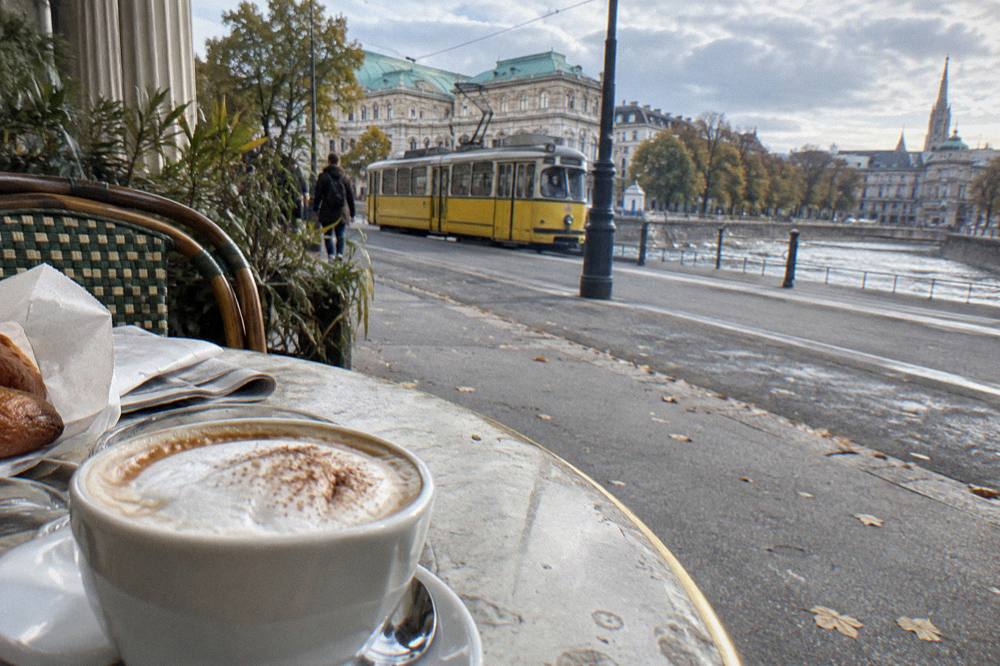
The setting matters as much as the food. Marble tables, bentwood chairs, newspaper holders and a waiter in a bow tie are the standard furniture of the genre, and they have barely changed in a century. That continuity is why the Vienna Tourist Board cites the coffee house, alongside the sausage stand and the Heuriger, as part of the city's recognised food heritage on its official Heuriger and heritage page.
Where Do Locals Actually Eat Breakfast In Vienna?
Locals split into two camps: the coffee house camp, where breakfast means a melange and a pastry at a traditional house like Landtmann, Sperl or Demel, and the neighborhood Beisl and modern cafe camp, where a Fruehstueck set with eggs and bread wins. Tourists cluster at three or four famous names. Viennese residents spread across dozens of smaller houses in the outer districts, and on weekends many go to brunch cafes in districts like Neubau and Favoriten that serve until early afternoon.
If you want the classic experience on a first visit, the grand houses on and around the Ringstrasse deliver it: Cafe Landtmann near the Burgtheater, Cafe Sperl in Mariahilf, and Demel opposite the Hofburg. All three appear in our rundown of the best coffee houses in Vienna, which covers hours, reservation norms and what to order at each. Landtmann accepts reservations, which matters on weekends; Demel generally does not, so expect to wait at peak times.
There is a practical wrinkle for 2026 that trip plans should account for. Cafe Central, the most famous coffee house name of all, has been closed for major renovation since 16 March 2026, with reopening planned for winter 2026. Meanwhile its pop-up, Decentral, operates at Freyung 3 daily from roughly 08:30 to 20:00, with a reported melange at 5.40 euros and Apfelstrudel at 5.90 euros. Confirm current status on the cafe's own site before you build an itinerary around it.
A guided walk is a genuinely good way to handle breakfast on a first morning, because the city's coffee house culture rewards explanation. Three morning-friendly options pair well with breakfast planning:
Each of these is a coffee-house-first experience rather than a full meal walk, which is the honest fit for a breakfast topic: no tour listed here is sold as a breakfast tour specifically. The guided Viennese coffee-house tour spends three hours on the institution itself, its history and its rituals, with stops for what the listing describes as classic coffee house fare. The pastries and bites walk runs three and a half hours and leans on the cake counter. The first-day tour is shorter, two hours 45 minutes, and mixes a coffee house stop with street food and local orientation tips, a sensible shape for a jet lagged first morning when you want breakfast and a city briefing in one go.
What Is On A Typical Fruehstueck Menu In Vienna?
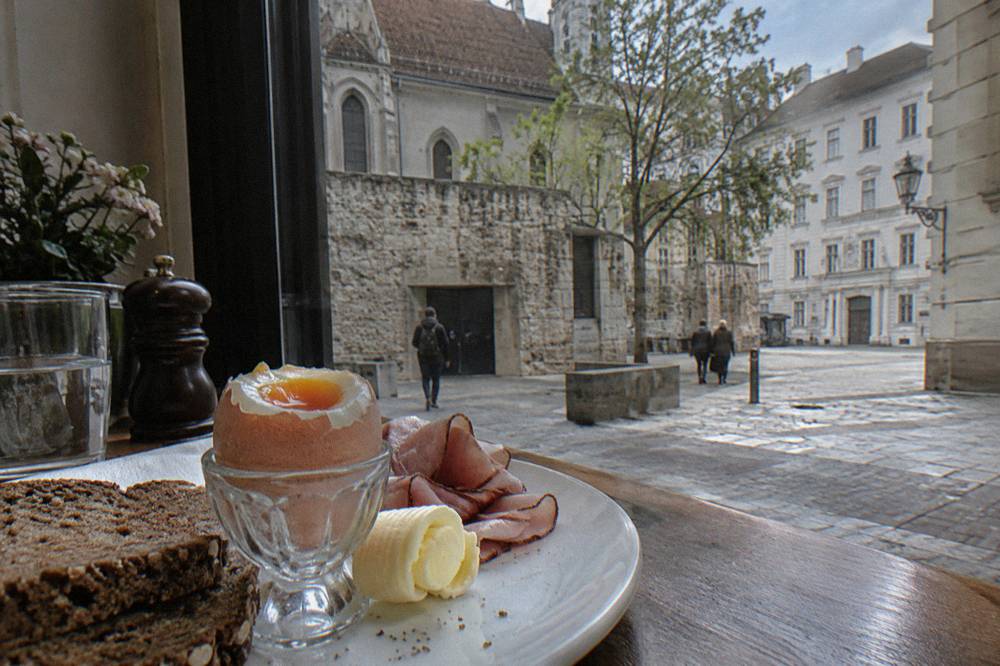
A typical Fruehstueck menu offers a small set of fixed plates: the standard breakfast with a soft boiled egg, semmel or bread, butter and jam; an extended version with ham and cheese; sometimes a sweet version with cake; and the full coffee list from melange to verlängerter. The choice is narrower than a brunch menu in London or New York, and prices at mid range cafes are moderate by local standards. What you gain in range you gain back in quality of setting.
The standard building blocks appear almost everywhere. Eggs come soft boiled in a cup more often than scrambled or fried. Bread is a semmel, rye or a small basket. Cold cuts are usually ham, sometimes speck. Cheese is a slice or two of a mild alpine style. Jam is apricot more often than anything else, a national habit that runs from breakfast to Sachertorte filling. Coffee portions are small by American standards and refills are not a concept here.
The table below lays out what a typical menu contains and what to expect from each plate:
| Menu item | What it is | Typical timing |
|---|---|---|
| Wiener Melange | Espresso-based coffee topped with steamed milk, the default breakfast order | All day |
| Kleiner Brauner | Small black coffee with a splash of cream | All day |
| Verlängerter | A "lengthened" espresso with hot water or milk, the local long coffee | All day |
| Standard Fruehstueck | Soft boiled egg, bread or semmel, butter, jam | Morning, often all day in coffee houses |
| Extended Fruehstueck | Adds ham, cheese, sometimes spreads and juice | Morning |
| Sweet breakfast | Pastry, strudel or cake slice with coffee | All day, entirely acceptable at breakfast |
One honest note for anyone with dietary restrictions: the tours listed here state a vegetarian lunch option on some food walks, but no coffee house on these tours states a vegan or gluten-free breakfast option, and neither do most traditional houses. Modern cafes are a different story. Vienna has a real gluten-free and vegan cafe scene, and we cover where to find it in the vegan food in Vienna and gluten-free guides. If a specific house matters to you, message the operator or the cafe before you commit.
What Does Breakfast Cost At A Viennese Coffee House?
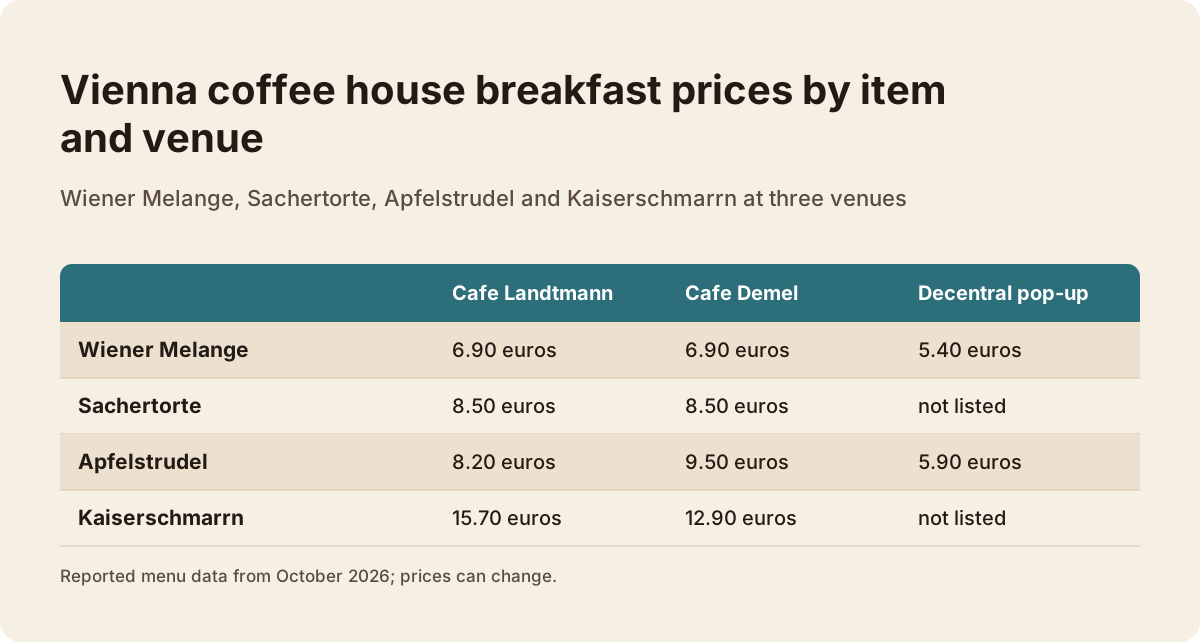
A melange costs around 6.90 euros at classic houses like Landtmann and Demel, a Sachertorte slice at 8.50 euros at both, and an Apfelstrudel between 8.20 and 9.50 euros, so a coffee plus pastry breakfast at a grand house runs to roughly 15 to 17 euros before tip. At the cheaper end, the Decentral pop-up reports a melange at 5.40 euros and strudel at 5.90. These figures should be treated as a planning range; always check the menu you are actually handed.
The differences between houses are smaller than people expect. Melange prices at the classic houses clustered around 6.90 euros, and the pastry spread across Landtmann and Demel is a euro or two either way. Kaiserschmarrn, the shredded pancake that works as a hearty late breakfast, runs 12.90 euros at Demel and 15.70 at Landtmann as reported October 2026 menu prices. The famous Sachertorte slice at Hotel Sacher is reported around 11.50 euros in 2026 sources, with some reports noting a range from roughly 8.90 to 10.50, and queues at Sacher run longest in the afternoon.
| Item | Cafe Landtmann | Cafe Demel | Decentral pop-up |
|---|---|---|---|
| Wiener Melange | 6.90 euros | 6.90 euros | 5.40 euros |
| Sachertorte | 8.50 euros | 8.50 euros | Not listed |
| Apfelstrudel | 8.20 euros | 9.50 euros | 5.90 euros |
| Kaiserschmarrn | 15.70 euros | 12.90 euros | Not listed |
The figures above are reported menu data from October 2026 and can change, so treat them as a budget frame rather than a promise. For the full cake-by-cake comparison, including the Original Sachertorte versus Demel rivalry and where to eat each, see Sachertorte or Demel: where to eat the cake. For guided walks, prices sit on each operator's booking page rather than in this article, and they vary by format: a three-hour guided coffee-house walk and a shorter orientation walk are different products with different prices, so check the booking page for the current figure.
When Should You Eat Breakfast In Vienna?
Coffee houses in the centre open between 07:00 and 08:30 at the earliest, with most serving breakfast until early afternoon, so there is no need to rush: the Viennese breakfast window is wide, and late morning is normal. Classic houses serve their full menu all day, which means a melange and strudel at 15:00 is as legitimate as at 08:00. The main scheduling pressure comes from queues at the most famous names, not from kitchens closing.
Timing tips that genuinely matter: arrive before 09:30 at Landtmann or Demel on a weekend if you want a table without a wait, and aim after 16:00 at Hotel Sacher if you must have the Original slice, since afternoon queues there are the longest. The Sacher versus Demel queue contrast is real: Sacher's line is the city's most notorious, Demel's typically shorter. If your morning starts with a tour, note that morning tour slots often begin with breakfast or coffee stops, so an early coffee house stop can double as your tour meeting warm up. The rest of the planning pages sit on Vienna Food Tours.
For market mornings, the Naschmarkt gives a different kind of breakfast backdrop. Official city hours allow sales stands to open from 06:00 on weekdays and until 18:00 on Saturdays, and every stand must be open Tuesday to Friday between 15:00 and 18:00, per the City of Vienna's official Naschmarkt page. Browsing the stalls costs nothing, and restaurants there can serve until 23:00, though the produce side of the market is the morning half. The details, including the Saturday flea market that shares the site, are in our Naschmarkt opening hours guide.
One calendar note for coffee lovers planning ahead: the Vienna Coffee Festival returns 10 to 12 September 2027 at Marx Halle, per the festival's official site. The 2026 edition ran in September and is past, so if a coffee-focused trip is on your list, autumn 2027 is the next window where the whole city's roasting scene gathers in one hall.
Can You Get Brunch And International Breakfast In Vienna?
Yes, and increasingly so: weekend brunch is now standard at modern cafes in Neubau, Wieden and Leopoldstadt, with eggs Benedict, avocado toast and shakshuka on menus, and the scene has grown enough that the Michelin Guide's 2026 Austria edition lists 61 Bib Gourmand value spots nationwide, including vegetarian-leaning Vienna additions. The traditional coffee house and the modern brunch cafe are now parallel institutions, and most visitors sensibly do both in one trip.
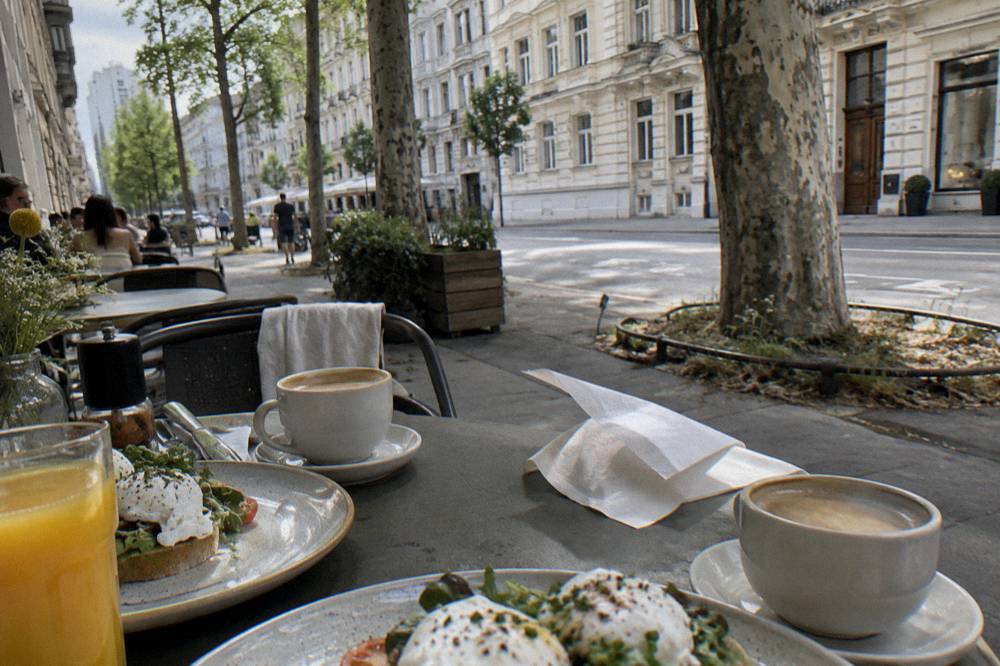
The brunch scene clusters in a few neighborhoods. Neubau around the Spitalgasse and Volkstheater area has the densest run of third wave cafes with full brunch menus. The Naschmarkt and Karlsplatz edges have cafe-restaurants serving weekend brunch till mid afternoon. The 2nd district around Karmelitermarkt has a quieter, more local scene. If rain hits or you simply want more choice than a semmel, any of these will deliver.
A few practical rules carry over from the restaurant side of the city, and they are worth knowing before your first breakfast bill. Gedeck, a cover charge of 2 to 5 euros per person, is legal in traditional venues only if it appears on the menu, and it applies whether or not you eat the bread basket. Tap water can be charged if it is listed: a 2026 Arbeiterkammer sample of 30 Vienna venues found 23 charged for it, often 0.80 to 3.60 euros per half liter. Tipping runs 5 to 10 percent at restaurants; in coffee houses, rounding up or leaving 0.50 to 1 euro is the norm. And every dining room in the country has been smoke-free indoors since 1 November 2019 under Austrian law, per the official business service portal, so terrace tables are the only smoky ones. Our full rundown of these customs is in the Vienna restaurant etiquette guide.
Is A Guided Coffee House Walk Worth It For Breakfast?
A guided coffee-house walk is worth it if you want the history and ritual explained while you eat, and it is the closest bookable product to a Vienna breakfast tour, since no listing on this site is sold specifically as a breakfast tour. The three-hour guided Viennese coffee-house walk covers the institution's heritage and its food; the shorter first-day tour mixes a coffee house stop with street food and orientation. Both solve the first-morning problem of not knowing which house to pick.
The honest framing matters here. A self-guided breakfast at Landtmann costs you a melange and a pastry, roughly 15 euros reported, plus whatever cake you add. A guided walk costs more, because you are paying for a guide's knowledge and a curated set of stops, with the current price on the booking page. What the walk adds is context: why the water glass arrives beside the coffee, what the newspaper holders mean, which houses survived which eras. Some travelers find that transforms the experience; others would rather spend the difference on a second slice of cake. Both are reasonable positions.
Dietary needs deserve a note here as well. Among guided products, a vegetarian option at lunch is stated for some of the longer food walks, but no coffee-house listing states vegan or gluten-free options, so anyone with those requirements should message the operator before booking. The same caution applies to the houses themselves: traditional menus are egg, bread and dairy heavy, and the modern cafes linked above are the better bet.
What Does A Vienna Morning Look Like Start To Finish?
A classic Vienna breakfast morning runs about two hours: a coffee house stop of 45 to 60 minutes for a melange and pastry, a walk through the centre past one or two landmark sights, and either a market browse or a second stop for a standing coffee, all within a couple of kilometers on foot. The city centre is compact enough that breakfast, a museum or palace exterior, and a second cafe can share one morning without transport.
Here is a sample shape that several mornings can be built from, using reported figures only:
| Time | Stop | What it costs, reported |
|---|---|---|
| 09:00 | Coffee house breakfast: melange and Apfelstrudel at a classic house | around 15 euros |
| 10:15 | Walk along the Ringstrasse or through the Hofburg courtyards | free |
| 11:00 | Market browse, Naschmarkt or Karmelitermarkt stalls | free to enter and browse |
| 11:30 | Standing coffee or second pastry at a sausage stand or bakery | a few euros |
The morning also scales up. The Vienna region's wine tradition borders the breakfast city closely, and vineyards sit inside the city limits, 588 hectares of them across Döbling, Floridsdorf and other districts, with about 33 percent farmed organically. Heurigen, the wine taverns that serve those vineyards' own wine, traditionally open late morning at the earliest and skew afternoon and evening, so they belong to the later part of a food day; we cover them in the Heuriger visitor guide. For now it is enough to know that Vienna is one of very few capitals where the breakfast coffee house and the wine tavern share the same municipal boundary.
Breakfast planning in Vienna is low risk and high reward: almost any path leads to good coffee and a serious pastry, and the main decisions are which house, which hour, and whether to add a guide's stories to the morning. Start with the classic coffee house version once, then explore the modern brunch scene, and treat the Vienna breakfast question we answer in depth elsewhere as your cheat sheet for the local vernacular.
Common Questions About Vienna Breakfast
What Is A Common Breakfast In Vienna?
A traditional breakfast is a coffee house affair: a Wiener Melange, a semmel or bread with butter and jam, often a soft boiled egg, and frequently a pastry such as Apfelstrudel or a slice of cake. Fruehstueck set plates with ham and cheese are the standard menu upgrade.
What Does Breakfast Cost In Vienna?
Reported 2026 prices put a melange at around 6.90 euros at classic houses and a pastry at roughly 8 to 9.50 euros, so a coffee plus pastry breakfast runs about 15 to 17 euros before tip. The Decentral pop-up reports cheaper options, with a 5.40 euro melange.
Is Cafe Central Open For Breakfast?
No. Cafe Central has been closed for major renovation since 16 March 2026, with reopening planned for winter 2026. Its pop-up, Decentral, operates at Freyung 3 daily from roughly 08:30 to 20:00; confirm status on the cafe's own site.
Do I Need A Reservation For Breakfast In Vienna?
Cafe Landtmann accepts reservations and it is wise for weekends. Demel generally does not take reservations, so arrive before 09:30 to avoid a wait. Hotel Sacher queues run longest in the afternoons.
Are There Breakfast Tours In Vienna?
No tour on this site is sold specifically as a breakfast tour. The nearest fits are guided coffee-house walks, including a three-hour guided Viennese coffee-house tour and a shorter first-day tour that combines a coffee house stop with street food and local tips.
Is Tipping Expected At Vienna Breakfast?
In coffee houses, rounding up or leaving 0.50 to 1 euro is the norm. At full restaurant breakfasts, 5 to 10 percent is standard, and you state the total you want to pay when the bill arrives.