Where To Eat Wiener Schnitzel In Vienna
Vienna ordered more schnitzel per person than any other Austrian city in 2026, and the difference between a great one and a disappointing one comes down to veal, thickness, and where you sit.
Short answer
A true Wiener Schnitzel is veal, pounded thin and pan-fried in breadcrumbs. Vienna is Austria's schnitzel capital by delivery orders, with a reported average pork schnitzel price of around 15.09 euros. Expect plate-sized portions, potato salad or parsley potatoes on the side, and a serious gap between tourist-strip venues and proper Beisl kitchens.
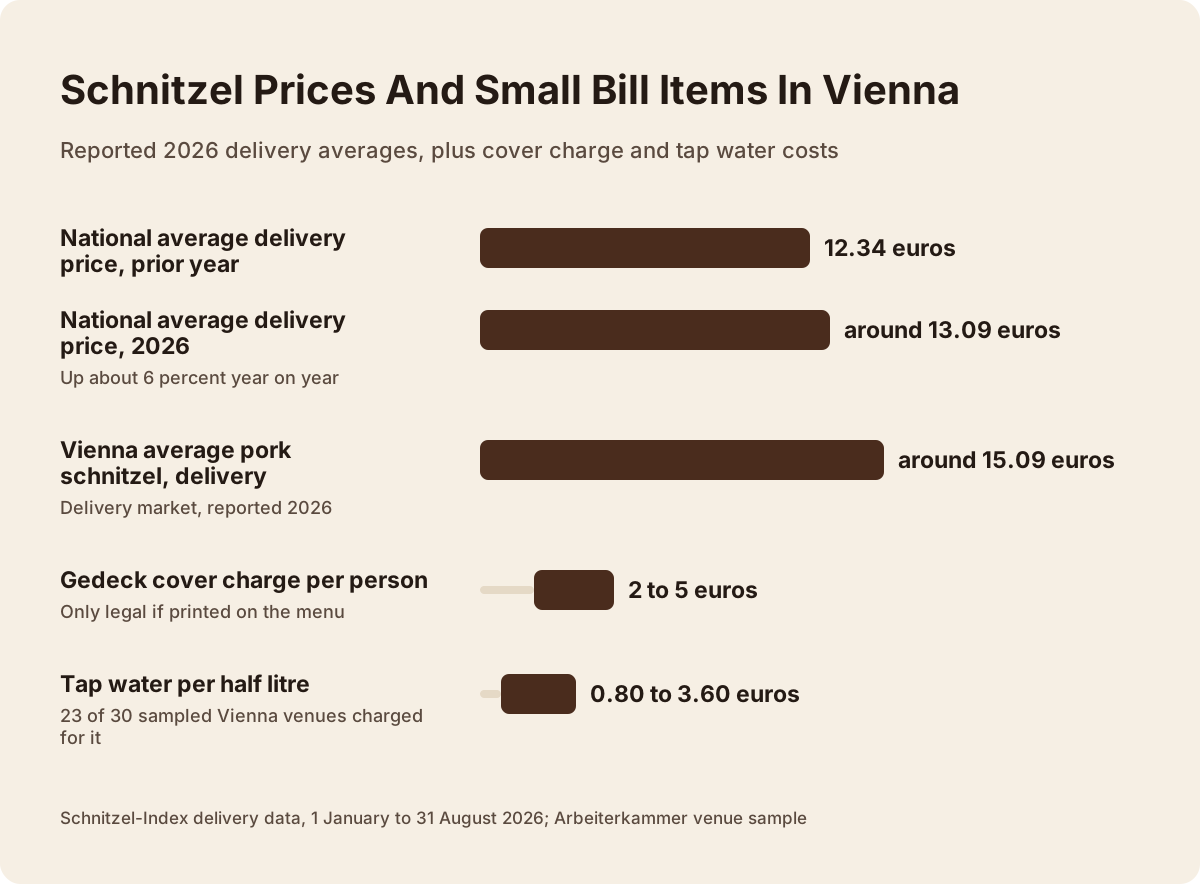
Vienna is, by the numbers, Austria's schnitzel capital. The 2026 Lieferando Schnitzel-Index counted 142,318 schnitzel orders in the city between January and August 2026, or 7.4 orders per 100 inhabitants, ahead of Linz at 5.7 and Graz at 4.9. The national average price of a delivered schnitzel rose about 6 percent to 13.09 euros, while the Vienna average for a pork schnitzel sat around 15.09 euros, all reported for 2026. Those delivery numbers are not a restaurant guide, but they say something real: this city takes its breaded cutlet seriously, and it eats a lot of them.
For visitors the dish is more complicated than the queue at any famous cafe suggests. There is a naming rule with legal weight, a veal-versus-pork price gap that can double a bill, and a landscape of venues that runs from neighborhood Beisl kitchens to places where the schnitzel is a photo prop. This guide lays out what a real Wiener Schnitzel is, what you should pay, where the traps are, and how a cooking class or guided food walk can anchor a schnitzel-focused day. For the wider dish-by-dish picture, see our traditional Viennese dishes overview.
What Makes A Real Wiener Schnitzel?
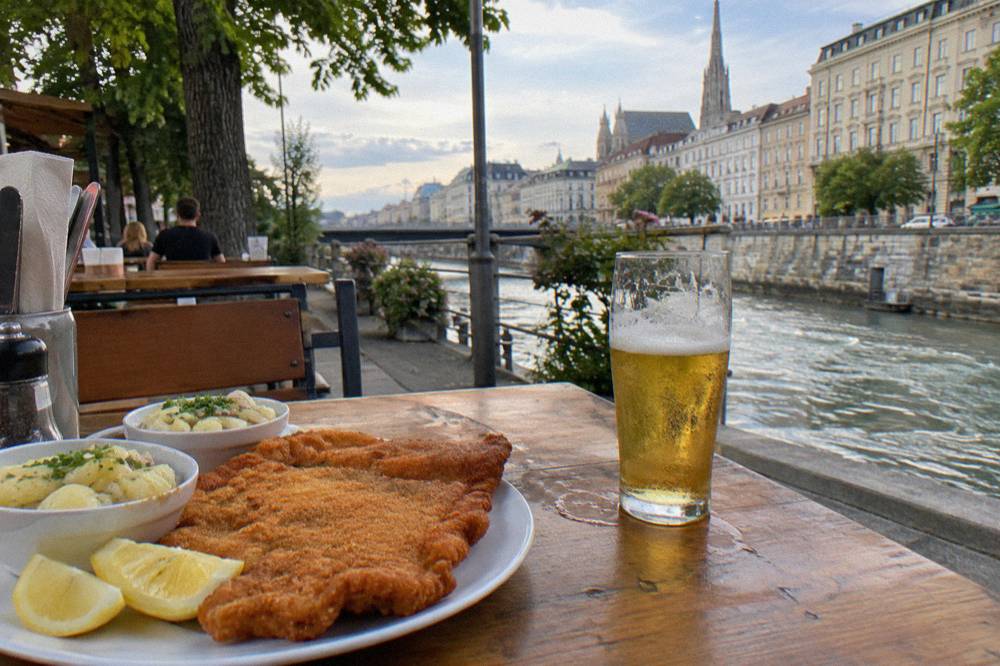
A genuine Wiener Schnitzel is a veal cutlet, pounded thin, breaded in flour, egg, and breadcrumbs, and pan-fried in shallow fat until golden. By Austrian convention the name means veal, and a pork version must be labelled Schweinesschnitzel or Schnitzel Wiener Art on a correct menu. The finished cutlet should stretch past the rim of the plate and be tender enough to cut with a fork.
The veal rule is the single most useful thing a visitor can know. When an Austrian menu says "Wiener Schnitzel" without qualification, the kitchen is committing to veal. Pork is cheaper and completely legitimate, but honest restaurants name it: Schnitzel vom Schwein, Schweinesschnitzel, or Schnitzel nach Wiener Art. If a menu near a major sight lists only "schnitzel" with no meat specified and no price difference anywhere, that vagueness is worth a question before you order.
The technique matters as much as the meat. The breadcrumb coating should be loose and airy, almost flaky, because the cutlet is shaken rather than pressed when breaded and swims in enough hot fat that the coating steams away from the meat instead of sticking. That separation is what gives a proper schnitzel its characteristic wavy surface. A flat, dense, oily crust usually means the pan was too crowded or the fat too cool.
Portion expectations are part of the experience too. The classic presentation is a cutlet that hangs over the edge of the plate, with a lemon wedge, and either potato salad or parsley potatoes. It looks extravagant, but the thinness means it is far less food than it appears. Sharing is generally not expected, and a single schnitzel with one side is a normal main course for one person.
Where To Find The Best Schnitzel In Vienna?
The reliable schnitzel venues in Vienna cluster in traditional Beisl and Wirtshaus kitchens rather than the streets around St Stephen's Cathedral. Look for hand-written daily menus, a schnitzel priced clearly by meat type, and a dining room that fills with locals by midday. Guided options exist too: several food walks and cooking classes on the operator listings include schnitzel in some form, from a full lunch stop to frying one yourself.
No honest guide can rank Vienna's schnitzel venues, and this one will not try. What can be said is structural. The Wirtshaus renaissance reported through 2025 and 2026 has pushed renovated neighborhood taverns back to the centre of Viennese dining, several of them now recognised in the Michelin Guide's 2026 Bib Gourmand list, which counted 61 such venues across Austria including new Vienna additions. A revived 1906 tavern on Sechshauser Strasse, reopened in late 2024 by a former Steirereck chef and serving a vegetarian-leaning modern Beisl menu with natural wines, is the kind of place that signals where the city's serious cooking now lives. Those rooms may not centre a schnitzel, but they show the standard of kitchen the best versions come from.
The practical filters matter more than names. A venue that specifies veal versus pork on the menu is being honest with you. A kitchen that pounds and breads to order will have a slightly longer wait, and that wait is a good sign. A place where the schnitzel arrives ninety seconds after you ordered it is reheating, not cooking. Vienna's total gastronomy has been smoke-free indoors since 1 November 2019, so a dining room full of cigarette smoke is no longer part of the Beisl deal at any legitimate venue, per the Austrian business service portal.
Schnitzel hunters also have two guided routes that put the dish at the centre of the day. The first is a cooking class, where you pound, bread, and fry the cutlet yourself and then eat it. The second is a food walk that includes schnitzel among its stops, which pairs the dish with market stalls, coffee house culture, and other classics in a single booked outing. Both formats are covered in detail further down this guide.
Between those two formats, the choice comes down to what you want from the day. A class is about understanding the dish; a walk is about understanding the city that eats it. Many visitors with two or three days in Vienna do one of each, and the cooking class in particular has become the easiest booked experience to justify, because you leave with lunch included and a repeatable recipe.
How Much Should You Pay For Schnitzel In Vienna?
Reported 2026 delivery data puts the national average schnitzel price at around 13.09 euros, up about 6 percent year on year, with the Vienna average pork schnitzel at around 15.09 euros. In proper restaurants a pork schnitzel commonly lands in the mid-teens in euros, while a true veal Wiener Schnitzel typically costs several euros more because veal is the expensive input. Treat every figure as reported menu or market data, and always check the printed menu. If the price gap between pork and veal has you wondering what actually counts as the real thing, the guide to Vienna's signature dish explains the difference and much more.
The Schnitzel-Index figures come from delivery orders between 1 January and 31 August 2026, and they describe a delivery market rather than restaurant dining. They are still the best hard numbers available on where schnitzel prices are moving: the national average rose from 12.34 euros to 13.09 euros in a year. Delivery prices and restaurant prices are different markets, but the direction of travel, roughly six percent inflation on the dish, is a reasonable planning assumption for restaurant menus too.
The table below pulls together the hard figures you can actually plan around. Note what it does not contain: no individual restaurant prices, because no verified source in our research gives them, and any specific number attached to a named schnitzel venue would be invented.
| Figure | Value | What it tells you |
|---|---|---|
| Vienna schnitzel delivery orders, Jan to Aug 2026 | 142,318 | Austria's highest volume of any city |
| Orders per 100 inhabitants, Vienna | 7.4 | Ahead of Linz at 5.7 and Graz at 4.9 |
| National average delivery price | around 13.09 euros | Up about 6 percent from 12.34 euros the prior year |
| Vienna average pork schnitzel, delivery | around 15.09 euros | Delivery market, reported 2026 |
| Best-rated delivery city | Graz, 4.34 out of 5 | Satisfaction and volume are not the same thing |
For booked experiences the same caution applies. Cooking classes and food walks are priced per person on the operator listings, and those prices change with seasons and demand, so the figure to trust is the one on the booking page when you reserve. Our general cost breakdown for guided eating, in what a Vienna food walk costs, covers how to compare these prices honestly.
Two small bill items catch visitors off guard and belong here. A traditional venue may add a Gedeck, a cover charge of roughly 2 to 5 euros per person, which is only legal if it is printed on the menu. And tap water is not automatically free in Vienna: a 2026 Arbeiterkammer sample of 30 Vienna venues found 23 charged for it, commonly 0.80 to 3.60 euros per half litre. Both points are covered in full in our tipping and cafe etiquette guide.
Veal Or Pork: Which Schnitzel Should You Order In Vienna?
Order veal once, at a venue that names its meat clearly, because the veal Wiener Schnitzel is the original dish and the texture difference is real: veal is more tender and carries a cleaner flavor under the crust. Order pork for the rest of your trip, because a well-fried Schweinesschnitzel is an excellent dish at a noticeably lower price, and many locals prefer it. The mistake is paying veal money without confirming you are getting veal.
The honest answer is that both are correct orders and the choice is about budget and curiosity, not status. Veal is the namesake cut, and if you eat one schnitzel in Vienna, the argument for making it veal is strong. But pork schnitzel is what fills the city's lunch tables and its delivery apps, 142,318 times in eight months, and a kitchen that fries pork well will usually do veal well too.
The ordering tactic is simple. Read the menu for the exact phrase, and use the quick decoder below before you commit to a table.
| Menu phrase | What it means | What to expect on the bill |
|---|---|---|
| Wiener Schnitzel | Veal, the original dish by Austrian convention | The higher price tier, veal is the costly input |
| Schnitzel vom Schwein | Pork, honestly named | The lower price tier |
| Schnitzel Wiener Art or nach Wiener Art | Pork prepared the Viennese way | The lower price tier |
| Schnitzel, unqualified | Ambiguous, ask before ordering | Unknown until you ask |
There is a third category worth knowing: the schnitzel-adjacent street versions. The Wurstelstand culture that the Vienna Tourist Board itself cites as part of the city's food heritage sells its own breaded and grilled snacks, and the Käsekrainer from a sausage stand is a different pleasure entirely, cheese-filled and snapped into a bun. If your schnitzel day stretches into a street-food evening, our Wurstelstand street food guide maps that side of the city.
Is A Schnitzel Cooking Class Worth Booking In Vienna?
For most schnitzel-focused visitors, yes, because a class is the only format where you learn why the cutlet is shaken, why the fat must be deep enough, and how thin the pounding really goes, and you eat the result afterwards. Vienna's booked cooking classes run from about 60 to 90 minutes for the short formats up to three hours for full shared sessions, with inclusions and prices stated on each operator's booking page.
The short class that anchors this guide's featured option is the Traditional Kaiserschmarrn and Schnitzel Cooking Class with Tasting, a one-to-one-and-a-half-hour session where participants cook both dishes and then sit down to eat them. The pairing is not random: Kaiserschmarrn, the shredded pancake dusted with icing sugar, is the classic sweet finish after a schnitzel in many Viennese homes, so the class effectively teaches a whole Austrian lunch. Exact price, meeting point, and what is included are on the booking page, and those details change often enough that repeating them here would be a disservice.
The longer alternative is the shared Schnitzel and Strudel class, a three-hour session that adds apple strudel to the repertoire in a small-group setting. Three hours is a meaningful chunk of a sightseeing day, but it delivers three dishes and a slower, more social pace. Families and mixed groups tend to fit the shared format better; solo travellers and short-stay visitors tend to prefer the compact class.
What a class genuinely adds over a restaurant meal is the failure education. Nearly everyone's first breading attempt clumps, and feeling why, the egg wash too wet, the crumbs pressed too hard, teaches more than any menu ever will. You also leave with the technique in your hands, which travels home better than a souvenir. If cooking is not your interest at all, skip the class without guilt and spend the money on one very good veal schnitzel at a proper tavern instead.
Which Vienna Food Walks Include A Proper Schnitzel Stop?
Several guided food walks on the operator listings build a full meal around classic Viennese dishes, and schnitzel or its street-side relatives appear in the longer formats alongside market tastings, coffee house stops, and drinks. The four-hour Typical Austrian Food Tour with coffee house visit is the clearest fit for schnitzel hunters, because it ranges across a whole day of Austrian eating in one booked outing.
That four-hour walk pairs a coffee house visit with a cross-section of Austrian food, which suits a visitor whose real goal is schnitzel plus context: where the dish sits among Tafelspitz, sausages, and the pastry counter. For a comparison of all the formats side by side, including shorter market walks and evening dinner tours, our food walk comparison guide breaks down the differences. The table below shows how the three schnitzel-relevant booked experiences stack up.
| Booked experience | Duration | Best for | Schnitzel angle |
|---|---|---|---|
| Traditional Kaiserschmarrn and Schnitzel Cooking Class | 1 to 1.5 hours | Short-stay visitors, solo travellers | You fry it yourself, then eat it |
| Schnitzel and Strudel Shared Cooking Class | 3 hours | Families and mixed groups | Two cooked classics plus strudel |
| Typical Austrian Food Tour with coffee house visit | 4 hours | First-time visitors wanting context | Part of a full Austrian meal walk |
A guided walk solves a specific schnitzel-hunter's problem: the dish is cheap to eat but hard to eat well on a first visit, because the good kitchens are scattered and the famous names are mobbed. A guide's route trades two hours of research for a table that has already been vetted. Dietary needs deserve a note here too: a vegetarian lunch comes with two walks, the Vienna Food Tour: Coffeehouses, Markets, Lunch & Street Food and the Authentic Vienna Food Tour. The private food tour offers vegetarian tastings but no lunch, and none of the walks offers a vegan or gluten-free option, so message the operator before booking if that matters to your group.
What Sides And Drinks Go With Schnitzel?
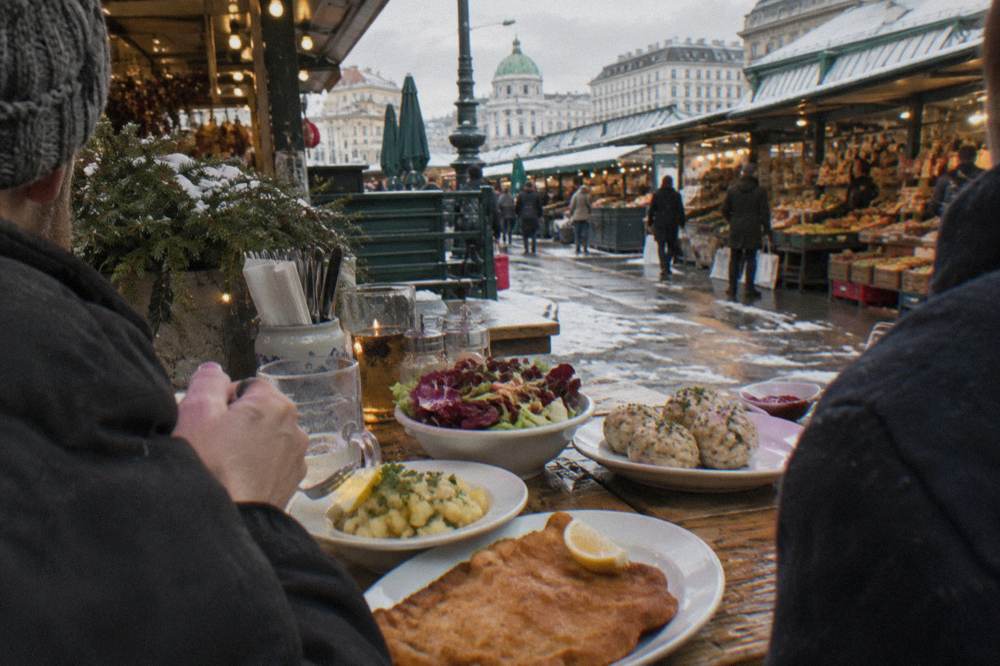
The canonical sides are potato salad, warm and slightly sweet with onion and vinegar, or parsley potatoes with melted butter, with a lemon wedge on the schnitzel itself. The canonical drink is a glass of Austrian wine, from a crisp Gruener Veltliner to a quarter-litre of the young local vintage, though a regional beer is equally traditional. Cranberry or lingonberry compote appears at some venues as a sharp counterpoint.
The potato salad question is a real Viennese debate. The classic version is warm, bound with a light vinegar-and-oil dressing rather than mayonnaise, and a kitchen that serves it cold from a tub is cutting the same corners as one that pre-fries its schnitzel. Parsley potatoes are the quieter option, and some venues offer a simple mixed salad as the fresh element. Portions being plate-sized, one side is enough.
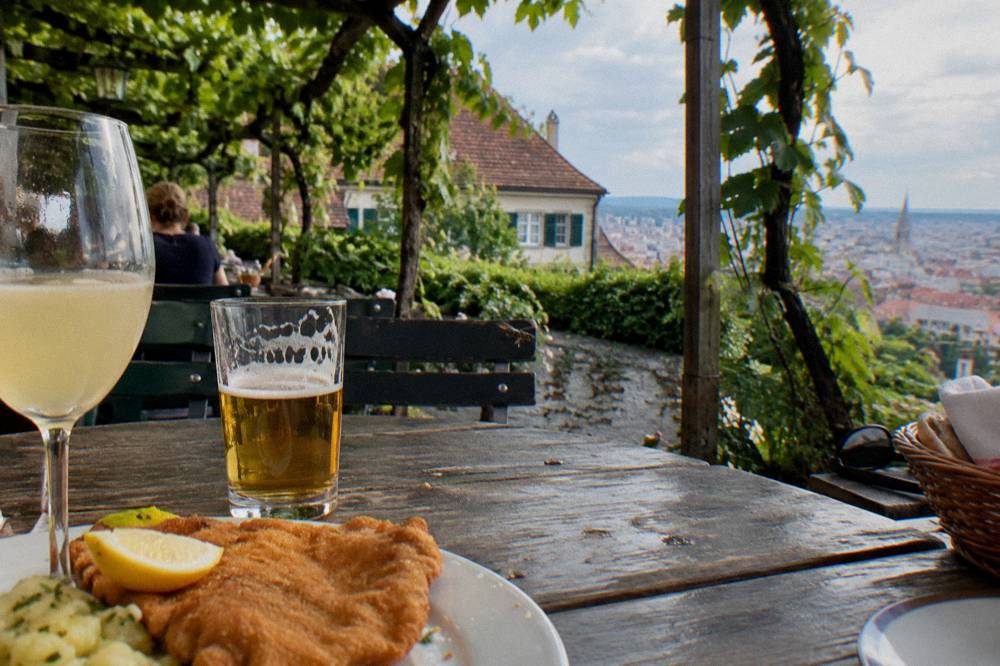
On the wine side, Austria's own whites are the local logic: the acidity cuts the fried crust. A Viennese Heuriger wine, meaning the current vintage, which by tradition may carry that name until 11 November of the following year per the Vienna Tourist Board's definition, is the most local pairing there is. For depth on that world, see our Vienna wine tasting options guide. Beer drinkers lose nothing: a pale regional lager beside a hot schnitzel is as Austrian as the wine glass.
What Are The Tourist Traps To Avoid With Schnitzel?
The three reliable warning signs are a menu with no meat type named, a schnitzel that arrives almost instantly after ordering, and a venue where the dish is photographed more than eaten, typically the streets around St Stephen's Cathedral and the major sight corridors. None of these guarantees a bad meal, but each shifts the odds, and the fix is the same: walk ten minutes off the main sight lines toward a street with a handwritten daily menu.
The economics of the trap are straightforward. Rent near the cathedral is brutal, turnover is everything, and a pre-fried schnitzel held under a heat lamp serves that economics perfectly. The visitor pays mid-range restaurant prices for a reheated pork cutlet, and often does not know the difference on a first trip. The protection is asking the two questions from earlier in this guide: which meat, and how long.
Two further flags deserve mention. A cover charge is legitimate in Vienna when printed on the menu, but a venue that adds an unlisted Gedeck is not playing straight, and you can reasonably query it. And spectacular oversize schnitzels, the ones bigger than the plate, are a genuine tradition at some well-loved venues, but sheer size alone is a marketing trait, not a quality signal. Our Naschmarkt tourist trap discussion covers the same dynamic at the city's famous market.
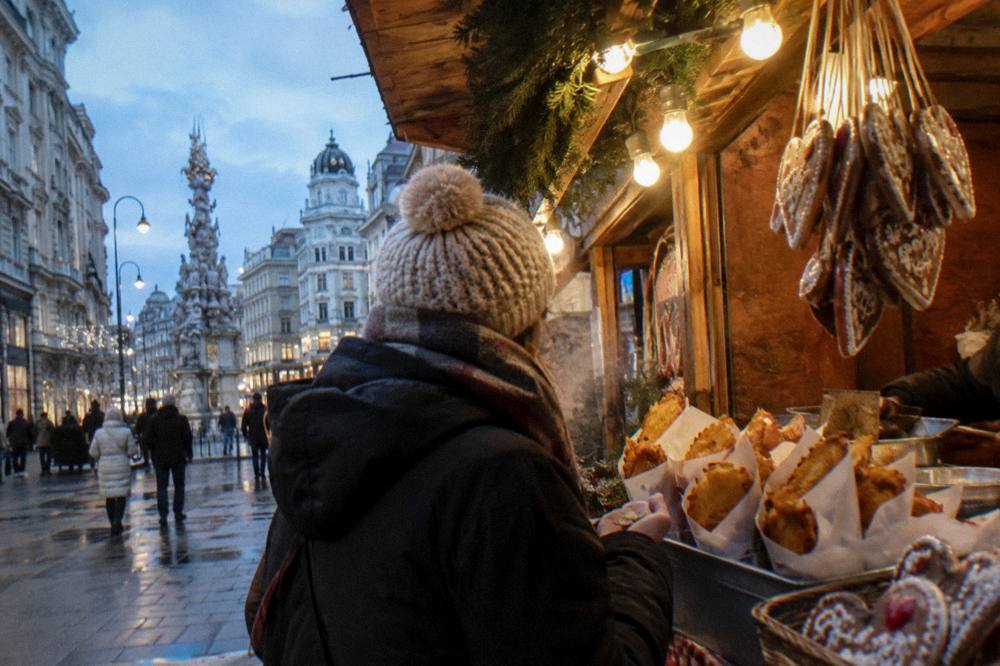
The seasonal calendar can also rescue a schnitzel trip. Vienna's Christmas markets run through late December 2026, with 15 markets and 814 stalls confirmed by the City of Vienna's October press release, and the market food stalls carry their own fried and grilled classics. The Rathausplatz market runs 13 November to 26 December and the Schönbrunn market 6 November to 24 December, both daily into the evening.
Should You Plan A Whole Day Around Schnitzel In Vienna?
Yes, and the strongest version of that day pairs formats: a morning market or coffee house stop, a lunchtime schnitzel at a neighborhood tavern or a cooking class where you fry it yourself, and an evening drink in a Wirtshaus or at a Christmas market stall in season. Booked experiences slot in naturally, with a short class eating about 90 minutes and a full food walk about four hours, so a two-day visit can hold both without strain.
The reason a day works better than a single meal is that schnitzel in Vienna is a constellation, not a dish. The veal rule, the veal-versus-pork price gap, the smoke-free Beisl revival, the delivery-index numbers, the Wurstelstand snacks at the edges: each one is a small piece of context that makes the plate in front of you more interesting. A visitor who spends one hour in a cooking class and one lunch in a good tavern leaves understanding the dish in a way that three restaurant meals never quite deliver.
Scheduling helps. The compact class formats fit a late-morning slot and end in lunch, which is exactly when a proper tavern kitchen is also at its best, and before the tourist corridors fill for the evening. A longer walk works as an afternoon-to-evening block. In the winter season, the market stalls extend the schnitzel day into the night with punched wine and grilled food, and the 2026 market calendar runs right through 26 December at Rathausplatz.
However you build the day, keep the two protections from this guide in play: ask which meat, and check the price basis on the printed menu. Everything else, the plate size, the lemon, the potato salad debate, is part of the pleasure rather than a risk. Vienna Food Tours exists because eating well in this city rewards a little planning, and schnitzel is the single most plannable pleasure Vienna offers.
Common Questions About Wiener Schnitzel In Vienna
What Makes A Wiener Schnitzel Authentic?
By Austrian convention, the name Wiener Schnitzel means veal: a thin-pounded veal cutlet, breaded in flour, egg, and breadcrumbs, and pan-fried in shallow fat. A pork version must be labelled Schweinesschnitzel or Schnitzel Wiener Art on a correct menu, and the price difference between the two reflects the cost of the meat.
How Much Does Schnitzel Cost In Vienna?
Reported 2026 delivery data puts the Vienna average pork schnitzel at around 15.09 euros and the national average at around 13.09 euros, up about 6 percent in a year. Restaurant prices vary by venue and meat, veal costs more, and the only figure that counts is the one printed on the menu in front of you.
Why Is Wiener Schnitzel So Big?
The cutlet is pounded very thin, often until it stretches past the plate rim, which is the traditional presentation rather than a tourist stunt. Because it is thin, it is less food than it looks, and one schnitzel with a side is a normal main course for one person.
Can I Learn To Cook Schnitzel In Vienna?
Yes. Booked cooking classes teach pounding, breading, and frying, with the Traditional Kaiserschmarrn and Schnitzel class running 60 to 90 minutes including eating the result, and a three-hour shared Schnitzel and Strudel class as the longer alternative. Prices, meeting points, and inclusions are stated on each operator's booking page.
Do Any Guided Food Walks Include Schnitzel?
Several do. The four-hour Typical Austrian Food Tour with coffee house visit covers a full cross-section of Austrian dishes in one outing, and longer food walks generally build a complete meal with several tastings and drinks. Check the booking page for the current stop list before reserving.