What To Eat In Vienna: Traditional Dishes And Where To Try Them
Viennese cooking is a curated archive of the old empire, and the classics still anchor nearly every menu in the city. Here is what the traditional dishes actually are, how they differ, and where each one fits on a sensible eating list.
Short answer
The core traditional Vienna food list is short and stable: Wiener Schnitzel, Tafelspitz, Gulasch, Knoedel, Kaiserschmarrn and the sausages of the Wurstelstand. A Vienna Schweineschnitzel averaged 15.09 euros by delivery data in 2026, and a 4-hour Austrian food tasting walk covers several classics in one sitting.
Viennese cuisine is the edible record of a multi-ethnic empire. Bohemian dumplings, Hungarian goulash, a breaded cutlet with Milanese ancestry and a shredded pancake named for an emperor all sit on the same menu, and the city has spent a long time deciding which of them count as truly Viennese. The answer, mostly, is all of them.
That makes the eating list easier than it looks. Six dishes carry most of the weight: Wiener Schnitzel, Tafelspitz, Gulasch, Knoedel, Kaiserschmarrn and whatever the nearest sausage stand is serving. Learn those and you can read almost any traditional menu in the city, from a Beisl in the outer districts to a grand coffee house on the Ringstrasse.
This guide walks through each dish, what it is, how it is served, and where to plan it into a trip. It also points to the guided tasting walks that bundle several classics into one afternoon, useful if your days are short. For the broader picture of the city's food identity, start with our companion piece on Vienna's must-eat foods.
What Counts As Traditional Vienna Food?
Traditional Vienna food is the set of dishes that developed in the city's home kitchens, Beisl dining rooms and imperial kitchens before the modern era, and that still appear on menus citywide: Wiener Schnitzel, Tafelspitz, Gulasch, Knoedel of several kinds, Kaiserschmarrn, and the boiled and grilled sausages of the Wurstelstand. Each has a defined form, and the city guards those forms with law in one case and habit in the rest.
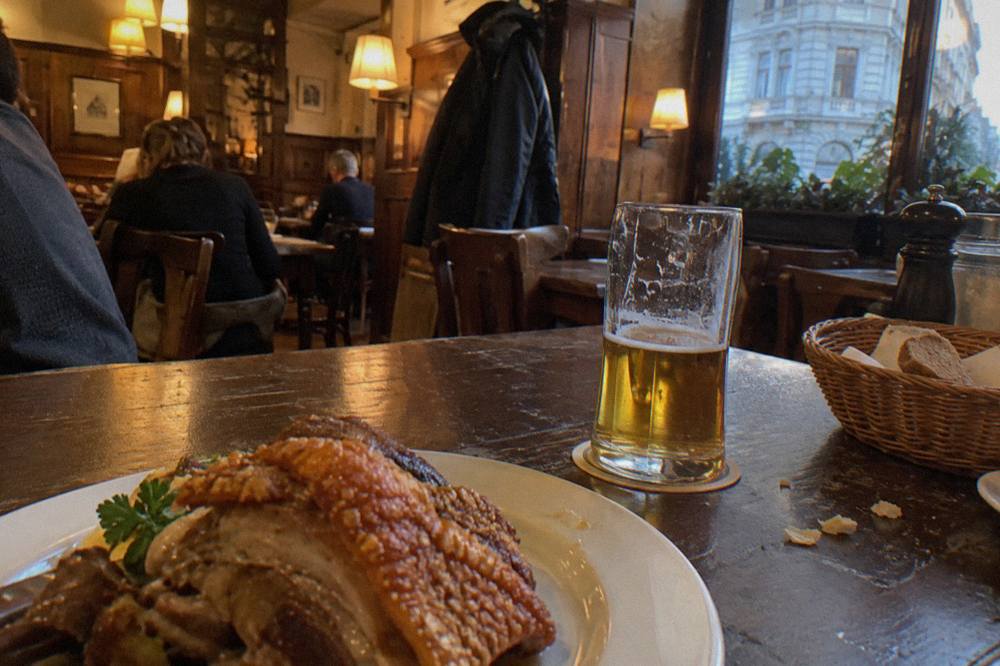
The word to know is Beisl. A Beisl is the Viennese neighbourhood tavern, small, wood-panelled, often family-run, and it is where the traditional cooking is done best and cheapest. The grander version is the Wirtshaus, and above that the historic coffee houses, which serve a subset of the classics alongside their cakes. None of these is better than the others by definition; they serve different meals on different clocks.
The modern scene sits on top of this foundation rather than replacing it. The Michelin Guide Austria 2026 counted 101 starred restaurants in the country, with Vienna still holding two three-star houses, Steirereck im Stadtpark and Amador. More telling for traditional eaters is the Bib Gourmand list, which added three Vienna addresses in 2026, among them Rosi in the 15th district, a revived 1906 Wirtshaus serving a vegetarian-leaning modern Beisl menu with natural wines. The old cooking and the new cooking are in conversation, and the old dishes are the shared vocabulary.
Here is the working list, in the order a visitor usually meets them:
| Dish | What it is | Where it belongs |
|---|---|---|
| Wiener Schnitzel | Veal escalope, hammered thin, breaded and fried in a shallow bath of clarified butter or fat | Lunch or dinner at a Beisl |
| Tafelspitz | Boiled beef, usually silverside, with broth, vegetables and a tray of accompaniments | A long lunch, the classic Sunday meal |
| Gulasch | Beef stewed with onion and paprika, arrived from Hungary and adopted | Dinner in cold months |
| Knoedel | Dumplings, potato or bread based, sweet or savoury | Side dish or dessert |
| Kaiserschmarrn | Shredded pancake with raisins, sugar and plum compote | Dessert, or lunch if you are honest |
| Wurstelstand sausages | Käsekrainer, Bosna, Frankfurter and friends, served standing | Late night or quick lunch |
Where Should You Eat Wiener Schnitzel In Vienna?
Order Wiener Schnitzel at a traditional Beisl rather than a tourist restaurant, and know that by law the name means veal; the pork version must be sold as Schnitzel Wiener Art. Delivery data from 2026 put the average Vienna Schweineschnitzel at 15.09 euros, and the national average schnitzel price rose about 6 percent to 13.09 euros, so a Beisl price in the mid-to-high teens is normal rather than a rip-off.
The veal rule matters. Austrian food law protects Wiener Schnitzel as a geographical indication, so a menu in Vienna that prints the full name is promising veal, breaded and fried in fat, not baked in oil. Pork cutlets get the polite label Schnitzel Wiener Art, Vienna-style schnitzel, and they are the cheaper, extremely common sibling. Turkey and chicken versions are a step further from tradition and usually a sign you have wandered into a kitchen cooking for volume.
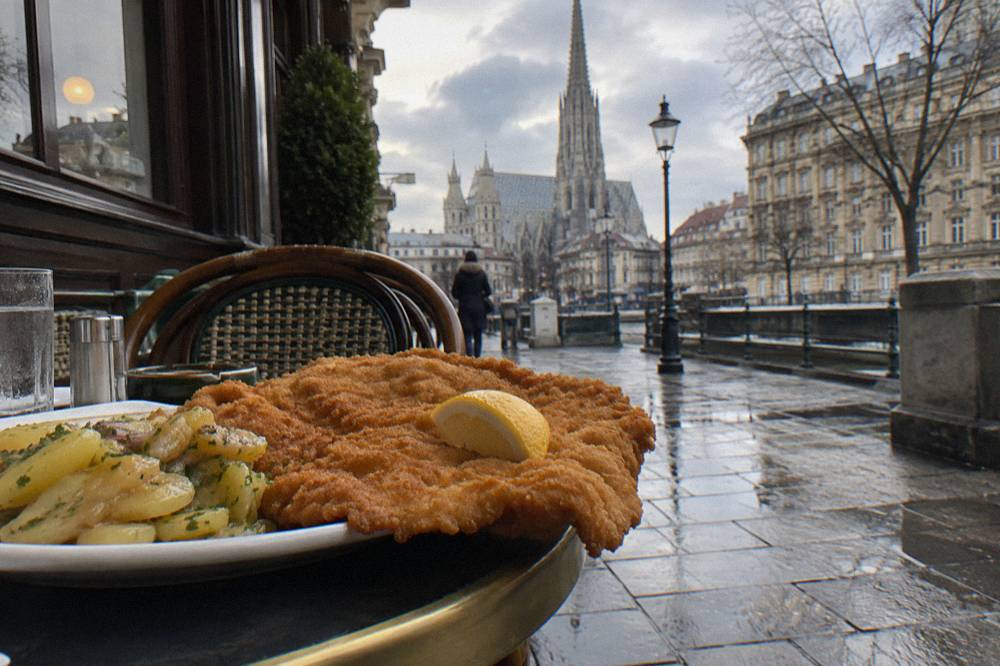
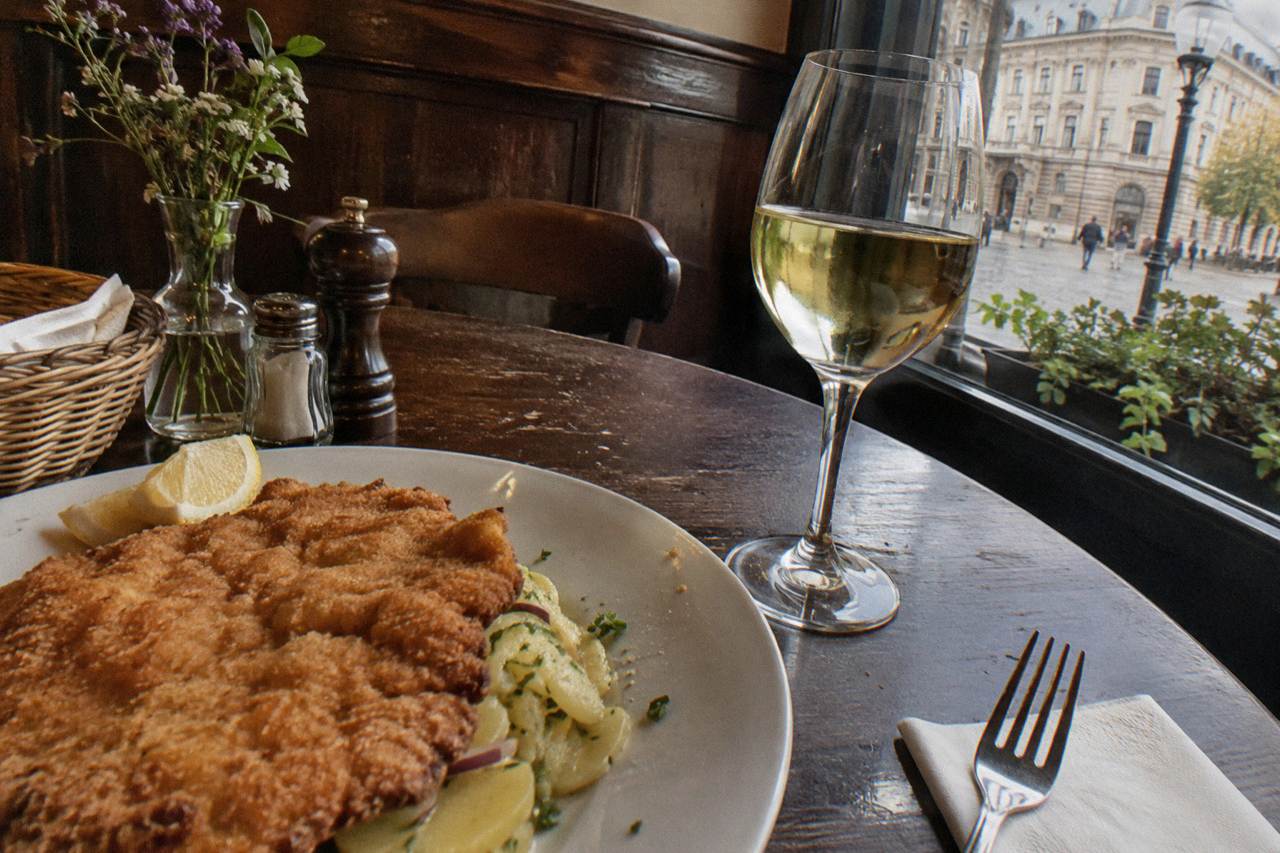
What the plate should look like: thin, wide, gently blistered rather than flat and greasy, with a lemon wedge and a small salad or potato salad, rarely both and never chips unless you asked. The schnitzel should not sit in sauce. That is the whole test, and it is a fair one.
Vienna takes the dish seriously enough to count it. The 2026 Schnitzel index compiled from delivery orders logged between January and August 2026 found 142,318 schnitzel orders in Vienna, 7.4 per 100 inhabitants, enough to crown the city Austria's Schnitzel capital ahead of Linz and Graz. People are not ordering it out of politeness.
The detail that surprises first-time visitors is the size. A proper Wiener Schnitzel overhangs the plate, sometimes dramatically. Order one to share if the kitchen allows it, or make it your only substantial meal of the day.
For a deeper dive into the best venues and the veal-versus-pork question, our dedicated schnitzel restaurant guide covers the decision in full. If you would rather let a guide lead you to a table and put several classics in front of you in one go, the following tasting walks are the strongest fits.
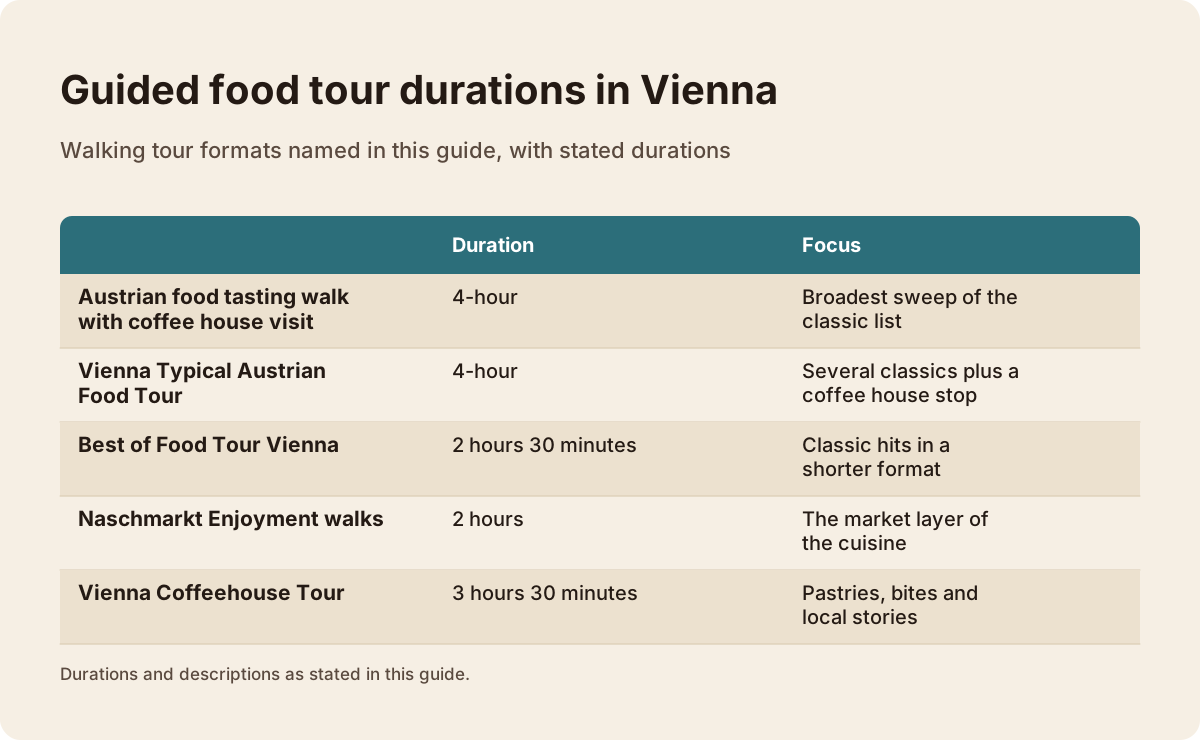
Each of those three works for a schnitzel-first eater. The 4-hour Austrian food tasting walk with a coffee house visit is the broadest sweep of the classic list, the full-meal walk by Do Eat Better is structured as a genuine lunch rather than a series of nibbles, and the 7-tasting walk adds a secret dish to keep you guessing. Durations, inclusions and prices are on each operator's booking page.
What Is Tafelspitz And Why Do Locals Rate It?
Tafelspitz is boiled beef, classically the pointed end of the silverside, cooked gently in broth with root vegetables and served with its cooking liquid plus a tray of accompaniments: apple horseradish, chive sauce, fried potatoes and sometimes creamed spinach. It was reportedly Emperor Franz Joseph's regular dish, and it remains the dish Viennese cooks judge each other by.
The emperor ate it, they say, every day, which is why the dish carries an aura no marketing could buy. But its real appeal is structural: the broth is the meal's soul, the beef is lean and clean-tasting, and the accompaniments let each diner build their own combination. It is a participatory dish, and a good restaurant will bring the components in stages, broth first, meat and sides after.
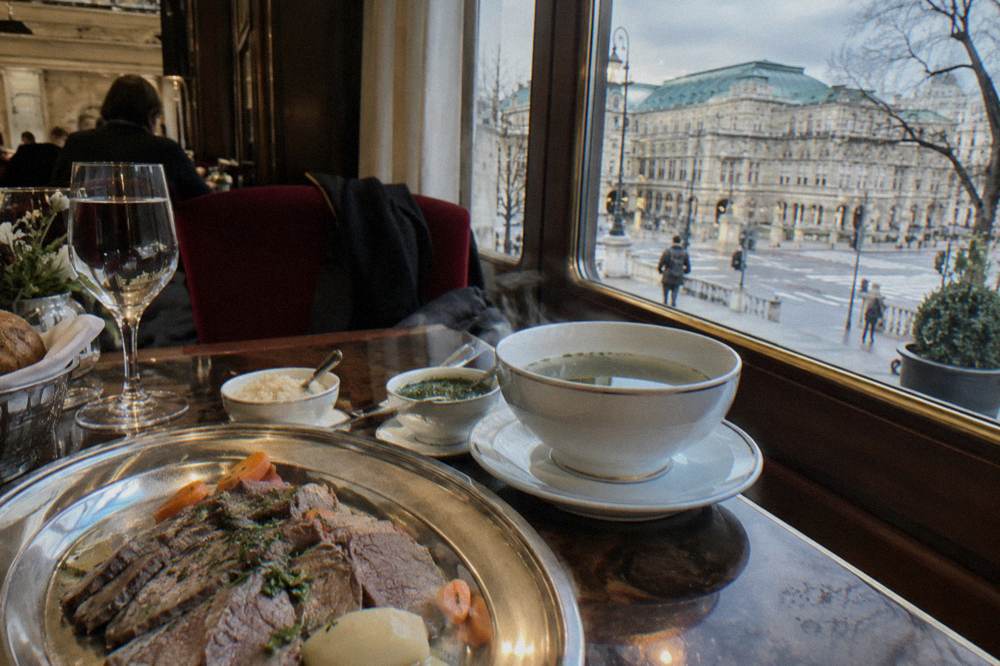
Tafelspitz is the one classic that rewards a slightly grander address. It demands a kitchen with time, because poor Tafelspitz is just grey beef in salty water, and the traditional houses on and around the Ringstrasse have had a century of practice. Order it for a long lunch rather than a pre-theatre dinner; it is a meal that refuses to be hurried.
| Component | What arrives | What to do with it |
|---|---|---|
| Broth | Clear beef soup, often with a frittata strip or pancake garnish | Drink it as the first course |
| Beef | Sliced boiled Tafelspitz cut | Eat with the sauces below |
| Apple horseradish | Grated apple and horseradish, mildly sweet and sharp | The traditional pairing |
| Chive sauce | Thin sauce of chives, sometimes with breadcrumbs | Spoon over the beef |
| Fried potatoes | Roesti-style shredded potatoes | The standard starch |
If you want the Tafelspitz experience without the research, the Vienna Typical Austrian Food Tour with Coffee House Visit folds several classics, a coffee house stop and local context into one 4-hour walk, and the operator's booking page lists the current stops and inclusions. This is also where the tasting format earns its keep: a first-time visitor assembling these dishes alone will spend three restaurant visits doing what one guided walk covers.
What Is Gulasch Doing On A Viennese Menu?
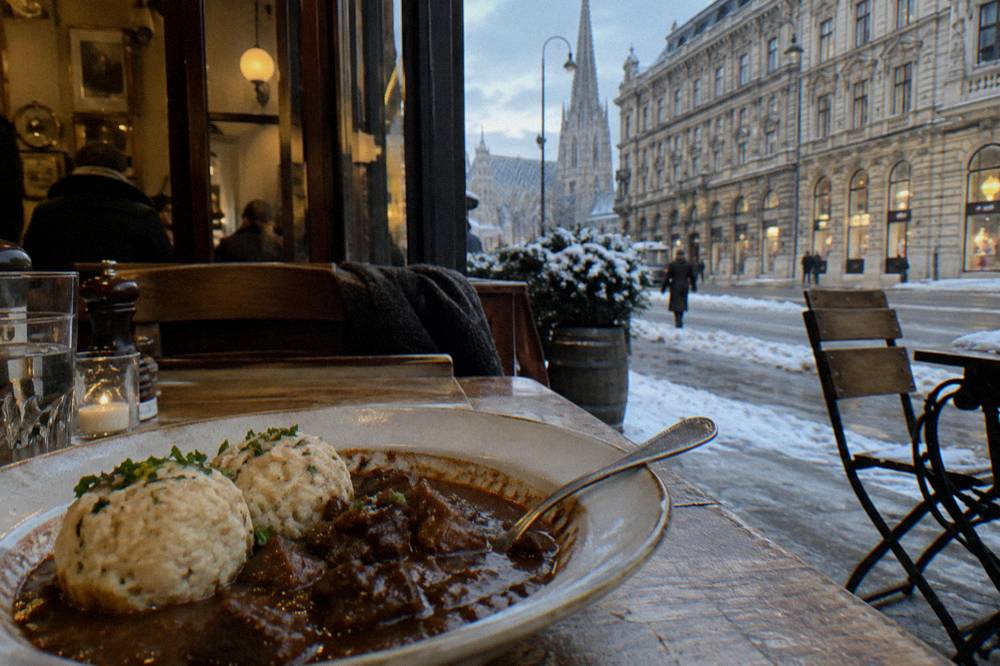
Gulasch is a paprika and onion beef stew that arrived from Hungary and was adopted so thoroughly by Viennese home and tavern kitchens that it now reads as native. The Viennese version is darker, thicker and plainer than the Hungarian original, usually served with a bread dumpling, a Knoedel, or simply bread.
The distinction is worth a sentence at the table. Hungarian goulash is closer to a soup, bright with paprika and potato. The Viennese Rindsgulasch is a stew, darkened with slow-cooked onion, served dense enough that the dumpling is not optional decoration. Saftgulasch, the juicy version, is the higher form, and a Beisl that takes pride in it will say so on the menu.
It is a cold-weather dish in spirit, and the seasonal logic of the city backs that up: the deep traditional dishes cluster from autumn through winter, exactly when the Christmas markets are running. The city's official 2026 market program lists 15 markets with 814 stalls between mid-November and the end of December, per the City of Vienna press release, and a bowl of gulasch before or after is the local pattern. Our Vienna Christmas markets guide maps the full season.
Two cousins share the menu section. Gulaschsuppe, the soup version, is the standard order at sausage stands and market stalls, a one-hand meal on a cold evening. Szegediner gulasch, with sauerkraut and sour cream, is the other branch of the family and equally Viennese by adoption.
What Are Knoedel And How Many Kinds Are There?
Knoedel are dumplings, and in Vienna they come in two families: savoury, made from potato or stale bread, served alongside meat dishes, and sweet, filled with fruit such as apricot or plum, dusted with breadcrumbs and sugar and eaten as a main course or dessert. The dumpling is the quiet workhorse of the traditional kitchen.
The savoury kinds are the ones foreigners overlook. A Semmelknoedel, bread dumpling, arrives with gulasch and soaks the sauce; an Erdapfelknoedel, potato dumpling, is denser and often served with roast pork. A well-made one is light despite its reputation, and a badly made one is a cannonball, which is why locals treat a Beisl's Knoedel as a proxy for its whole kitchen.
| Knoedel | Base | Served with |
|---|---|---|
| Semmelknoedel | Stale bread rolls, milk, egg | Gulasch, roast meats, mushroom sauces |
| Erdapfelknoedel | Raw and cooked potato | Roast pork, pork loin |
| Speckknoedel | Bread dumpling with bacon | As a main with salad, or in broth |
| Marillenknodel | Potato dough around an apricot | Sweet main course, sugar and breadcrumbs |
| Zwetschgenknoedel | Same dough around a plum | Late summer and autumn dessert |
The sweet dumplings invert expectations. A Marillenknodel, apricot dumpling, is a full main course by local custom, buttery crumbs on the outside, molten fruit inside, and ordering it for lunch is entirely respectable. Plum dumplings follow the same logic in late summer and autumn when the fruit is in season. If you meet them on a menu, order them; they are the dish most likely to be missing from your mental map of Vienna and the one most likely to convert you.
What Is Kaiserschmarrn And When Should You Eat It?
Kaiserschmarrn is a thick pancake, torn into ragged pieces while it fries, finished with raisins, butter and icing sugar, and served with plum or apple compote. The name credits Emperor Franz Joseph again, and the dish straddles dessert and main course; ordering it as your whole lunch is a recognised and defensible choice.
The story goes that the emperor's kitchen mangled a pancake and served it shredded, and the emperor approved. Whatever the truth, the dish is now the standard sweet finish at coffee houses and mountain restaurants alike. Good Kaiserschmarrn is caramelised at the edges, fluffy in the middle, and arrives in a pan or a generous heap, never as a neat stack. The compote is not a garnish; it cuts the sugar.
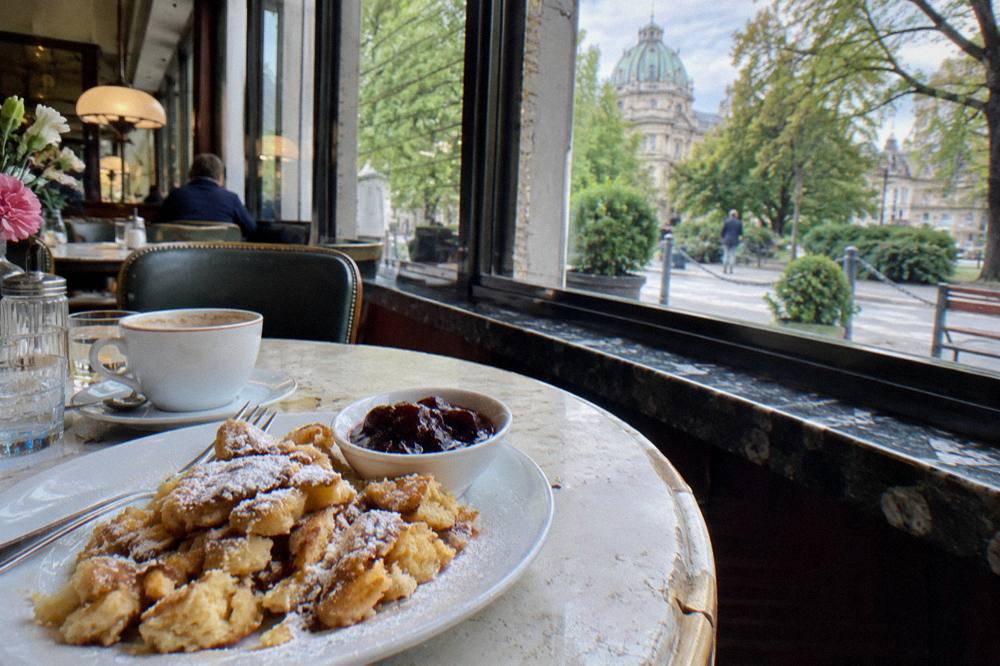
It pairs naturally with the coffee house half of Viennese food culture. The classic houses serve Kaiserschmarrn alongside the Sachertorte and strudel canon, and the coffee house institution itself is a protected one: Viennese coffee house culture was placed on Austria's national inventory of intangible cultural heritage in 2011, as the UNESCO Austrian commission's inventory records. If you want that institution explained properly, our Vienna coffee house culture guide does it in depth.
For a shorter arc: Kaiserschmarrn for lunch, a long coffee house afternoon after, and no further plans. That is a full Viennese day and nobody will judge you.
What Should You Order At A Wurstelstand?
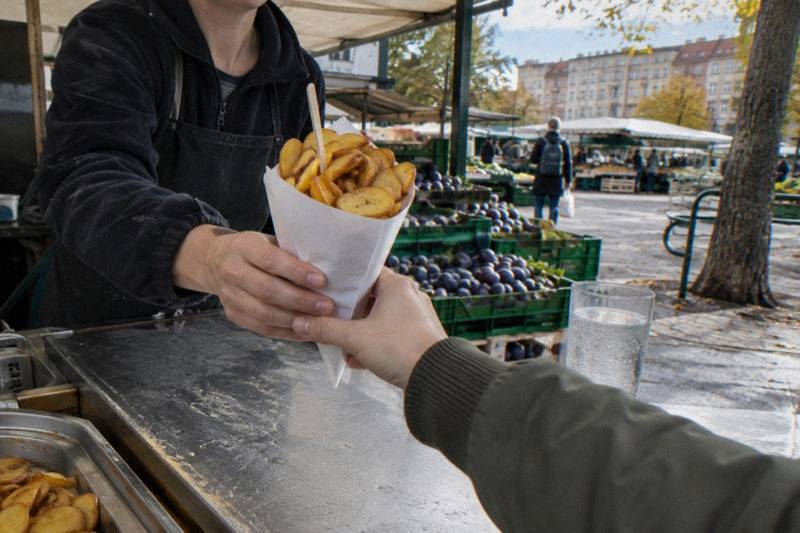
Order a Käsekrainer or a Bosna at a Wurstelstand, the Viennese sausage kiosk that stands on corners across the city at all hours. The Käsekrainer is a pork sausage threaded with molten cheese; the Bosna is a bratwurst in a white bread roll with mustard, curry powder and raw onion. Both cost a few euros and neither requires a table.
The Wurstelstand is not street food in the imported sense; it is a long-standing city institution with its own canon. The classic order for locals is the Käsekrainer mit Brot, with bread, plus a blob of mustard and a cold beer if the stand has a cooler. The Frankfurter, despite the name, is the Viennese sausage, a fact the city enjoys pointing out to Germans.
The stands are the cheap, fast end of the traditional list, and they carry the same protected-heritage aura as the coffee houses: the Vienna Tourist Board's own page on Heurigen and sausage-stand culture cites the Wurstelstand alongside coffee house and Heuriger traditions as intangible heritage. The practical detail is when to go: stands run all day, but the true Wurstelstand hour is late evening, when the theatre and bar crowds queue for a sausage on the way home.
Our full Wurstelstand street food guide covers the orders, the etiquette and what to expect to pay, and the wider district-by-district eating overview places the stands in context with the Beisl and coffee house layers of the city.
If a guided version appeals, one tasting format leans closest to the street-food end of the spectrum: the Best of Food Tour Vienna compresses the classic hits into 2 hours 30 minutes, a shorter commitment than the full-meal walks, and the operator's booking page lists what is currently included.
Can One Guided Tasting Cover All These Dishes?
A guided tasting walk can cover four to six of the six classics in a single afternoon, which is the main argument for booking one: the traditional dishes are scattered across Beisl kitchens, market stalls and coffee houses, and a walk with a guide compresses three restaurant visits into one booked block of three to five hours.
The honest framing is this. The dishes above are cheap to eat individually, but each lives in a different room: schnitzel and gulasch in a Beisl, Tafelspitz in a grander house, Kaiserschmarrn in a coffee house, sausages at a stand. A visitor with four days can assemble them alone comfortably. A visitor with two days, or one who wants the explanations along with the food, is exactly who the tasting walks serve.
The Naschmarkt Enjoyment walks, 2 hours inside Vienna's great market, suits eaters whose priority is the market layer of the cuisine rather than its dining rooms.
And for the dessert-first traveller, the Vienna Coffeehouse Tour covering pastries, bites and local stories runs 3 hours 30 minutes and parks itself firmly in the Kaiserschmarrn-and-cake half of the canon. Check the booking page for current stops and dietary options; where a listing does not state a vegetarian, vegan or gluten-free option, message the operator before booking rather than assuming.
A note on pace. Vienna's food culture rewards the slow meal, and the smoke-free indoor rule in force since 1 November 2019 under Austria's gastronomy law, as the official business portal records, means every Beisl dining room is now a comfortable place to sit long. Budget two hours for a proper Tafelspitz lunch and do not double-book the afternoon.
Whatever route you take, build the list before you build the itinerary. The city's eating map is dense enough that a plan of six dishes across three days beats a plan of one restaurant a night, and the team behind Vienna Food Tours keeps each dish and each walk on this site mapped so you can shuffle the list until it fits.
Common Questions About Traditional Vienna Food
What Is The Most Traditional Dish In Vienna?
Wiener Schnitzel is the one with legal protection, and Tafelspitz is the one with imperial history; both compete for the title. If you can only order one, order the schnitzel at a Beisl and the Tafelspitz on a return visit, and add Gulasch and Kaiserschmarrn for the full canon.
Is Wiener Schnitzel Always Veal?
In Austria, yes, by law: the name Wiener Schnitzel is reserved for veal. The pork version must be labelled Schnitzel Wiener Art, Vienna-style schnitzel, and it is the cheaper, very common alternative on most menus.
What Is A Käsekrainer?
A Käsekrainer is a pork sausage with cheese melted through the middle, one of the standard orders at a Viennese Wurstelstand. It is usually served grilled, with bread, mustard and sometimes a cold beer from the stand's cooler.
Is Kaiserschmarrn A Dessert Or A Meal?
Both, and locals treat it either way. It is a shredded pancake with raisins, sugar and plum compote, often eaten as a sweet main course at lunchtime rather than after a full meal.
Do I Need To Book A Food Walk To Eat Well In Vienna?
No. The traditional dishes are available at any Beisl and coffee house without a guide. A guided tasting walk is worth it when your days are short, or when you want several classics plus their context delivered in one booked block of three to five hours.
What Does A Traditional Vienna Food List Look Like?
Schnitzel at a Beisl, Tafelspitz on a long lunch, Gulasch with a bread dumpling on a cold evening, a sweet Knoedel when it appears, Kaiserschmarrn in a coffee house, and a Käsekrainer from a sausage stand late at night. Six dishes, three days, one happy itinerary.