What Is Vienna's Signature Dish?
Wiener Schnitzel is Vienna's signature dish. Here is what the dish actually is, what it costs in 2026, its rivals, and how to learn to make it yourself.
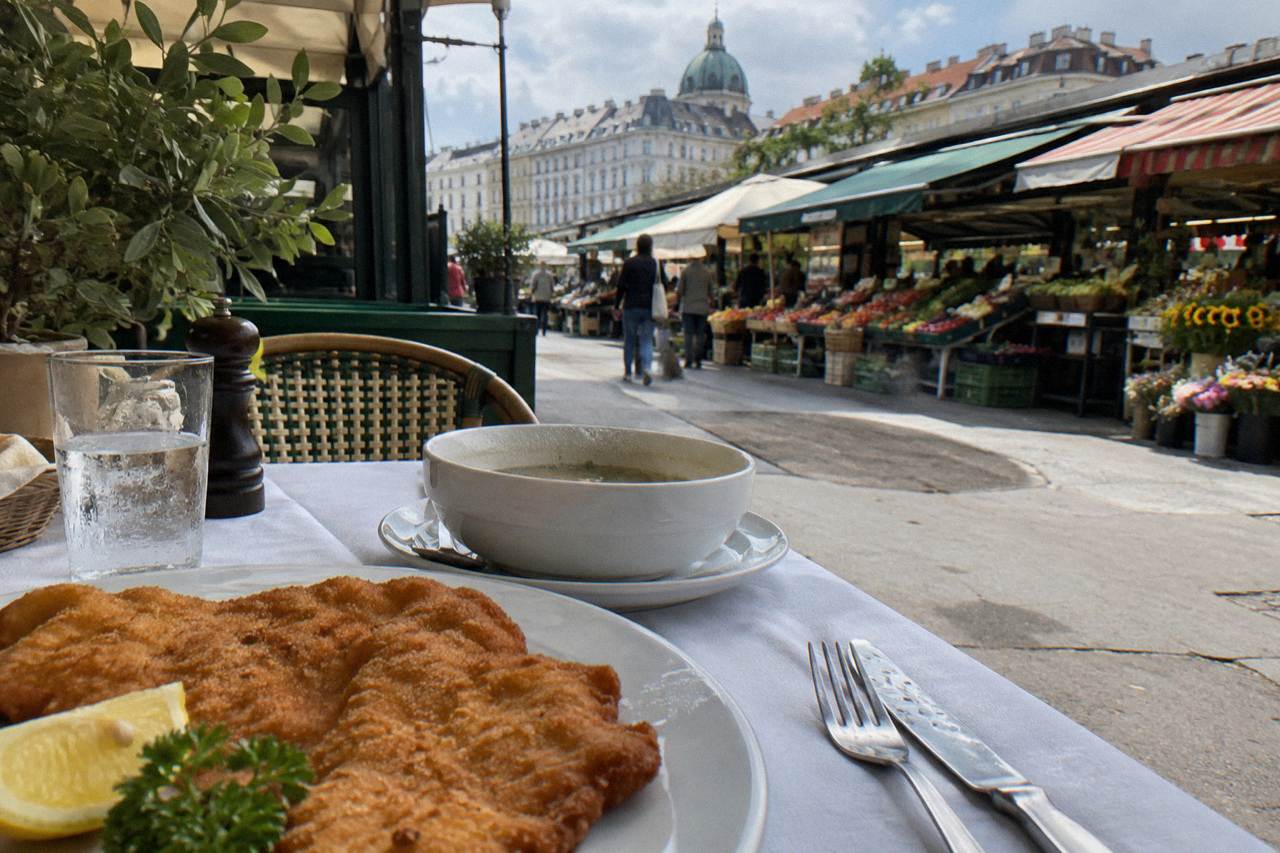
Wiener Schnitzel, a thin veal cutlet pounded wide, breaded and fried in a shallow pan of fat or butter, is the dish Vienna is known for, and the name is legally protected: only veal may be sold in Austria as Wiener Schnitzel. Schweineschnitzel, the pork version most visitors actually eat, is cheaper and everywhere. Kaiserschmarrn, the shredded sugar-dusted pancake, runs a strong second.
It sounds like a settled question, and mostly it is. But the honest answer has layers: a legal definition most tourists never hear about, a 2026 delivery-data snapshot that crowned Vienna Austria's schnitzel capital, a sweet shredded pancake with an emperor's name attached, and a handful of rivals that each own a piece of the city's identity. This article walks through all of it, and ends with the most direct way to understand the dish, which is to cook it.
Vienna's signature dish is Wiener Schnitzel: a veal escalope pounded until it is thin and wide, coated in flour, egg and breadcrumbs, and fried until the breading puffs into a crisp, slightly domed shell. By Austrian food-labelling rules the name Wiener Schnitzel is reserved for veal, so the pork cutlet served in most budget restaurants must appear as Schnitzel vom Schwein or similar.
The legal detail matters more than it sounds. In Austria, menu language is policed in a way that surprises visitors: order Wiener Schnitzel and you are entitled to veal. Order anything with Schwein in the name and you get pork, usually at half the price. The same naming convention follows the dish abroad, which is why so many travellers believe they have eaten Wiener Schnitzel when they have actually eaten its pork stand-in. Neither is wrong to eat. Only one is the signature dish by name.
The plating tells you the city's character too. A proper schnitzel arrives wider than the plate, garnished with nothing but a lemon wedge and sometimes a small potato salad or parsley potatoes, cranberry jam on the side in the traditional houses. Anything piled on top, sauce, cheese, a fried egg, takes it out of Vienna and into improvisation. Purists will tell you the test of the kitchen is the dome: breading that lifts clear of the meat because the cutlet was flicked in the pan at the right moment. That lift, the detachment of crust from veal, is what a trained cook looks for before anything else.
If you want the full context around the dish, where to find good versions, what a fair price looks like and how it sits among the city's other classics, the guide to Vienna Food Tours covers the eating side of the city in depth, and the dedicated piece on where to eat Wiener Schnitzel goes dish-hunting by district.
Why Schnitzel And Not Sachertorte?
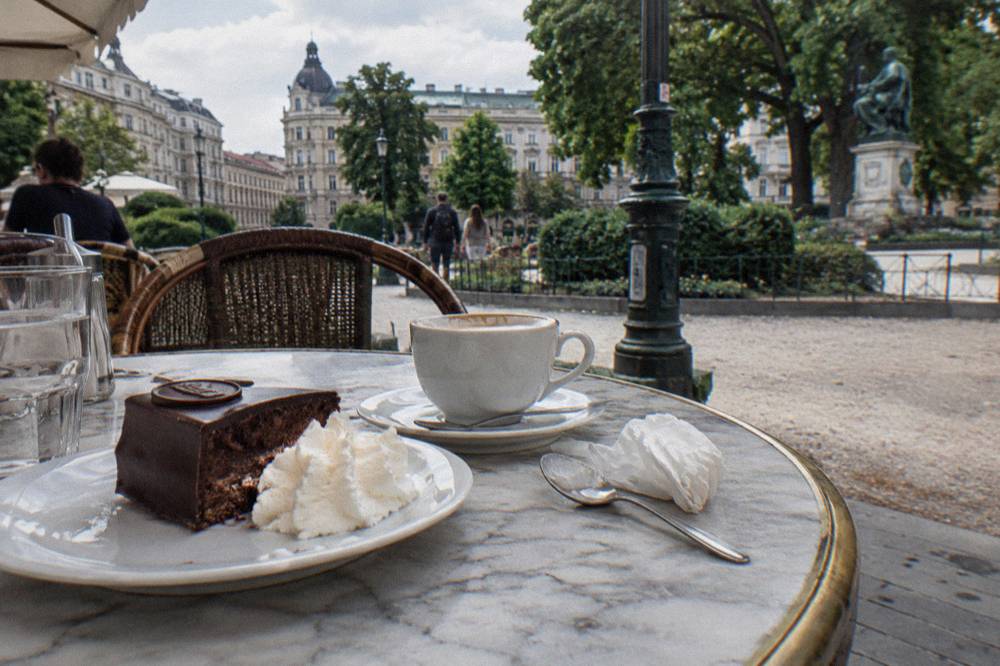
Sachertorte is Vienna's signature cake, not its signature dish, and the distinction holds up in daily life: the chocolate torte belongs to the coffee house afternoon, while schnitzel is the plate the city eats at lunch and dinner year-round, in neighbourhood Beisln and smart restaurants alike. The torte even has a rival claimant, Hotel Sacher versus Demel, which weakens it as a single symbol.
A signature dish should be uncontested, everyday, and made by ordinary kitchens everywhere in the city. Schnitzel passes all three tests. Sachertorte passes one. It is famous, genuinely famous, but it is a dessert with a lawsuit in its past, an "Original" seal held by one hotel and a rival triangular-marked version served at Demel, a fight that has been running for decades and still colours every slice sold in the city centre. A dish that two institutions cannot agree on who owns is a poor candidate for a single city's emblem.
The torte's price spread also tells against it as a daily symbol. A slice of the Original at Hotel Sacher runs around 11.50 euros, with a range of roughly 8.90 to 10.50 euros elsewhere, while Café Demel lists Sachertorte at 8.50 euros. Those are special-occasion numbers for most locals, the price of sitting inside a marble-floored institution. A schnitzel lunch in a neighbourhood Beisl costs less and happens more often.
There is also the matter of reach. Schnitzel appears on menus from airport counters to two-star dining rooms; Vienna keeps two three-star restaurants in the 2026 Michelin Guide, Steirereck im Stadtpark and Amador, and even that rarefied city eats schnitzel on its days off. The torte lives mostly in the first district's grand cafés. When a city wants to show a visitor what it eats, it fries a cutlet.
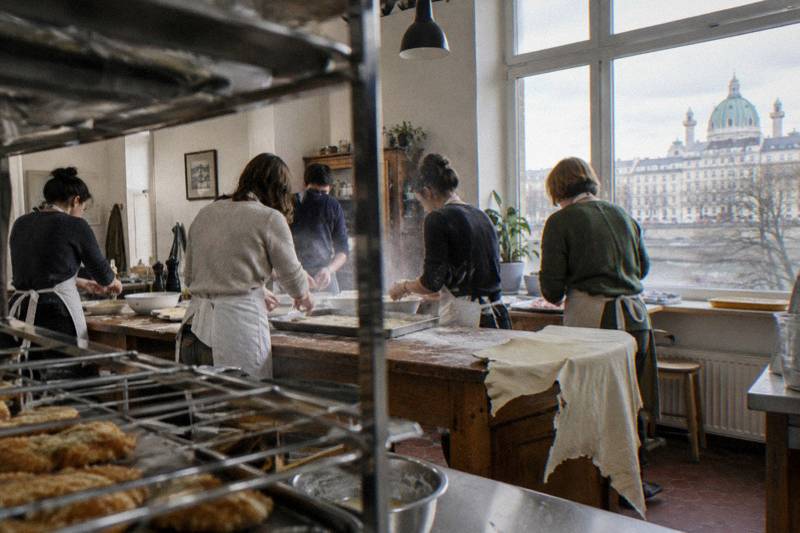
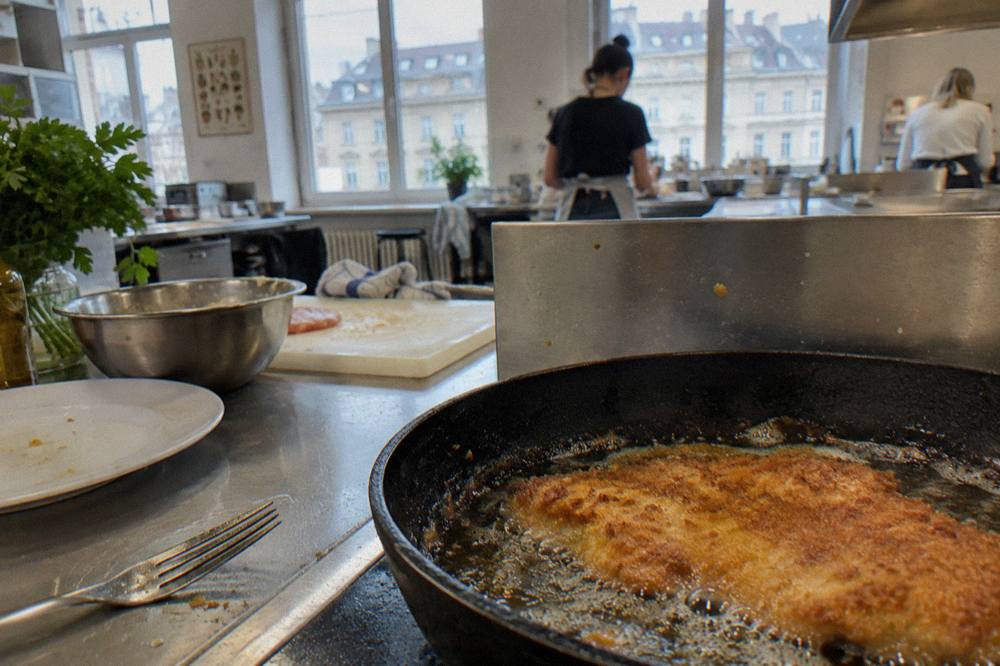
Reading about the technique only gets you so far. The Traditional Kaiserschmarrn and Schnitzel Cooking Class puts the mallet, the breadcrumbs and the pan in your own hands for 1 to 1.5 hours, with the tasting as the finish, and the listing carries free cancellation, so a plan change does not cost you.
What The 2026 Schnitzel Numbers Say
The 2026 Schnitzel Index, compiled from delivery-order data covering 1 January to 31 August 2026, named Vienna Austria's schnitzel capital: 142,318 schnitzel orders, 7.4 per 100 inhabitants, ahead of Linz at 5.7 and Graz at 4.9. The national average price rose about 6 percent to 13.09 euros, with Vienna's average pork schnitzel at 15.09 euros, while Graz led on guest ratings.
The numbers are worth reading twice, because they say two different things. Vienna orders the most schnitzel per person in the country, which confirms the dish's everyday status in the city that names it. At the same time the average price keeps climbing, roughly six percent in a year, which pushes the restaurant version steadily away from the cheap lunch it once was. A visitor watching a budget in 2026 is eating schnitzel deliberately, not incidentally.
| Measure | Figure | Context |
|---|---|---|
| Vienna schnitzel orders, 1 Jan to 31 Aug 2026 | 142,318 | Most in Austria |
| Orders per 100 inhabitants, Vienna | 7.4 | Linz 5.7, Graz 4.9 |
| National average price 2026 | about 13.09 euros | Up from about 12.34 euros |
| Vienna average pork schnitzel | about 15.09 euros | Delivery data, not restaurant menus |
| Highest guest rating city | Graz | 4.34 out of 5 |
Two cautions on that table. The figures are delivery-order data, not restaurant menus, so a classic Beisl price can sit well above or below the average depending on district and address. And the price trend is national, which means the rise reflects costs across Austria, not some Viennese premium alone. Treat the numbers as the shape of the market, and check the menu at the door for the price that actually applies to you, the same habit that serves you well with the Gedeck cover charge and tap-water rules in traditional restaurants.
The price pressure is one honest reason cooking classes have grown. Learning the dish costs about the same as two restaurant portions and leaves you with the skill permanently. The Traditional Kaiserschmarrn and Schnitzel Cooking Class, listed with its current price on the operator's page, covers both the savoury signature and its sweet rival in a single 1 to 1.5 hour session.
What Proper Wiener Schnitzel Looks Like
A proper Wiener Schnitzel is thin enough to see light through before breading, wide as the plate after frying, with a crust that has lifted into a gentle dome and stays crisp to the last bite. It is fried in a generous depth of fat or clarified butter, never deep-drowned, and finished with nothing but lemon. Potato salad or parsley potatoes sit beside, never under.
The technique is the reason the dish survived as a symbol. Any kitchen can bread a cutlet; keeping the crust separated from the meat through a whole fry takes practice, the right flick of the wrist in the pan so hot fat gets between the breading and the veal and inflates it. Cooks learn this by doing it badly a few times first. The mallet work matters equally: the escalope has to be pounded evenly thin or the outside burns before the inside is done, and uneven pounding shows up as leathery edges on the plate.
What you should not accept is a flat, shiny, oil-soaked crust clinging to the meat. That is the mark of breading pressed on too hard, fat too shallow, or a pan too cool. Vienna's restaurant scene spans everything from that to the textbook version, which is exactly why the district-by-district eating guide is worth a read before you commit an evening. A schnitzel from a good kitchen is a demonstration of technique disguised as a simple lunch.
Cranberry jam in a small dish appears in traditional rooms, and opinions divide sharply on whether it belongs anywhere near the cutlet. Nobody divides on the lemon. That is not optional.
Kaiserschmarrn, The Sweet Challenger
Kaiserschmarrn, a thick pancake torn into ragged pieces while frying, dusted with icing sugar and served with plum or apricot compote, is the closest thing Vienna has to a second signature dish. The name ties it to Emperor Franz Joseph I through more than one origin story, none provable, and it appears on dessert menus and Heuriger buffets across the city and the Vienna Woods.
The stories are part of the dish. One version has the emperor's wife refusing a neat pancake and the cook scrambling it in panic; another says the sweet was invented for a bad swimmer of a princess, shredded so her failings could not be seen. None of it is verifiable, and all of it is repeated with relish, which tells you the dish has the mythology a signature food needs. What is verifiable is the eating: torn edges caramelised in butter, sugar, and the compote cutting through.
Kaiserschmarrn appears on the Heuriger buffet table too, alongside the cold spreads that make up the wine-tavern lunch, a pairing worth understanding if you plan to visit the wine villages. The Heuriger visitor's guide explains the buffet norms: reported typical local self-service cold plates run about 6 to 12 euros, an evening total often lands at 8 to 15 euros at neighbourhood spots, and an Achtel of wine about 3 to 5 euros, always check the board on the day.
Because the two dishes share a kitchen, several Vienna cooking classes teach them together. The Schnitzel and Strudel: Shared Cooking Class runs 3 hours and adds the apple strudel into the bargain, while the shorter Traditional Kaiserschmarrn and Schnitzel session squeezes both into 1 to 1.5 hours. Prices shift with season and availability, so confirm on the booking page before you plan the day around it.
The Other Rivals Worth Knowing
Tafelspitz, boiled beef with root vegetables and accompaniments, was reportedly Franz Joseph's preferred plate and is the connoisseur's answer to this question; the Viennese sausage stand, the Würstelstand, is the street-level answer; and Sachertorte owns the afternoon. Each is genuinely Viennese, and each loses to schnitzel on ubiquity, legal protection, or both.
Tafelspitz is the insider's pick, and a fair one. The dish is a long simmer of a cut of beef, served with broth, then the sliced meat alongside apple-horseradish, chive sauce and fried potatoes. It takes hours, appears on the menus of the grand old restaurants, and is cited by the Vienna Tourist Board as part of the same heritage cluster as the coffee house. It is the dish you order to eat like an imperial civil servant, and it is wonderful. It is also absent from most casual kitchens, which is why it cannot be the signature.
The Würstelstand makes the opposite case: cheap, fast, everywhere at midnight, the Käsekrainer oozing cheese into a slice of bread. The tourist board cites the Viennese sausage stand, like the Heuriger and the coffee house, under the intangible-heritage umbrella. For depth on the stand culture, the Würstelstand guide covers the ordering rituals. But a sausage shared with half of Europe's street-food scene is a weaker signature than a dish whose name the city carries in front of it, Wiener, like a surname.
The coffee house completes the set. Vienna's coffee house culture was recognised on Austria's national inventory of intangible cultural heritage in 2011, and the Vienna Tourist Board cites it as UNESCO heritage, though not on the global representative list. That heritage lives in the ritual: the glass of water with the melange, the marble table, the newspaper on a stick. The coffee house culture guide unpacks it. But a culture is not a dish, and the torte inside it is already accounted for above.
How To Learn The Dish Yourself
A cooking class is the one way to understand schnitzel that a restaurant cannot match, because the two skills that define the dish, pounding the escalope evenly and flicking the pan so the crust lifts, only make sense once your own hands have failed at them. Vienna's class options run from 1 to 1.5 hour sessions to a 3 hour shared class, each ending with eating the result.
The short formats suit a busy itinerary. The Traditional Kaiserschmarrn and Schnitzel Cooking Class and Tasting covers the signature dish and its sweet challenger inside 1 to 1.5 hours, which fits between a morning museum and an evening concert. The longer Schnitzel and Strudel class runs a full 3 hours and works in the pastry, which suits travellers who want the afternoon to be the event. Nabiel's Vienna Cooking Class, also 3 hours, is the option for a deeper dive across more of the cuisine.
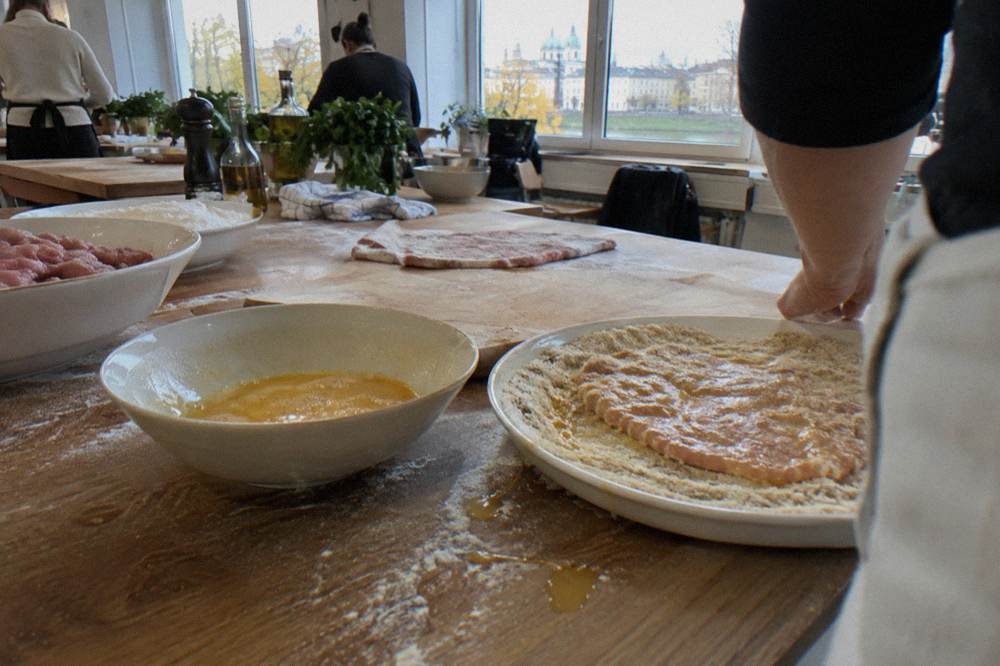
What a class gives you that a meal cannot is the correction loop. You will press the breadcrumbs too hard the first time, and the instructor will show you the loose hand. You will crowd the pan, and you will see the temperature drop and the crust go flat. These are the moments that turn a national dish from a menu item into something you can reproduce at home, which is the difference between eating in Vienna and bringing a piece of it back.
Book the practical details from the listing rather than from memory: meeting point, what is included, and the current price all live on the operator's booking page and change with season. Dietary needs deserve a message to the operator before booking, since class formats vary in what they can adapt. If a guided eating walk appeals more than cooking, the Vienna: Typical Austrian Food Tour with Coffee House Visit runs 4 hours and pairs the city's classic dishes with a coffee house stop, a good complement to a kitchen session rather than a substitute for one.
Eating The Signature On A Food Walk
A food walk is the efficient way to taste schnitzel in context, next to the sausage stand, the market stall and the coffee house, rather than as one isolated restaurant plate. Guided walks in the city run from 2 hour market circuits up to routes of 5 hours 30 minutes covering coffee houses, markets, lunch and street food, with tastings and drinks included as the listing describes.
The context argument is real. Schnitzel eaten alone in a first-district tourist room tells you almost nothing; the same cutlet eaten after a morning at the Naschmarkt, the city's great produce market, and beside a Würstelstand visit, shows you how the layers of the cuisine fit together. The market's official stand hours run to 21:00 on weekdays and 18:00 Saturdays, with all stands required to open 15:00 to 18:00 Tuesday to Friday, per the city's own market page at wien.gv.at. A walk timed to those windows catches the market at work rather than half asleep.
For planning around the rest of the cuisine, two official rules shape every meal out. Austrian gastronomy has been smoke-free indoors since 1 November 2019, per the business service portal's rules, so the old smoke-filled Beisl is a memory. And the 2026 harvest in Vienna's own vineyards came in 30 to 40 percent lower in volume but very good in quality after the hot, dry summer, per reporting on the wienerwein catalog, so the local glass beside your schnitzel is scarcer and better than usual this year. The full wine picture is in the Vienna wine tasting options guide.
| Way to meet the dish | Time | What it adds |
|---|---|---|
| Restaurant plate | 1 hour | The finished dish, at its best in a good Beisl |
| Cooking class | 1 to 3 hours | The technique, hands-on, repeatable at home |
| Guided food walk | 2 hours to 5 hours 30 minutes | The dish in context beside the city's other foods |
| Market morning, self-guided | Half a day | The raw ingredients and the shopping culture |
None of these replaces the others. The class teaches, the walk contextualises, the restaurant rewards. Travellers with three days can fit all three, and the three-day itinerary shows where each slot naturally falls.
Whichever way you choose to meet the dish, the pattern holds: the veal cutlet owns the name, the pork version owns the everyday table, and the kitchen, any kitchen from Beisl to cooking class, is where the signature is actually written.
Common Questions About Vienna's Signature Dish
What Is Vienna's Signature Dish?
Wiener Schnitzel: a veal escalope pounded thin, breaded in flour, egg and breadcrumbs, and pan-fried until the crust puffs. Austrian rules reserve the name Wiener Schnitzel for veal, so pork versions must be labelled as schnitzel from pork.
Is Wiener Schnitzel Always Veal?
In Austria, yes by law for the name Wiener Schnitzel. Menus selling pork must say so, usually as Schnitzel vom Schwein. Pork is cheaper and more common on visitor menus, and it is the version behind most 2026 delivery orders.
What Is The Difference Between Schnitzel And Kaiserschmarrn?
Schnitzel is the savoury breaded cutlet, the city's main-course signature. Kaiserschmarrn is a sweet shredded pancake with icing sugar and fruit compote, tied by legend to Emperor Franz Joseph I, and the closest thing Vienna has to a second signature dish.
How Much Does A Schnitzel Cost In Vienna?
Reported 2026 delivery data puts the average pork schnitzel in Vienna at about 15.09 euros, with the national average up about 6 percent to 13.09 euros. Restaurant prices vary by district and house; check the menu at the door, and expect a Gedeck cover charge of 2 to 5 euros in traditional rooms.
Can I Learn To Make Wiener Schnitzel In Vienna?
Yes. Cooking classes run from 1 to 1.5 hours, pairing schnitzel with Kaiserschmarrn, up to 3 hour shared classes that add apple strudel. Each ends with eating what you cooked. Prices and meeting points are on each operator's booking page.
Why Is Sachertorte Not The Signature Dish?
It is Vienna's signature cake rather than its signature dish: a dessert tied to the coffee house afternoon, split between two rival claimants, Hotel Sacher and Demel, and priced at a reported 8.50 to 11.50 euros a slice in 2026. Schnitzel is cheaper, daily, and unique to the savoury table.