Vienna Street Food: Wurstelstand, Kaesekrainer And Bosna
Vienna's sausage stands are the city's most enduring street food, a culture the Vienna Tourist Board lists alongside the coffee house and the Heuriger as local heritage. Here is what to order, where to stand, and how the guided walks fold it all in.
Short answer
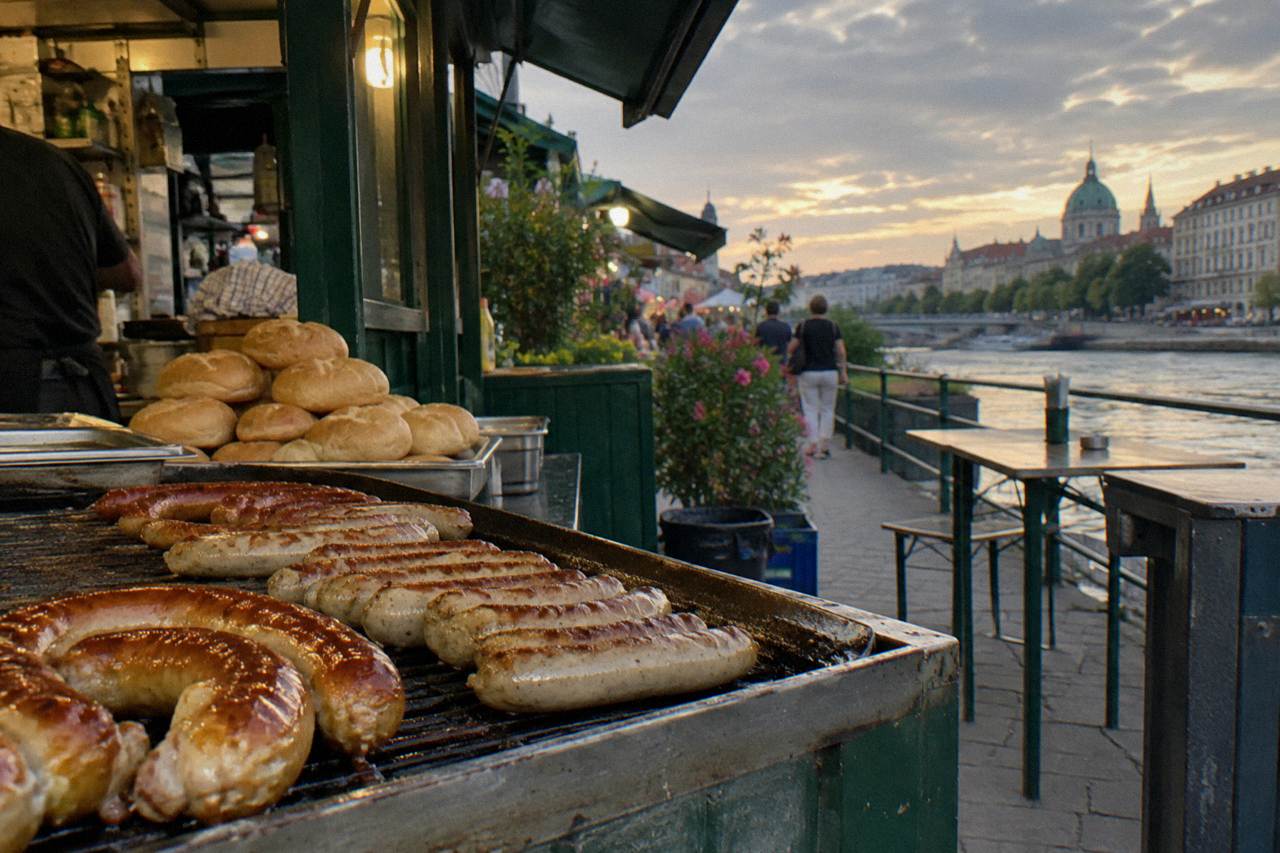
A Wurstelstand is a Viennese sausage kiosk serving grilled sausages such as Kaesekrainer and Bosna through late hours. The Vienna Tourist Board lists the sausage stand with Heuriger and coffee house culture as heritage. No per-sausage price is verified, so expect stand menus to vary, and check each stand's board.
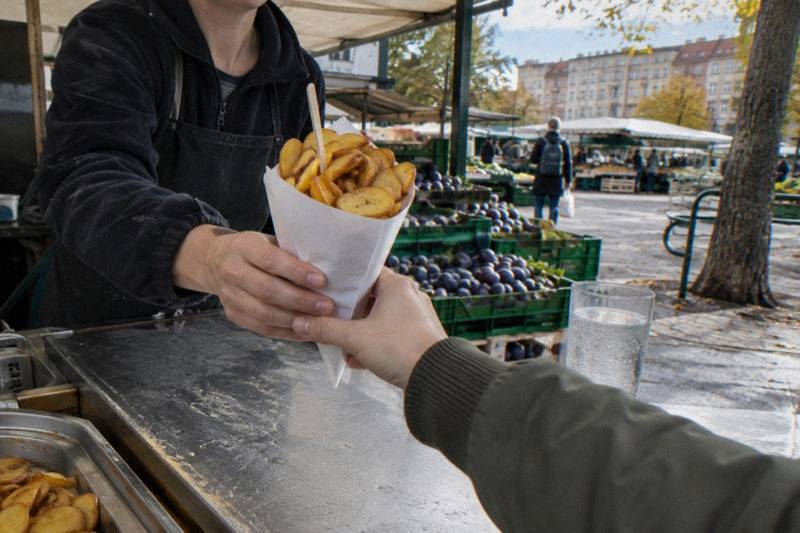
Vienna eats standing up more than most visitors expect. The Wurstelstand, the city's sausage kiosk, has outlived empires, and the Vienna Tourist Board now lists the Viennese sausage stand alongside the Heuriger wine tavern and the coffee house as part of the city's food heritage, page wording that reflects local pride even though it is not a UNESCO representative-list status. Around the stands sits a wider street food layer: market halls, cheese and bread stalls, and the sweet end of the spectrum in the coffee houses. If tasting your way through the stands makes you want to cook some of it yourself, our guide to Vienna strudel and schnitzel cooking classes explains what a session covers, how long it runs and how to pick a workshop that fits your trip.
This guide covers the stands themselves, the vocabulary you need at the counter, where to find the densest street food clusters, reported 2026 prices for the cafe side of snacking, and how a guided food walk, like the one this site features, stitches stands, markets and coffee houses into a single afternoon.
What Is A Wurstelstand And Why Does Vienna Love It?
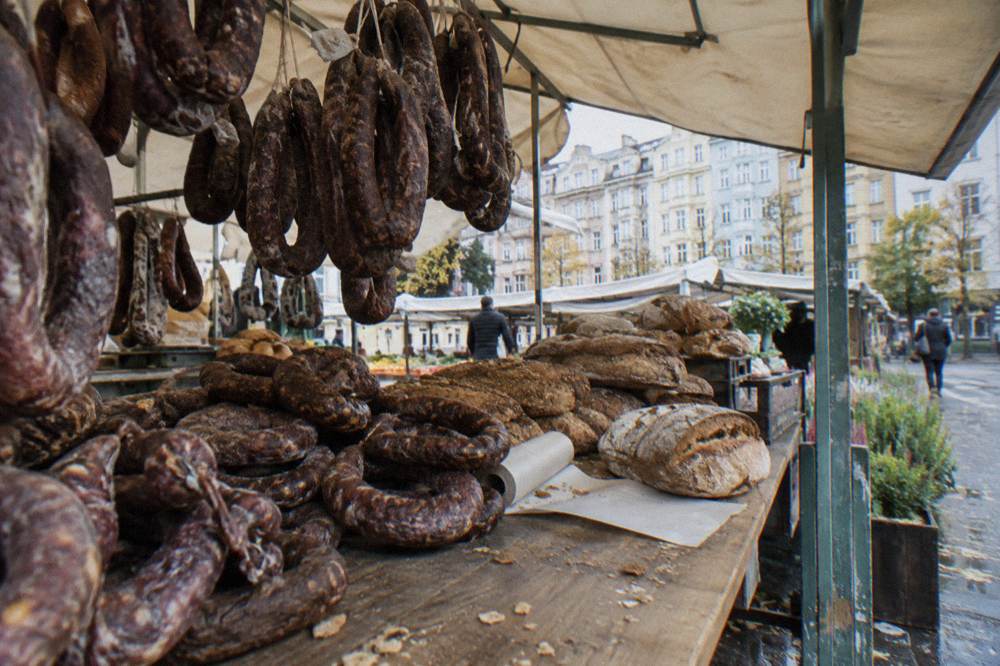
A Wurstelstand is a small kiosk or trailer grilling and boiling sausages, often open into the early hours, and it is the closest thing Vienna has to a native fast food institution. The Vienna Tourist Board names the Viennese sausage stand, together with Heuriger and coffee house culture, as part of the city's recognised food heritage, so ordering at one is less a snack stop than a small cultural act.
The format is simple and has barely changed. A grill, a boiling pot, crates of bread rolls, mustard and a slice of bread or a paper tray. Customers stand at a narrow counter or lean on the kiosk itself, eat in a few minutes, and leave. Locals use the stands the way other cities use kebab windows: after the theatre, after a late shift, before the first U-Bahn home.
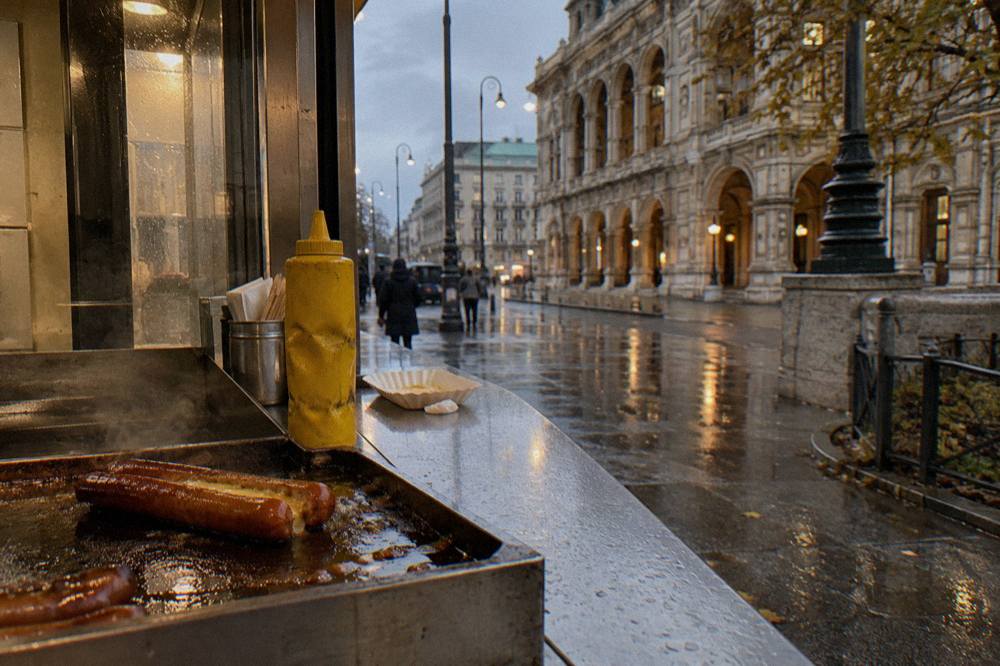
Two habits surprise first timers. First, the stand is a social leveller: suits next to students next to night-shift workers, all facing the same grill. Second, the stands are among the few food outlets reliably trading on Sundays and late evenings, when most Vienna retail is shut, which makes them genuinely practical rather than merely traditional. The classic orders, Kaesekrainer, Bosna and Currywurst among them, are general knowledge worth learning before you reach the counter.
The heritage framing matters for how you read the city. Austria keeps a national inventory of intangible cultural heritage, and the coffee house was entered there in 2011, while the tourist board's own page groups the sausage stand, the Heuriger and the coffee house as heritage experiences on its Heuriger and food culture page. Treat that as the official local claim, not as a global UNESCO designation.
What Should You Order At A Vienna Sausage Stand?
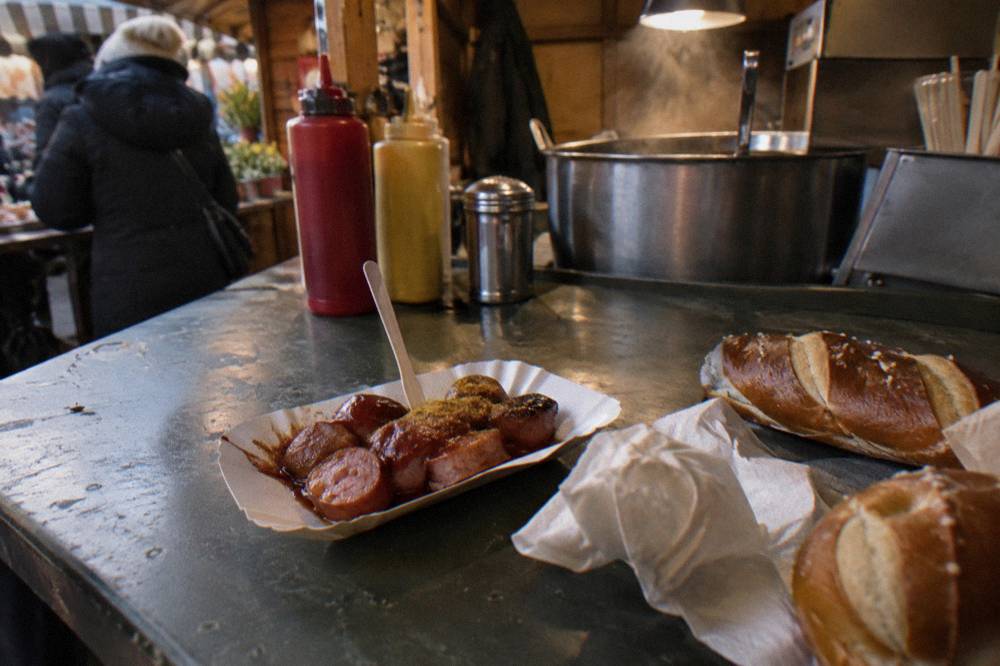
Order a Kaesekrainer if you want the essential Vienna stand experience: a pork sausage with molten cheese inside, served with a bread roll and mustard. A Bosna is the same sausage idea rebuilt as a sandwich with onions and curry-spiced sauce, and a Currywurst is the sliced, sauce-dressed crossover familiar from German street food. Each has a standard name, so ordering is fast even with no German. Once you have these three orders down, our full guide to Vienna's best street food takes you past the wurstelstand to market stalls, buffet plates and Christmas market snacks, with realistic prices and tour options if you want a local to lead the way.
The counter vocabulary is small enough to learn in a taxi. Ask for the sausage by name, choose mit Brot (with a roll) or without, and specify senf (mustard) or ketchup if the griller asks. Saying the whole order in one breath, "a Kaesekrainer mit Brot, bitte", is the local rhythm; hesitation marks you as new but costs you nothing but a smile.
| Order | What it is | How it is served | Notes for first timers |
|---|---|---|---|
| Kaesekrainer | Pork sausage with cheese running through the centre | Grilled, with roll and mustard | The canonical Vienna stand order; the cheese is hot |
| Bosna | Grilled sausage in a white bread roll with onions and spice sauce | As a sandwich, wrapped in paper | More a meal than a snack; the sauce is curry-leaning |
| Currywurst | Sliced sausage dressed with curry sauce and powder | On a tray or in a roll | Familiar from Germany; widely available in Vienna |
| Frankfurter | Boiled vienna sausage, the local paradox | In hot water or with roll | Viennese call it a Frankfurter, not a Wiener |
| Kasekrainer mit Kraut | Kaesekrainer with sauerkraut side | On a tray | Adds bite and turns the snack into a plate |
No verified per-sausage price exists for 2026, and stand menus are not standardised city wide, so treat the board at the kiosk as the truth and expect small stands to be cheaper than the stands parked outside major sights. What is consistent is the service pattern: pay at the window, take the roll, eat standing. A stand with a queue of locals at 1 a.m. is doing something right.
How Much Does Street Food And Snacking Cost In Vienna?
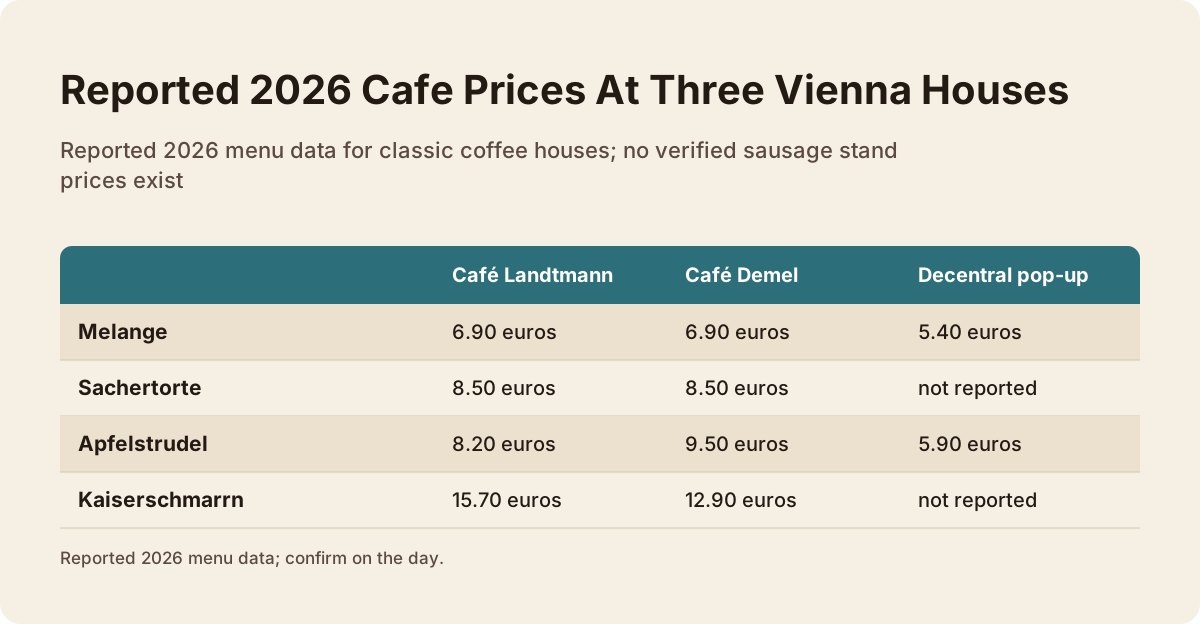
No verified per-sausage price exists, so the honest figure for the stands is whatever the board says when you order. On the cafe side of street snacking, classic houses charge around 6.90 euros for a Melange, Sachertorte slices run around 8.50 euros, and Kaiserschmarrn from 12.90 to 15.70 euros, always check the menu before you sit down.
The sweet side of Vienna snacking overlaps with the coffee houses, and there the prices are reasonably consistent. At Café Landtmann the Melange is listed at 6.90 euros, Sachertorte at 8.50 and Kaiserschmarrn at 15.70. Café Demel charges 6.90 for the Melange, 8.50 for Sachertorte and 9.50 for Apfelstrudel. The pop-up Decentral, standing in for the closed Café Central, lists a Melange at 5.40 euros and Apfelstrudel at 5.90. These are menu prices that change, so read the card on the table.
| Item | Café Landtmann | Café Demel | Decentral pop-up |
|---|---|---|---|
| Melange | 6.90 euros | 6.90 euros | 5.40 euros |
| Sachertorte | 8.50 euros | 8.50 euros | not reported |
| Apfelstrudel | 8.20 euros | 9.50 euros | 5.90 euros |
| Kaiserschmarrn | 15.70 euros | 12.90 euros | not reported |
A few table habits affect the bill more than the prices do. A Gedeck cover charge of 2 to 5 euros per person appears in traditional venues, legal only if printed on the menu. Tap water is not free by default: an Arbeiterkammer sample of 30 Vienna venues found 23 charged for it, often 0.80 to 3.60 euros per half litre. Tipping runs 5 to 10 percent, or simply round up at a stand.
One closure worth planning around: Café Central has been shut for major renovation since 16 March 2026, with a reopening planned for winter 2026 and the pop-up Decentral at Freyung 3 standing in meanwhile. Confirm on the cafe's own site before you make a special trip.
Where Are The Best Street Food Areas In Vienna?
Naschmarkt is the densest single street food zone, with sales stands allowed to trade to 21:00 on weekdays and its restaurants to 23:00, plus a Saturday flea market. Brunnenmarkt in Ottakring is the longest street market in the city, and Karmelitermarkt in the second district runs a strong farmers' market on Fridays and Saturdays.
Each market has a different personality. Naschmarkt mixes produce stalls, cheese counters and a restaurant row, and it is the most tour-friendly because it sits on the U4 line and stays open late; the official hours, published by the city, allow stands Monday to Friday up to 6:00 to 21:00 and Saturdays to 18:00, with every stand required to be open Tuesday to Friday between 15:00 and 18:00 on the City of Vienna's market page. Read our Naschmarkt food and where-to-eat guide for the stall-level detail.
| Market | District | Stand hours (max) | Best for |
|---|---|---|---|
| Naschmarkt | 4th and 5th | Mon-Fri to 21:00, Sat to 18:00 | Late eating, restaurant row, Saturday flea market |
| Brunnenmarkt | 16th, Ottakring | Street market, roughly 160 to 170 stalls | Everyday produce, Turkish and Balkan street food |
| Karmelitermarkt | 2nd | Mon-Fri to 21:00, Sat to 18:00 | Friday and Saturday farmers' market |
| Viktor-Adler-Markt | 10th | Mon-Fri to 21:00, Sat to 18:00 | Neighbourhood character, fewer visitors |
Brunnenmarkt, car-free since its renovation, runs to roughly 160 or 170 stalls, with a big jump in active stalls on Saturdays, and its food leans Balkan and Turkish, which broadens the sausage-stand picture. Karmelitermarkt is the compact, local-loved option in the second district, a short walk from the canal. For a fuller comparison, see Vienna's markets beyond Naschmarkt.
Beyond the markets, the sausage stands themselves cluster where the night traffic is: around the Ringstrasse stations, near the Praterstern, outside major U-Bahn interchanges and along the Naschmarkt's edges. If you are splitting the city by food personality, the best food by district guide maps which neighbourhoods reward a detour.
Is The Sausage Stand Really UNESCO Heritage In Vienna?
Not on the UNESCO representative list, and any source telling you otherwise is overstating it. What is true is that the Vienna Tourist Board's own pages present the Viennese sausage stand, Heuriger culture and coffee house culture together as local heritage, and that the coffee house was entered on Austria's national inventory of intangible cultural heritage in 2011. Precision here matters.
The distinction sounds pedantic until you see it misused. Austria maintains a national inventory under the UNESCO framework, and Viennese coffee house culture was inscribed there in 2011, a status that remains current. The tourist board's page wording then groups the sausage stand and the Heuriger with the coffee house as heritage experiences of the same family. That is a municipal and national-level recognition, genuinely meaningful, and the honest ceiling of the claim.
For a visitor, the practical read is that the stand is not a tourist prop kept alive for photographs. It is a working institution the city itself frames as cultural property, which is why the stands survive in a food scene that also holds two Michelin three-star restaurants. The 2026 Michelin Guide Austria lists Steirereck im Stadtpark and Amador at three stars, with 101 starred restaurants across the country. Vienna happily runs both layers at once.
The 2026 food scene reporting adds colour around the stands. Vienna was named Austria's Schnitzel capital in the 2026 delivery-order index with 142,318 schnitzel orders, and the national average schnitzel price rose about 6 percent to 13.09 euros, with the Vienna average Schweineschnitzel reported at 15.09 euros. Those numbers describe restaurant and delivery schnitzel, not street food, but they show the direction of food prices in the city, and the sausage stand remains the cheaper lane.
Can You Eat Street Food On A Guided Walk?
Yes, and it is the easiest way to cover stands, markets and a coffee house in one pass, since several Vienna food walks list street food explicitly among their stops. The featured walk on this site runs 5 hours 30 minutes across coffeehouses, markets, lunch and street food, while shorter formats, from 2 hours 45 minutes up to 3 hours 30 minutes, trade depth for time. Check each booking page for the current stop list and inclusions.
The featured tour, Vienna Food Tour: Coffeehouses, Markets, Lunch & Street Food, is the format that matches this guide's territory: a long morning-to-afternoon walk that moves from a coffee house through market stalls into street food and a proper lunch. Duration is 5 hours 30 minutes; pricing and the exact stop sequence are on the operator's booking page, and tours.json flags a vegetarian lunch option for this walk, so plant-based walkers have a stated path. You can also check availability if the timing question is the one holding you back.
| Format | Duration | What it trades on |
|---|---|---|
| Coffeehouses, Markets, Lunch & Street Food | 5 hours 30 minutes | The full arc, coffee house to street food, with lunch |
| Authentic Vienna Food Tour with 3 drinks | 5 hours | Lunch and street food with drinks included |
| Guided Food Tour with 7 Tastings & a Secret Dish | 3 hours 30 minutes | Counted tastings, compact route |
| Vienna First Day Tour | 2 hours 45 minutes | Coffee house, street food and local orientation tips |
Prices and ratings live on each operator's booking page rather than in a verified figure here, so compare on the listing rather than on a blog number. If choosing between formats is the actual blocker, the which Vienna food walk to book guide breaks the decision down by time budget and appetite, and Vienna Food Tours keeps the full set of formats side by side.
What About Sweet Street Food In Vienna?
Sweet snacking in Vienna mostly happens seated, in coffee houses, with reported 2026 prices around 8.50 euros for a Sachertorte slice and 6.90 euros for a Melange at the classic houses, while the Sachertorte rivalry between Hotel Sacher and Demel continues into 2026 with two legally distinct cakes. The stands themselves stay savoury.
The Sachertorte story is the best sweet-side street trivia in the city. Hotel Sacher holds the "Original" designation, a sealed cake with two apricot layers; Demel serves its rival version with a triangular seal and one layer, and the legal distinction between them persists in 2026 sources. A slice at the Hotel Sacher cafe is reported at 11.50 euros in 2026, with other reports noting a range around 8.90 to 10.50 euros; Demel's slice reports at 8.50 euros. Queues are part of the deal, longer at Sacher, shorter at Demel, so arrive early or after 16:00.
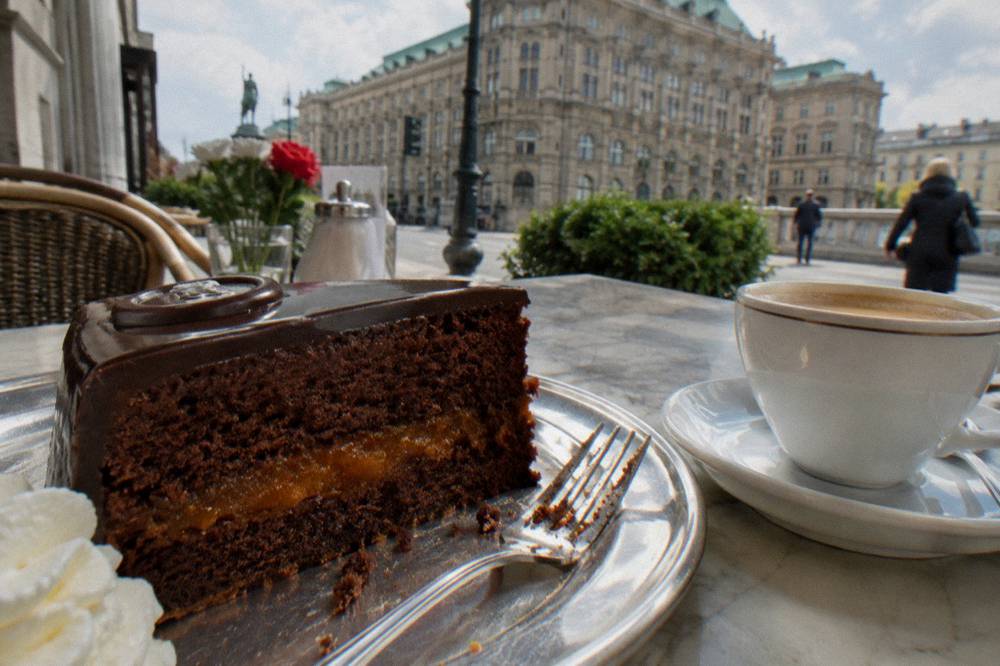
Reservations differ by house: Landtmann accepts them, Demel generally does not. And if Café Central was your target, remember it is closed for renovation with a reopening planned for winter 2026, and the Decentral pop-up at Freyung 3 is the interim option, with a reported Melange at 5.40 euros. The Vienna cake and pastry guide covers the full sweet field, and the Sachertorte or Demel comparison settles the two-house question properly.
When Are Stands And Markets Open In Vienna?
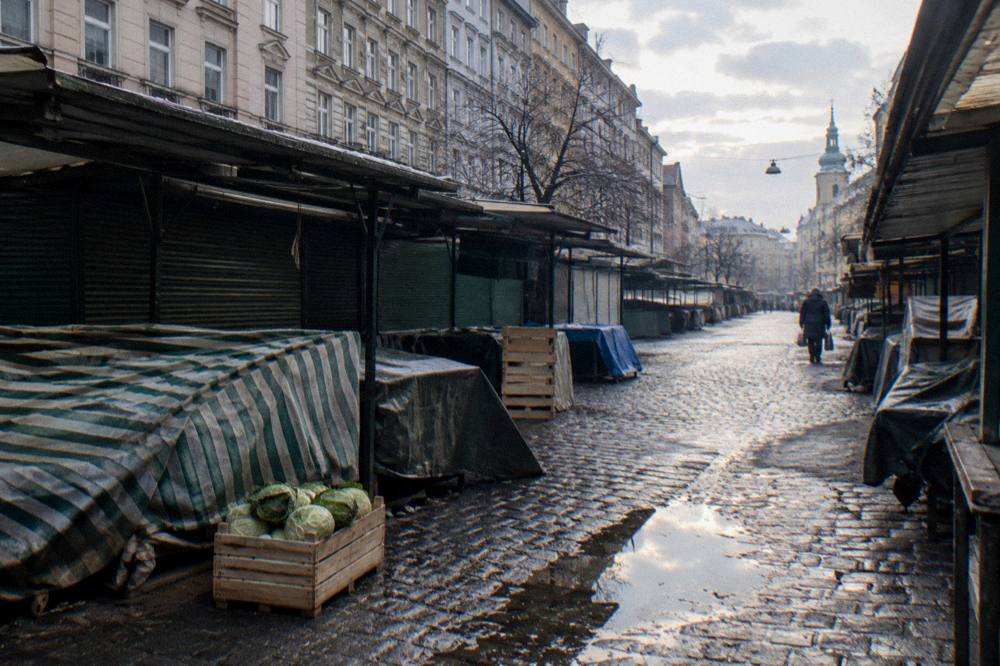
Stands trade when little else does, including Sundays, late evenings and holidays, which is their practical superpower. Markets follow the official windows: Naschmarkt sales stands may open to 21:00 on weekdays and 18:00 on Saturdays, restaurants there to 23:00, and every stand must be open Tuesday to Friday between 15:00 and 18:00. Retail shops mostly close on Sundays.
That Tuesday-to-Friday 15:00 to 18:00 rule is a genuine trip-planning tool: it guarantees a baseline of trading stalls in the late afternoon, so a market visit after 15:00 on a weekday will find stalls open even if the morning traders have packed up. Saturday mornings are the busiest and fullest windows, and the Naschmarkt flea market runs Saturdays roughly 6:30 to 15:00, with restrictions on 12 and 19 December 2026 for the Christmas tree market and no flea market on 25 to 26 December.
Two city-wide rules round out the practical picture. Austrian gastronomy has been smoke-free indoors since 1 November 2019, including coffee houses and bar areas under the national smoking ban, so standing-room eating is smoke-free indoors and regulated on terraces. And in the weeks from mid-November, the Christmas market layer takes over: the city's 2026 programme lists 15 markets with 814 stalls, opening from 6 November at Schoenbrunn and 13 November at the Rathausplatz.
What Should You Know Before Your First Wurstelstand Order?
Know your sausage name, carry small change or a contactless card, expect to eat standing, and do not expect a menu in English at every kiosk. Order by name with mit Brot for the roll, take mustard by default, and treat the stand's own price board as the only price list, since no verified city-wide sausage price exists for 2026.
The etiquette is thin because the format is fast. Say bitte with the order, take what you are handed, and clear your own paper tray into the bin that stands beside every kiosk. Locals rarely linger, and the counter space is small by design. A dog or a stroller at a stand is normal; a sit-down expectation is not.
If you want the stands interpreted rather than merely found, a guided walk earns its fee at exactly this point: someone local decides which kiosk is worth the queue, orders for the group, and connects the sausage to the coffee house and the market in one narrative. The traditional dishes overview fills in the restaurant-side classics if the stands leave you curious about the rest of the cuisine.
Common Questions About Vienna Street Food
What Is A Kaesekrainer?
A Kaesekrainer is a pork sausage with small pockets of cheese running through the centre, so the cheese melts as it grills. It is the canonical Vienna sausage stand order, typically served with a bread roll and mustard, and the cheese inside stays hot well after the outside cools.
What Is A Bosna In Vienna?
A Bosna is a grilled sausage served in a white bread roll with raw onions and a curry-spiced sauce, closer to a sandwich than a plain sausage. It originated in Salzburg but is a standard item at Vienna sausage stands, and it is the more filling of the two classic orders.
Are Vienna Sausage Stands Open On Sundays?
Generally yes, and that is a large part of their value, since most Vienna retail closes on Sundays and public holidays. Market stalls follow narrower windows, with Naschmarkt sales stands trading to 18:00 on Saturdays and restaurants to 23:00 Monday to Saturday, but the sausage stands themselves work the late and Sunday hours.
How Much Does A Sausage Cost At A Wurstelstand?
No verified city-wide sausage price exists for 2026, and stands are independent businesses with their own boards, so the menu at the kiosk is the only reliable price list. Expect stands near major sights to price above neighbourhood kiosks, and check the board before ordering.
Is The Viennese Sausage Stand UNESCO Listed?
Not on the UNESCO representative list. The Vienna Tourist Board presents the sausage stand alongside Heuriger and coffee house culture as local heritage on its own pages, and Viennese coffee house culture was entered on Austria's national inventory of intangible cultural heritage in 2011. That national-level recognition is the accurate claim.
Do Vienna Food Tours Include Street Food Stops?
Several do. The featured walk on this site lists coffeehouses, markets, lunch and street food in a 5 hours 30 minute format, and shorter walks such as a 2 hours 45 minute first-day tour also name street food among their stops. Check the operator's booking page for the current stop list, inclusions and dietary options before booking.