What Is The Best Street Food In Vienna?
The best street food in Vienna, from Kasekrainer and Bosna at the wurstelstand to market stalls, buffet plates and Christmas market snacks, with honest price context and tour options.
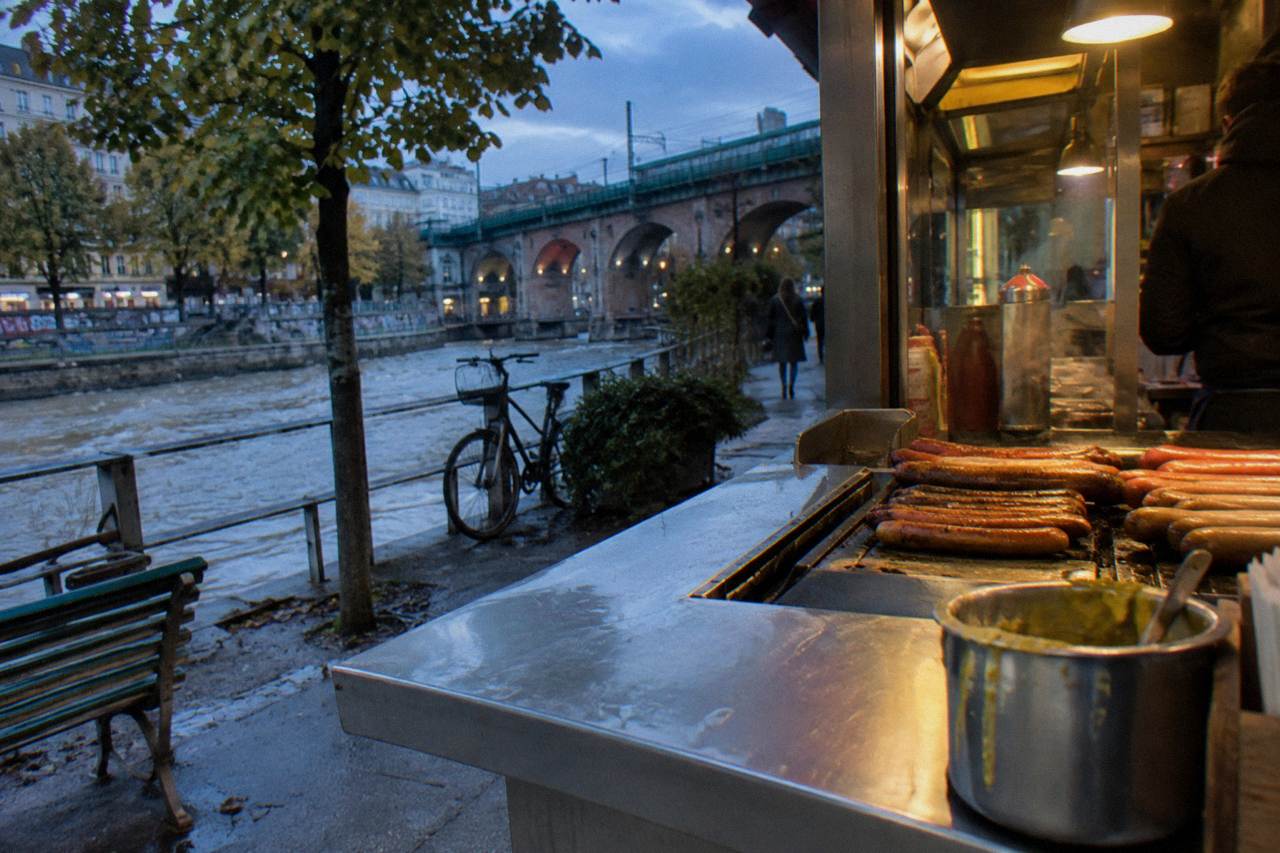
The best street food in Vienna is the Kasekrainer, a cheese-filled sausage served at the traditional Wurstelstand, closely followed by the Bosna, a grilled bratwurst in a curry-spiced bun with onions. Both are classics of the Viennese sausage stand, an institution the Vienna Tourist Board cites as part of the city's heritage alongside the coffee house and the Heuriger. You find them at stands all over the centre, late into the night. If you came to Vienna chasing a certain traveller's footsteps, the honest answer on where Anthony Bourdain ate in Vienna sorts the verified facts from the myths.
That answer surprises visitors expecting a single dish. Vienna does not really have one street food the way Berlin leans on the doner kebab or Naples on pizza al portafoglio. What it has is a small, stable repertoire that has barely moved in decades, sold from kiosks that look like they were teleported out of the late Habsburg era, and a growing ring of market stalls around them. The sausage stand, or Wurstelstand, is the anchor: the city's tourist board presents sausage stand culture alongside coffee house and Heuriger culture in its heritage framing, so treating a Kasekrainer as a cultural experience rather than just a cheap bite is genuinely defensible.
The repertoire is short. A Kasekrainer is a pork sausage studded with molten cheese, usually ordered with mustard, a slice of bread and sometimes a pickle. A Bosna wraps a grilled sausage in white bread with fried onions, curry powder and ketchup or mustard, an Austrian take that has been a stand staple for generations. Currywurst, sliced sausage dusted with curry powder, is the German import that Viennese stands adopted as their own. Beyond the grill you get Leberkas, a warm sliced meatloaf in a bun, and, in winter, roast chestnut stands whose smoke marks the start of the season. Prices are posted at each stand, so expect to pay a few euros and check the board before ordering.
If you want someone to walk you through this world rather than decoding German menu boards on your own, a guided tasting walk is the efficient route.
The Vienna Food Tour covering coffeehouses, markets, lunch and street food is the deepest option at 5 hours 30 minutes, and it is the one this site pairs most often with the question of where the best street eating sits, because it moves between the sausage-stand world, the market world and the coffee house world in a single day. Current pricing and exact inclusions are on the operator's booking page. A deeper dive into stand culture specifically lives in the Vienna wurstelstand and street food guide, which covers the ordering ritual stand by stand.
Where Do You Find The Classic Sausage Stands?
The classic Wurstelstand clusters around transit hubs and nightlife streets: near the state opera, around Schwedenplatz, along the Ring boulevard and beside major U-Bahn exits. Stands are independently run, so quality varies from one kiosk to the next, and no verified ranking of individual stands exists. Locals judge a stand by turnover and by whether the bread is fresh, not by its signage.
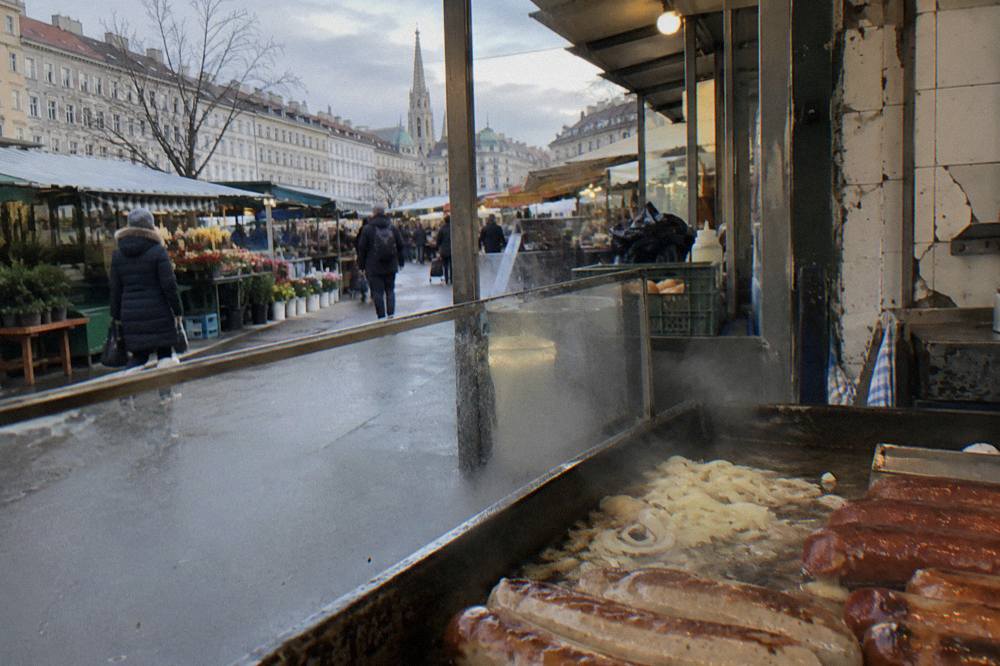
Vienna's sausage stands grew out of licensed kiosks that served workers and late-night theatre crowds, and the city still licenses them as a distinct category. That history explains the placement: a stand lives where people pass at midnight, not in a food court. Around Schwedenplatz and the canal, stands stay busy into the small hours. Near the opera and the Ring, they catch the post-performance and post-concert rush. The ordering ritual is worth knowing in advance: you state the sausage, then the condiment, then whether you want it mit Brot, with bread. Bread means a small roll or a slice, not a full bun, unless you order a Bosna, where the bun is the point.
Do not expect menus in English at every stand, and do not expect card payment to be universal at older kiosks. Carry a little cash. Eating at the stand, standing, with a tiny shelf folded down from the kiosk, is the authentic posture; takeaway and walking is fine too. The full ordering walkthrough, including how the Eitriger (a boiled sausage with mustard) fits in, is in the guide to Vienna's wurstelstand culture.
Here is the core stand vocabulary in one place, so the menu board stops being a puzzle:
| Snack | What it is | How locals order it |
|---|---|---|
| Kasekrainer | Pork sausage with molten cheese core | With mustard and bread, or as a hot dog in a hollowed roll |
| Bosna | Grilled bratwurst in a bun with onions and curry seasoning | Ordered by name, spice level varies by stand |
| Currywurst | Sliced sausage with curry powder and sauce | With a small fork, eaten at the stand shelf |
| Leberkas im Semmel | Warm meatloaf slice in a bread roll | Often with mustard or pickles, a lunch rather than a snack |
| Maroni | Roast chestnuts | Seasonal, autumn and winter only |
One practical point that catches visitors out: since 1 November 2019, Austrian gastronomy has been entirely smoke-free indoors, per the official business portal information on smoking rules in gastronomy, and the sausage stand world is an outdoor, standing culture anyway, so this rarely matters at a kiosk. It does matter if a stand has a small indoor seating area.
Is Naschmarkt Good For Cheap Eats And Street Food?
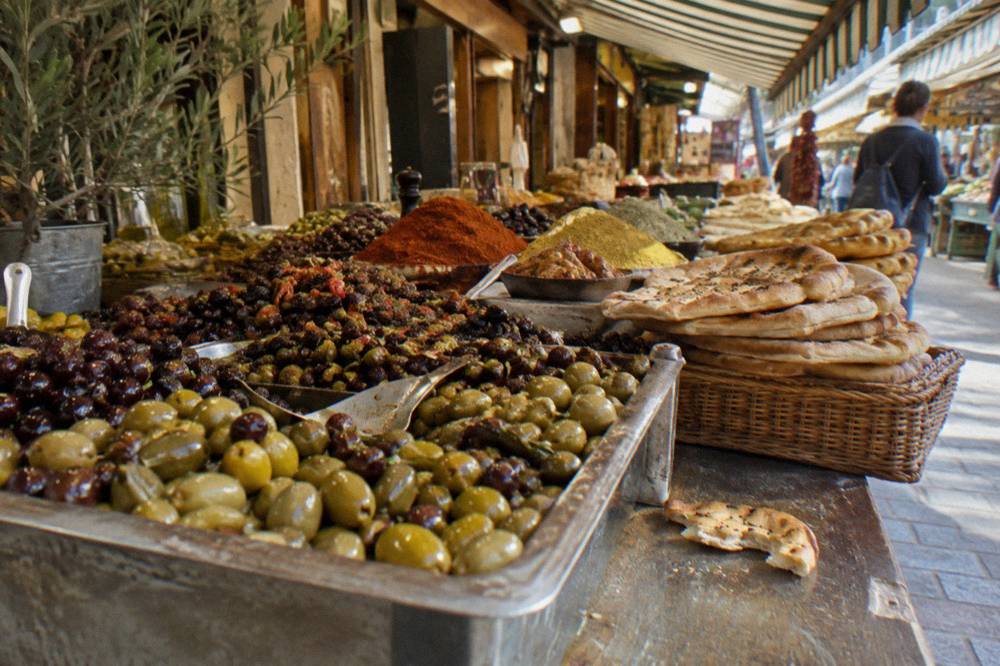
Naschmarkt is free to enter and browse, and it is one of the best street-food environments in Vienna, with stall counters, kebab grills and sit-down spots selling olives, falafel, burek and grilled snacks along a kilometre-long strip. Sales stands may open Monday to Friday until 21:00 and Saturday until 18:00, while market restaurants can run Monday to Saturday until 23:00, per the City of Vienna's official market page.
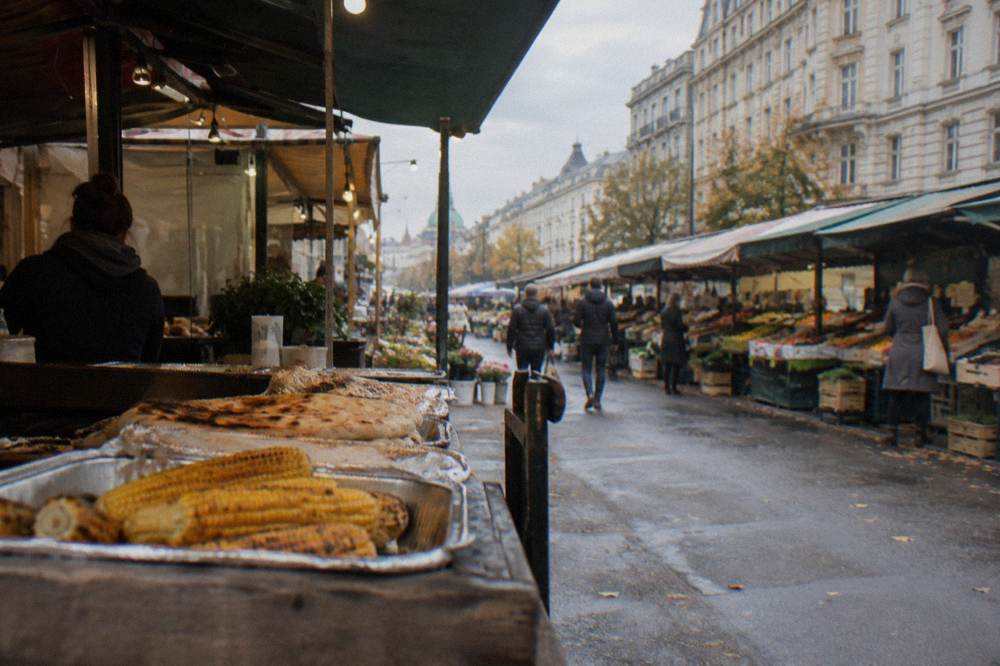
The market is the closest thing Vienna has to a permanent street food festival, and browsing costs nothing. You can walk the full strip from Karlsplatz to Kettenbruckengasse, sampling as you go: cheese and olive sellers hand out tastes, Balkan bakeries sell burek by the slice, and the restaurant rows towards the Reumannplatz end lean Middle Eastern and Vietnamese. Official maximum hours come from the city's own market regulation, which also requires every stand to be open Tuesday to Friday between 15:00 and 18:00, so a late-afternoon visit on a weekday is the safest bet for a lively market. The details, including the Saturday flea market that shares the site, are covered in the Naschmarkt opening hours guide.
Two honest caveats. First, the market's redevelopment is still in progress: the new Naschpark green space is finished, but the wider project, including the Marktraum hall and the farmers' market area, is now expected to complete around February 2027, and some stalls were relocated during the works. Second, the eating-on-a-budget question at Naschmarkt has a real answer: stall counters and the farmers' market side are where the value sits, while the sit-down restaurants on the Wienzeile side run closer to normal restaurant prices. What to actually eat, stall by stall, is laid out in the Naschmarkt food guide. The city's official page for the market, wien.gv.at's Naschmarkt information, is the source for the opening windows quoted here.
A guided market-and-more walk is worth considering if you would rather someone else decode the strip, and the related tour on this page is a strong fit:
What About Other Markets And District Stands?
Beyond Naschmarkt, the best cheap-eating markets are Brunnenmarkt in Ottakring, Vienna's longest street market with roughly 160 to 170 stalls, and Karmelitermarkt in the second district, whose Friday and Saturday farmers' market brings regional meats and produce. Both are free to browse, both sit in genuinely local neighbourhoods, and both put you closer to everyday Viennese food culture than the centre's stands.
Brunnenmarkt is the street-food hunter's market. It stretches along the Thaliastrasse end of Ottakring, car-free since its renovation, and its weekday and Saturday rhythms differ sharply: guides report around 40 to 50 active stalls on weekdays and roughly 120 on Saturdays, so Saturday morning is when the strip feels like a market rather than a street. Around it sit the neighborhood's Yugoslav and Turkish bakeries, which is where the burek and the better kebabs in Vienna actually live. Karmelitermarkt is smaller and more food-focused, with a restaurant row that turns into a weekend brunch scene; its official hours mirror Naschmarkt's stand windows, with restaurants capped at 19:00 on Sundays.
The third option is Viktor-Adler-Markt in Favoriten, further from the centre but authentic and cheap, its produce and trader stalls running mornings only, Monday to Saturday until 13:00. None of these markets charge entry, none require a booking, and all three reward arriving hungry. If your trip has room for only one market beyond Naschmarkt, make it Brunnenmarkt on a Saturday, then eat your way down the side streets towards the Yppenplatz corner, where the market's cafe and bar scene has grown up around the old stalls.
What Does A Guided Street Food Walk Actually Add?
A guided food walk adds three things a solo stand crawl cannot: a local who knows which vendors are worth the stop, a structured route that links markets, stands and coffee houses without transit guesswork, and included tastings or a full lunch so you are not paying per item as you go. Vienna's guided food walks run from about 2 hours 30 minutes up to 5 hours 30 minutes, with pricing shown on each operator's booking page.
The longest of the group, the Vienna Food Tour with coffeehouses, markets, lunch and street food, at 5 hours 30 minutes, is effectively a full eating day: it stacks a coffee house stop, market browsing, street food and a sit-down lunch into one guided arc, and tours.json flags a vegetarian lunch option for it, unusual on this category. Vegetarians should still message the operator before booking to confirm the current option. The Vienna Guided Food Tour with 7 Food Tastings and a Secret Dish compresses the same idea into 3 hours 30 minutes with a fixed tasting count, which suits visitors who want the highlights without a full day. At the short and light end, the Vienna First Day Tour at 2 hours 45 minutes blends a coffee house, street food stops and local orientation tips, ideal for arrival day.
| Guided walk | Duration | Focus | Booking details |
|---|---|---|---|
| Vienna Food Tour: coffeehouses, markets, lunch, street food | 5 hours 30 minutes | Full-day mix of coffee house, market, lunch and stands | Price on the operator's page, vegetarian lunch option flagged |
| Vienna Guided Food Tour, 7 tastings and a secret dish | 3 hours 30 minutes | Fixed tasting route with a surprise stop | Price on the operator's page |
| Vienna First Day Tour: coffeehouse, street food, local tips | 2 hours 45 minutes | Orientation plus snacks | Price on the operator's page |
| Naschmarkt guided food walks | About 2 hours | Market stalls and tastings | Price on the operator's page |
Dietary needs are the one thing to settle before booking. The tours listed here state a vegetarian lunch for exactly two walks, the Vienna Food Tour: Coffeehouses, Markets, Lunch & Street Food and the Authentic Vienna Food Tour; the private food tour offers vegetarian tasting options but no lunch, and none of these walks state vegan or gluten-free coverage, so anyone with those requirements should message the operator through the booking page first and not assume. Meeting points and exact inclusions for each walk are listed on each operator's page, and they are worth re-reading close to your travel date, since stop lists can shift with vendor schedules.
What Are The Cheap Sweets And Coffee House Snacks?
The best value sweet street snacks are the ones bakeries sell to go: a slice of Apfelstrudel and the chestnut stands in winter. The classic cafe versions cost seated prices: reported menu data puts a Melange coffee around 6.90 euros at the classic houses, Sachertorte slices from about 8.50 to 11.50 euros, and Kaiserschmarrn from about 12.90 to 15.70 euros. Check each menu, prices move.
Cafe Landtmann lists Sachertorte at 8.50 euros and Kaiserschmarrn at 15.70 euros, Cafe Demel at 8.50 and 12.90 respectively, and the Hotel Sacher's Original Sachertorte slice runs around 11.50 euros, with a range of roughly 8.90 to 10.50 euros elsewhere. The Melange, the classic Viennese coffee, clusters around 6.90 euros at Landtmann, Museum and Schwarzenberg. These are seated prices with table service; a bakery counter or a Wurstelstand's sweet shelf is the budget alternative, and the Vienna cake and pastry guide maps the cheaper to-go options.
One 2026-specific note matters for planning: Cafe Central, the most famous of all, has been closed for major renovation since 16 March 2026, with reopening planned for winter 2026, and its pop-up, Decentral, is operating at Freyung 3 meanwhile, with a reported Melange at 5.40 euros and Apfelstrudel at 5.90 euros. Confirm on the cafe's own site before going. The Sachertorte rivalry itself is a legal distinction, not marketing: Hotel Sacher holds the "Original" name with its sealed two-apricot-layer cake, while Demel serves its rival version under a triangular seal. That story, and where to eat which, is unpacked in Sachertorte or Demel: where to eat the cake.
Are Heuriger Buffets A Form Of Street Food?
A Heuriger buffet is the closest Vienna gets to a self-service street food economy: you load a plate from a cold buffet, pay by the plate, and drink the house's own young wine standing or at wooden tables. Typical local buffet plates run about 6 to 12 euros with an evening total often 8 to 15 euros at neighbourhood spots, and an Achtel, an eighth of a litre of wine, about 3 to 5 euros, per 2026 guides.
The Heuriger, the wine tavern that serves only its own vineyard's wine under a pine branch and an "Ausg'steckt" sign, is a sit-down culture, but its buffet counter works like street food: point, load, pay. Around 100 genuine Buschenschank and Heurigen were estimated still operating in Vienna, and their openings are irregular and seasonal, posted in Ausgsteckt calendars, with many reducing hours from November to March. The Vienna Tourist Board's guide to Viennese Heurigen explains the pine-bush signal and the districts where they cluster: Grinzing, Nussdorf and Neustift in the north, Stammersdorf and Strebersdorf in the 21st district, Mauer in the south.
Getting there is part of the fun and costs little: tram D runs to Nussdorf, bus 35A to Neustift am Walde, tram 31 to Stammersdorf. The 2026 wine hiking day in late September, four routes through the city's vineyards with free entry and paid tastings, has already passed; the vineyard walking routes themselves remain, and 588 hectares of vineyard sit inside the city limits, a third of it farmed organically. The full visitor walkthrough is the Heuriger in Vienna visitor's guide.
What Seasonal Street Food Should You Plan Around?
From mid-November, the best seasonal street food in Vienna is the Christmas market kitchen: 15 markets with a total of 814 stalls across the city in 2026, selling grilled sausages, Kasekrainer, roast chestnuts, Langos, Kaiserschmarrn and punch by the mug. Entry to every market is free, you pay per item, and the Rathausplatz Christkindlmarkt runs 13 November to 26 December 2026, daily 10:00 to 22:00.
The official city figures for 2026 give the season its shape: Schonbrunn's market opens earliest on 6 November, Spittelberg and Am Hof follow on 13 November, and Belvedere runs 20 November to 31 December. Punch and mulled wine prices are not yet verified, so check at the stand; a deposit on the mug is standard practice. The dedicated Vienna Christmas markets guide covers each market's food strengths and hours.
Beyond the markets, two 2026 data points frame the eating year. Vienna was named Austria's new Schnitzel capital in the 2026 delivery index, with 142,318 schnitzel orders between January and August and an average delivered Schweineschnitzel at 15.09 euros, a reminder that schnitzel is a sit-down dish at sit-down prices rather than street food. And the city's casual dining scene keeps renewing at the value end: the Michelin Guide's 2026 edition added three Vienna Bib Gourmands, including the vegetarian TIAN Bistro am Spittelberg, useful proof that cheap-and-good here is not limited to sausage stands.
What Practical Tips Make Street Food Easier In Vienna?
Carry some cash for older stands, expect to tip 5 to 10 percent at markets with table service while stand food needs no tip beyond rounding up, remember most shops and many stalls close Sundays, and know that a cover charge, the Gedeck, of 2 to 5 euros per person can appear at traditional sit-down venues if it is printed on the menu. Sunday is the biggest trap: supermarkets shut, and only station and market restaurants keep going.
A few specifics make the difference. Tipping at a restaurant means stating the total you want to pay when the bill comes, rounding up or adding 5 to 10 percent, and at a coffee house a small rounding of 0.50 to 1 euro is the norm. Tap water is not reliably free: a 2026 consumer-body sample of 30 Vienna venues found 23 charged for it, commonly 0.80 to 3.60 euros per half litre, legally, as long as the price is on the menu. At a Wurstelstand none of this applies; you pay the board price and eat standing. The tipping and etiquette guide covers the full ritual.
Timing matters as much as money. Weekday afternoons between 15:00 and 18:00 are when market regulation guarantees stands are open. Saturday mornings bring the flea market at Naschmarkt and the full Brunnenmarkt strip. Late evenings belong to the sausage stands near Schwedenplatz, which exist precisely for the post-midnight crowd. November through December belongs to the Christmas markets. Plan around those rhythms and the city feeds you well at every hour, as Vienna Food Tours lays out across its market, coffee house and sausage stand guides.
Common Questions About Street Food In Vienna
What Is The Best Street Food In Vienna?
The Kasekrainer, a cheese-filled sausage from a traditional Wurstelstand, is the single best answer, with the Bosna a close second. Both belong to the city's sausage stand culture, which the Vienna Tourist Board cites alongside coffee house and Heuriger culture in its heritage framing. Market stalls, Heuriger buffets and Christmas market food extend the repertoire.
How Much Does A Sausage Cost At A Vienna Wurstelstand?
Prices are posted at each stand, so check the board before ordering. Expect a few euros for a sausage with bread. Carry some cash, since not every older kiosk takes cards.
Is Naschmarkt Free To Visit?
Yes. Entry and browsing cost nothing, and the official city rules require all stands to be open Tuesday to Friday between 15:00 and 18:00. You pay only for what you eat, and the Saturday flea market beside it is also free to browse.
What Is A Bosna?
A Bosna is a grilled bratwurst served in a white bread roll with fried onions, mustard or ketchup and curry powder. It has been a standard item at sausage stands across the city for generations and is one of the two snacks most locals name first.
Do Vienna Food Tours Include Street Food Tastings?
Several do. The 5 hour 30 minute Vienna Food Tour mixes coffeehouses, markets, lunch and street food, while a 3 hour 30 minute guided walk includes seven tastings plus a secret dish. Exact inclusions and prices are on each operator's booking page, and dietary needs should be confirmed with the operator before booking.
Where Can Vegetarians Eat Street Food In Vienna?
Market stalls are the strongest option: burek, falafel, cheese and olive counters at Naschmarkt and Brunnenmarkt, plus chestnut stands in winter. Among guided walks, a vegetarian lunch option is stated for the main food walk, the authentic food walk and the private food tour; confirm current options with the operator.