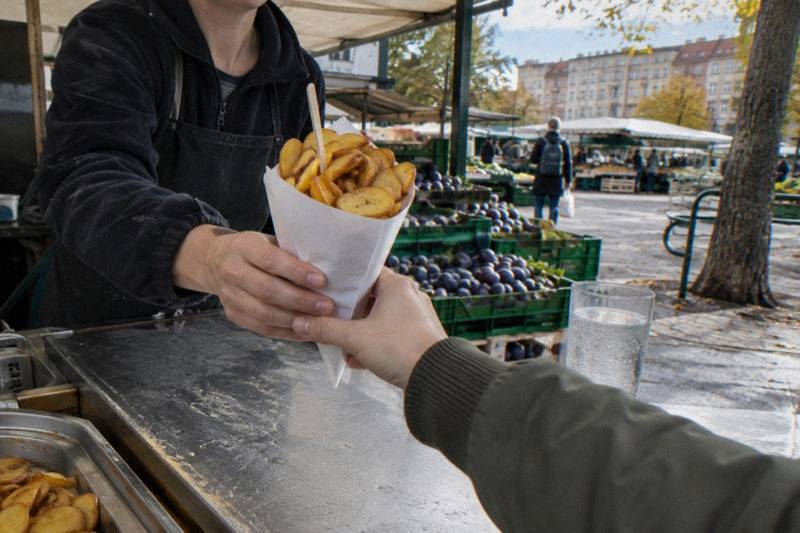
What Is The Best Tour In Vienna?
An honest breakdown of Vienna tours by format and traveller type: guided food walks, coffee house visits, evening dinners and wine tastings, with what each includes and who it suits.
No single Vienna tour is best for everyone, since one traveller with a free afternoon wants something different from a family with children or a couple on an evening out. The strongest general-purpose pick is a long guided food walk combining a market, coffee houses, lunch and street food in one outing, because Vienna's food culture is what self-guided visitors most often miss. For anyone inspired to eat like the late traveller himself, the straight answer on Anthony Bourdain's Vienna restaurants clears up the rumors and points you to the classic dishes worth ordering instead.
That framing matters more than any ranking. A ranking would need a single measure, and there is none: tour formats in Vienna range from a 45-minute cellar tasting to a full-day excursion into the Vienna Woods and the Wachau, and the right one depends on your time, budget and appetite rather than on a scoreboard. What this page does instead is sort the main guided formats by what they actually include, then match them to traveller types, so you can pick with your own constraints in mind.
The food walk is the natural starting point because it does the most work per hour. A guided walk with a local guide solves three problems at once: it explains dishes whose names mean nothing on first reading, it moves you between neighbourhoods without you planning the route yourself, and it books tables and tastings you would otherwise have to arrange yourself. The Vienna Food Tour: Coffeehouses, Markets, Lunch & Street Food is the walk most often paired with this question on Vienna Food Tours: five and a half hours linking the Naschmarkt, classic coffee houses, a seated lunch and street food stops, which is close to a complete introduction to how the city eats.
Before any of them, it helps to know the wider field. Vienna's guided tours fall into six broad families: food walks, coffee house and pastry tours, market walks, wine and Heuriger-adjacent tastings, cooking classes, and general sightseeing walks. The rest of this article walks through each family in the order a visitor usually meets them, then finishes with the practical checks worth making before you pay.
Which Tour Suits A First-Time Visitor?
A first-time visitor gets the most from a half-day food walk that combines a market, a coffee house stop and a meal, because it delivers the city's three signature food settings in one guided outing. The 5 hour 30 minute coffeehouses, markets, lunch and street food walk is built exactly this way. A shorter alternative is the 2 hours 45 minutes First Day Tour, which trades the full lunch for local tips and a lighter pace.
The logic is about density. A first visit to Vienna usually includes the Hofburg, St Stephen's Cathedral and one museum, and the food side of the city is what falls off the list. A guided walk prevents that by making food the itinerary rather than an afterthought. You arrive at the Naschmarkt with someone who can name the unfamiliar vegetables, sit down in a coffee house knowing what a Melange is before the waiter asks, and finish with street food you would have walked past.
The alternative is to split the day. Some travellers prefer a short walk in the morning and a museum in the afternoon, which is where the shorter formats earn their place. The question to ask yourself is simple: do you want one long outing that ends with a full meal, or a two-to-three-hour introduction that leaves the rest of the day open? Both exist as guided products in the city, and neither is the wrong answer.
One caution applies to every format: what a guide shows on any given day varies with openings, weather and group size. The listing describes the standard route and inclusions, and that description is what you are buying, not a minute-by-minute guarantee.
Not Sure Yet?
Free cancellation is offered on most guided tours in the city, so you can lock in a morning slot and still change your mind.
What Does A Guided Food Walk Actually Include?
Inclusions on Vienna food walks typically run to a market walk, several seated tastings, a full lunch on the longer tours, and drinks where the listing states them. The 5 hour 30 minute flagship walk lists lunch and street food in its title; the Authentic Vienna Food Tour lists lunch, street food and three drinks over 5 hours. Exact portions and stop counts are on each booking page, since operators adjust them seasonally.
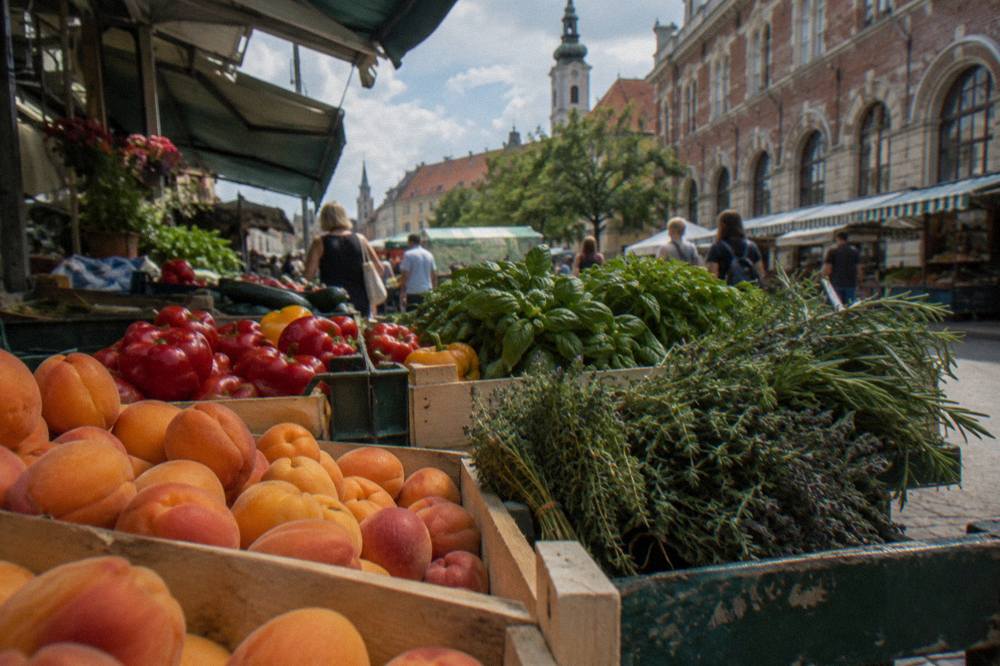
The long walks are effectively a day of eating with commentary attached. You start where the city starts its own shopping, at a market, then move through the historic centre with stops that build from snacks toward a proper lunch. Guides on these walks handle the local context: which sausage is which, why the coffee house is on Austria's national inventory of intangible cultural heritage, and what the Gedeck on your bill means. For context on that last point, see the restaurant etiquette basics in the tipping and Gedeck guide.
Dietary needs are worth flagging before you book, not on the day. The listings for the main food walk, the authentic walk and the private food tour state a vegetarian lunch option. No listing states a vegan or gluten-free option, so if that is your situation, message the operator before paying and confirm what can be adapted. Guides generally try, but a kitchen needs advance notice for a group.
For travellers who want the eating without the walking pace, the Do Eat Better full meal walk covers the same idea over 3 hours 30 minutes, and the private food tour offers six or ten tastings on your own schedule. The private format costs more per person and buys flexibility, which matters most for families with young children or groups with mixed mobility.
How Much Should You Expect To Pay?
Guided food experiences in the city cluster in the mid two figures to mid three figures per person in US dollars, with the exact figure depending on length and inclusions. Prices sit on each operator's live listing and change with season, so treat any printed number as a snapshot. Short formats, like a one-hour chocolate workshop or a 45-minute cellar tasting, sit at the bottom of the range; full-day wine excursions at the top.
The price follows the hours and the food. A two-hour market walk with a few tastings costs less than a five-hour walk that includes a full lunch, and a full-day Wachau valley excursion with transport and tasting costs more than both. That is ordinary economics rather than marketing, but it does mean comparing tours by headline price alone is misleading. A cheap walk with two tastings is not the same product as a longer one that feeds you a meal.
| Format | Typical length | What it usually includes | Who it suits |
|---|---|---|---|
| Market walk | 2 to 2.5 hours | Guided market browsing, a few tastings | Short-stay visitors, market lovers |
| Full food walk | 5 to 5.5 hours | Market, coffee house stop, lunch, street food | First-timers, hungry travellers |
| Coffee house tour | 2.5 to 3.5 hours | Pastries, coffee tastings, house histories | Cafe devotees, slower mornings |
| Evening dinner tour | 4 hours | Dinner, wine, cocktails, small group | Couples, relaxed evenings |
| Cooking class | 1 to 3 hours | Hands-on schnitzel or strudel, tasting | Families, repeat visitors |
| Wine tasting | 45 minutes to 8 hours | Tastings, sometimes transport and cellar visits | Wine drinkers, day-trippers |
One local cost travellers rarely budget for is the Gedeck, the cover charge of roughly 2 to 5 euros per person that traditional venues add for bread and table setting, legal only when printed on the menu. It appears on bills in restaurants and some coffee houses, and it is separate from tipping, which runs 5 to 10 percent at restaurants and a small round-up at cafe counters. Knowing both keeps the end-of-meal arithmetic from surprising you.
Wine shows the widest single-variable swing: formats run from 45 minutes to 8 hours, so one category straddles the entire price span. Festive travel adds another variable. Vienna hosts 15 Christmas markets with 814 stalls in 2026, including the Rathausplatz Christkindlmarkt daily from 10:00 to 22:00 between 13 November and 26 December, where you pay per item rather than per person. If you plan to eat your way through those markets, the street food guide to Vienna's wurstelstand and market stalls covers what a Kasekrainer or a buffet plate really costs.
Budget-conscious visitors can also skip guided formats entirely. The Naschmarkt's sales stands trade from 6:00 to 21:00 Monday to Friday and from 6:00 to 18:00 on Saturdays, and every stand is required to open between 15:00 and 18:00 Tuesday to Friday, so mid-afternoon is the safest window for full coverage. You pay only for what you sample, with no per-person guide fee.
Coffee house costs are easier to estimate with one anchor: the Decentral pop-up at Freyung 3 that stands in for Cafe Central during its renovation, closed since 16 March 2026 with reopening planned for winter 2026, reported a melange at 5.40 euros. Use that as a rough per-cup benchmark when weighing a coffee house tour's headline price against simply ordering your own.
Coffee House Tour Or Evening Dinner Tour?
A coffee house tour suits a morning or afternoon and runs 2.5 to 3.5 hours covering pastries, bites and local stories; an evening dinner tour runs about 4 hours with dinner, wine and cocktails in a small group. They are complementary rather than competing: one explains the daytime institution, the other turns the same city into a night out. The choice is really about when you want your guided hours.
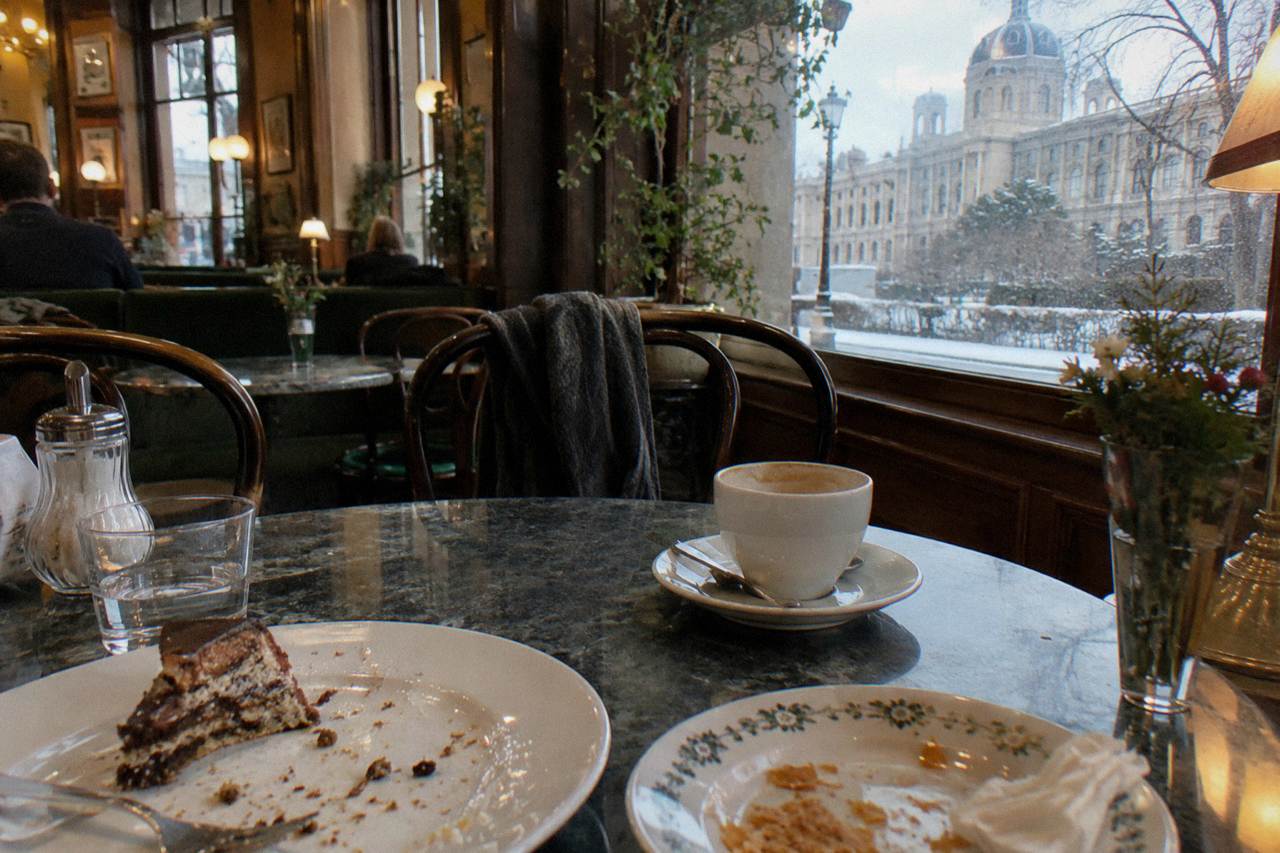
The coffee house format is quieter and more interpretive. Guides on these walks explain the institution itself, from the water glass tradition to the newspapers and the marble tables, alongside the pastries. It pairs naturally with a morning market visit or an afternoon museum. The guided Viennese coffee house tours in the city run around three hours, and the pastries-and-bites format is 3 hours 30 minutes, giving you the room to linger rather than march.
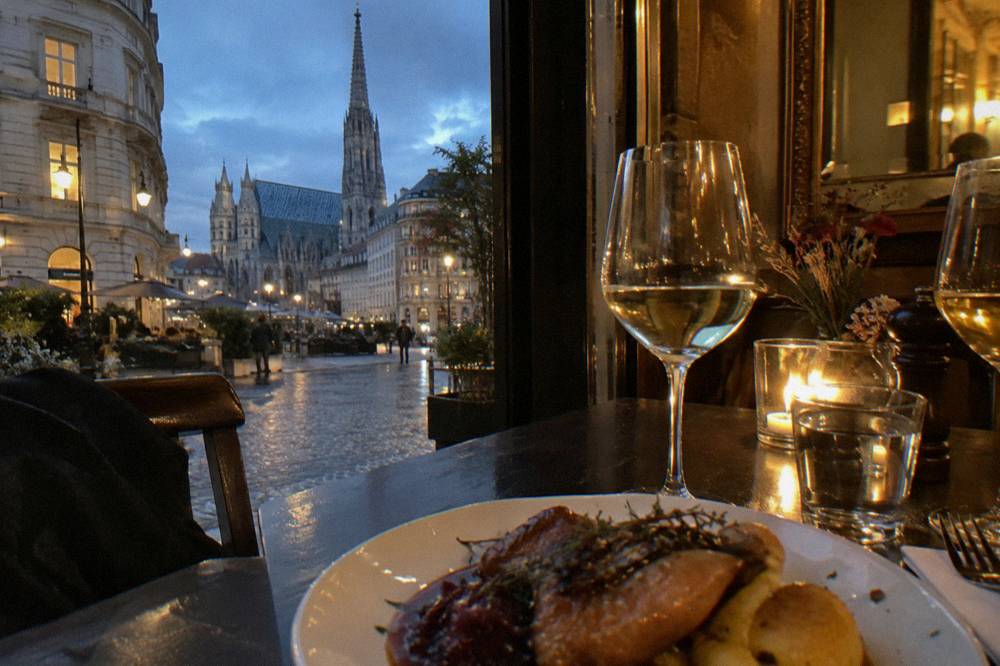
The evening format flips the emphasis to food and drink as entertainment. A small-group dinner, wine and cocktail evening walks you through several venues over four hours, ending late enough that the city has emptied of day-trippers. It suits travellers whose sightseeing days are already full and whose evenings are otherwise a restaurant-roulette exercise.
A quick check of recent diner behaviour helps set expectations for the evening side. Vienna's restaurant scene in the 2026 Michelin Guide retains two three-star restaurants, Steirereck and Amador, and added new Bib Gourmand value picks including the revived Wirtshaus Rosi, per the Guide's Austria 2026 announcement. An evening tour will not take you to a starred dining room, but the same city that supports that scene knows how to feed you well after dark.
If an evening of dinner, wine and cocktails with a small group sounds like your speed, the format below is the one to compare:
What About Wine, Cooking Classes And Market Walks?
Vienna's non-walking formats each solve a specific problem: a wine tasting introduces Austrian bottles in 45 minutes to 3 hours, a cooking class teaches schnitzel or strudel in 1 to 3 hours, and a dedicated market walk goes deeper at the Naschmarkt than a combined tour can. None of them is a full-day introduction to the city, and all of them are better as a second or third activity than as your only one.
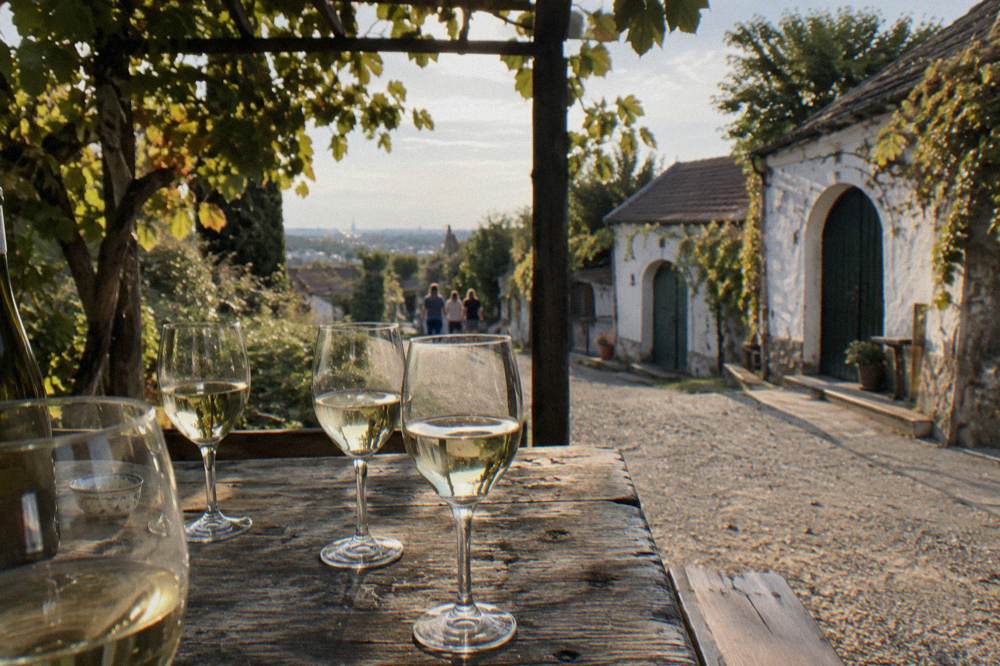
Wine deserves special mention because Vienna is one of the few capitals with commercial vineyards inside the city limits, around 588 hectares across Döbling, Floridsdorf and Liesing. The 2026 vintage was small, down 30 to 40 percent on yield after a hot, dry summer, but early reports describe the quality as very good. That is the glass you would be tasting. Formats range from a 45-minute hidden cellar session to a two-hour Austrian tasting and full-day Vienna Woods and Wachau excursions; the wine tasting options guide breaks them down properly.
Cooking classes are the format most families underestimate. A shared class where you bread and fry your own schnitzel, or pull strudel dough, occupies an hour or three and ends with eating your work. Children can participate in ways a four-hour walk does not allow, and you leave with a skill rather than only a memory. The main classes in the city run 1 to 3 hours, several with the tasting included in the title.
Market walks, finally, are for visitors who already know their schnitzel and want the Naschmarkt itself explained. The two dedicated market walks run about two hours each and stay inside the market, where a combined city walk spends only part of its route. If the market is the reason you are asking the question, the deeper Naschmarkt food guide covers what to eat there without a guide at all.
How Do You Check A Tour Before Booking?
Read the listing's inclusions, cancellation terms, meeting point and duration, and confirm dietary needs by message before paying. Check the meeting point against your transport plan, since most walks start inside the historic centre or at the Naschmarkt. Ratings are useful only with a review count beside them: a high score from a handful of reviews says little, while the same score from hundreds of travellers says more.
The meeting point deserves the most attention. A walk starting at the Naschmarkt puts you at the U4 Kettenbrückengasse stop area; a walk starting in the centre may name a square you can reach on foot from most inner hotels. Give yourself fifteen minutes of slack, because Vienna's trams run well but construction diversions appear regularly, and the city's main rail corridor has works running into 2027.
Cancellation terms are the second read. Most guided products in the city offer free cancellation up to a day before, which makes booking early nearly costless and lets you rebook around weather. Pay-later options exist on many listings as well. Neither appears on every product, so confirm on the booking page rather than assuming.
| Check before booking | Why it matters | Where to find it |
|---|---|---|
| Inclusions list | Tells you whether lunch, drinks and tastings are covered | The tour's own page |
| Meeting point | Determines your travel time and morning plan | The tour's own page |
| Duration and pace | A 5-hour walk is a commitment on foot | The tour's own page |
| Dietary options | Vegetarian stated on some walks; vegan not stated on any | Message the operator |
| Cancellation window | Protects you if plans or weather change | The booking page terms |
Finally, trust your calendar over any advice, including this page's. A traveller with a six-hour gap wants a different product from one with ninety minutes, and both are well served in Vienna. The clusters of positive reviews matter, the fit matters more.
For context on the wider city offering beyond food, the official tourism body publishes its own overview of guided experiences at wien.info, and the City of Vienna's own pages, such as the Naschmarkt information page, confirm market hours that any market-bound tour depends on.
So Which One Should You Book?
Book the format that matches your free hours and appetite: the 5 hour 30 minutes coffeehouses, markets, lunch and street food walk for the fullest introduction, the 5-hour authentic walk with lunch and three drinks for the same idea with drinks built in, or the shorter full-meal walk if five hours sounds like too much. First-timers get the most from the long format; repeat visitors often enjoy coffee house, cooking or wine formats more.
The through-line of this whole comparison is that Vienna rewards eating with a guide more than most cities, because so much of its food culture is institutional rather than obvious. The coffee house, the market, the sausage stand and the Heuriger are all traditions with rules and histories, and a guide's value is in unpacking them while you eat. Whichever product you choose, book the one whose inclusions match the meal you actually want, and read its page rather than its star rating.
These three walks are the ones this page keeps coming back to, because between them they cover the range most travellers want:
Common Questions About The Best Tour In Vienna
What Is The Best Tour In Vienna?
There is no single best tour. For most first-time visitors the strongest choice is a long guided food walk covering a market, coffee houses, lunch and street food in one outing, because it introduces the city's food culture in a single afternoon. Travellers with different time, budget or interests may do better with a coffee house tour, an evening dinner tour, a cooking class or a wine tasting.
How Long Is A Vienna Food Walk?
Food walks in the city run from about 2 hours 30 minutes for market-focused walks to 5 hours 30 minutes for the full format that includes a seated lunch. Coffee house tours run 2.5 to 3.5 hours, and evening dinner tours run about 4 hours.
Do Vienna Food Tours Include A Full Meal?
The longer walks do: the flagship coffeehouses, markets, lunch and street food walk includes lunch, and the authentic walk includes lunch plus three drinks. Shorter formats include tastings rather than a full meal. Always confirm portions on the tour's own page before booking.
Are Vienna Tours Good For Vegetarians Or Vegans?
Several food walks state a vegetarian lunch option on their listings. No listing states a vegan or gluten-free option, so message the operator before booking to confirm what can be adapted. The city also has strong standalone vegan dining, covered separately in the vegan eating guide.
Can I Cancel A Vienna Tour If My Plans Change?
Most guided tours in the city offer free cancellation up to roughly a day before departure, and several listings include pay-later options. Terms vary by product, so check the cancellation window on the booking page before you pay rather than assuming it applies.