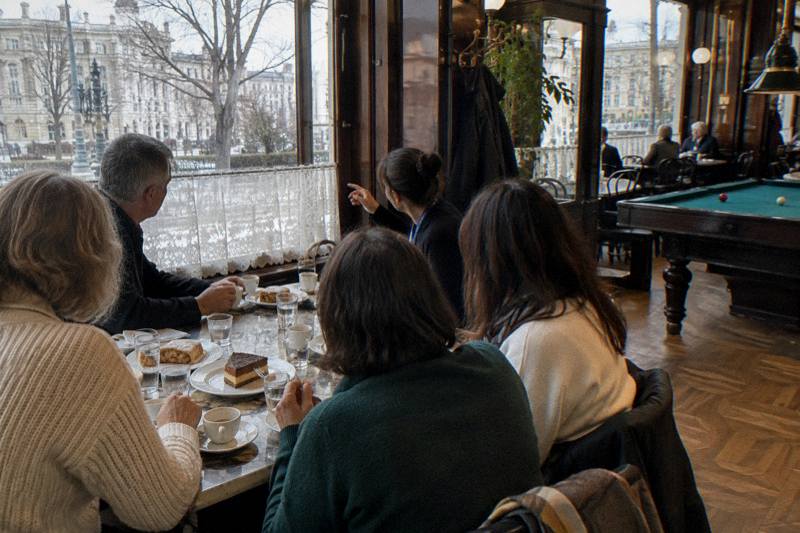
Why Is Café Central Popular In Vienna?
Café Central's fame, its 2026 renovation closure, the Decentral pop-up at Freyung 3, and what a coffee house visit in Vienna looks like meanwhile.
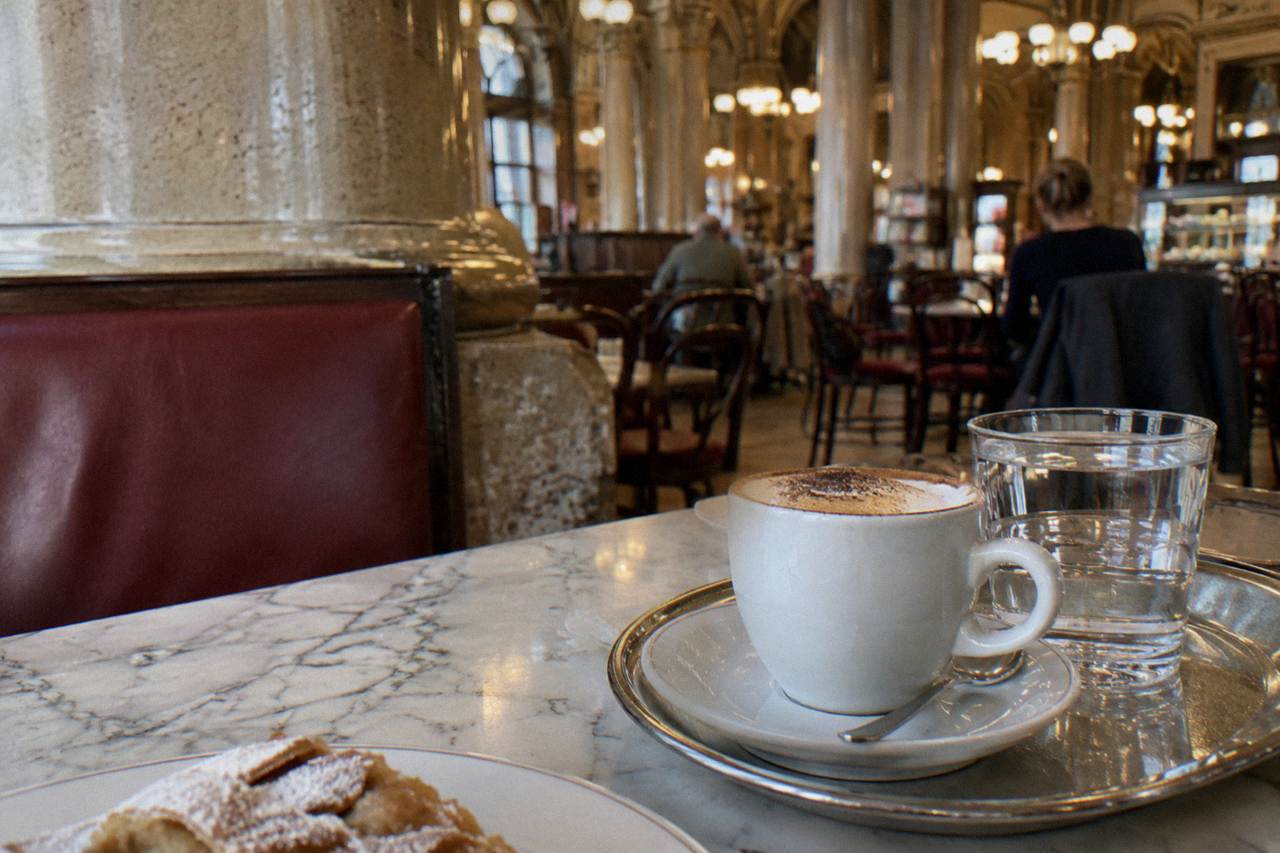
Café Central is popular because it bundles the whole Viennese coffee house idea into one theatrical setting: a vaulted hall inside the former Bank and Stock Exchange palace at Herrengasse 14, steps from the Hofburg, with marble tables, newspaper holders and tuxedoed waiters serving Melange and Apfelstrudel. Its fame is architectural, literary and geographic at once, and it has been a fixture of guidebooks for generations.
That is the short version. The longer version matters if you are planning a trip, because the answer has changed shape in 2026: Café Central has been closed for major renovation since 16 March 2026, with reopening planned for winter 2026, according to current reporting. A pop-up called Decentral is operating meanwhile at Freyung 3, a few minutes' walk away, and it is drawing the queues the original address used to draw. If those queues at Decentral have you wondering whether to book ahead, our practical reservation guide for Café Central and its pop-up has the current answer, including alternatives and what cake will set you back.
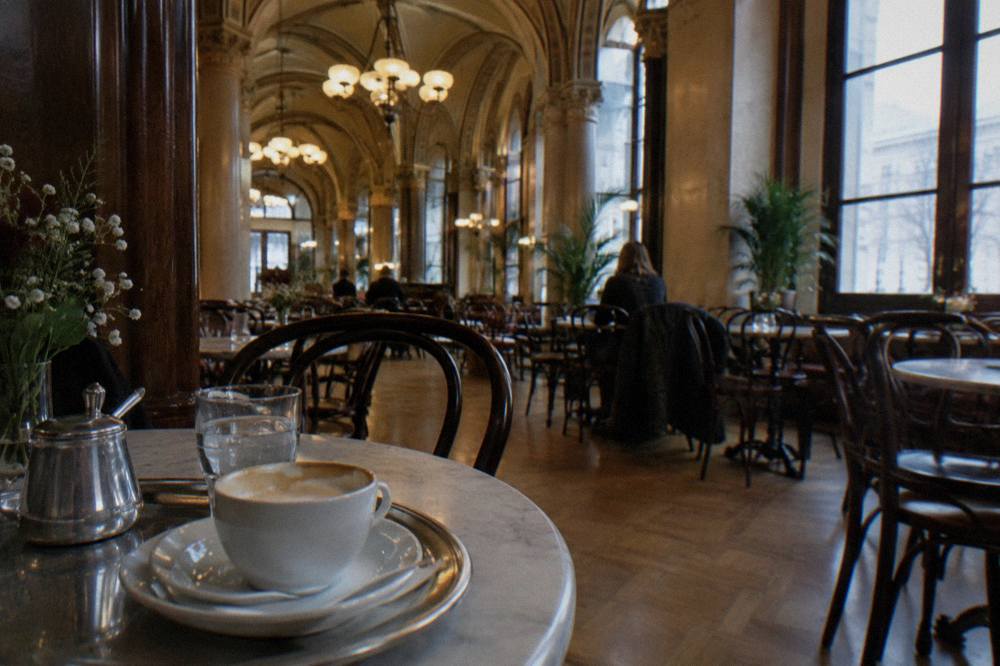
The café's reputation rests on three pillars. First, the room itself: the Ferstel palace, built as a bank and stock exchange, gives the café a Gothic Revival hall that few coffee houses anywhere can match. The architecture alone does an enormous amount of work: visitors who cannot name a single writer associated with the café still photograph the vaulting, the chandeliers and the newspaper holders, and those photographs are the café's best advertisement in every season. Second, the literary and political folklore: the historic coffee house was a second living room for writers, journalists and chess players, and Café Central's address in that story is retold in nearly every history of the city. Third, location: it sits directly on the edge of the old centre, so it catches almost every visitor walking between the Hofburg and the Ringstrasse.
None of that requires the café to serve the best cake in Vienna, and honestly, that has never been the claim. Its popularity is about atmosphere and myth, which is exactly why a renovation closure feels so disruptive to so many itineraries: people are not only missing a cake, they are missing a set. A traveller who has seen the hall in a dozen photographs arrives wanting to sit inside the photograph, and until the renovation finishes, that is simply not possible at Herrengasse 14.
There is a useful lesson hiding in the disruption. Vienna has hundreds of traditional coffee houses, a few dozen of them grand, and the culture they carry was recognised on Austria's national inventory of intangible cultural heritage in 2011, an honour that belongs to the institution rather than to any single address. The closure forces the question the guidebooks never ask: if the experience survives in other rooms, what exactly were you going to Café Central for? For many people the honest answer is the room, which is a perfectly good answer, but it points to a return trip after reopening rather than a substitute stop today.
If you want the atmosphere while the main hall is out of action, a guided walk through several working coffee houses covers the same tradition with more cake per hour. One option worth a look:
What Happened To Café Central In 2026?
Café Central closed for a major renovation on 16 March 2026 and plans to reopen in winter 2026, per current reports. Until then, the operator runs a pop-up café called Decentral at Freyung 3, roughly five minutes' walk from the original Herrengasse 14 address, serving the classic range: coffee specialities, cakes and savoury dishes in a smaller, less vaulted space.
The closure is the single most important practical fact for anyone adding Café Central to a 2026 itinerary. Travel advice written before March 2026 describes queues out the door at the Herrengasse entrance; that picture is out of date. What is true now is that the pop-up carries the demand, and reviews suggest the wait at Freyung 3 is the new wait. If your guidebook, blog post or saved TikTok dates from before the spring of 2026, treat every queue, hour and menu detail in it as suspect.
Reported prices at Decentral put a Melange at 5.40 euros and an Apfelstrudel at 5.90 euros. Those figures carry the usual caveat: menu prices move, and the café's own site is the place to confirm before you go. As a planning anchor, Decentral sits slightly below the grand-house cluster: classic houses such as Landtmann, Museum and Schwarzenberg charge around 6.90 euros for a Melange, and Demel lists its Melange at 6.90 euros too. On that evidence the pop-up is, somewhat unexpectedly, one of the cheaper ways to sit down for coffee in a historic setting this year.
If your heart is set on the vaulted hall itself, the honest advice is to schedule Vienna after the reopening. Winter 2026 in the reporting means roughly November to December, and openings of this scale slip. Check the café's own website before you build a day around it, and have a second house in your back pocket so the morning is not wasted if the date moves. Freyung, where the pop-up sits, is itself one of the more pleasant squares in the inner city, with the Austrian Museum of Folk Life and Folk Art and the Porcelain Museum within a short stroll, so a Decentral stop slots easily into a wider old-town walk.
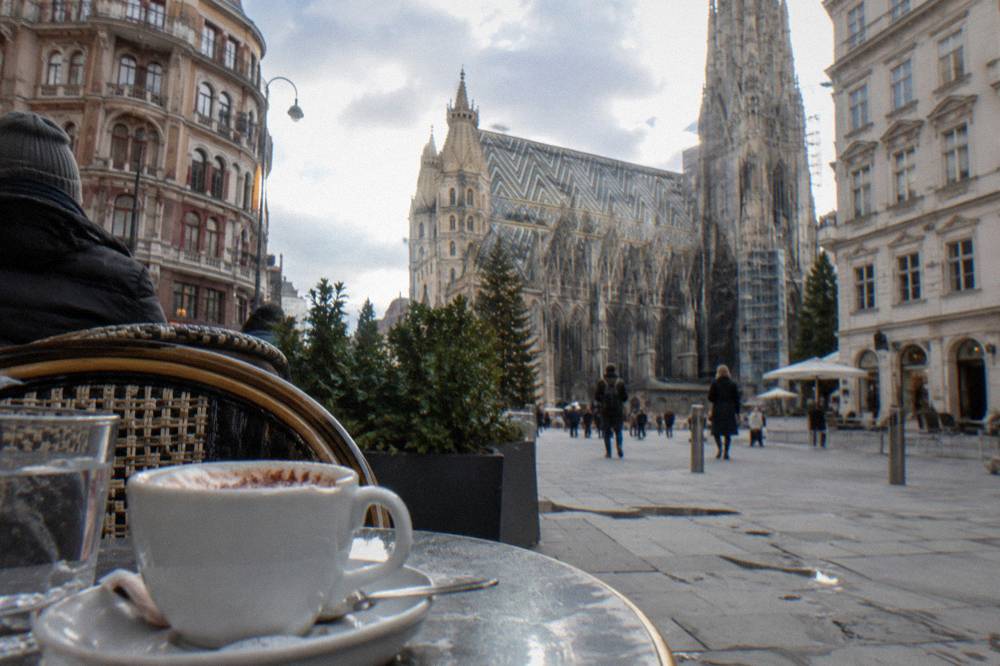
Where Does The Reputation Come From?
Café Central's reputation grew from the historic coffee house scene, when cafés functioned as offices, clubs and newspapers' homes for writers, chess players and political thinkers. The room's bank-palace grandeur, its chess tables and its location near the Hofburg made it a symbol of that era, and guidebooks have repeated the symbol ever since, regardless of who sits there today.
The careful phrasing matters here. Many articles recite a list of famous names supposedly resident at Café Central's tables, and those lists drift into legend. What can be said plainly is that the Viennese coffee house of that period was a genuinely working institution: cheap coffee, endless newspapers, marble-topped tables, and no pressure to leave, which made cafés the natural headquarters of the city's intellectual life. Café Central, housed in the Ferstel palace, was the most architecturally imposing of them, and architecture has a long memory: rooms outlive reputations, and the hall kept drawing visitors long after the chess players of the folklore had gone.
The chess detail is worth pausing on, because it explains the café's image better than any cake can. In the classic coffee house, a table, a newspaper rack and a glass of water bought you hours of occupation, and the café became the place where the city's arguments happened. That function, the café as public living room, is what the heritage listing actually protects, and it is still visible in any traditional house today: the mirrored walls, the bentwood chairs, the waiter who lets you sit with one Melange for two hours. Visitors sense it immediately, even if they cannot name it, and Café Central's hall communicated it more loudly than any other room in the city.
Coffee house culture as a whole was recognised on Austria's national inventory of intangible cultural heritage in 2011, and the Vienna Tourist Board cites it as UNESCO heritage on its own pages. That official recognition attaches to the institution, the ritual and the rooms, not to any single café, which is a useful correction: the tradition you are chasing at Café Central is alive in dozens of houses across the city. It also means the renovation closure, inconvenient as it is, interrupts a photograph rather than a tradition.
For the deeper background on the ritual itself, the newspaper holders, the water glass beside the coffee, the unhurried table, our Vienna coffee house culture guide walks through where the customs come from and what to order with confidence.
A good way to feel the tradition, rather than read about it, is with a guided walk that moves through several houses with a local explaining the stories as you go. One such tour runs three and a half hours, pairs pastries and small bites with the local history, and lists coffee house stops among its inclusions; the price is on the operator's listing.
Can You Still Get The Café Central Experience In 2026?
Yes, in three ways: visit the Decentral pop-up at Freyung 3 for the brand and the menu, walk into any of Vienna's other grand traditional houses for the same vaulted-room feeling, or book a guided coffee house tour that strings several historic cafés together with tastings. The culture is not concentrated in one address, and 2026 is a good year to prove that to yourself.
Start with the alternatives, because they are genuinely good. Café Landtmann, on the Ringstrasse by the Burgtheater, has the red-velvet grand version, takes reservations, and lists Sachertorte at 8.50 euros and Kaiserschmarrn at 15.70 euros. Café Demel, the former imperial confectioner near the Hofburg, generally does not take reservations and lists Sachertorte at 8.50 euros and Apfelstrudel at 9.50 euros. Café Sperl near the Naschmarkt is the worn-leather, billiard-table version, so check the menu there for current prices.
Here is how the reported October 2026 figures compare across the houses most visitors choose between:
| Coffee house | Melange | Sachertorte | Apfelstrudel | Kaiserschmarrn | Notes from 2026 reporting |
|---|---|---|---|---|---|
| Decentral (Café Central pop-up), Freyung 3 | 5.40 euros | Check the menu | 5.90 euros | Check the menu | Pop-up during renovation; original closed since 16 March 2026 |
| Café Landtmann | 6.90 euros | 8.50 euros | 8.20 euros | 15.70 euros | Accepts reservations; Ringstrasse location |
| Café Demel | 6.90 euros | 8.50 euros | 9.50 euros | 12.90 euros | Generally no reservations; typically shorter queues than Hotel Sacher |
| Hotel Sacher café | Check the menu | around 11.50 euros a slice | Check the menu | Check the menu | Sealed "Original" Sachertorte; queues reported longest in afternoons |
All prices are in euros; treat them as planning ranges and check the menu on site. Note the Sachertorte rivalry at the bottom of that table: Hotel Sacher holds the "Original" with its sealed chocolate disc and two apricot layers, while Demel serves its rival version with a triangular seal and one layer, a legal distinction that still stands. Our Sachertorte or Demel comparison goes deep on that feud.
The other route is a guided tour, which solves a different problem: it gets you seated, fed and briefed in houses you would otherwise hover outside of. A three-hour guided Viennese coffee house walk visits a series of traditional cafés with coffee and cake included as described on the listing, price stated on the booking page. There is also a shorter option, two and a half hours combining coffee, cake and chocolate stops, useful if your schedule only allows a morning.
Whichever way you go, keep two local customs in mind so nothing on the bill surprises you. A Gedeck, a cover charge of 2 to 5 euros per person in traditional venues, is legal only if it is printed on the menu, and tipping 5 to 10 percent at restaurants, or rounding up in coffee houses, is the standard ritual. For the full etiquette picture, including the tap-water quirk, see Vienna restaurant etiquette explained.
Timing shapes the visit too. Reports on the Sachertorte houses note that queues run longest in the afternoons, especially at Hotel Sacher, and recommend arriving early or after 16:00. The same logic applies to any famous café in peak season: a 9 a.m. table is a calmer table. And one quirk of Austrian law is worth knowing, since it shapes the room you sit in: gastronomy has been fully smoke-free indoors since 1 November 2019, so the historic halls are as clean-aired as they look in the photographs.
Is The Fame Justified, Or Should You Skip It?
For the room alone, the fame is justified: a Gothic Revival bank hall with a literary backstory is rare, and when Café Central reopens it will again be worth the walk. But as a place to eat, it competes with houses that are open now, often cheaper and often less crowded, so in 2026 the honest answer is to treat Café Central as a landmark to revisit, not the centerpiece of a food day.
Consider what a visitor actually experiences. At the original address, pre-closure, the trade-off was a spectacular room against a queue and a menu priced for the guidebook crowd. At Decentral, you get the kitchen and the brand in a modest space, which is a fair stop if you are already at Freyung but hardly a destination in itself. At Landtmann or Sperl, you get the full classic experience, today, without the construction story.
There is also a timing angle. Vienna's Christmas markets open across the city in mid-to-late November 2026, fifteen markets with 814 stalls in total per the City of Vienna's own announcement, and the Rathausplatz and Am Hof markets sit within an easy walk of both Herrengasse and Freyung. The Rathausplatz Christkindlmarkt runs 13 November to 26 December 2026 and Am Hof runs 13 to 23 December, so a December visit could plausibly pair a reopened Café Central with a market crawl, which is a better plan than standing in a November queue for a pop-up.
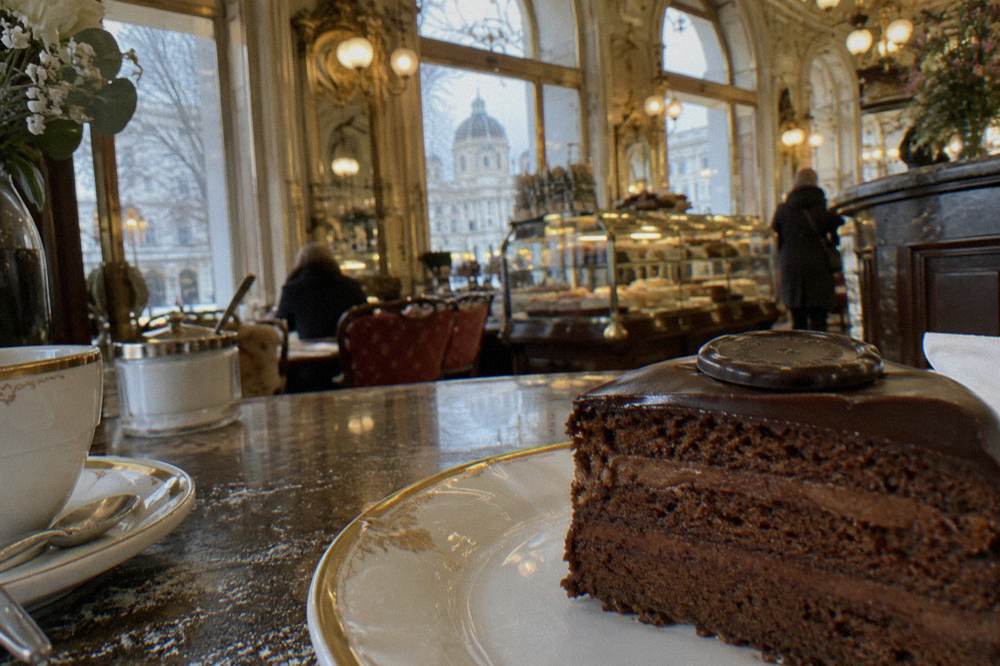
For context on how the other houses rank in character rather than fame, the best coffee houses in Vienna guide sorts them by what kind of visit you want, from chandelier-grand to worn and workmanlike. And if your interest in the café is really an interest in Viennese cake generally, the Vienna cake and pastry guide covers the wider repertoire, from Sachertorte and Apfelstrudel to the lesser-known tortes that never make the postcards.
When Will Café Central Reopen?
The reported plan is winter 2026, meaning roughly November or December, and reports describe it as a major renovation rather than a refresh. Treat that window as provisional: reopening dates for projects of this size slip, and the café's own site, not third-party guides, is the source to trust for the final date.
Until the doors open, plan around the pop-up. Decentral at Freyung 3 has been reported open daily from around 08:30 to 20:00, with the Melange at 5.40 euros and Apfelstrudel at 5.90 euros already noted above. Those hours are reported figures, so confirm before arranging a group around them.
One more date for coffee-minded visitors to hold onto: the Vienna Coffee Festival returns to Marx Halle on 10 to 12 September 2027, after the 2026 edition in September. It is the city's clearest signal that Vienna's coffee culture extends well beyond the historic houses, into a full roaster and specialty scene, and it makes a good anchor for an entirely different kind of coffee trip.
If you are using this site to plan the food side of the trip, Vienna Food Tours covers the rest: market walks, Heuriger wine taverns in the vineyard districts, and the cake-and-coffee tradition this article keeps circling back to. For the coffee house piece specifically, these guided options are the natural shortlist.
Common Questions About Café Central
Why Is Café Central Popular In Vienna?
Its setting inside a former bank palace near the Hofburg, its role in the city's literary and political folklore, and generations of guidebook repetition made it the most famous single address in Viennese coffee house culture. The tradition itself is shared across dozens of houses, which is worth remembering while the original room is closed for renovation.
Is Café Central Open In 2026?
No. It has been closed for major renovation since 16 March 2026, with reopening planned for winter 2026. A pop-up, Decentral, operates meanwhile at Freyung 3, a short walk from the Herrengasse 14 address.
Where Is The Decentral Pop-Up And What Does It Cost?
Decentral is at Freyung 3. Reported October 2026 menu prices put a Melange at 5.40 euros and an Apfelstrudel at 5.90 euros, with daily opening reported at around 08:30 to 20:00. Confirm current hours and prices on the café's own site.
Which Coffee Houses Are Good Alternatives While It Is Closed?
Café Landtmann on the Ringstrasse, Café Demel near the Hofburg and Café Sperl near the Naschmarkt are the usual substitutes. Landtmann accepts reservations; Demel generally does not. Reported 2026 prices put a Melange at 6.90 euros at both Landtmann and Demel.
Is Coffee House Culture Officially Recognised?
Yes, at national level. Viennese coffee house culture was added to Austria's national inventory of intangible cultural heritage in 2011, and the Vienna Tourist Board cites it as UNESCO heritage on its pages. The recognition covers the institution and its rituals, not one café.
Can A Tour Replace A Café Central Visit?
A guided coffee house walk visits several traditional houses with coffee, cake and the stories included as described on the listing, and it keeps working through the renovation. The three and a half hour coffee house walk with pastries and local stories, the three hour guided coffee house tour and the two and a half hour coffee, cake and chocolate tour are the natural options; prices are on the operators' listings.