What Cake Is Vienna Famous For?
Vienna's famous cakes explained: Sachertorte, Apfelstrudel, Kaiserschmarrn and more, with reported 2026 prices at the classic coffee houses and how to taste them on a guided cake and chocolate walk.
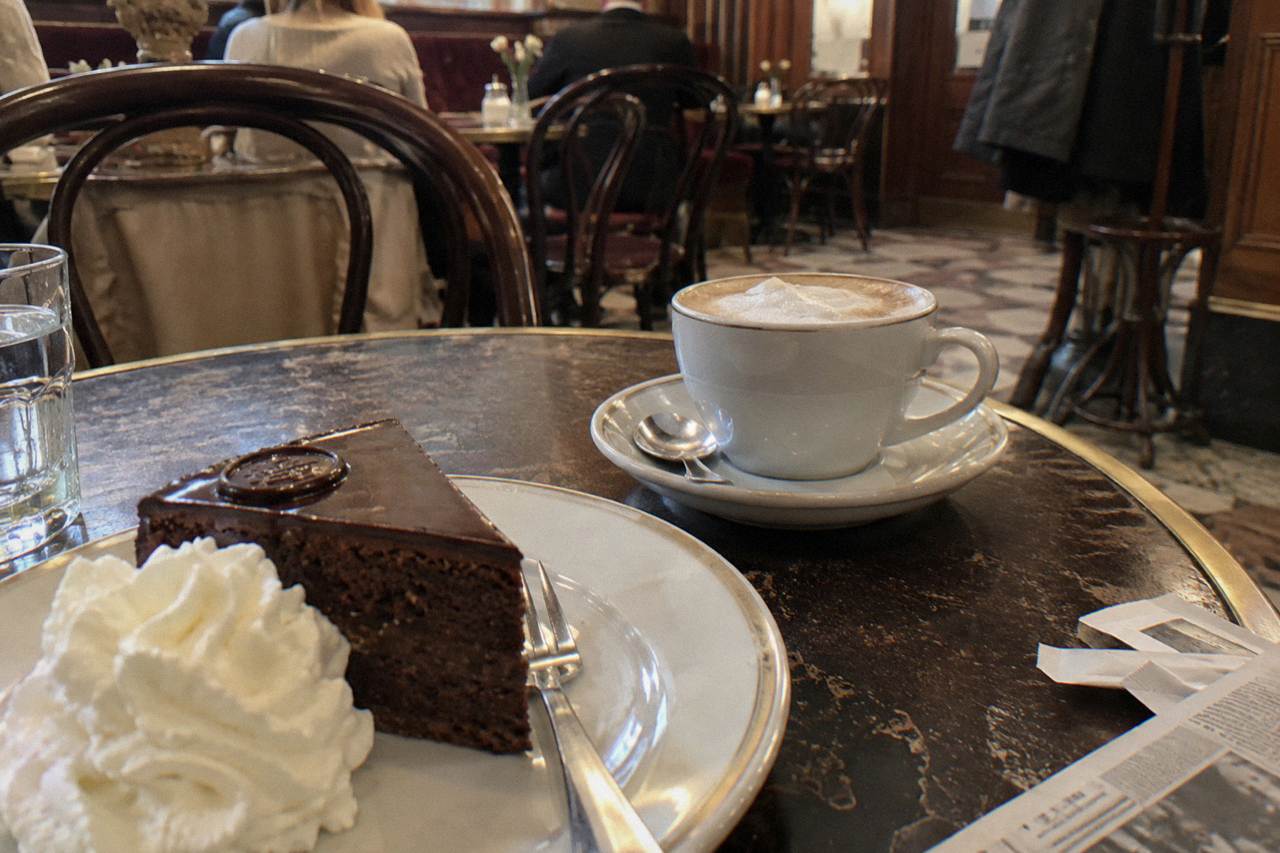
Vienna is famous above all for the Sachertorte, a dense chocolate cake with apricot jam layers and a dark chocolate glaze, served with unsweetened whipped cream. Close behind come Apfelstrudel, the warm apple strudel of Habsburg kitchens, and Kaiserschmarrn, a torn caramelised pancake. All three belong to the city's coffee house culture, recognised as intangible cultural heritage in Austria since 2011.
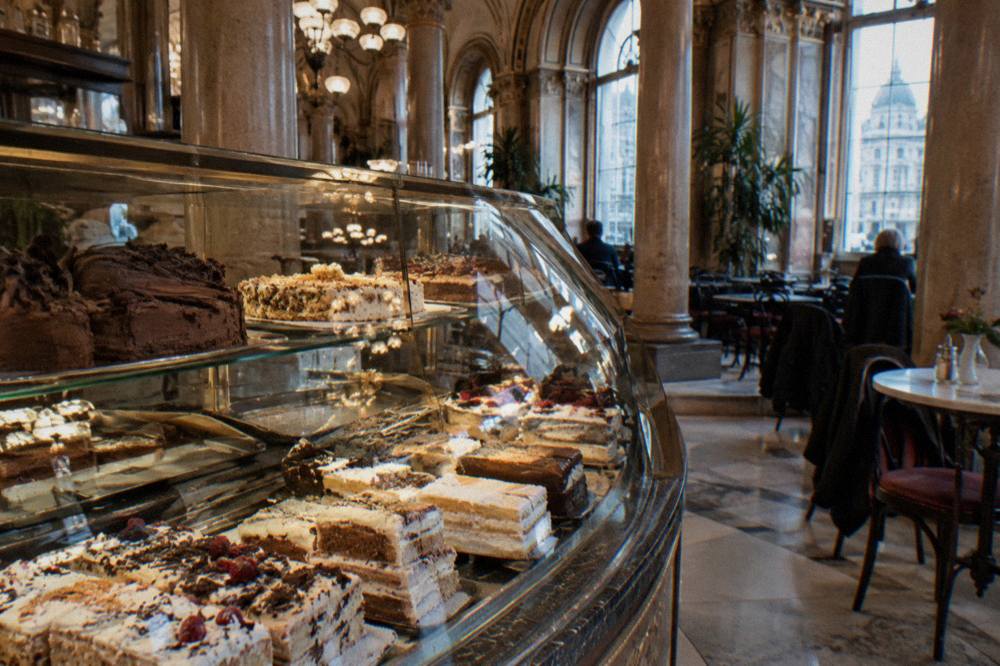
That is the short answer, and nearly every visitor who lands in Vienna asks it within a day of arriving, usually while standing in front of a glass display case holding seven identical-looking chocolate cakes and wondering which one to point at. The longer answer is that Vienna does not really have one famous cake, it has a cake institution. The coffee house is the frame, the cake is the picture, and ordering one without the other is, in local eyes, only half the experience.
The Sachertorte is the cake that travels. It has a name, a legal history, a sealed cardboard box and a rival claimant, and we will get to all of that below. But order like a local and the rotation is wider: Apfelstrudel in the afternoon, Kaiserschmarrn when you are hungrier than you admitted, a Gugelhupf slice if the waiter still makes them, and a Dobostorte or Esterhazytorte if the display case leans Hungarian, which many classic houses do, a leftover of the empire's pastry vocabulary.
The question also has a seasonal answer worth knowing before you plan. In the weeks of the Christmas markets, from mid November through Christmas Eve, the cake tables shift toward punch and stollen and the stalls around Rathausplatz and Schönbrunn take over the sweet-eating hours, with 15 markets and 814 stalls confirmed for 2026 by the City of Vienna press release. In spring and early summer the coffee houses reclaim the stage. Cake culture here is a year-round institution, but the setting you eat it in changes with the calendar, and a first visit in December will taste different from one in May.
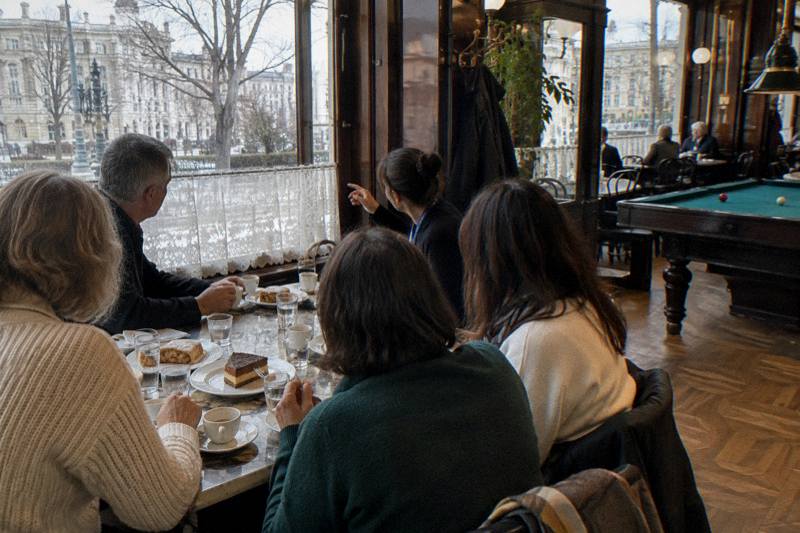
If you want the cakes explained while you eat them rather than decoded from a menu, a guided cake walk does exactly that. The 2.5-hour Viennese coffee, cake and chocolate tour moves through coffee house and chocolate stops with a guide who covers the history between bites, and the pairing below shows two other formats: a longer coffee house walk with pastries and local stories, and a hands-on chocolate workshop.
Sachertorte: The Chocolate Cake With A Lawsuit Behind It
The Sachertorte was created in Vienna by the apprentice Franz Sacher for Prince Metternich's household, and the recipe made his family's name. It is a dense chocolate sponge, a thin apricot jam layer, and a glossy dark glaze, served with a side of whipped cream. Hotel Sacher and the confectioner Demel later fought a long court battle over who may sell the "Original".
That last sentence is not trivia garnish, it is the reason the cake has two versions in Vienna and why asking for "a Sachertorte" gets you a follow-up question in some houses. Hotel Sacher holds the legal right to the seal marked "Original Sachertorte", with two layers of apricot jam between the sponge. Demel, the imperial confectioner a few streets away, makes its rival with a single apricot layer under the glaze, marked with a triangular seal. The dispute ran through the Austrian courts for years and ended in a split decision that both houses still market around today, each selling its cake as the true inheritor of the apprentice's recipe.
Which is better is a permanent Viennese argument and no honest article settles it. The Sacher version is denser and sweeter; the Demel version is lighter, with more sponge and less jam. Cake tourists should treat the comparison as the point: eating both, a few streets apart, is one of the better two hours you can spend in the first district. Expect queues at both, and expect them to be longer at Hotel Sacher in the afternoon, a pattern 2026 guidance notes consistently. Arriving early or after 16:00 is the standard advice, and it holds for weekends above all.
What should a first-timer actually know before ordering? Three things. First, the cake is deliberately not molten or fudgy, it is a firm, dry-ish sponge meant to be eaten with the cream, and if it strikes you as dry, that is the cake working as designed rather than a defect. Second, the whipped cream on the side is not optional decoration, it is the intended counterweight to the glaze. Third, the price gap between the two houses is real but small; both sit in the classic-house band rather than the bakery band, and we print the reported numbers further down.
One more note for the cake-obsessed: the "Original" seal travels. Hotel Sacher sells the boxed whole cake to take home, sealed and packed for journeys, and that boxed version is what many visitors actually taste first, often as a gift rather than a table order. The boxed and the sliced experience are not identical, the boxed cake is denser still and wants that cream even more, so judge the house on the plate, not the parcel.
Apfelstrudel And Kaiserschmarrn: The Other Two Crown Jewels
Apfelstrudel is Vienna's warm answer to the Sachertorte: pulled paper-thin pastry wrapped around spiced apples, currants and breadcrumbs, served with vanilla sauce or cream. Kaiserschmarrn, technically a torn pancake rather than a cake, is caramelised, raisin-studded and dusted with icing sugar. Both appear on nearly every classic coffee house menu, and both are best ordered fresh rather than from the case.
The strudel is the older story. It came to Vienna through the Habsburg empire's tangled pastry traffic with its eastern and Balkan neighbours, picked up in the imperial kitchens and turned into a household standard that now sits on virtually every coffee house card in the city. What you are eating in a good Viennese coffee house is a specific discipline: the dough is stretched by hand until it is translucent before the filling goes on, and the skill of the kitchen shows in whether that survives the oven. A greasy, bready strudel means the house buys it in, and a good one should arrive warm with the pastry in distinct shattering layers.
Kaiserschmarrn, so the story goes, was salvaged from a torn pancake and rescued by Kaiser Franz Joseph's approval, hence the name, "the emperor's mishmash". Whatever the truth of the anecdote, and Austrians themselves tell it several ways, the dish is now the thing locals order when they want something closer to a meal than a slice. It arrives in a pan or a generous plate, caramelised at the edges, and it is meant to be shared or to replace lunch entirely. It also sits awkwardly between categories, sold as a dessert, sized as a main course, priced like a cake in some houses and like a dish in others, so check the menu before assuming.
There is a practical ordering rhythm worth knowing. Sachertorte sits happily in a display case and loses little; strudel and Kaiserschmarrn both decay with waiting. If a menu says the strudel comes warm from the oven, order it. If the Kaiserschmarrn is made to order, expect a wait of ten to fifteen minutes and accept it as the price of the good version. The cakes that tolerate a display case, Sachertorte, Esterhazytorte, Dobostorte slices and the Gugelhupf, are the safe afternoon picks when the kitchen is quiet.
For visitors who want this layer of the culture unpacked in person, the coffee house walk with pastries and local stories spends its stops on exactly these houses, and a guide who knows which kitchen makes its strudel fresh is worth more than any listicle.
The Rest Of The Display Case: Esterhazy, Dobos And Gugelhupf
Beyond the famous three, Vienna's display cases hold Esterhazytorte, a hazelnut-almond torte with a decorated glaze; Dobostorte, a Hungarian layer cake with a caramel top; and the Gugelhupf, a marbled ring cake served in plain slices. None has the Sachertorte's fame or its court history, but all three appear across the classic houses and cost less than the marquee slices.
The Esterhazytorte is the connoisseur's pick, hazelnut and almond cream layered between thin sponge rounds and finished with the characteristic feathered chocolate pattern on top, and it is the slice that Viennese regulars often choose when the tourists are ordering the chocolate cake. The Dobostorte arrived from Budapest and stayed, its hard caramel lid protecting the buttercream layers below, a design that was originally about surviving transport and now reads as pure theatre. The Gugelhupf is the plainest of the set, a marble ring loaf cut into wedges, and it is the cake most likely to be sold out by late afternoon in a well-run house, which tells you something about who is actually eating it.
Ordering from this second tier has two advantages. These slices tend to sit nearer the bakery end of the price card than the marquee end, and they rotate with the kitchen rather than being engineered for the display case, so what is on offer reflects what the house made that morning. A waiter asked which of the three is freshest will usually answer honestly, and that answer is worth more than any fixed ordering rule. If the goal is to eat like a resident rather than a pilgrim, this is the tier to order from.
Where To Eat The Cakes: The Classic Houses And Their Reported Prices
The famous addresses are Café Landtmann, Café Demel, Hotel Sacher's cafe and Café Sperl, with Café Central closed for renovation since 16 March 2026 and its pop-up, Decentral, running at Freyung 3 in the meantime. Reported 2026 prices put a Sachertorte slice between 8.50 and 11.50 euros and a Kaiserschmarrn between 12.90 and 15.70 euros at the named houses; menus change, so check on site.
The table below gathers the reported 2026 menu figures for the houses where they were verified. These are euro prices at the venues themselves, not tour prices, and they are reported menu data rather than fixed facts: coffee house menus move, and the only number that binds is the one you read on the card in front of you.
| Venue | Melange | Sachertorte slice | Apfelstrudel | Kaiserschmarrn |
|---|---|---|---|---|
| Hotel Sacher Cafe | Check the menu | 11.50 euros (reported) | not on the verified list | not on the verified list |
| Café Demel | 6.90 euros | 8.50 euros | 9.50 euros | 12.90 euros |
| Café Landtmann | 6.90 euros | 8.50 euros | 8.20 euros | 15.70 euros |
| Decentral pop-up (Central's stand-in) | 5.40 euros | not on the verified list | 5.90 euros | not on the verified list |
Two readings of that table are worth pulling out. First, the Melange, Vienna's signature coffee, clusters at around 6.90 euros across the classic houses, so the coffee is a real line item, not a rounding error, when you plan a cake afternoon. Second, the Sachertorte spread between Demel and Hotel Sacher is around three euros a slice, which is small enough that choosing by cake philosophy rather than price is entirely reasonable. A Sacher-and-Melange sitting for two at the classic houses lands comfortably above thirty euros before anything else is ordered, which is the honest budget line for the full ritual. For the full picture of what the coffee side of the ritual costs, our breakdown of Viennese coffee house prices walks through cover charges, tipping, and whether a guided coffee house tour pays off.
Café Central deserves its own note because it is on so many itineraries. The house at Herrengasse 14 has been closed for major renovation since 16 March 2026, with reopening planned for winter 2026, and the pop-up Decentral is operating daily at Freyung 3 meanwhile, with a Melange reported at 5.40 euros and an Apfelstrudel at 5.90 euros. Confirm on the cafe's own site before you plan the visit around it. For Café Sperl's current cake prices, check the menu or board in person.
Practical etiquette rounds out the visit. Landtmann accepts reservations; Demel generally does not, per 2026 guides. Tipping in coffee houses runs to rounding up or half a euro to one euro, and a Gedeck cover charge of 2 to 5 euros per person can appear on the bill in traditional venues, legally only if it is printed on the menu. Our fuller rundown of habits covers both in Vienna restaurant etiquette, Gedeck and tap water, and the cake-by-cake overview continues in the Vienna cake and pastry guide.
Why Cake Never Comes Alone: The Coffee House Ritual
Viennese cake culture is inseparable from the coffee house, an institution recognised on Austria's national inventory of intangible cultural heritage in 2011 and cited by the Vienna Tourist Board as UNESCO heritage. The ritual matters as much as the slice: a Melange or a kleiner Brauner, the newspaper on a stick, the marble table, and no pressure to leave. Cake ordered standing at a counter is a snack; cake ordered at a table is an afternoon. If you're unsure what to order alongside your slice, this guide to Vienna's coffee house drinks and their rituals explains the Melange, the Einspaenner, and why every cup arrives with a glass of water.
That is not romantic padding, it is the actual mechanism that made the cakes famous. The classic Viennese coffee house sells time as much as pastry, and the cakes evolved to fit long sittings: dense, keepable slices that survive a display case and pair with bitter coffee. The Sachertorte is the purest expression of this, a cake engineered to be cut clean hours after glazing. The Vienna Food Tours site exists, in large part, because this pairing of cake and house has become the single most requested food experience in the city.
The heritage status has a precise wording that is worth getting right. Coffee house culture was inscribed on Austria's national inventory of intangible cultural heritage in 2011, within the UNESCO framework, and the Vienna Tourist Board cites it as UNESCO heritage alongside the Viennese sausage stand and Heuriger culture. The safe claim stops there; it is the national inventory, not the global representative list, and articles that blur the two are repeating a shortcut rather than a fact. The UNESCO framework is described on the Austrian UNESCO Commission's inventory page.
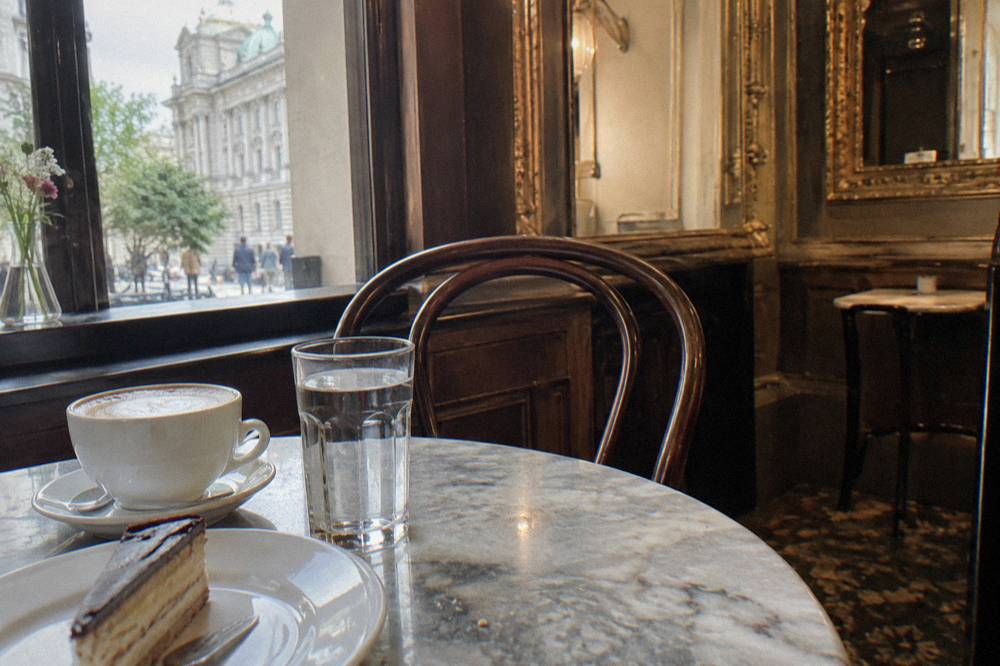
A few habits make the ritual work for visitors. Order the coffee and cake together; the waiter brings them as a set and nothing needs signing or explaining. The glass of water on the saucer stays refilled in proper houses, an old courtesy signal. Stay as long as you like, that is the point of the institution, and note that Austrian gastronomy has been smoke-free indoors since 1 November 2019, per the official business service portal, so the marble rooms are as pleasant for non-smokers as anywhere in Europe. If a specific famous house is the goal, the practical details, queues, reservations and closures, are covered in the question-by-question breakdown at Sachertorte or Demel: where to eat the cake.
Guided Ways To Eat The Cakes: Tours And Workshops
Three bookable formats cover Vienna's cake culture: a short coffee, cake and chocolate walk of about 2.5 hours; a longer coffee house tour of about 3.5 hours built on pastries and local stories; and a one-hour chocolate workshop in the chocolate museum with tasting. Prices, inclusions and meeting points for each are on the operators' booking pages, since these change more often than cafe menus do.
The walk format suits first-time visitors with limited time and a long list. A guided cake-and-coffee circuit strings together several houses and a chocolate stop, so the Sachertorte-versus-Demel comparison and the strudel stop happen in one afternoon with the history supplied between them, and the 2.5-hour coffee, cake and chocolate tour is built exactly on that pattern. The longer coffee house format goes deeper into the houses themselves, their writers and regulars, with pastry stops along the way, and suits a second visit or a slower day. If your slice on the walk tastes drier than expected, what Sachertorte is supposed to taste like explains why that texture is deliberate and what a proper piece should offer.
The workshop format flips the relationship: instead of eating the finished cakes, you work with chocolate directly and taste as you go, which lands better with families and with travellers who have already done the coffee house rounds once. It is also the most weather-proof option in the set, an hour indoors with a clear takeaway. What none of these formats does is promise a specific cake at a specific house, stops vary with opening hours and group size, so treat the itinerary described on the booking page as the plan of record and message the operator with dietary needs before booking.
For anyone planning around the festival calendar, the coffee angle has its own date: the Vienna Coffee Festival ran 11 to 13 September 2026 at Marx Halle with admission reported at around 14 to 20 euros, and the 2027 edition is already scheduled for 10 to 12 September, listed on the official festival page carried by the Vienna Tourist Board. It is a coffee event rather than a cake event, but the roasters and pastry makers overlap heavily, and it is the one date on the calendar where the whole specialty scene is in one hall.
Common Questions About Vienna Cake
What Cake Is Vienna Famous For?
The Sachertorte, a dense chocolate sponge with apricot jam and a dark glaze, served with whipped cream. Apfelstrudel and Kaiserschmarrn share the podium, and all three belong to the coffee house tradition rather than to bakeries.
Why Is The Sachertorte Dry?
By design. The original is a firm, keepable sponge meant to balance the sweet glaze when eaten with the unsweetened whipped cream served alongside. Without the cream it reads dry, so use it.
What Is The Difference Between Sacher And Demel Versions?
Hotel Sacher sells the "Original" with a seal and two apricot layers; Demel serves its rival with a triangular seal and a single apricot layer. The split comes from a long court dispute both houses still market.
How Much Does A Slice Of Cake Cost In Vienna?
Reported 2026 figures put a Sachertorte slice at 8.50 euros at Demel and Landtmann and 11.50 euros at Hotel Sacher's cafe, with Kaiserschmarrn between 12.90 and 15.70 euros at the named houses. Menus change, so check the card on site.
Is Café Central Open?
It has been closed for major renovation since 16 March 2026, with reopening planned for winter 2026, and the pop-up Decentral operates at Freyung 3 meanwhile. Confirm on the cafe's own site before visiting.
Can You Book A Tour That Includes The Cakes?
Yes. Guided formats include a 2.5-hour coffee, cake and chocolate walk, a longer coffee house tour built on pastries, and a chocolate workshop with tasting. Inclusions and meeting points are on each booking page, and dietary needs should be messaged to the operator before booking.