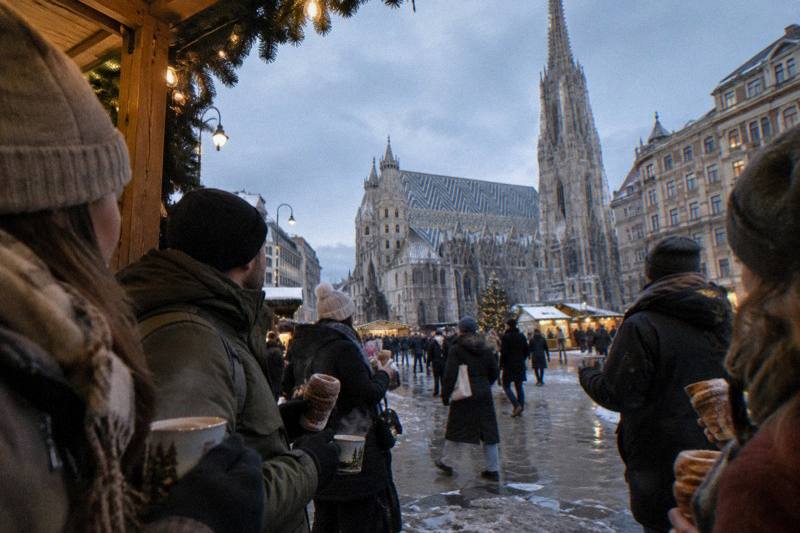
Is Vienna Christmas Market Worth It?
A direct answer to whether Vienna's Christmas markets are worth your time and money, covering the season dates, which market suits which visitor, and when a guided food tour earns its price.
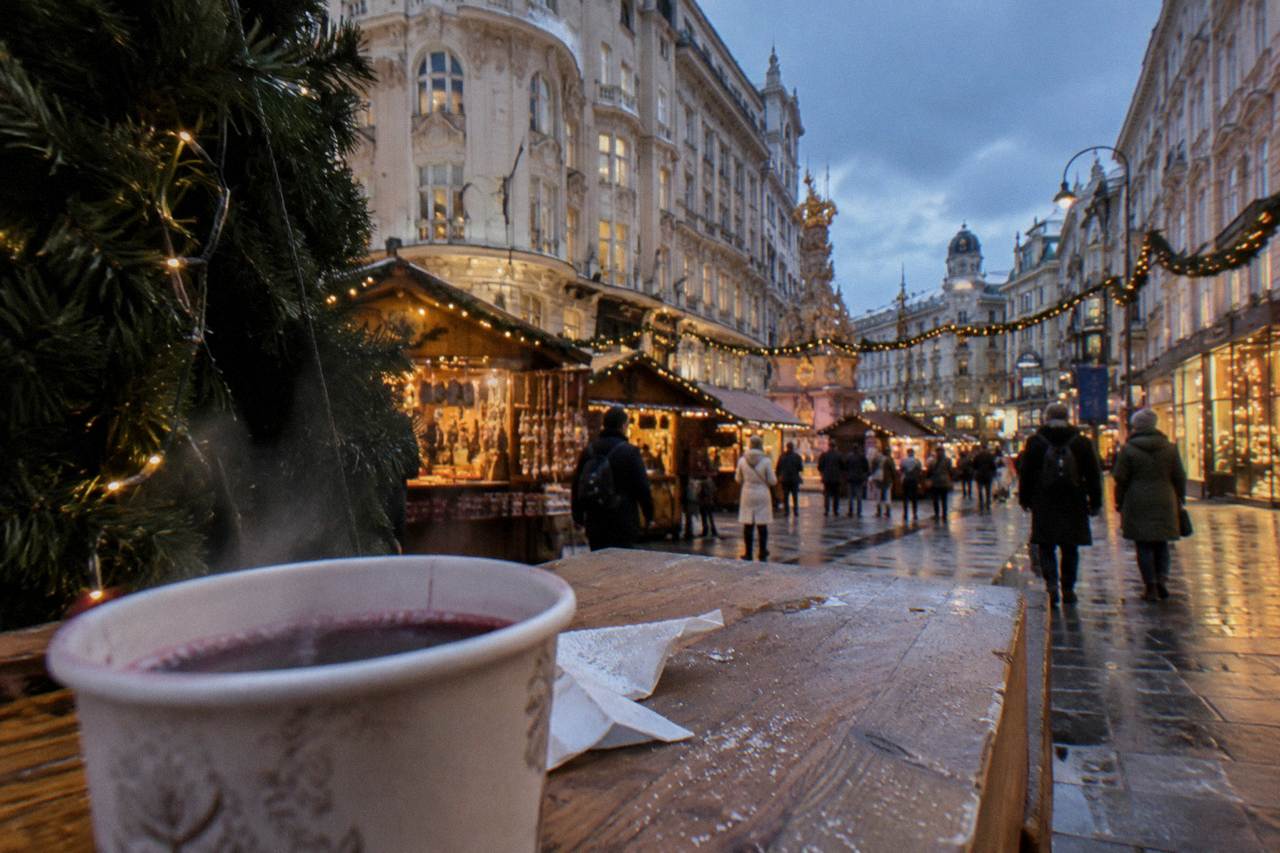
Yes, for most visitors the Vienna Christmas markets are absolutely worth it. The experience rewards you most when you arrive hungry, because food lovers get the best of the deal, and the chance to eat and drink your way through the festive stalls is what makes a visit genuinely worthwhile. The city will host 15 markets with 814 stalls in 2026, spread across squares from Rathausplatz to Schönbrunn, running from 6 November to 31 December. Entry to every market is free, so you pay only for what you eat, drink and carry home. The real value question is therefore not whether to go but what you do once you are standing inside the lights, and that is a question of market choice, timing and appetite. If you're left wondering whether the city justifies a trip beyond the festive weeks, our honest answer to whether Vienna is worth visiting weighs the food, the real downsides and the best timing for a stay.
The honest case for worth starts with scale and setting. Vienna does not stage one market; it stages a season across the whole city, and the settings are the kind other cities would charge admission for: the neo-Gothic Rathaus, the baroque forecourt of Schönbrunn Palace, the narrow Biedermeier lanes of Spittelberg. A mug of punch drunk under the Rathous lights on a December evening is a genuinely memorable thing, and it costs a few euros. The case against is equally honest: the biggest markets are crowded, the craft stalls repeat themselves from market to market, and the food at the most tourist-heavy stands can be indifferent. The gap between a good visit and a mediocre one is mostly about where you go, when, and whether anyone shows you the stalls worth stopping at. The same goes for the food, and the Vienna street food guide names the stands worth your euros and the ones to walk past.
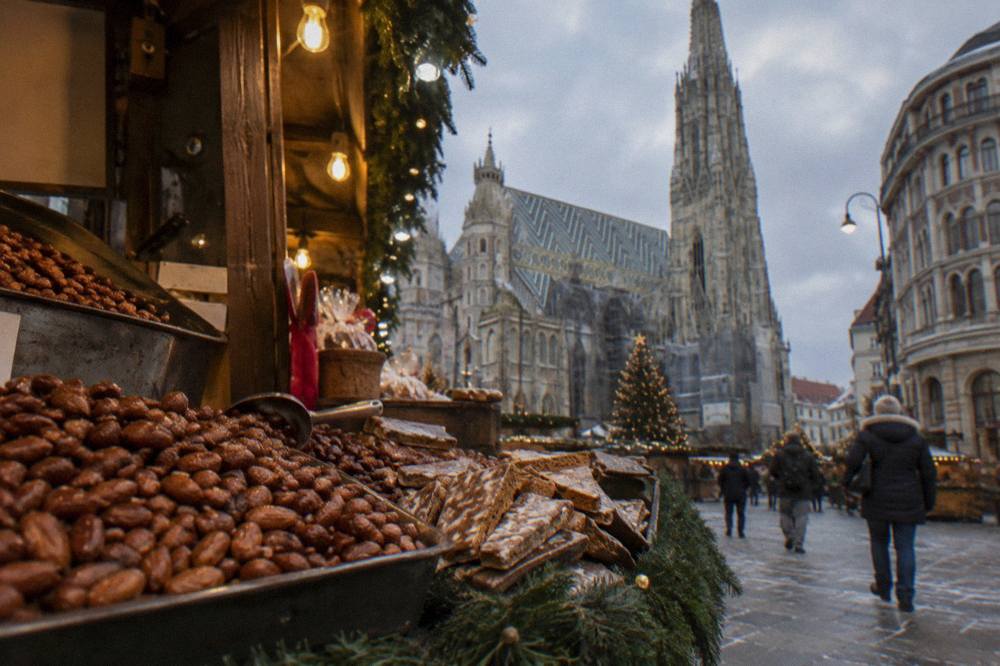
For a food-focused traveller, the markets are a concentrated version of Viennese winter eating: grilled sausages, Käsekrainer, roast chestnuts, langos, and the small movable feast of the punch and gluhwein stands. This is the same street-food culture described in the Vienna street food and Wurstelstand guide, moved outdoors and lit with a thousand fairy lights. If you already plan to eat your way through Vienna, December simply adds a festive layer on top of a city that eats well in every month of the year.
A quick framing for the rest of this article: the facts below come from the City of Vienna's own announcements and from the operator listings themselves. For food and punch prices at the stalls, your best bet is to check the menu or the board at each stall in person. What this piece covers in full: the dates, the hours, the stall counts, and what the guided tours actually include, all of which is enough to plan a very good December evening.
When Do The Vienna Christmas Markets Open In 2026?
Most of Vienna's headline Christmas markets open in November 2026. Schönbrunn is first, opening its stalls on 6 November, the major Rathausplatz Christkindlmarkt follows from 13 November, and Belvedere welcomes visitors from 20 November, with six of the headline markets all opening across that single month. Most close between 23 and 26 December, though the Belvedere market runs to 31 December. The city counts 15 markets and 814 stalls in total across the season, according to the official City of Vienna press release. Entry is free at all of them, and no ticket is needed to walk in.
The timing matters more than visitors expect. Before about 15 November, only Schönbrunn is running, so an early-November trip is really a one-market trip. From the third week of November the city fills up, and the weekend after that is peak atmosphere and peak crowds together. Christmas Eve afternoon is the odd window: the Rathausplatz market closes early at 18:30 on 24 December, and several markets pack up entirely by the 23rd, so the days between Christmas and New Year belong mainly to Rathausplatz (to 26 December) and Belvedere (to 31 December). If your trip straddles the 26th, plan accordingly, because the city thins out fast.
| Market | 2026 dates | Hours | Notes |
|---|---|---|---|
| Schönbrunn Weihnachtsmarkt | 6 Nov to 24 Dec | Daily 10:00 to 21:00; 24 Dec 10:00 to 16:00 | Earliest opener, baroque palace setting |
| Rathausplatz Christkindlmarkt | 13 Nov to 26 Dec | Daily 10:00 to 22:00; 24 Dec closes 18:30 | Largest, most crowded |
| Spittelberg | 13 Nov to 23 Dec | Mon to Fri 14:00 to 21:30; weekends 11:00 to 21:30 | Lanes, crafts, more local feel |
| Am Hof | 13 Nov to 23 Dec | Mon to Thu 11:00, Fri to Sun from 10:00, to 21:00 or 22:00 | Central, mixed crafts and food |
| Belvedere | 20 Nov to 31 Dec | Mon to Fri 11:00 to 21:00; weekends 10:00 to 23:00 | Runs past Christmas |
| Art Advent, Karlsplatz | 13 Nov to 23 Dec | Daily 12:00 to 20:00, gastronomy to 21:00 | Emphasis on art and craft stalls |
One December wrinkle worth knowing before you plan a market-plus-flea-market day: the Saturday flea market at Naschmarkt, normally running from about 6:30 to 15:00, is restricted on 12 and 19 December because of a Christmas tree market on the same site, and there is no flea market at all on 25 and 26 December. The details are in the Naschmarkt Saturday flea market guide, and the underlying hours are published by the city at wien.gv.at. The Naschmarkt food stalls themselves keep their regular season alongside all of this, so the market district remains a strong pre-Christmas stop.
Which Vienna Christmas Market Should You Visit?
Visit Rathausplatz or Schönbrunn for the headline atmosphere, then balance it with a smaller market such as Spittelberg or Am Hof, where the stalls feel less mass-produced and the food queues move faster. Pairing one big market with one smaller one gives you both the grand Christmas spectacle and a slower, more handmade feel. Trying to visit five markets in a day is the classic mistake: the stalls blur together, you eat badly at whichever stand was nearest when hunger hit, and you remember lights rather than tastes. Two well-chosen markets, given a full evening each, beat a breathless marathon every time, and leave room for a proper sit-down stop in between.
Rathausplatz is the postcard. It has the biggest tree, the ice rink in front of the Rathaus, and the densest concentration of food and punch stands anywhere in the city. It is also the most crowded, most especially on weekend evenings after dark. Schönbrunn, opening a week earlier, trades some of that intensity for a palace backdrop and a slightly more relaxed pace, and its setting next to the palace gardens makes it the natural pick if you are combining the market with sightseeing. Spittelberg is the antidote to both: a network of narrow lanes in the 7th district where the stalls sit between restored Biedermeier houses, and where the stands open earlier on weekends, at 11:00 rather than 14:00, giving you a longer window to browse before the evening rush builds.
For a food-focused visitor, the practical answer is that the market matters less than the stops inside it. A guided walk solves that problem directly, and one listing on this site is built exactly for the season: the Vienna Christmas Market Food and Drinks Tour, a 4-hour guided walk through the festive stalls with food and drinks along the way. The current price and the exact inclusions are on the operator's booking page. What a guide adds at the markets is specific: someone who knows which sausage stand grills to order, which punch stand pours the good stuff, and how the stalls differ from one square to the next.
If a guided festive walk appeals, it is worth booking ahead for December weekends: the small-group formats fill first in the two weeks around Christmas, and the free-cancellation terms on the booking page mean an early booking carries little risk. Check availability before locking in your dates, since the tour follows the market season and only runs while the stalls are up. Travellers who prefer to decide on the ground often use the first evening as reconnaissance and book a guided walk for the second, which is a sensible rhythm for a three-day visit.
What Does The Guided Christmas Food And Drinks Tour Include?
The Vienna Christmas Market Food and Drinks Tour runs 4 hours with a guide leading you through the festive stands, with food and drinks included as the listing describes; the exact tasting lineup and price are on the booking page, not published here. It sits in the food-walks category, the same family as the city's standard food walks, but with the route and the stops tuned to the Christmas season. That seasonal tuning is the whole point of booking it: a regular food walk shows you the year-round city, this one shows you the few weeks of it that disappear on 26 December. If you'd rather taste your way through Vienna on a normal week of the year, our guide to whether the Naschmarkt is worth visiting covers the city's year-round market scene and its Saturday flea market.
Comparing it against the non-festive alternatives is the fair way to decide. The long option in the same category is the Vienna Food Tour covering coffeehouses, markets, lunch and street food, at 5 hours 30 minutes the most complete eating day among the tours compared here. It does not depend on the Christmas season, so it works identically in May or December, and it digs into the indoor institutions, the coffee houses and the market halls, that carry the city's food identity all year. The coffee-and-cake alternative is a different appetite entirely: the 2.5-hour Viennese coffee, cake and chocolate tour, which pairs naturally with a cold afternoon when you want warmth and Sachertorte more than sausage smoke.
A practical December pairing that works well: a market walk in the late afternoon as the lights come on, then a coffee house afterward to thaw out. Vienna's coffee house culture is recognised on Austria's national inventory of intangible cultural heritage and cited by the Vienna Tourist Board as UNESCO heritage, and in December the classic houses are at their best, all velvet, newspapers and steam-fogged windows. One caution from the current facts: Café Central has been closed for major renovation since 16 March 2026, with a reopening planned for winter 2026 and a pop-up, Decentral, operating at Freyung 3 meanwhile; confirm on the cafe's own site before you plan a visit. The wider scene is covered in the best coffee houses in Vienna guide, which lists houses that take reservations and houses that do not, a distinction that matters in December.
How Much Does A Day At The Markets Cost?
Entry to all 15 markets is free, so a day costs exactly what you spend at the stalls, plus whatever a guided tour adds if you book one. The honest budgeting advice is that a market day is a pay-as-you-go affair: you can spend an evening on one punch and a bag of chestnuts, or run up a full dinner's worth across five stands. Check prices at the stand before ordering, since nothing is standardized across 814 stalls, and the deposit on the punch mug is returned when you hand it back.
Two verified cost facts help frame a December trip. Vienna's tourist tax, the Ortstaxe, stands at 5 percent of the accommodation base and rises to 8 percent from 1 July 2027, which matters if you are booking a hotel across the season boundary. And in the restaurants around the markets, the traditional cover charge, the Gedeck, runs a reported 2 to 5 euros per person and is only legal if listed on the menu, a custom explained in full in the restaurant etiquette and Gedeck guide. Tap water, too, may be charged if it is on the menu; a 2026 sample of 30 Vienna venues found 23 charged for it, often 0.80 to 3.60 euros per half litre, which is worth knowing before you order water with your schnitzel.
| Cost item | What is verified | Where it applies |
|---|---|---|
| Market entry | Free at all 15 markets | City-wide, whole season |
| Guided festive walk | From $139 per person; 4 hours, food and drinks included | Christmas market tour |
| Long food walk | From $150 per person; 5 hours 30 minutes | Coffeehouses, markets, lunch, street food |
| Coffee and cake tour | From $78 per person; 2.5 hours | Coffee houses and chocolatiers |
| Gedeck cover charge | Reported 2 to 5 euros, only if on the menu | Traditional restaurants |
| Tourist tax | 5 percent now, 8 percent from 1 July 2027 | Accommodation bookings |
The guided-tour question is a value judgment rather than a math problem. A guide costs money but converts a random evening of stalls into an edited one, and on the food-walk side the inclusions, the tastings and drinks, replace money you would have spent at the stands anyway. For a first visit of two or three days in December, one guided walk plus one self-guided evening is a defensible split. The trade-offs between morning, evening and guided formats are laid out in the which Vienna food walk should you book guide, which walks through the same decision for the rest of the year.
What Food And Drink Should You Try At The Markets?
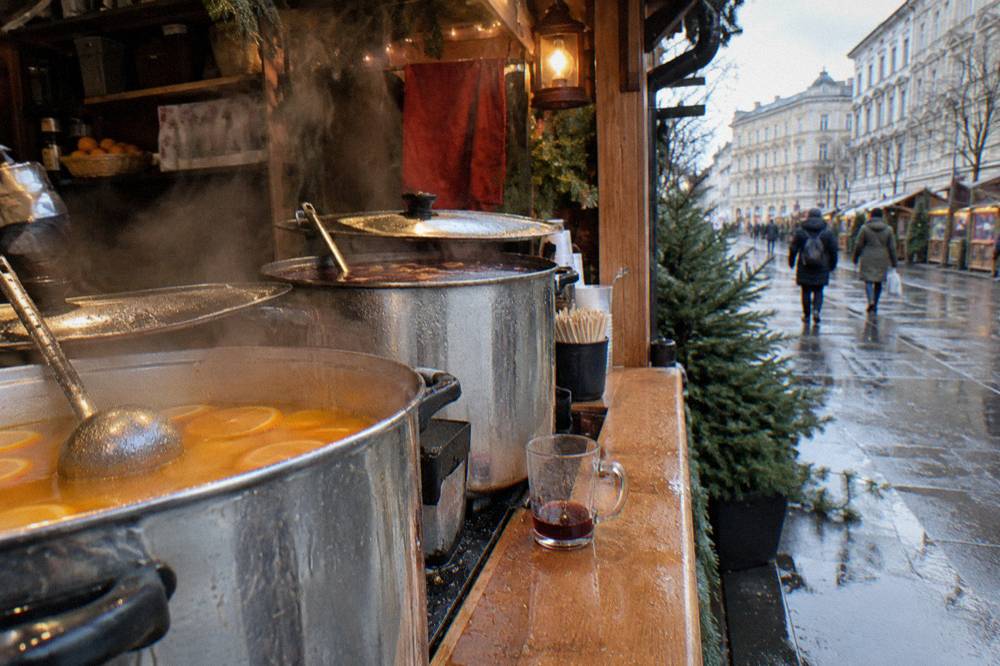
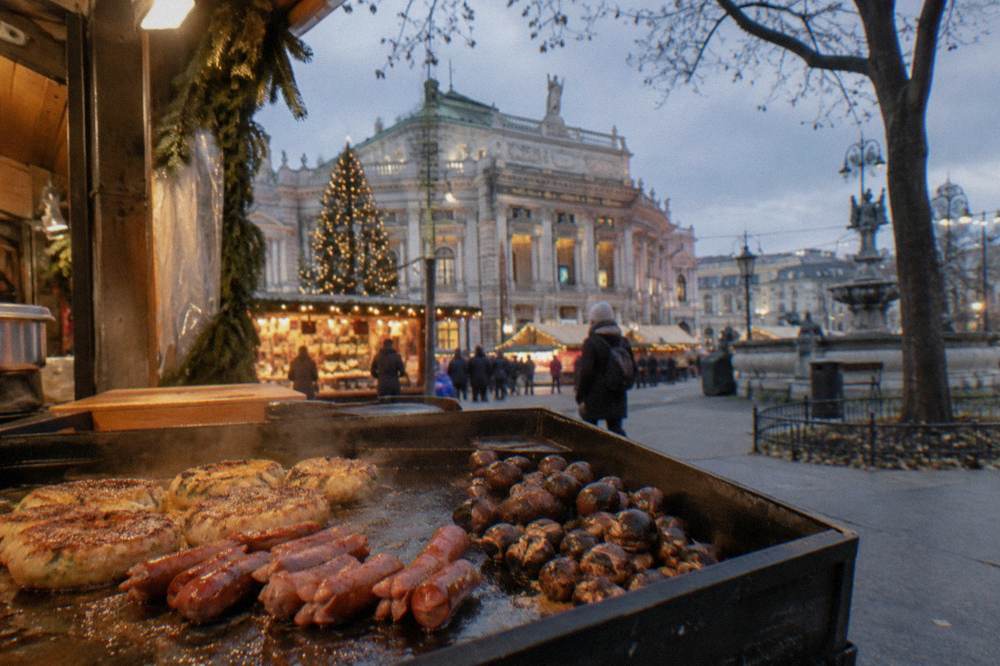
Work the stands that cook to order: a grilled sausage such as the Käsekrainer, roast chestnuts, langos, and cups drawn from the punch and gluhwein kettles. The food is the reason to go to these markets, and the craft stalls are decoration, so plan your visit around eating your way from one stand to the next. The sausage stand is a Viennese institution in its own right, recognized by the Vienna Tourist Board alongside coffee house and Heuriger culture, and at Christmas the Wurstelstand moves into the wooden stalls. Punch comes in every register from tart berry to creamy egg, and the mug usually carries a deposit you get back when you return it, so hold onto it between stands rather than cashing it in after every drink.
Eat like a local rather than a queue-follower. The longest line is rarely the best stand; it is usually the one closest to the entrance. Walk one full loop of a market before buying anything, note which griddles are actually busy with locals, and buy there. Chestnuts are the marker of a good stand: fresh ones split cleanly and smell of char, tired ones are leathery and smell of nothing. And pace the punch: it is sweeter and stronger than it tastes at minus two degrees, a fact every December evening in Vienna re-teaches somebody.
For a deeper winter appetite, the city beyond the stalls is still fully open. A full tasting walk such as the 7-tastings guided food walk keeps its regular route through the year-round food city while the markets hum in the squares, and the coffee houses are at their coziest exactly when the markets are at their coldest. Christmas in Vienna is not an either/or between markets and the rest of the food scene; the season simply adds a layer on top of a city that eats well in every month, and the smart December itinerary uses both halves of it.
One last practical note for the stalls themselves: Austrian gastronomy has been smoke-free indoors since 1 November 2019 under the national smoking law, confirmed on the official business portal at usp.gv.at, but the markets are outdoors, so the terraces and stand-up tables around the stalls follow outdoor rules. Dress for the temperature you will actually be standing in for three hours. Warm shoes beat a warm coat, and a hat beats both, because the evening cold arrives from the top down while you stand still watching a griddle.
So, is it worth it? If you enjoy eating outdoors, winter light and a city that stages its own season, yes, unreservedly. If you hate crowds, go on a weekday afternoon, pick Spittelberg over Rathausplatz, and let a guide do the stall-picking. The verdict, like the gluhwein, depends on how you take it, and Vienna Food Tours exists to help you take it well.
Common Questions About The Vienna Christmas Markets
Is Vienna Christmas Market Worth It?
For most visitors, yes. Entry is free, the settings are spectacular, and the food stands are a concentrated dose of Viennese winter eating. The value depends on market choice and timing: Rathausplatz for the postcard, Spittelberg for calm, and a guided walk if you want the best stalls picked for you.
When Do The Vienna Christmas Markets Open In 2026?
Schönbrunn opens on 6 November, the Rathausplatz Christkindlmarkt and Spittelberg on 13 November, and Belvedere on 20 November. Most markets close between 23 and 26 December; Belvedere runs to 31 December.
Do You Need Tickets For The Vienna Christmas Markets?
No. Entry to all 15 markets is free. You pay only for food, drinks and anything you buy at the stalls. Guided food and drinks tours are the exception: those are ticketed experiences booked in advance.
Which Vienna Christmas Market Is Best For Food?
Rathausplatz has the densest concentration of food and punch stands; Spittelberg and Am Hof offer a slower, more local pace with shorter queues. A guided festive walk, such as the 4-hour Christmas market food and drinks tour, takes the guesswork out of choosing stands.
Are The Vienna Christmas Markets Crowded?
The big ones, yes, especially Rathausplatz on weekend evenings from late November. Weekday afternoons are noticeably calmer, and the smaller markets like Spittelberg and Art Advent at Karlsplatz spread visitors across lanes rather than squeezing them into one square.
How Much Does Food Cost At The Vienna Christmas Markets?
Expect to pay per item at the stand and check the menu or price board before ordering; nothing is standardized across the 814 stalls.