Is Naschmarkt Worth Visiting?
A direct answer to whether Naschmarkt is worth your time in Vienna, with official opening hours, the Saturday flea market, the 2026 redevelopment, and how a guided tasting walk changes the visit.
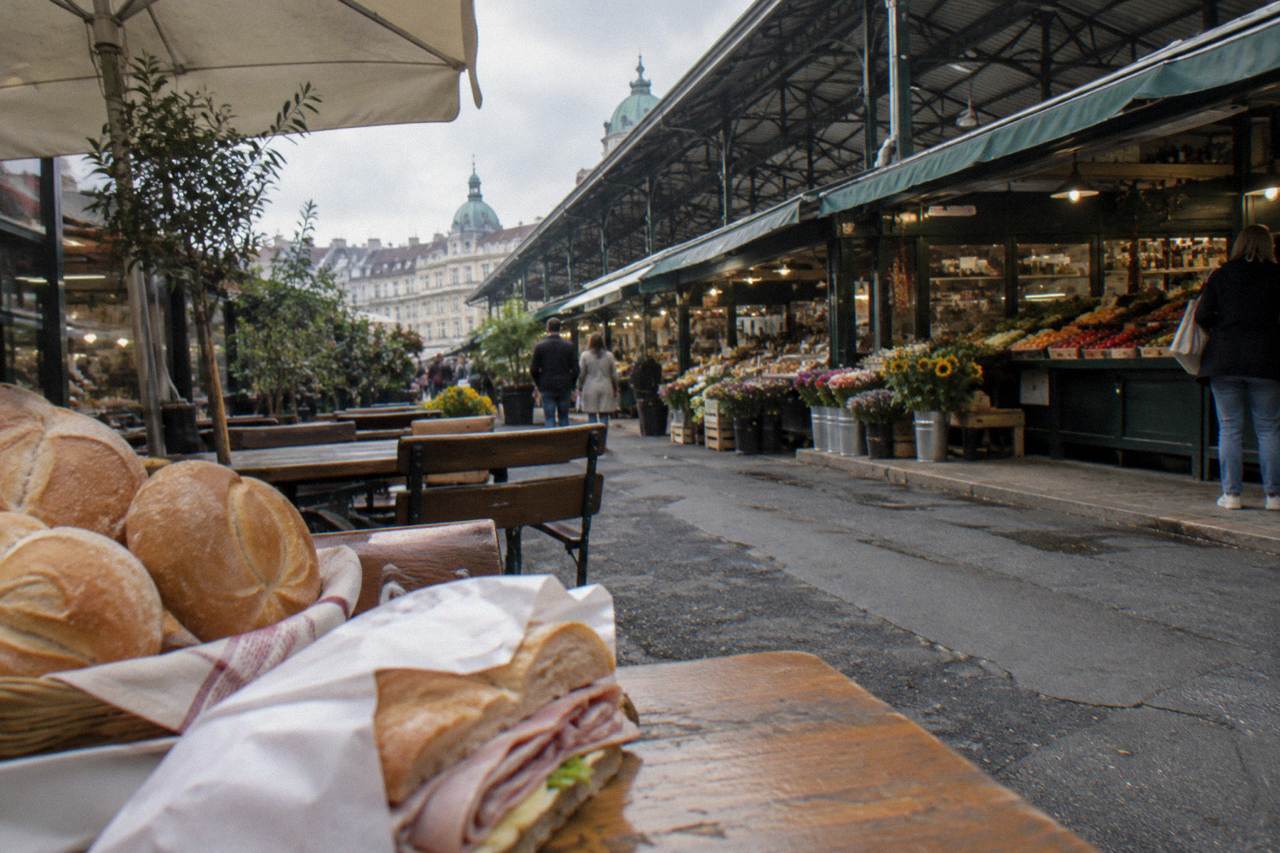
Yes, for most visitors Naschmarkt is worth visiting, with two honest conditions attached. Come hungry and come at the right time of day, because the market's strength is food you eat standing or at a stall table, not scenery. And go on a weekday morning or a Saturday, since the official rules let many stands close outside the Tuesday to Friday afternoon window and Sundays are quiet. If the market has you weighing the whole city, our honest answer to whether Vienna is worth visiting covers what earns the trip and what doesn't.
That is the short version. The longer version matters, because Naschmarkt is simultaneously Vienna's most famous market and the one locals argue about most. It has been a fixed part of the city's food supply for generations, a produce strip that grew up between the river and the Wienzeile where the Kettenbrückengasse U4 station now stands. Today the market runs for roughly a kilometre along the Wienzeile, a linear band of around 120 stands and restaurants wedged between the road and the elevated U4 line, and it wears several identities at once: produce market, intercultural food hall, tourist attraction, Saturday flea market destination.
Whether it is worth your limited time in Vienna depends on which of those identities you are actually shopping for. A traveller who wants to photograph a "real Viennese market" and eat schnitzel may be mildly disappointed, because much of the market's everyday business is Turkish, Vietnamese, Indian and Middle Eastern groceries, and has been for decades. A traveller who wants a long lunch, good olives, a cheap bowl of pho and a wander through one of the city's densest strips of food commerce will get more than their money's worth. The Vienna Food Tours site exists partly because this stretch rewards context: knowing which row to walk, what to order and when to arrive is the difference between a highlight and a shrug.
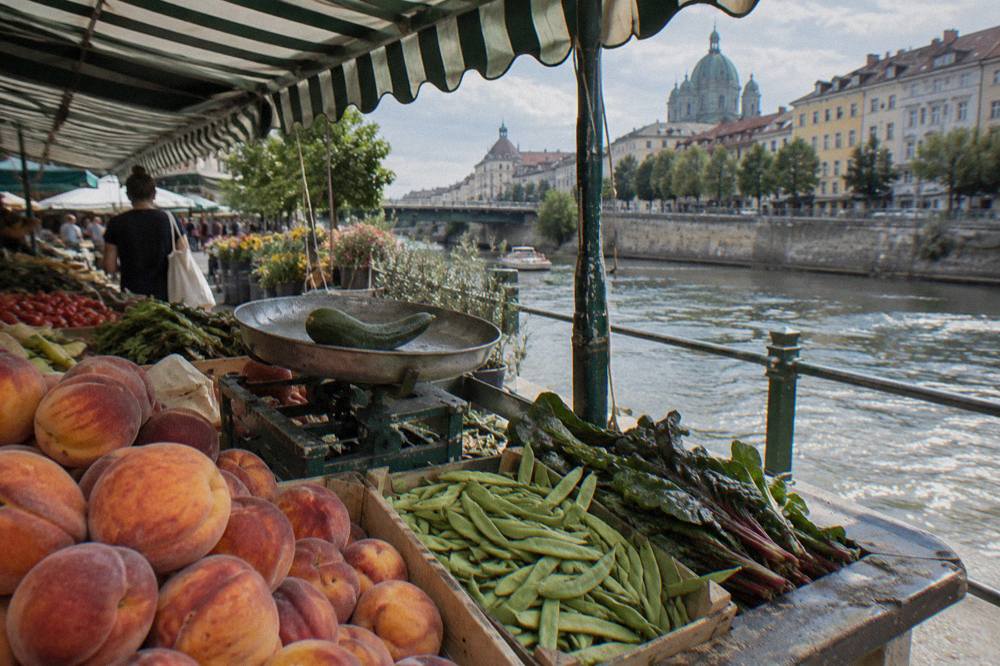
The market's setting also does it a strange favour. The U4 viaduct arches above the stalls, and the whole strip feels more like Istanbul's railway markets than a postcard Vienna square. That grit is genuine. The city's official pages describe Naschmarkt as Vienna's best-known market, and the tourist board markets it hard, but the floor of the place remains a working market where cooks buy coriander by the bunch and where restaurant suppliers still pick up fish before service. If you arrive expecting only dirndls and sachertorte you have come to the wrong half of Vienna's food story. For a straight answer on whether that grit survives the tourist crowds, read the honest verdict on Naschmarkt's tourist-trap reputation, which also explains how to eat well there.
Price is the other honest angle. Browsing costs nothing. Eating ranges from very cheap indeed, a kebab or a bowl of soup from a stand, to mid-range restaurant seating with table service, and a few of the market's restaurants are among the more expensive casual meals in the district. Nobody has to spend much here to have a good hour, which is more than can be said for several of Vienna's marquee attractions. For a structured visit, the market-focused tasting walks below are the bookable shortcut.
What Are The Official Naschmarkt Opening Hours?
Naschmarkt's stands may sell from 6:00 to 21:00 Monday to Friday and from 6:00 to 18:00 on Saturday, while restaurants and bars may run to 23:00 Monday to Saturday and 9:00 to 21:00 on Sundays and holidays. Every stand and venue must be open Tuesday to Friday between 15:00 and 18:00, so the late afternoon is the one window with guaranteed trading.
Those figures come from the City of Vienna's own market page, which sets maximum permitted hours, not a promise that every stall keeps them. Individual standholders choose their own hours inside those windows, and in practice the market has distinct daily rhythms. Morning is the produce hour: the vegetable, fruit, cheese and fish stands do their real business before noon, delivery vans still nose along the service lane, and the restaurant terraces are half empty. By early afternoon some produce stands start packing down. Evening flips the strip: the food stands dim and the restaurants fill, especially on Friday and Saturday nights, when the Kettenbrückengasse end in particular turns into a going-out street.
| Part of the market | Mon–Fri | Saturday | Sunday / holidays |
|---|---|---|---|
| Sales stands | 6:00–21:00 max | 6:00–18:00 max | Closed |
| Farmers' and trader spaces | 6:00–19:30 max | 6:00–18:00 max | Closed |
| Restaurants and bars | 6:00–23:00 max | 6:00–23:00 max | 9:00–21:00 max |
| Guaranteed trading window | 15:00–18:00 Tue–Fri | none mandated | none |
The guaranteed window is the detail most visitors miss. The city's rules require every stand and venue to be open Tuesday to Friday between 15:00 and 18:00, which makes late afternoon the safest bet for a full market experience if you cannot make a morning. It is an odd inversion of most markets' rhythms, but it is written into the municipal conditions, and it is your insurance policy against arriving to find half the strip shuttered.
Sundays deserve a warning: the sales stands do not trade at all on Sundays, and only the restaurants and bars may open, from 9:00 to a 21:00 maximum. A Sunday visit is therefore a restaurant visit, not a market visit, and honestly a quiet one. If your Vienna itinerary puts you in the city only over a weekend, aim for Saturday morning, when the market runs alongside the flea market and the whole Kettenbrückengasse area is at its busiest and best. The fuller mechanics of hours, transport and timing are laid out in the Naschmarkt opening hours and flea market guide.
For anyone who wants the food without the guesswork, a guided walk solves the timing problem outright. The two-hour Naschmarkt guided walk with a local guide is built around the market's workable hours, and the operator's listing carries the current price, meeting point and what is tasted.
Is The Saturday Flea Market Worth The Early Start?
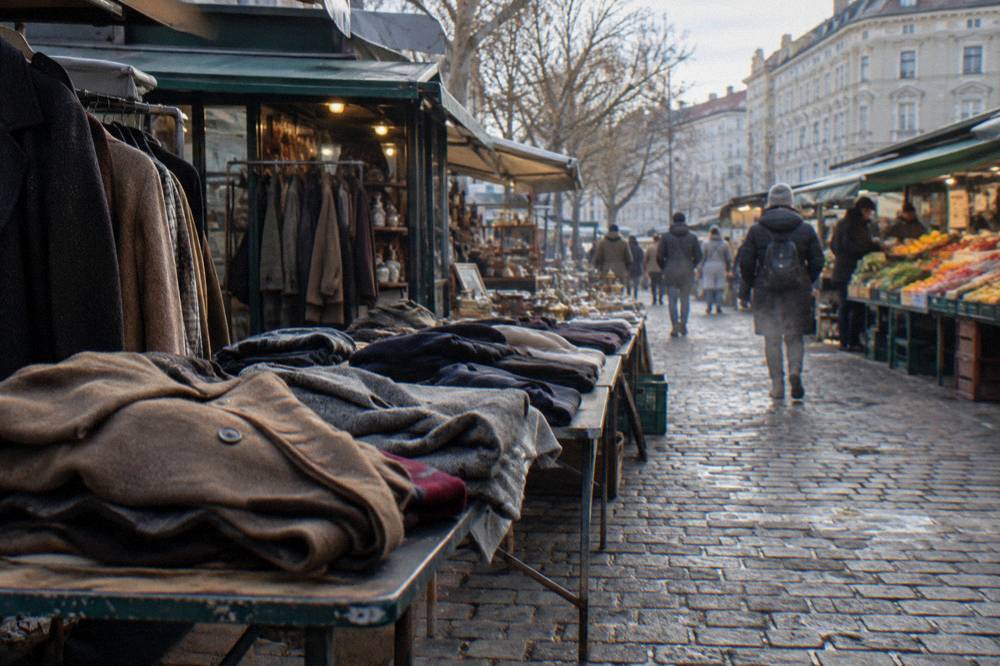
Yes, if you like flea markets at all, the Saturday Flohmarkt beside Naschmarkt is one of Vienna's best free pleasures. It runs every Saturday from about 6:30 to 15:00 along the adjoining street, with second-hand clothes, furniture, records, books and a properly eclectic mix of professional and private sellers. It is free to browse, and the two markets together make Saturday the single best Naschmarkt day.
The flea market has long been a fixture of the Kettenbrückengasse area, occupying the stretch behind the U4 arches on the market's Wien side, and its mix of household clear-outs and professional antiques sellers is a Viennese institution in its own right. Serious buyers arrive between 7:00 and 9:00, when the private sellers who have hauled their wares in overnight are still unpacking and the best furniture and collectibles move first. By noon the crowd is thick, the café terraces on the market proper are full of brunchers, and the whole district has the feel of a weekly festival that the rest of the city quietly tolerates.
Two calendar caveats come straight from the city's own rules for 2026. There is no flea market on 25 and 26 December, and trading is restricted on 12 and 19 December 2026 because the same space hosts a Christmas tree market on those Saturdays. If you are visiting Vienna in the Christmas run-up and the flea market is on your list, plan around those two dates and treat any December Saturday morning as busy with seasonal visitors as well.
The pairing is what makes the Saturday visit special. You can start at the flea market at 8:00 with a coffee, drift into the food market as the produce stands hit their stride, eat a long stand-up or terrace lunch, and finish with olives, cheese and bread for a picnic or a hotel supper. That arc, junk to groceries to lunch, is a genuinely Viennese Saturday and it costs almost nothing beyond what you choose to spend. Whether the market's food side itself has slipped into tourist habits is a fair question with a nuanced answer, and it is examined without sentiment in is Naschmarkt a tourist trap?
What Does The Redevelopment Change For Your Visit?
Naschmarkt is in the middle of a major city-led redevelopment: the Naschpark green space with 70 new trees is finished, the new timber Marktraum hall has opened with 13 regional-food stands, and the wider project's completion has slipped to February 2027 as reported. Expect some construction fencing, a relocated farmers' market area and a market in transition rather than a pristine postcard.
The redevelopment is the single biggest change to the market in a generation, and it is genuinely worth understanding before you go, because it explains things a visitor might otherwise read as decline. The old riverside car park has been replaced by the Naschpark, a green space planted with 70 trees, which sounds modest and is actually a meaningful upgrade to a district that had almost no shade. The new Marktraum, a roughly 800 square metre timber market hall, has opened with 13 stands focused on regional and seasonal products, bread, meat, fish and cheese among them, and the building closes at night, which the older open strip never really did. The city's planning pages describe the full picture.
| Redevelopment element | Status as reported | What a visitor notices |
|---|---|---|
| Naschpark (former car park) | Completed | New green space with 70 trees beside the market |
| Marktraum market hall | Open, 13 stands | Regional food hall, closes at night |
| Bauernmarkt (farmers' market) areas | Relocated during U4 works | Farmers' stands in front of the hall and along Kettenbrückengasse |
| Overall project | Full completion expected February 2027 | Fencing and works in places |
The farmers' market relocation deserves a mention because it changed the market's northern texture. During the U4 tunnel sealing works the farmers' stands moved to the area in front of the new hall and to the sides of Kettenbrückengasse, and Austrian press reporting in 2026 noted some stands running smaller and losing roughly 30 percent of sales during the transition. For a visitor that means the organic and farm-direct produce is now clustered differently than in older guidebooks, and a map from a few years ago will quietly mislead you. The works themselves are the price of a better market; the reporting frames the delay to February 2027 as a schedule slip rather than a change of plan.
None of this makes the market less worth visiting. If anything, a market mid-renovation is a market with a visible future, and the new park and hall already give the strip amenities it never had. But set expectations accordingly: you will walk past some hoarding, the stand layout is not yet final, and the photos in older travel articles will not quite match the ground truth. The trade-off, a greener, better-organised Naschmarkt from 2027, is one the city has clearly decided is worth the interim mess.
Should You Take A Guided Naschmarkt Tasting Walk?
A guided tasting walk is worth it if you want the market explained rather than just eaten, and the two and a half hour tasting tour is the strongest option: it covers the market's food history and stall culture with tastings along the way. If you would rather wander alone with a list, skip it, the market is completely navigable on your own and browsing is free.
The case for a guide at Naschmarkt specifically is stronger than at most Vienna attractions, because the market's story is not written on its walls. Which stand families have traded here for generations, why the U4 arches house restaurants, what Gemischter Satz has to do with the city's vineyards, which stalls the restaurant cooks actually buy from, these are the things a good local guide carries and a guidebook usually flattens. The tasting format also solves the market's other problem: at a food market, an unguided visitor tends to buy one lunch and leave, where a structured walk distributes six or eight small purchases across the strip and ends up cheaper per taste than ordering blind.
Practical notes for booking any of them: prices, exact meeting points and the current list of included tastings live on the operator's listing, and those details change with seasons and stand availability, so check the booking page rather than relying on a review from months ago. Dietary needs deserve a message to the operator before booking, since stand-based tastings depend on what is open that day. Group sizes on the guided walks vary by operator, and the smaller walks naturally get more time at each stand.
What And Where Should You Eat At Naschmarkt?
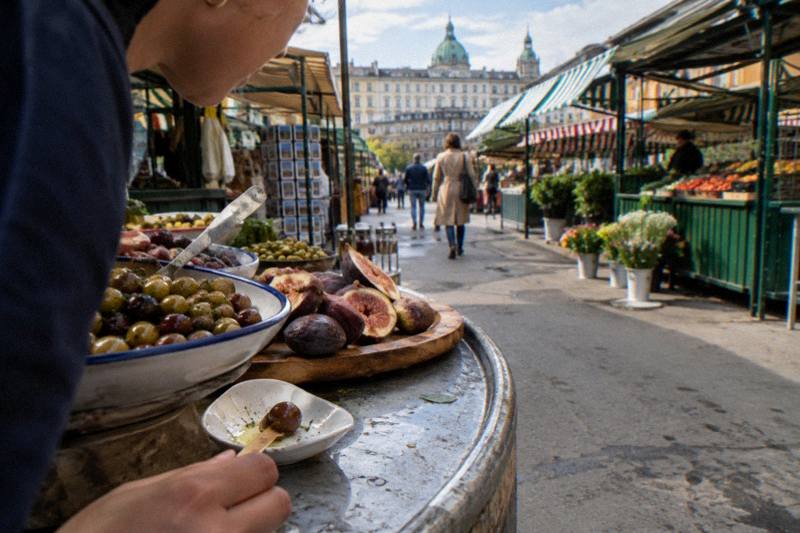
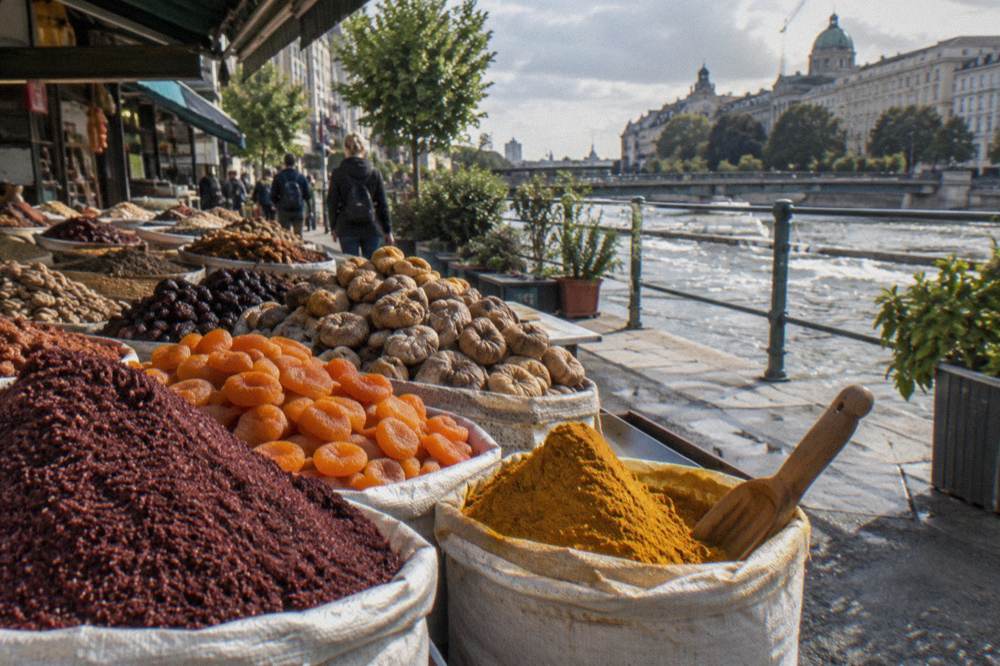
Eat the things the market does better than the rest of the city: fresh juice pressed to order, olives and cheese bought by weight, mezze and grilled meats at the Turkish and Levantine stands, Vietnamese and Indian lunch plates, and fish at the restaurant terraces. A loose rule of thumb is that the produce and snack end rewards browsing, while full restaurant meals are better in the middle and eastern stretches of the strip.
The market's food geography rewards a little orientation. The western end near Kettenbrückengasse leans hardest into the flea-market-adjacent buzz and the intercultural groceries, this is where the spice, olive and pickle stands cluster and where a bag of mixed olives costs a fraction of a coffee-house cake. The middle stretch carries the densest run of restaurants, from long-established Viennese-market institutions to Vietnamese kitchens, and the terraces under and beside the viaduct arches fill from midday. The eastern end toward the Secession is quieter, more food-to-go, and closest to the new Marktraum hall with its regional stands. Anyone planning a full eating circuit should work from the detailed stall-by-stall breakdown in the Naschmarkt food guide.
Budgeting is straightforward because the market spans cheap to moderate with almost nothing expensive by Vienna restaurant standards. Stand food, a juice, a filled flatbread, a bowl of soup, sits at the low end. Restaurant terrace meals land in casual mid-range territory. The one cost trap is the same one that catches locals: it is very easy to buy "just a few things" at four different stands and discover you have assembled a full, slightly chaotic picnic at real cumulative cost. Most people consider this the market working exactly as intended. Payment is increasingly card-friendly but a few older stands still prefer cash, so carry some euros.
For visitors who want the eating curated, the small-group enjoyment walks run by long-time market operators add a host who knows the standholders personally, which at a relationship-driven market like this one is not a marketing line but an actual functional advantage in what gets offered to the group.
When Is Naschmarkt Not Worth It?
Skip or shorten a Naschmarkt visit in three situations: on a Sunday, when the stands are shut and only restaurants open; late on a weekday evening if you wanted produce and browsing rather than dinner; and in pouring rain, since the stand aisles are open to the elements and the flea market loses most of its charm. Anyone expecting a historic-looking Viennese square will also be disappointed by the traffic and the viaduct.
Sundays are the clearest case. The city's rules close the sales stands entirely, leaving a strip of restaurants that may open from 9:00 to a 21:00 maximum. That can still be a pleasant lunch, but it is not a market visit, and calling it one sets you up for a let-down. Weekday evenings tilt the same way: the food side winds down and the strip becomes a restaurant row, which is a fine thing to want and a different thing from what the brochures show.
Weather matters more here than at Vienna's indoor sights. The stand aisles sit under a mix of corrugated canopies and open sky, the Saturday flea market is entirely outdoors, and the Naschpark's new trees are years from giving cover. A wet Saturday shrinks both markets to their hardiest sellers. Conversely, the market is at its most rewarding on a bright Saturday morning or a warm weekday evening when the terraces spill out, and those are the conditions under which most people's best memories of the place are made.
The final honest check is about expectations of beauty. Naschmarkt is not the postcard Vienna of the first district. It is a working, evolving, partly rebuilt food corridor with a road on one side and a railway on the other, and its appeal is density, variety and price, not architecture. Visitors who calibrate for that almost always answer the worth-it question with a yes. Visitors who arrive seeking quaint usually walk through in twenty minutes and head for a coffee house, which, to be fair, is also an excellent way to spend a Vienna afternoon.
The Verdict
Naschmarkt is worth visiting for the large majority of travellers: it is free to enter, cheap to eat at, open six days a week in some form and unlike anything else in the city centre. Time it for Saturday morning with the flea market or a weekday morning for produce, use the Tuesday to Friday 15:00 to 18:00 window as a fallback, and expect a market in transition until the redevelopment completes in early 2027.
If your time in Vienna is short, the deciding question is what you would trade for it. Against a second art museum, the market wins on food and price. Against a half-day in the Vienna Woods or a coffee-house afternoon, it is a genuine contest, and the honest answer is that Naschmarkt pairs better with a hunger for the city's everyday, multicultural food life than with a hunger for imperial Vienna. For most itineraries of three days or more, there is room for both, and the market earns its slot. If your trip lands in late November or December, the guide to whether Vienna's Christmas markets are worth it applies the same honest tradeoff test to the city's seasonal stalls.
For the fullest experience, either go with a list and an appetite of your own or let a guide compress the learning curve into a couple of hours. The three market walks below are the ones this site rates for the job.
Common Questions About Naschmarkt
Is Naschmarkt Worth Visiting?
Yes, for most visitors. The market is free to enter, offers some of Vienna's cheapest and most varied food, and on Saturdays adds a large flea market. Visit in the morning or in the guaranteed Tuesday to Friday 15:00 to 18:00 trading window, and expect a working food corridor in mid-redevelopment rather than a picturesque square.
What Time Does Naschmarkt Open?
Sales stands may trade from 6:00, with a 21:00 maximum Monday to Friday and 18:00 on Saturday. Restaurants may run to 23:00 Monday to Saturday and from 9:00 to 21:00 on Sundays and holidays. Individual stands choose their own hours within those city-set limits.
Is Naschmarkt Open On Sundays?
Only partially. The sales stands do not trade on Sundays, but restaurants and bars at the market may open from 9:00 to a 21:00 maximum. A Sunday visit is a meal, not a market browse.
When Is The Naschmarkt Flea Market?
Every Saturday from about 6:30 to 15:00, beside the market along Kettenbrückengasse. There is no flea market on 25 and 26 December, and trading is restricted on 12 and 19 December 2026 for the Christmas tree market.
How Much Does A Visit To Naschmarkt Cost?
Entry and browsing are free. Stand snacks and produce are among the cheapest eating in Vienna, and restaurant terrace meals sit in the casual mid-range. Prices for the guided tasting walks are shown on the operator's listing.
Is Naschmarkt A Tourist Trap?
Partly tourist-facing, but not a trap. Much of its everyday trade is local grocery shopping, and the food quality and prices hold up. The strip has a tourist-restaurant fringe, so eating where the stalls are busiest remains the sensible rule.