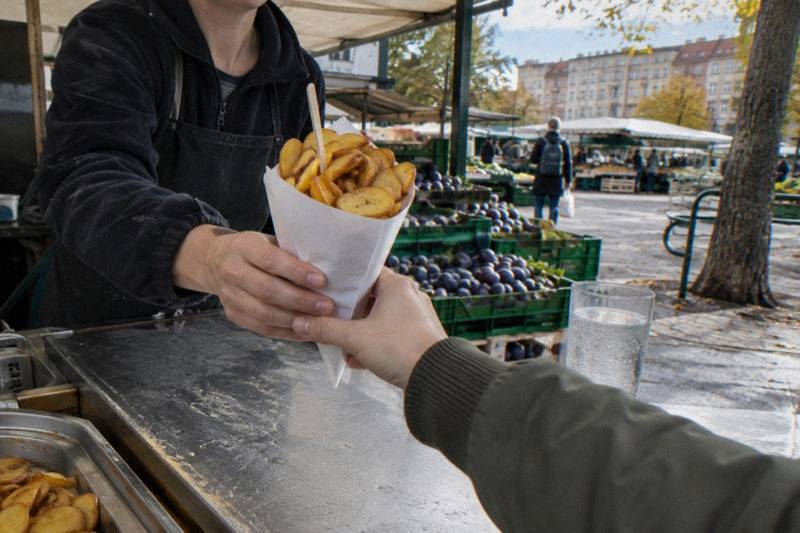
Where To Stay In Vienna For Food Lovers
Where you sleep in Vienna decides how close you are to the market at breakfast, the coffee houses at eleven, and the wine villages at dusk. This guide matches each part of the city to the way you actually eat there.
Short answer
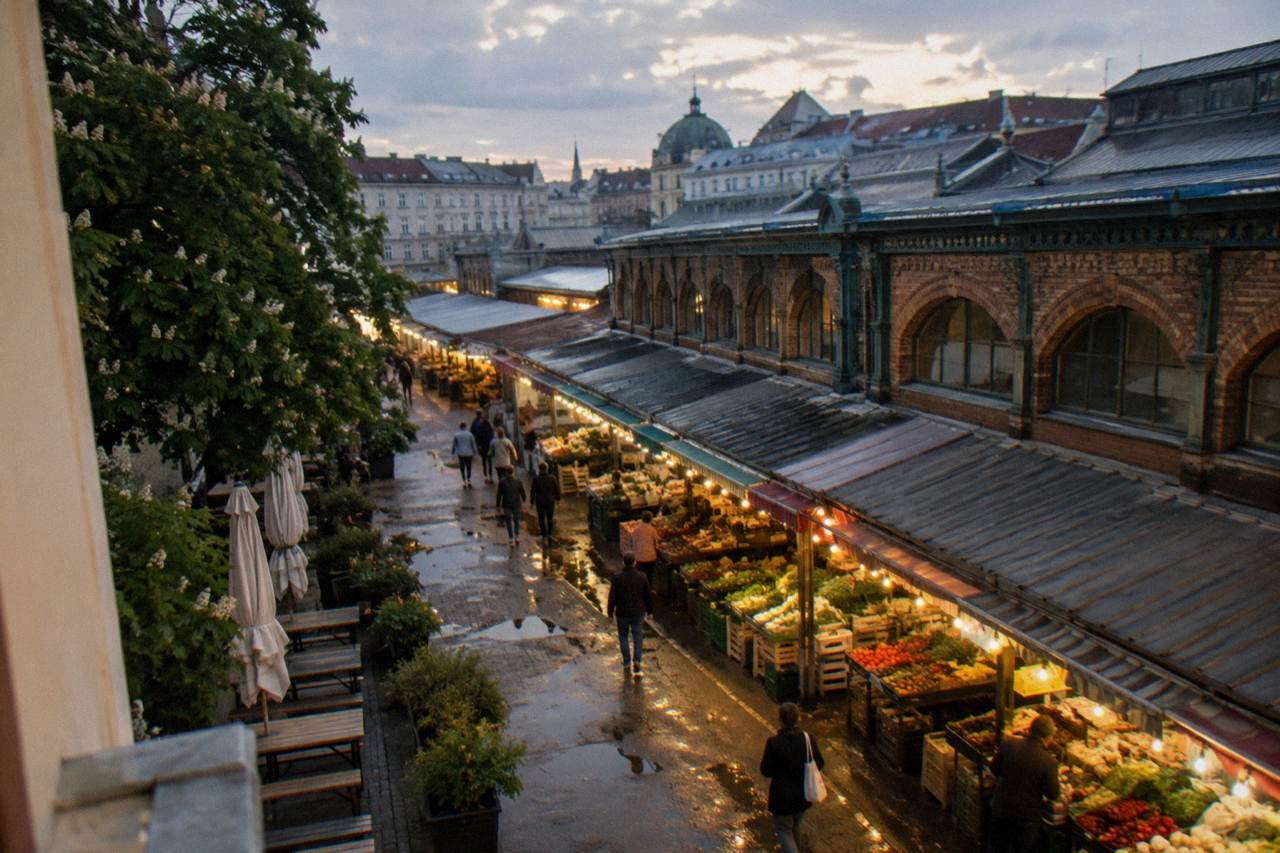
Stay in the Naschmarkt belt, around the fourth and fifth districts, if market mornings and street food matter most. Stay in the Innere Stadt for coffee houses and walking-distance dinner tables. Vienna's tourist tax is 5 percent of the accommodation fee now and 8 percent from 1 July 2027, whatever district you pick.
Stay location decides which food walk start points are close, which market you can reach before the crowds, and whether a Heuriger evening means a short tram ride or a long one. Vienna is compact, but its food identity is deeply local: the market belt eats differently from the old town, and the wine hills eat differently again. This guide walks through the practical trade-offs of each area for a visitor whose days are planned around meals, with the official figures that actually affect your bill.
The one number every visitor pays, regardless of district: Vienna's Ortstaxe, the city tourist tax, runs at 5 percent of the accommodation fee, excluding VAT and breakfast, and rises to 8 percent from 1 July 2027, according to the Vienna chamber of commerce. Keep it in mind when comparing rates. For a fuller picture of what a guided tasting day costs once you have a base, our Vienna Food Tours planning pages break the options down by format and length.
Which Vienna Neighbourhood Puts You Closest To The Food?
The Naschmarkt belt in the fourth and fifth districts puts you closest to the largest concentration of food in the city: the market itself, the surrounding restaurant rows of the Wienzeile, the Saturday flea market, and a ten minute walk to the Naschmarkt U-Bahn interchange that connects you toward the centre. The Innere Stadt, the first district, trades that market access for coffee houses, traditional restaurants and the shortest evening walk home. Further out, Döbling and Floridsdorf sit beside the vineyards, where an evening at a wine tavern is a stroll rather than an expedition. None of these choices is wrong; they simply optimise for different meals. The market belt favours breakfast and lunch people, the old town favours cake and dinner people, and the wine districts favour anyone whose ideal evening is a glass of young wine above the city lights.
The honest summary of the trade-offs, district by district:
| Area | Districts | Best for | Main compromise |
|---|---|---|---|
| Naschmarkt belt | 4th and 5th (Wieden, Margareten) | Market mornings, street food, cheap eats | Fewer grand coffee houses than the centre |
| Innere Stadt | 1st | Coffee houses, traditional restaurants, walkability | Higher hotel rates, tourist-heavy tables |
| Karmeliter belt | 2nd (Leopoldstadt) | Karmelitermarkt, quieter Beisl scene | Crosses the canal for the old town |
| Wine hills | 19th and 21st (Döbling, Floridsdorf) | Heuriger evenings, vineyard walks | Longer trips to the centre |
| Ottakring | 16th | Brunnenmarkt, brewery events | Least central, most local |
If you are booking a guided tasting day, the start point matters as much as the hotel. The five-and-a-half-hour coffeehouse, market, lunch and street food walk that anchors this site's planning pages weaves several of these areas into one route, so a base near the market belt or the old town keeps your morning start short. Check the meeting point on the booking page before you choose, since operators adjust start locations seasonally.
Where Should You Stay Near The Naschmarkt?
Stay in the fourth or fifth district, within about ten minutes' walk of the Kettenbrückengasse or Karlsplatz stations, and the Naschmarkt becomes your daily breakfast street: sales stands may trade from 6:00 in the morning, and every stand is required to be open Tuesday to Friday between 15:00 and 18:00, per the City of Vienna's official market rules. That last detail is the one most visitors miss. Individual vendors open and close at will, so a midweek afternoon visit is the only window the city guarantees. Saturday is the busiest and most rewarding day, with the flea market running alongside from about 6:30 to 15:00, though the flea market is restricted on 12 and 19 December 2026 for the Christmas tree market and closed 25 to 26 December.
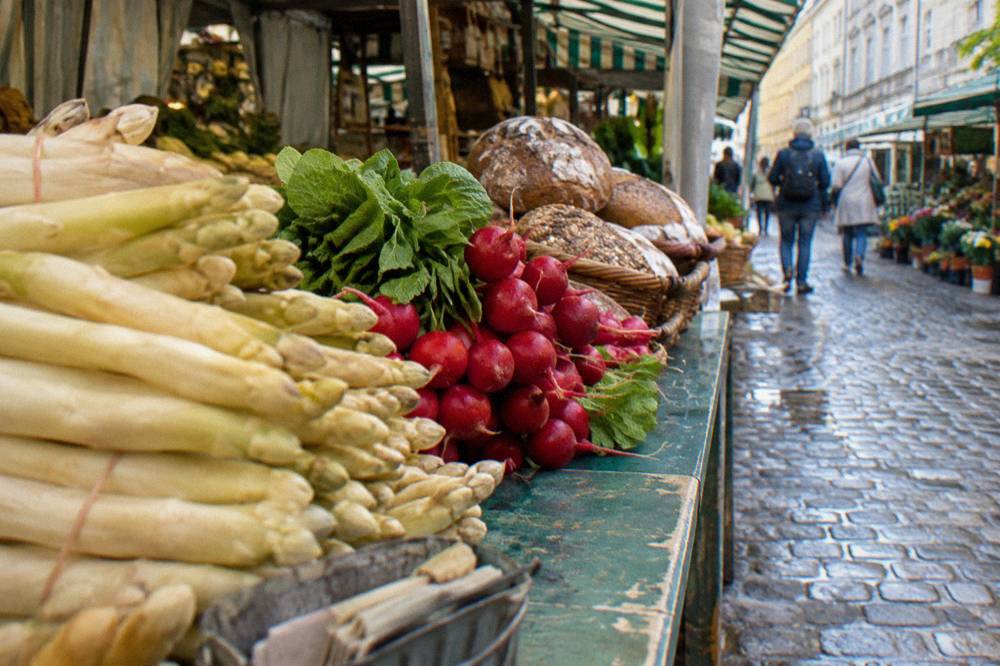
The market is also mid-renovation, which cuts both ways for visitors. The former car park has become the Naschpark, a green space with 70 new trees, and the timber Marktraum hall now hosts 13 stands selling regional bread, meat, fish and cheese. Full completion of the wider redevelopment slipped to February 2027, so expect some fencing and relocated farmers' market stands during the transition. The food upside is real: the new hall gives the market a proper regional-produce anchor it previously lacked.
For a first visit, a guided market walk turns browsing into understanding. Peters Naschmarkt Enjoyment walks run about two hours through the stalls with a guide who explains what you are looking at.
If you would rather eat your way from the market through lunch, the five-and-a-half-hour coffeehouse and market walk pairs the stalls with a seated lunch and street food stops; its price and current availability are on the operator's listing. Deeper background on the stalls themselves is in our Naschmarkt food and where-to-eat guide, and the practical opening-hour details, including the flea market, are covered in full in Naschmarkt hours and the Saturday flea market.
Is The Innere Stadt Worth It For Food Lovers?
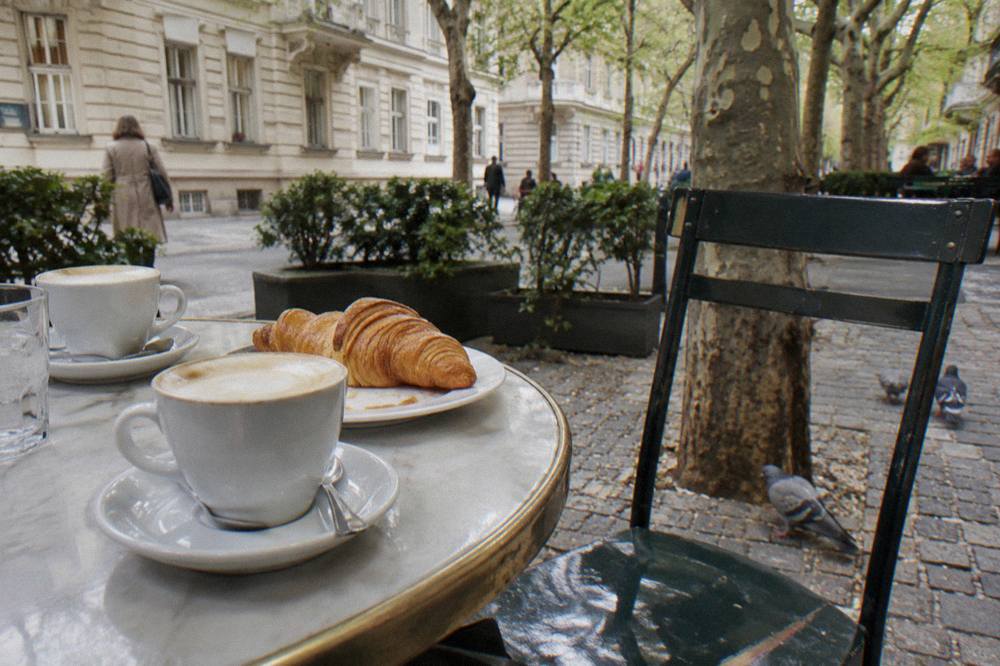
Yes, if your priorities are grand coffee houses, traditional restaurants and walking home after dinner; the first district concentrates the classic addresses within a short stroll of most hotels, though nightly rates run higher than the districts outside the ring, and the city's tourist tax applies everywhere equally. The Innere Stadt is where the coffee house institution lives most densely, from Landtmann near the Burgtheater to Demel near the Hofburg. One 2026 wrinkle worth knowing before you plan a cake pilgrimage: Café Central has been closed for major renovation since 16 March 2026, with reopening planned for winter 2026, and a pop-up called Decentral operates at Freyung 3 in the meantime, with a reported Melange at 5.40 euros. Confirm the reopening on the café's own site rather than assuming.
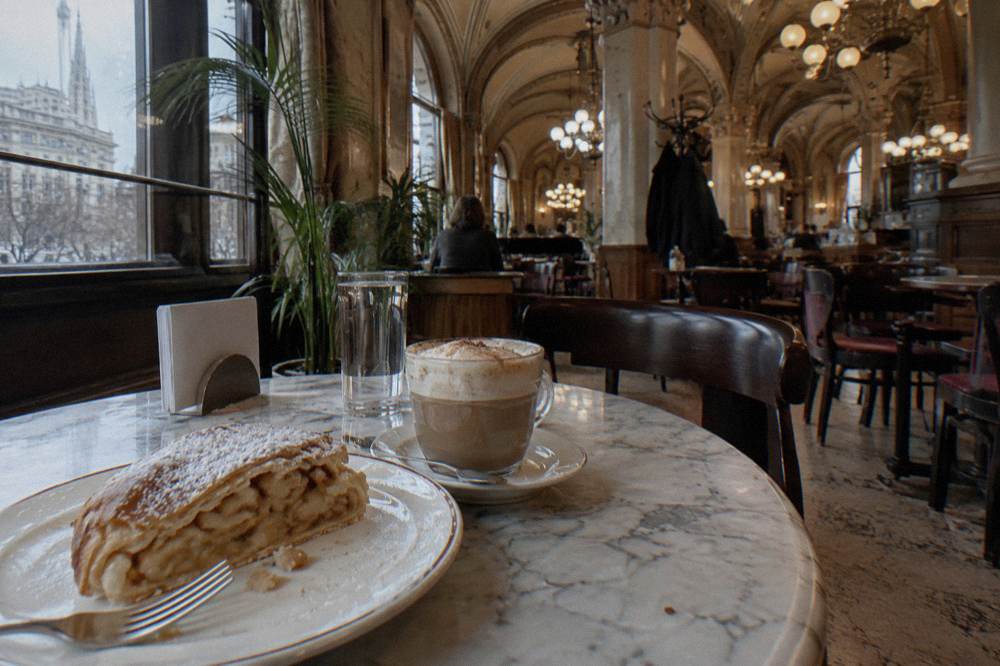
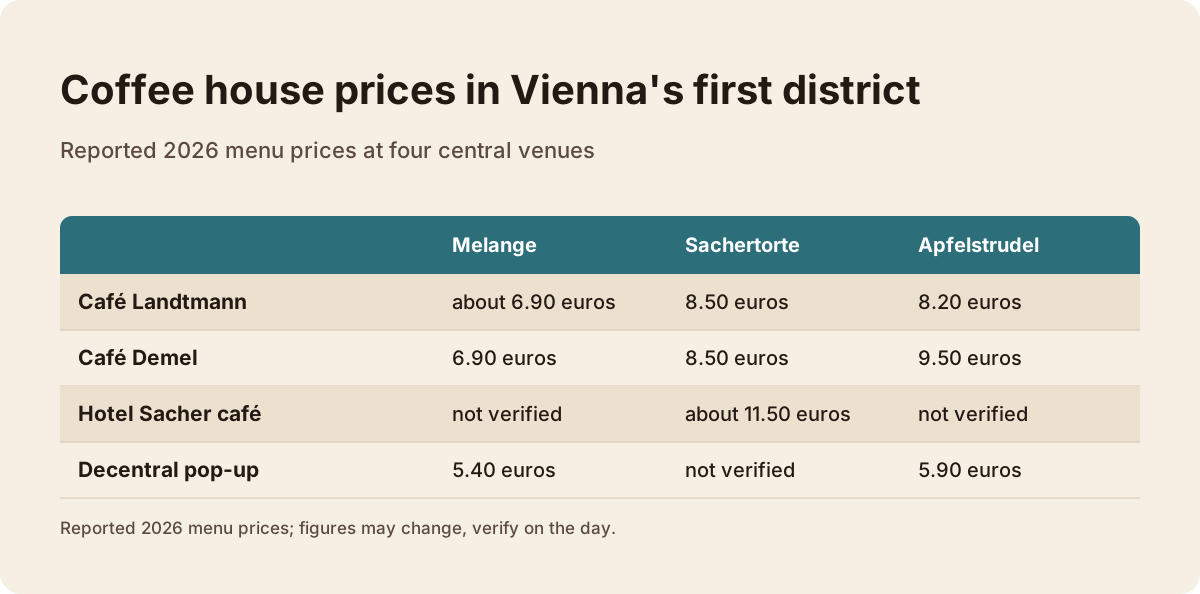
What a coffee house morning costs in the centre, at reported 2026 menu prices (check the menu on the day):
| Venue | Melange | Sachertorte | Apfelstrudel | Notes |
|---|---|---|---|---|
| Café Landtmann | about 6.90 euros | 8.50 euros | 8.20 euros | Takes reservations |
| Café Demel | 6.90 euros | 8.50 euros | 9.50 euros | Generally no reservations |
| Hotel Sacher café | Check the menu | about 11.50 euros | Check the menu | Queue can be long afternoons |
| Decentral pop-up | 5.40 euros | Check the menu | 5.90 euros | Stands in while Central renovates |
Beyond the cafés, the first district also concentrates the traditional dinner tables a food lover travels for, and the queue intelligence matters as much as the menu prices. Landtmann accepts reservations, Demel generally does not, and the Hotel Sacher café sees its longest queues in the afternoons, so an early arrival or a post-16:00 visit saves real waiting time. The Sachertorte rivalry is genuine and ongoing: Hotel Sacher holds the "Original" sealed version with two apricot layers, while Demel serves its rival cut with a single layer, so a stay in the old town lets you run the comparison yourself across two evenings. The full verdict is argued in Sachertorte or Demel, where to eat the cake.
Staying in or near the first district also puts the coffee house stops of guided walks within a short stroll. The Vienna Coffeehouse Tour runs three and a half hours of pastries, bites and local stories through exactly this world, and it suits a first morning in the city.
One etiquette note that follows you into any traditional table in the centre: a Gedeck cover charge of 2 to 5 euros per person appears on menus in classic venues, payable whether or not you touch the bread basket, and tap water may legally be charged if it is listed; a 2026 consumer-body sample of 30 Vienna venues found 23 charged for it, often 0.80 to 3.60 euros per half litre. Our restaurant etiquette and Gedeck guide covers the full ritual, including tipping.
A quick budget exercise shows what the district's classic cake-and-coffee mornings actually cost once the cover charge lands on the bill. At Landtmann, a Melange at about 6.90 euros plus a Sachertorte at 8.50 euros comes to 15.40 euros, and the 2 to 5 euro Gedeck lifts a realistic per-person total to 17.40 to 20.40 euros before anything else is ordered. Demel lands almost identically, though its Apfelstrudel at 9.50 euros edges the base to 16.40 euros. The Hotel Sacher café's Sachertorte at about 11.50 euros is the priciest single slice in the table, so check the menu or board in person for its Melange price before fixing a per-person total. Decentral is the value outlier while Café Central renovates: a 5.40 euro Melange plus a 5.90 euro Apfelstrudel totals 11.30 euros before any cover charge, which is why the pop-up earns its place on a cake itinerary rather than serving as a mere consolation.
Scheduling matters more than menu research here. Landtmann takes reservations, so it is the one classic address you can pin to a fixed time; Demel generally does not, which leaves off-peak arrival as your only lever at a table you cannot book. The Hotel Sacher café queues longest in the afternoons, so if you are running the Sachertorte comparison across two evenings, give Sacher the post-16:00 slot and arrive at Demel early. As for Café Central, closed for major renovation since 16 March 2026 with reopening planned for winter 2026, treat Decentral at Freyung 3 as the stand-in for now and confirm the reopening on the café's own site rather than assuming, so a cake pilgrimage does not collapse around a locked door.
Finally, put the Gedeck and the water charge in your daily budget rather than treating them as surprises. A couple sharing one classic sitting faces 4 to 10 euros in cover charges alone, and if both order a half litre of tap water at the sampled 0.80 to 3.60 euros, the combined extra runs from 5.60 to 17.20 euros before a single coffee arrives. The Vienna Coffeehouse Tour's three and a half hours fits best on a first morning, before you have settled on a favourite table; taken early in the stay, it turns the reservation and queue intelligence above into a working plan instead of a lesson learned too late.
Where Should You Stay For Heuriger Evenings And Wine?
Stay in or near Döbling, the 19th district, or Floridsdorf, the 21st, if wine tavern evenings are the centrepiece of your trip: these are the districts with the vineyards, roughly 100 genuine Heurigen are still operating citywide, and public transport reaches them directly by tram D to Nussdorf, bus 35A to Neustift am Walde, or tram 31 to Stammersdorf. The classic Heuriger serves only wine from its own vineyards and signals it is open with a pine branch and an Ausg'steckt sign, per the Vienna Tourist Board's definition, so openings are seasonal and irregular rather than daily. Many traditional spots reduce hours from November through March, while larger Grinzing and Nussdorf addresses stay open year round.
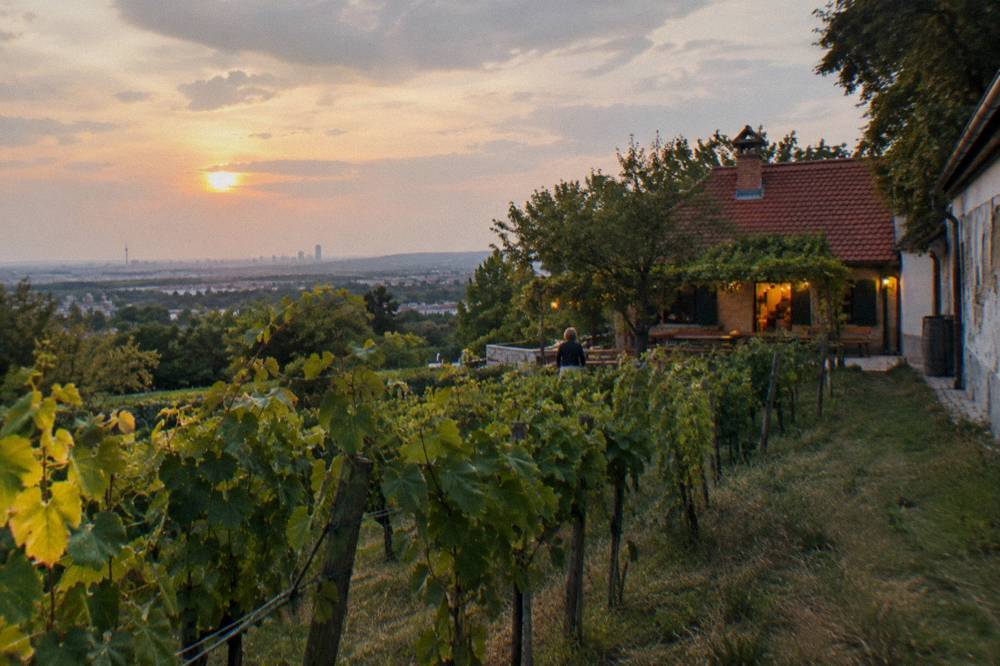
Budgeting for a Heuriger evening follows a predictable local pattern: a self-service cold buffet plate typically runs about 6 to 12 euros at neighbourhood spots, an evening total often lands at 8 to 15 euros, and an Achtel, an eighth of a litre of wine, costs about 3 to 5 euros. Tourist-oriented addresses charge more, so treat those figures as planning ranges and check the buffet prices on the board. Our full Heuriger visitor's guide explains the customs; if you would rather have someone drive and pour, the wine-tasting tour options from cellar visits to full Vienna Woods days are compared in Vienna wine tasting and tour options.
How Does The Tourist Tax Change Your Hotel Math?
Vienna charges an Ortstaxe of 5 percent of the accommodation fee, excluding VAT and breakfast, collected by your hotel and passed to the city, and this rises to 8 percent from 1 July 2027, so bookings that straddle that date, or trips planned for late 2027 onward, carry a materially higher tax line. The tax applies identically in every district, so it never decides where in Vienna you stay, only how much. It is usually excluded from the headline rate you see at booking and added to your final bill, which is why comparing base rates across neighbourhoods can mislead by a few euros per night.
Two further bill items to expect at Viennese tables rather than at the hotel: tipping of 5 to 10 percent at restaurants, stated as the total you want to pay when the bill arrives, and rounding up or 0.50 to 1 euro in coffee houses. Neither is compulsory, but both are standard, and budgeting them in from the start keeps the food ledger honest. Smoking, for reference, has been banned inside all Viennese gastronomy since 1 November 2019, so an indoor table anywhere in the city is a smoke-free table.
What Does A Food-Focused Day Look Like From Each Base?
A Naschmarkt-belt base gives you a market breakfast, a midday tasting walk, an afternoon coffee house stop and a dinner inside walking distance; an Innere Stadt base shifts the weight toward cake at eleven and a grand dinner at eight; a wine-hill base inverts the day entirely, holding the city for the afternoon and finishing at a tavern above the vines. The five-and-a-half-hour coffeehouse, market, lunch and street food walk matches the first pattern almost exactly, which is why a market-belt hotel pairs so well with it. The five-hour Authentic Vienna food walk, which includes lunch, street food and three drinks, suits either central base equally. If you're torn between those two walks or wondering how a coffee house visit or evening wine tasting stacks up, the guide to Vienna's best tours compares each format by what's included and who it fits.
A sample day from each base, using the verified timings:
| Time | From the Naschmarkt belt | From the Innere Stadt | From the wine hills |
|---|---|---|---|
| 08:30 | Market breakfast at a stall | Coffee house Melange and cake | Bakery breakfast locally |
| 11:00 | Guided tasting walk start | Coffee house tour start | Tram toward the centre |
| 14:00 | Lunch inside the walk | Lunch inside the walk | Market or old-town lunch |
| 17:00 | Flea market browse on Saturdays | Demel or Sacher cake stop | Return toward the vines |
| 19:30 | Wienzeile dinner | Traditional restaurant nearby | Heuriger buffet and wine |
The Authentic Vienna food tour, with its lunch, street food and three included drinks, is the single booking that most rewards a central base, since it eats through the middle of the day and leaves your evening free. Its current price is on the operator's listing.
Which Area Suits A Short Stay Best?
For a stay of two nights or fewer, the Innere Stadt or the Karlsplatz edge of the Naschmarkt belt wins on pure meal density: coffee houses, the market, the sausage stands and several traditional dinner addresses all sit inside a 20 minute walk, and both main guided walking formats start within that circle. Longer stays of four nights or more justify splitting your base or moving outward, because the wine hills, the Karmelitermarkt and Ottakring's Brunnenmarkt each reward unhurried visits. Vienna's transit makes any of this cheap: from 1 January 2026 a single digital ticket is 3.00 euros and a 24-hour digital ticket 9.70 euros, per Wiener Linien's fare pages, though you should confirm current fares before travelling.
The Brunnenmarkt deserves its line here: it is Vienna's longest street market, with roughly 160 to 170 stall positions and around 120 trading on Saturdays, and it has been car-free since the 2005 to 2010 renovation. Baseline details for every market in the city, including Karmelitermarkt's farmers' days, are gathered in Vienna markets beyond Naschmarkt. If your short stay falls between mid-November and Christmas, the timing guide at the best time to visit Vienna for food explains what the 15 Christmas markets and their 814 stalls add to each district's calendar.
Seasonal timing also nudges the district choice. The city's Christmas markets run from 6 November through 31 December 2026 across 15 locations, with the Rathausplatz market trading daily until 22:00, so a winter stay in or near the first district puts the punch stalls and roast chestnuts inside a short walk of your hotel. In September and October, the balance flips outward: the Sturm season, when the cloudy, half-fermented new wine appears in the Kellergassen, is best reached from a northern base. Whenever you travel, Sunday closures shape the plan, since most retail shuts on Sundays and holidays, with station and airport shops the main exceptions, so a Sunday breakfast is a coffee house or market restaurant affair rather than a supermarket run.
For anyone weighing the trade in pure cost terms, the comparison of formats and prices lives in what a Vienna food walk costs, and the morning-versus-evening question is settled in morning or evening food walks in Vienna.
Common Questions About Where To Stay In Vienna For Food Lovers
Which Vienna Neighbourhood Puts You Closest To The Food?
The Naschmarkt belt in the fourth and fifth districts, close to Kettenbrückengasse or Karlsplatz stations, puts the city's largest market, its restaurant rows and the Saturday flea market within a short walk, with a ten minute transit hop to the old town.
Is The Innere Stadt Worth It For Food Lovers?
Yes, if grand coffee houses and traditional dinners are the priority. Rates run higher than outside the ring, and Café Central is closed for renovation until winter 2026, with the Decentral pop-up at Freyung 3 standing in.
Where Should You Stay For Heuriger Evenings And Wine?
Döbling, the 19th district, or Floridsdorf, the 21st, sit beside the vineyards. Tram D, bus 35A and tram 31 reach the main wine villages directly, and roughly 100 genuine Heurigen operate across the city, many with reduced winter hours.
How Much Is Vienna's Tourist Tax?
The Ortstaxe is 5 percent of the accommodation fee, excluding VAT and breakfast, collected by hotels, and it rises to 8 percent from 1 July 2027. It applies in every district and is usually added to your final bill rather than the headline rate.
When Is The Naschmarkt Guaranteed Open?
Official city rules require every stand to be open Tuesday to Friday between 15:00 and 18:00. Outside that window, individual vendors set their own hours within maximum trading windows that end at 21:00 on weekdays and 18:00 on Saturdays.
Does It Matter Which District For A Guided Food Walk?
Only for your journey to the meeting point. The main guided walking formats start in or near the centre, so a base in the Naschmarkt belt or the Innere Stadt keeps the start short; always confirm the exact meeting point on the booking page.